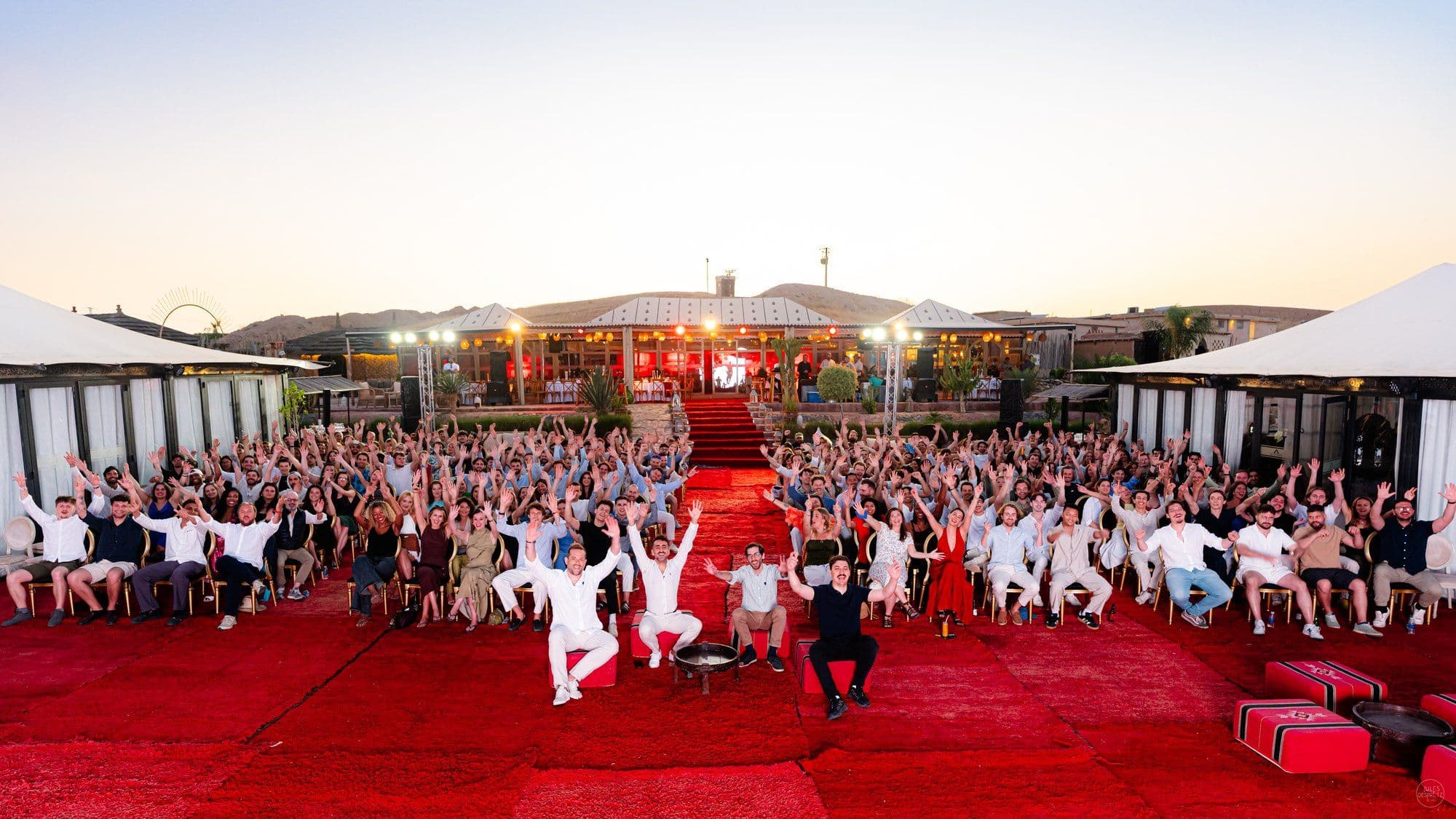
These corporate event ideas give planners a practical mix of formats, from cooking workshops and office Olympics to retreats, volunteer days, and quieter social sessions. Use them to choose the right balance of focus, connection, and pace for the team you are bringing together. The list also helps you match the event to the outcome you want, whether that is trust, belonging, better communication, or a reset after a busy period.
Key takeaways
- The spread runs from interactive cooking workshops and office Olympics to professional development retreats, charitable volunteer days, and mystery lunch pairings, so planners can choose between active, reflective, and low-pressure formats.
- Several options are built for different team needs, including events that reflect company values, events that support hybrid teams, and events that reduce burnout.
- Before booking, check for dietary needs, a clear agenda, enough breathing room, and a pace that leaves room for conversation without turning the day into another work task.
- The strongest formats are the ones that fit the outcome you want, such as events that encourage lateral thinking, events that build trust, and events that create a sense of belonging.
- Some ideas work especially well when departments need to mix or people need to see colleagues differently, including mystery lunch pairings, team building activities in the kitchen, and office Olympics.
1. Interactive cooking workshops
Interactive cooking workshops are strong corporate event ideas because they ask people to collaborate in a low-pressure setting.
Teams have to divide tasks, manage timing, and work with limited resources, which mirrors workplace dynamics without the usual deadline stress. They also let colleagues see each other in a new way.
Group setup: the whole team at once
Best for: team building and inclusive collaboration
How to apply: Plan for dietary needs from the start. Keep the focus on the process, not just the finished dish. Use the workshop to give people a shared task that needs coordination and timing.
2. Professional development retreats
Professional development retreats work when the group needs space to think clearly and leave with decisions they can use.
They are a practical format for teams that need more than another meeting room session. Pair focused work with breathing room for informal conversation and reflection.
Group setup: the whole team at once
Best for: strategic planning and skill-building
How to apply: Build a clear rhythm into the day. Start with strategic planning, move into skill-building, then finish with dinner or a quieter social format. Keep enough structure to give the retreat direction, but not so much that it drains energy.
3. Office Olympics
Office Olympics are lively corporate event ideas for teams that respond well to friendly competition.
They mix physical and mental tasks, from chair racing to paper-plane aerodynamics, so different people can take part in different ways. Adding trivia or puzzles keeps the format open to more people and gives every department a fair shot.
Group setup: the whole team at once
Best for: lifting the mood with friendly competition
How to apply: Mix physical and mental tasks so the event does not favour one kind of participant. Add trivia or puzzles to widen the appeal. Keep the setup simple so the energy stays high without needing a complicated build.
4. Charitable volunteer days
Charitable volunteer days are corporate event ideas with a clear sense of purpose.
Giving back can build shared pride in the organisation and connect the brand with local causes, which makes the day feel meaningful rather than decorative.
Group setup: the whole team at once
Best for: belonging and community impact
How to apply: Involve the team in choosing the charity so the day feels relevant to the people taking part. Use the day to do something useful outside the office. Keep the focus on shared purpose and practical contribution.
5. Mystery lunch pairings
Mystery lunch pairings are simple corporate event ideas for breaking down silos.
A random pairing creates a reason to talk to someone new without the pressure of a formal agenda. They work especially well in larger organisations where people may only know their immediate team.
Group setup: pairs
Best for: cross-department connection
How to apply: Keep the setting relaxed and the logistics easy. Let the pairing do the work of creating a conversation. Make the lunch feel low-pressure so the focus stays on meeting someone new.
6. Team building activities in the kitchen
Team building activities in the kitchen work because they turn a meal into a shared task.
A mystery basket challenge adds problem-solving and keeps the session lively. It gives people a chance to plan, adapt, and collaborate under light pressure.
Group setup: the whole team at once
Best for: shared problem-solving and a more organic social experience
How to apply: Use a mystery basket challenge to give the group a clear task. Let people plan, adapt, and work together while they cook. Consider dietary needs from the start so everyone can take part.
7. Social catalysts
Social Catalysts are the Naboo Impact Quadrant's high-social, low-professional format, and they suit lighter corporate event ideas.
They are for events where people need space to mix, unwind, and connect without a formal agenda. That makes them useful when the main goal is conversation rather than decisions.
Group setup: high-social, low-professional format
Best for: mixing, unwinding, and connecting
How to apply: Choose this format when you want energy and conversation rather than a working session. Keep the agenda light or absent. Use it to help people feel comfortable with one another.
8. Skill synchronisers
Skill Synchronisers are the Naboo Impact Quadrant's high-professional, moderate-social format.
They fit corporate event ideas that need a practical business aim, such as workshops, team challenges, or problem-solving sessions. The format separates events that are more structured from those that are mainly social.
Group setup: high-professional, moderate-social format
Best for: learning, alignment, and collaboration
How to apply: Use this format when the event needs to build capability as well as connection. Choose a workshop, team challenge, or problem-solving session with a clear business aim. Keep enough social space for people to work together well.
9. Wellbeing anchors
Wellbeing Anchors are a low-professional, moderate-social format for calmer corporate event ideas.
They work because they support morale, recovery, and shared experiences that feel thoughtful rather than demanding. That makes them useful after a busy period or when the team needs a reset.
Group setup: low-professional, moderate-social format
Best for: calmer corporate event ideas after a busy period or when the team needs a reset
How to apply: Keep the tone relaxed. Leave enough social interaction to feel communal, but do not make the event so structured that it becomes another work task. Pace matters more than performance.
10. Strategic aligners
Strategic Aligners are a high-social, high-professional format.
They work for offsites and retreats where discussion, decision-making, and relationship-building need to happen together. They suit teams that need to align on direction while still making room for human connection.
Group setup: high-social, high-professional format
Best for: offsites and retreats where teams need to align on direction
How to apply: Plan for substance and keep the agenda clear. Choose a venue that supports both focus and informal exchange. Make room for discussion, decision-making, and relationship-building in the same day.
11. Events that reflect company values
Events that reflect company values are stronger than generic entertainment because they feel connected to the organisation's identity.
They work because effective event planning for corporate teams is about more than logistics. It also needs a strategic focus on how the activity reflects business values.
Group setup: the whole team at once
Best for: events that need to reflect the organisation's identity
How to apply: Choose formats that say something real about how the company works and what it cares about. A volunteer day, a retreat, or a workshop can all do this if the purpose is clear. Keep the execution thoughtful.
12. Events that support hybrid teams
Events that support hybrid teams are essential because distributed work can weaken informal connection.
They work because shared experiences provide the social glue that keeps teams aligned when people are not in the same place every day. The best formats create a sense of belonging without relying on constant physical proximity.
Group setup: hybrid teams
Best for: distributed teams that need informal connection
How to apply: Pick formats that help people feel part of the same team, not just the same company. Use shared experiences to keep people aligned across office and remote work. Focus on belonging rather than constant physical proximity.
13. Events that reduce burnout
Events that reduce burnout should give people a break from routine without adding pressure.
They work because company morale boosting events can address burnout and encourage a sense of belonging. The format should feel restorative, not like another item on the to-do list.
Group setup: the whole team at once
Best for: teams that need a break from routine and a reset
How to apply: Use retreats, calmer social sessions, or volunteer days if they are paced well. Create room for people to breathe, talk, and reset. Keep the event restorative rather than demanding.
14. Events that encourage lateral thinking
Events that encourage lateral thinking are useful when a team needs fresh ways of approaching problems.
They work because well-chosen employee engagement events can help encourage lateral thinking alongside morale. Cooking workshops and Office Olympics fit because they ask people to adapt quickly and work in new ways.
Group setup: small groups or the whole team at once
Best for: teams that need fresh ways of approaching problems
How to apply: Choose an activity that asks people to adapt quickly and work in new ways. Cooking workshops and Office Olympics both fit this brief. Let the activity shift how colleagues see one another's thinking and problem-solving.
15. Events that build trust
Events that build trust work best when people have to rely on one another in a low-risk setting.
They work because shared experiences help create better communication and trust. Cooking workshops, retreats, and team challenges all create moments where people have to listen, adjust, and cooperate.
Group setup: small groups or the whole team at once
Best for: teams that need better communication and trust
How to apply: Use an event where people need to rely on one another without high stakes. Let them listen, adjust, and cooperate during the activity. Keep it natural rather than turning it into a formal trust exercise.
16. Events that create a sense of belonging
Events that create a sense of belonging help people feel included in the wider group, not just their immediate team.
They work because shared experiences matter for morale and for hybrid workplaces. Formats that mix departments or bring people together around a common purpose are especially useful.
Group setup: mixed departments or the whole team at once
Best for: teams that need to feel part of something larger
How to apply: Use mystery lunch pairings or volunteer days to create connection without forcing it. Bring people together around a common purpose or across departments. Make space for people to feel included in the wider group.
17. Events that mix work and social time
Events that mix work and social time are a good fit when the team needs both focus and connection.
They work because structured sessions are balanced with informal conversation and downtime. If the event is all business, it can feel stiff. If it is all social, it may miss the point.
Group setup: the whole team at once
Best for: when the team needs both focus and connection
How to apply: Keep structured sessions balanced with informal conversation and downtime. Do not let the event become all business. Leave space for a social side as well, so the day feels human as well as useful.
18. Events with a clear agenda
Events with a clear agenda are easier to run and easier for teams to value.
They work because people want to know why they are there and what the day is meant to achieve. A clear agenda keeps the event from drifting, while still leaving room for conversation and spontaneity where it counts.
Group setup: the whole team at once
Best for: when the event needs direction and purpose
How to apply: Set a clear agenda before the day begins. Keep a rhythm rather than a packed schedule or a loose one. Leave room for conversation and spontaneity where it counts.
19. Events with enough breathing room
Events with enough breathing room tend to work better than overfilled programmes.
They work because people need time to talk, reflect, and move between sessions without feeling rushed. Breathing room is not wasted time. It is often where the useful conversations happen, especially in offsites and development days.
Group setup: the whole team at once
Best for: offsites and development days
How to apply: Do not fill every part of the programme. Leave time for people to talk, reflect, and move between sessions. Give the day enough space so useful conversations can happen.
20. Events that are inclusive by design
Events that are inclusive by design make it easier for everyone to take part without feeling left out.
They work because planning starts with who might struggle before the event begins. The article gives a clear example in cooking workshops, where dietary needs should be considered from the start, and says Office Olympics should include different types of tasks so not every activity depends on physical ability.
Group setup: the whole team at once
Best for: when everyone needs a fair way to take part
How to apply: Think about who might struggle before the event begins. In cooking workshops, consider dietary needs from the start. For Office Olympics, include different types of tasks so not every activity depends on physical ability.
21. Events that use friendly competition
Events that use friendly competition can lift energy quickly when the group enjoys a bit of challenge.
They work best when the competition stays light and fair. The aim is to create momentum, not tension. If the rules are simple and the activities varied, more people can join in and the event feels lively rather than divisive.
Group setup: the whole team at once
Best for: when the group enjoys a bit of challenge
How to apply: Keep the competition light and fair. Use simple rules and varied activities. Include chair racing, paper-plane tasks, trivia, and puzzles if that suits the group.
22. Events that support problem-solving
Events that support problem-solving are useful when the team needs to think together rather than just socialise.
They work because they create a shared task with a clear outcome. People have to communicate, divide roles, and adjust when things change. That makes the event feel active and purposeful, while still being enjoyable.
Group setup: small groups
Best for: when the team needs to think together
How to apply: Choose a format that gives the group a shared task with a clear outcome. Cooking workshops and mystery basket challenges both fit that brief. Let people communicate, divide roles, and adjust when things change.
23. Events that connect to local causes
Events that connect to local causes give the team a reason to feel proud of the day.
They work because charitable volunteer days link the brand with community work, which can make the event more meaningful to staff. When people can see the impact of their time, the event tends to stay with them longer.
Group setup: the whole team at once
Best for: when you want the day to feel meaningful and grounded
How to apply: Choose a local cause that matters to the group, not just to the calendar. Use a charitable volunteer day to link the brand with community work. Make sure people can see the impact of their time.
24. Events that suit larger organisations
Events that suit larger organisations need to create connection without becoming chaotic.
They work because mystery lunch pairings help people meet across departments in a simple, manageable way. Office Olympics can also work well at scale if the activities are varied and easy to run. Large groups need structure that makes new conversations possible.
Group setup: larger groups across departments
Best for: larger organisations that need cross-team connection
How to apply: Use mystery lunch pairings to help people meet across departments in a simple, manageable way. If you choose Office Olympics, keep the activities varied and easy to run. Avoid formats that only reward people who already know one another.
25. Events that help departments mix
Events that help departments mix are valuable when teams work in separate lanes and rarely cross paths.
Mystery lunch pairings and team challenges can break those patterns. When people from different parts of the business talk, they often understand each other's pressures more clearly, which can improve later collaboration too.
Group setup: departments mixing
Best for: teams that rarely cross paths
How to apply: Use mystery lunch pairings or team challenges to bring people together. Keep the event easy to enter and simple to keep going. Aim for conversation that helps people understand each other's pressures more clearly.
26. Events that feel organic
Events that feel organic often land better than formats that seem overproduced.
Cooking workshops can create that feel because the conversation happens naturally while people cook. The same quality matters in other group gatherings too, where the activity gives people a reason to interact without forcing every moment.
Group setup: the whole team at once
Best for: a more relaxed event
How to apply: Choose an activity that gives people a reason to interact naturally. Cooking workshops are one example because conversation happens while people cook. Keep the structure in place, but let the interaction feel unforced.
27. Events that build pride in the organisation
Events that build pride in the organisation help people feel good about where they work.
Charitable volunteer days can strengthen how staff see the company because social responsibility gives the event more weight. When staff see the company acting with purpose, the event carries more meaning.
Group setup: the whole team at once
Best for: strengthening pride in the company
How to apply: Choose a charitable volunteer day or another activity that aligns with the organisation's values. Make it easy for people to support. Keep the focus on social responsibility and purpose.
28. Events that suit a change of pace
Events that suit a change of pace are useful when the team needs to step away from routine.
Retreats work well partly because they offer a proper change of pace, not just a different room. A different setting, a new activity, or a shared meal can all help reset the mood.
Group setup: the whole team at once
Best for: stepping away from routine
How to apply: Move the team into a different setting or give them a new activity. A shared meal can also help reset the mood. The point is to break the pattern enough that people return with more energy and a clearer head.
29. Events that help people see colleagues differently
Events that help people see colleagues differently can improve how teams work together afterwards.
Cooking workshops can reveal roles that mirror workplace dynamics but without the usual stress. Office Olympics and volunteer days can do something similar by showing strengths that do not always appear in day-to-day work.
Group setup: the whole team at once
Best for: changing how colleagues see one another
How to apply: Pick an activity that reveals different strengths, such as cooking workshops, Office Olympics, or volunteer days. Let people fall into roles naturally. Use the event to show abilities that do not always appear in daily work.
30. Events that are easy to source, manage, and track
Events that are easy to source, manage, and track save time for planners and reduce friction for the team.
Naboo helps teams Source, Manage, and Track corporate events from the first search to the final check-in. When the venue, timing, and follow-up are organised in one flow, the event feels considered rather than improvised.
Group setup: the whole team at once
Best for: simplifying event logistics
How to apply: Use a flow that keeps the venue, timing, and follow-up organised together. Naboo helps teams Source, Manage, and Track corporate events from the first search to the final check-in. That leaves the team free to focus on the experience itself.
Where to host corporate event ideas
The venue decides which corporate event ideas will work, from boardroom briefings to outdoor team challenges. Each option below includes a real Naboo venue to help you match the setting to the activity.
A venue for structured team sessions
A venue for structured team sessions suits professional development retreats and strategic aligners because it gives people room to think, speak, and reset without distraction. The mix of larger rooms and smaller suites works well for groups that need focused discussion, shared planning, and enough breathing room for quieter voices to join in.
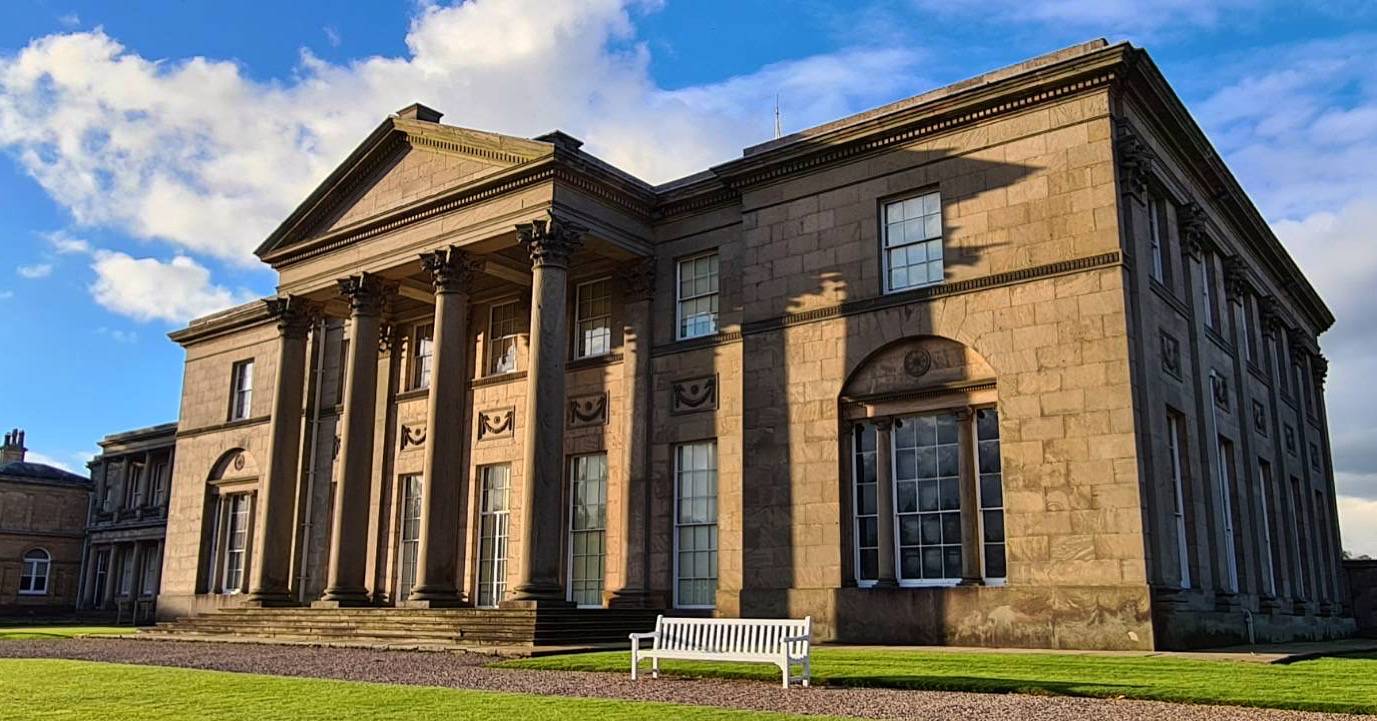
Tatton Park is in Cheshire, England. It offers a varied range of meeting and conference rooms for corporate events, including Tenants' Hall for up to 400 theatre-style, Lord Egerton's Apartment for up to 40 theatre-style, and a Boardroom for up to 20 guests, with projectors, audio-visual systems, free parking, and signage provided.
A venue for flexible social events
A venue for flexible social events suits ideas like team-building activities and networking because it can shift from relaxed conversation to a more structured group format without fuss. Spaces that are easy to source, manage, and track help planners keep the day moving, while still leaving room for people to mix, talk, and take part naturally.
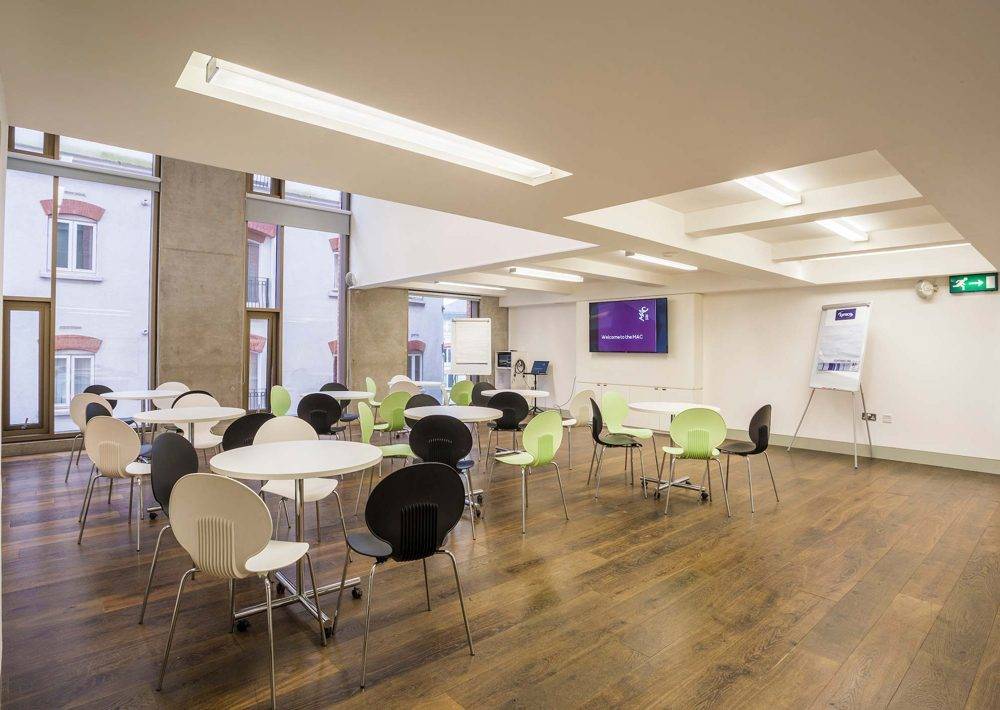
The Mac is in West Northern Ireland. It is a versatile, modern venue with adaptable spaces, from a large theatre to intimate boardrooms, and its contemporary style includes dark timber flooring, bespoke furniture, and professional theatre lighting and sound systems.
Frequently asked questions
What corporate event ideas work best for a team that needs connection?
The strongest options are the ones that give people a reason to talk, solve problems together, and see colleagues in a different light. Cooking workshops, volunteer days, Office Olympics, mystery lunch pairings, and retreats each serve a different team need, from bonding to shared purpose.
How do I choose the right corporate event idea?
Choose the format that matches the outcome you want, whether that is bonding, reflection, friendly competition, or shared purpose. The Naboo Impact Quadrant groups events by social intensity and professional integration, which helps you decide between lighter social formats and more strategic sessions.
How do I run a corporate event well?
Keep the event inclusive, balance structure with downtime, and choose a venue that fits the format. Plan for dietary needs from the start, keep the focus on the process where that matters, and make the execution thoughtful rather than overcomplicated.
What group size should I plan for?
It depends on the format. Interactive cooking workshops, professional development retreats, Office Olympics, charitable volunteer days, and team building activities in the kitchen all work with the whole team at once, while mystery lunch pairings work in pairs.
How do I plan for remote or hybrid teams?
Pick formats that help people feel part of the same team, not just the same company. Shared experiences provide the social glue that keeps teams aligned when people are not in the same place every day, so focus on belonging rather than constant physical proximity.
Which corporate event ideas help when morale is low or burnout is creeping in?
Retreats, calmer social sessions, and volunteer days can help when the team needs a break from routine and a reset. Keep the tone relaxed, leave room for people to breathe and talk, and make the event restorative rather than demanding.