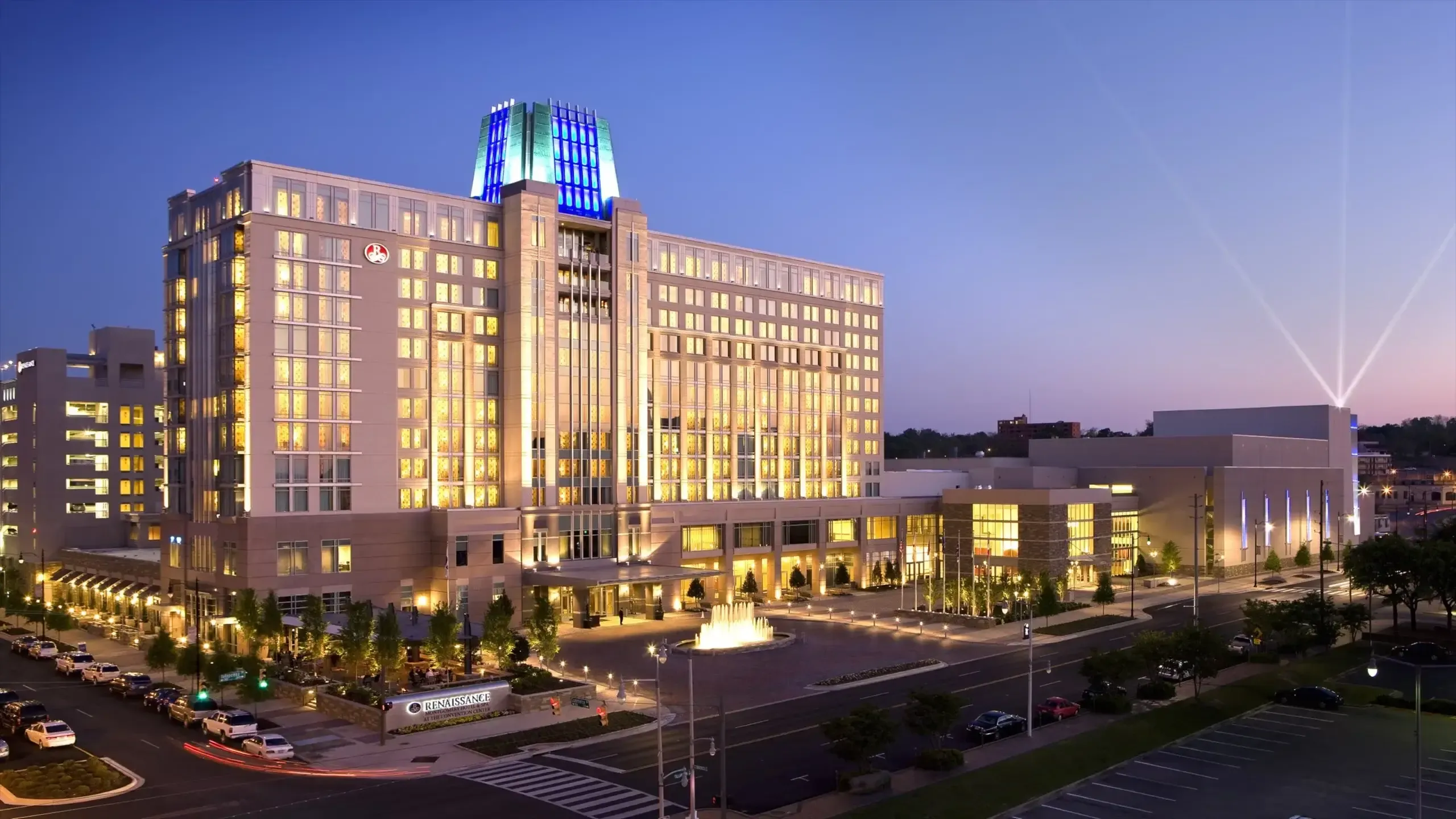
The corporate venue decision should start with what the event needs to achieve, then match that purpose to a conference hotel, event location, or inhouse space.
Use a conference hotel when you need predictable pricing and simple coordination, choose an event location when the setting needs to do part of the work, and stay inhouse when cost and scheduling ease matter most.
That order keeps the choice tied to outcome, not habit.
Key takeaways
- Conference hotels suit multi-day events with overnight stays, and they bring room hire, AV, catering, and accommodation under one contract with an experienced events team.
- Event locations work when the experience is part of the message, including converted industrial spaces, cultural venues, rooftop settings overlooking London, Manchester, or Edinburgh, and purpose-built experiential locations.
- Inhouse is practical for weekly team meetings, monthly reviews, and department-level training, especially when most attendees are in the same location and the content matters more than the setting.
- Before booking, check event purpose alignment, logistical complexity tolerance, budget flexibility, and experience outcome priority, then choose the venue type that fits the strongest signals.
- Conference hotels are the most predictable on pricing, while event locations usually need separate sourcing for catering, AV, furniture, and sometimes power.
- The main risk is choosing on familiarity instead of fit, or treating the venue type as fixed instead of reassessing it as the event's purpose and priority change.
The event purpose test: the starting point for any venue decision
Before evaluating any specific venue, the right question is not what kind of space is available but what the event needs to achieve. A compliance training session has fundamentally different requirements from an executive strategy retreat or a new joiner induction. The conference hotel vs event location decision should follow from this purpose test, not precede it. The MICE Report finds that 45 percent of companies already apply this logic, choosing their format and venue based on the specific occasion rather than defaulting to a single preferred type. This flexible approach, which the report labels occasion-led planning, consistently produces better outcome-per-pound ratios than blanket preference for one venue category.
When a conference hotel is the right choice
The conference hotel is the right answer when logistical reliability and operational simplicity are the primary requirements. Conference hotels offer integrated room hire, AV, catering, and accommodation under a single contract, with an experienced events team that has managed hundreds of similar events. For multi-day events with overnight stays, which account for 71 percent of all corporate conferences according to the MICE Report, the single-supplier model significantly reduces coordination effort. Conference hotels also offer the most predictable pricing: standardised day-delegate packages make budgeting straightforward and reduce the risk of cost surprises. For procurement teams managing tight schedules and compliance requirements, this predictability has genuine value.
Where conference hotels fall short
The limitation of the conference hotel model is environmental homogeneity. Most mid-market conference hotels produce a similar experience: the same neutral carpet, the same basic catering, the same standard AV setup. For events where the goal is a genuine departure from routine, a conference hotel environment works against the objective. When delegates attend a strategy session in a room that looks identical to every other strategy session they have attended, the setting does not reinforce the event's purpose. The environment matters more than event managers often acknowledge.
When an event location delivers better outcomes
An independent event location is the right choice when the experience itself is part of the event's message. Twenty-one percent of companies in the MICE Report specifically seek unusual or experiential venues as a deliberate strategic choice. These organisations understand that a distinctive setting signals intent: that this event is different, that what happens here matters, that the organisation is investing in the experience, not just the agenda. Converted industrial spaces, cultural venues, rooftop settings overlooking London, Manchester, or Edinburgh, and purpose-built experiential locations create an atmosphere that conference hotels structurally cannot replicate. The difference in attendee engagement and post-event recall between a standard conference hotel and a well-chosen independent event location is measurable. Explore event location options across multiple venue types.
The operational trade-off of event locations
The experiential premium of an independent event location comes with real operational complexity. Catering, AV, furniture, and sometimes even power must be sourced separately, adding coordination overhead. The MICE Report confirms that event locations are typically more expensive than conference hotels on a like-for-like basis. For event managers without dedicated support, this complexity is a genuine constraint. The calculation changes for teams using platforms that aggregate all supplier coordination, or for events where the experience outcome justifies the premium.
When inhouse is the pragmatic choice
Inhouse events work well for high-frequency, operationally focused formats: weekly team meetings, monthly reviews, and department-level training that does not require an atmosphere shift. Eighteen percent of companies in the MICE Report choose inhouse for their events, citing cost advantages and ease of scheduling as the primary drivers. For events where the majority of attendees are in the same location and the content is the primary focus, the inhouse option delivers functional value without the overhead of external venue coordination. The key limitation is context: if the goal is to signal that this event is strategically important or to help attendees think differently, the same conference room they use for daily work is not the optimal setting.
Corporate venue decision steps
A practical tool for making the conference hotel vs event location decision is the four-factor Decision Matrix. Score each venue type against: (1) event purpose alignment, (2) logistical complexity tolerance, (3) budget flexibility, and (4) experience outcome priority. Events scoring high on purpose alignment and experience priority but lower on logistical complexity tolerance point toward conference hotels. Events where purpose alignment requires a distinctive environment and where the team has operational support point toward event locations. Events where cost efficiency and scheduling ease are paramount point toward inhouse. Applying this matrix across the annual event portfolio reveals patterns that help teams develop a structured venue strategy rather than making each decision in isolation.
Common mistakes in the venue type decision
The most common mistake is choosing on familiarity rather than fit: defaulting to the conference hotel that was used last year because it is known, even when the event purpose would be better served by a different format. A second mistake is treating the venue type decision as permanent for a given event series rather than reassessing it annually as the event's purpose and strategic priority evolve. A third mistake is failing to brief the event location properly when choosing an independent venue: the additional operational demands of a non-standard venue are manageable with good preparation but unmanageable when the briefing is incomplete. Read how enterprise event teams build venue strategy frameworks.
Frequently asked questions
What should decide the venue for a corporate event?
The event's purpose should decide the venue. A compliance training session, an executive strategy retreat, and a new joiner induction all need different settings, so the venue choice should follow what the event needs to achieve rather than start with what is available.
How do you choose between a conference hotel, an event location and inhouse?
Use the four-factor Decision Matrix: event purpose alignment, logistical complexity tolerance, budget flexibility, and experience outcome priority. High purpose alignment and experience priority point towards conference hotels or event locations, while cost efficiency and scheduling ease point towards inhouse.
How do you run a venue choice well?
Choose on fit, not familiarity, and reassess the venue type each year as the event's purpose and strategic priority evolve. If you choose an independent event location, brief it properly, because the extra operational demands are manageable with good preparation but unmanageable when the briefing is incomplete.
What size or format of event suits a conference hotel?
Conference hotels work well for multi-day events with overnight stays, which account for 71 percent of all corporate conferences according to the MICE Report. They are also a strong fit when logistical reliability, operational simplicity and predictable pricing matter most.
When is inhouse the right choice for a corporate event?
Inhouse works well for high-frequency, operationally focused formats such as weekly team meetings, monthly reviews and department-level training. It is also practical when most attendees are in the same location and the content matters more than the setting.
How should remote or hybrid teams think about venue choice?
Remote or hybrid teams should be clear about whether the event needs to create a shift in atmosphere or simply deliver the content efficiently. If the goal is to signal strategic importance or help people think differently, a conference room used for daily work is not the right setting, so a conference hotel or event location is more suitable.