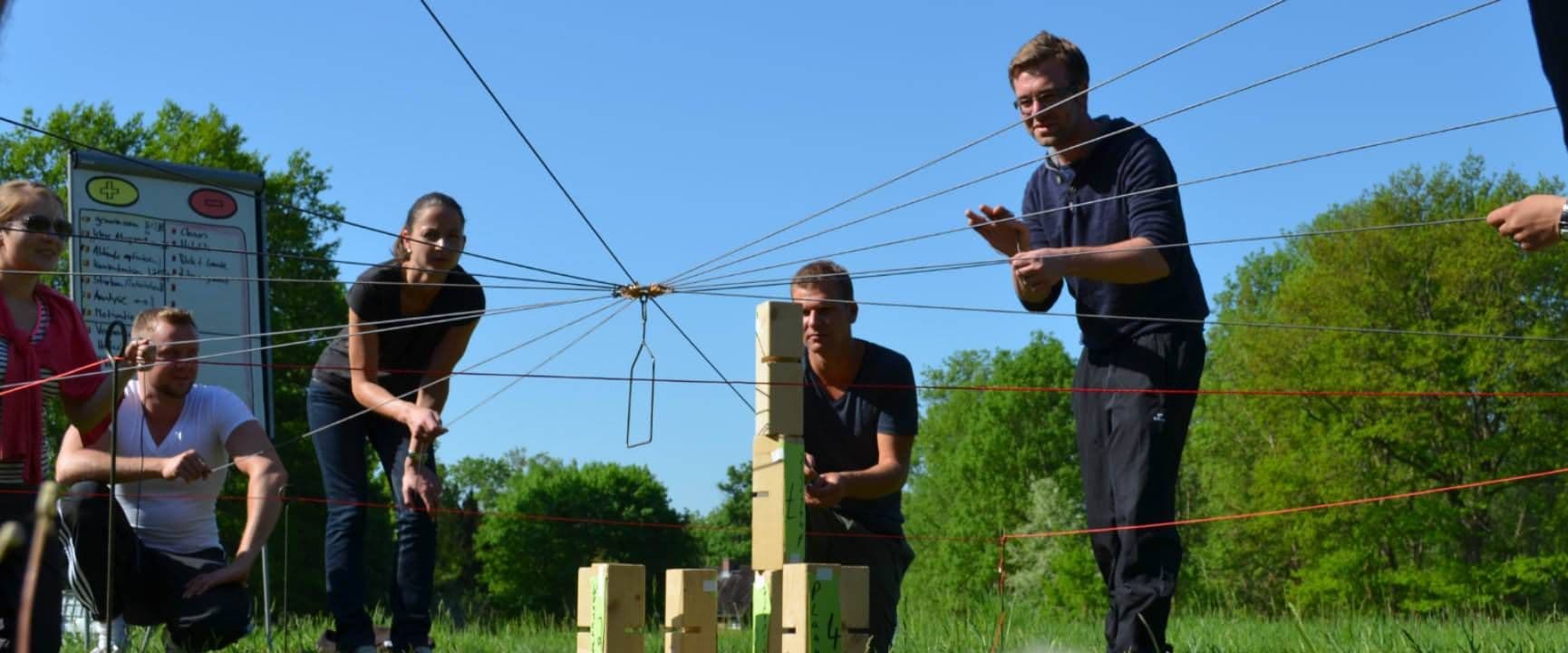
These team building away days give you a clear set of one-day ideas you can match to the outcome you want, from sharper communication to better trust, coordination, or a simple reset. Use them to choose an activity that fits the group, the pace, and the level of challenge you want. You will find options that work in workshop spaces, city centres, climbing walls, kitchens, outdoor sites, and quieter settings, so you can pick the format that suits the team and the day.
Key takeaways
- The ideas range from indoor workshops and guided sessions to city routes, climbing walls, water outings, parks, kitchens, and brewery or vineyard visits, so there is a wide spread of settings to choose from.
- Several options suit teams that need to think together, including innovation sprint workshop, structured design thinking challenge, immersive storytelling class, and custom board game design session.
- For movement and shared effort, the list includes urban scavenger hunt race, guided bouldering or climbing session, team rafting or kayaking excursion, and high-ropes confidence course.
- Food and drink-led choices include chopped-style cooking competition, mixology or signature drink workshop, international food tasting journey, hosted catered lunch with structured sharing, and local brewery or vineyard tour.
- Before booking, check the practical details that shape the day: whether the group needs a facilitator, enough space for visual work, safety equipment, a chartered coach, or a venue with room for a group visit.
- The closing ideas are about purpose as much as fun, with guided mindfulness and digital detox day, park clean-up and environmental service project, volunteer day at a local shelter, building bikes for charity, and interactive public art mural creation all giving the team a shared focus.
1. Innovation sprint workshop
This idea gives teams half a day to solve a small internal challenge quickly and collaboratively.
People define the problem, brainstorm, prototype with simple materials such as sticky notes or flip charts, and pitch the result to leadership. It works well when you want cross-functional thinking without the pressure of a full strategy session.
Group setup: the team, half a day
Best for: cross-functional thinking on a low-stakes internal challenge
How to apply: Keep the brief low-stakes but relevant, so people can be inventive without worrying about failure. Let the group define the problem first, then move into brainstorming and simple prototyping. Finish with a pitch to leadership.
2. Structured design thinking challenge
This is a guided exercise built around the five stages of Design Thinking: Empathise, Define, Ideate, Prototype, and Test.
The focus is an external, customer-facing problem, which makes it especially useful when technical and non-technical colleagues need to work more closely together. A skilled facilitator and enough space for visual work are important.
Group setup: the group, guided workshop
Best for: bringing technical and non-technical colleagues together on a customer-facing problem
How to apply: Use the five stages in order: Empathise, Define, Ideate, Prototype, and Test. Keep the group moving with a skilled facilitator. Make sure there is enough space for visual work so the day has a clear rhythm.
3. Immersive storytelling class
This workshop uses a professional writer or communications coach to help teams shape stronger narratives.
It is not just about writing well. It is about presenting company goals, product pitches, or internal updates in a way people can actually absorb.
Group setup: the team, workshop format
Best for: teams that need to communicate with more clarity and less jargon
How to apply: Bring in a professional writer or communications coach to guide the session. Have teams work on short stories about current projects. Use the exercise to build empathy and presentation confidence.
4. Group vision board creation
This activity has the whole team build one shared board for the next quarter or year.
It can be physical, using magazines, glue, and poster boards, or digital, using a large screen and collaboration tools. The point is to make goals visible and shared, rather than left in separate heads.
Group setup: the whole team at once
Best for: reinforcing a common direction and company culture
How to apply: Choose a physical or digital format for the board. Ask everyone to contribute to one shared view of the next quarter or year. Keep the focus on making goals visible and shared.
5. Corporate escape room challenge
This is a timed puzzle challenge in a themed room where the group must solve clues together.
A harder room in a busy city setting, such as the West End or Edinburgh, makes the experience more demanding and more rewarding. Different strengths come into play, from logic to observation to lateral thinking.
Group setup: the group, timed room challenge
Best for: seeing how people communicate under pressure and who steps into leadership
How to apply: Choose a themed room with a harder level if you want more demand. Put the group in the room and let them solve the clues together. Watch for how logic, observation, and lateral thinking show up under pressure.
6. Custom board game design session
This idea asks teams to design a playable board game linked to an abstract part of their industry, such as supply chain logistics or customer acquisition.
They need to create rules, pieces, and objectives, which means the group has to simplify complex ideas into something usable. It is creative, but it also requires negotiation and patience.
Group setup: the team, design session
Best for: turning complex industry ideas into something usable
How to apply: Ask the team to pick an abstract part of their industry, such as supply chain logistics or customer acquisition. Have them create the rules, pieces, and objectives for a playable game. Use the process to encourage negotiation and patience.
7. Urban scavenger hunt race
This outdoor challenge sends teams through a city centre route to solve riddles, find locations, and complete photo tasks using a mobile app.
The best version uses walking or public transport so the group has to stay coordinated. Good clues matter here. They should reward teamwork rather than speed alone, and they can draw on local history or distinctive facts about the area.
Group setup: teams on a city centre route
Best for: groups that enjoy movement and a bit of competition
How to apply: Set a route through the city centre and use a mobile app for the tasks. Keep the group moving by walking or using public transport. Make sure the clues reward teamwork and use local history or distinctive facts about the area.
8. Guided bouldering or climbing session
This activity takes place at an indoor climbing wall, where teams learn basic technique and safety before tackling routes together.
Belaying is central, because one person literally holds the rope for another. That makes trust visible, not abstract.
Group setup: the team at an indoor climbing wall
Best for: building confidence in one another
How to apply: Start with basic technique and safety before anyone tackles routes. Use belaying so one person holds the rope for another. Finish with a post-session discussion, since the physical experience gives people a clear example of mutual reliance.
9. Team rafting or kayaking excursion
A team rafting or kayaking excursion is a water-based outing that depends on synchronised effort and clear communication.
A half-day on tandem kayaks near Reading or white-water rafting in Nottingham gives teams a shared physical challenge with real consequences for coordination. Professional guides and safety equipment are non-negotiable.
Group setup: the group on tandem kayaks or rafting
Best for: teams that need to practise real-time communication and learn how to move together rather than in parallel
How to apply: Choose a half-day on tandem kayaks near Reading or white-water rafting in Nottingham. Keep professional guides and safety equipment in place. Use the outing to make coordination visible in real time.
10. High-ropes confidence course
A high-ropes confidence course uses elevated obstacles such as zip wires, bridges, and leaps of faith, often at sites like Go Ape.
Participation may be voluntary, but the group dynamic matters just as much as the individual challenge. Cheering, waiting, and encouraging colleagues all shape the experience.
Group setup: the whole group at a high-ropes site
Best for: when morale needs a lift and the team would benefit from seeing courage and support in the same setting
How to apply: Book a site with elevated obstacles such as zip wires, bridges, and leaps of faith. Let participation be voluntary if needed. Make room for cheering, waiting, and encouraging colleagues throughout the session.
11. Olympic-style field day tournament
An Olympic-style field day tournament is a lighthearted competition built around simple games such as sack races, three-legged races, and oversized lawn activities.
Teams are split into "countries", which adds a playful structure without making the day feel serious. The appeal is in the laughter and the low pressure.
Group setup: large groups or mixed teams
Best for: an easy social reset
How to apply: Set up simple games such as sack races, three-legged races, and oversized lawn activities. Split teams into "countries" to give the day a playful structure. Use a park or common and a few basic supplies.
12. Chopped-style cooking competition
A Chopped-style cooking competition gives teams a mystery basket of ingredients and a time limit to create a dish.
The group has to plan quickly, divide tasks, and manage what it has on hand. What makes it different from a standard cooking class is the urgency.
Group setup: the group in kitchen teams
Best for: fast-moving project work and a shared meal after the pressure
How to apply: Give each team a mystery basket of ingredients and a time limit. Ask them to plan quickly, divide tasks, and work with what they have. Judge the result by leadership or by an external chef.
13. Mixology or signature drink workshop
A mixology or signature drink workshop brings in a professional bartender to teach cocktails and mocktails, then asks participants to create a company signature drink.
It is relaxed, creative, and easy to talk through, which makes it useful for groups that need a softer setting after a busy work period.
Group setup: the group with a professional bartender
Best for: groups that need a softer setting after a busy work period
How to apply: Bring in a professional bartender to teach cocktails and mocktails. Ask participants to create a company signature drink. Keep the session relaxed so people can experiment without much pressure.
14. International food tasting journey
An international food tasting journey replaces a standard catered meal with a tasting tour built around a region or cuisine, such as Scottish fare, South Indian dishes, or regional British food like Cornish pasties.
Small plates create natural conversation, and the cultural context adds depth to the experience.
Group setup: the group around small plates
Best for: encouraging openness and curiosity
How to apply: Build the meal around a region or cuisine such as Scottish fare, South Indian dishes, or regional British food like Cornish pasties. Serve small plates to keep conversation moving. Let the shared experience of trying something new do the work.
15. Hosted catered lunch with structured sharing
A hosted catered lunch with structured sharing keeps the meal simple but adds a clear conversation structure.
After lunch, the host asks small groups a few non-work questions, such as what skill they learned outside work recently. That small shift changes the tone of the room.
Group setup: small groups after lunch
Best for: connection without a complicated activity
How to apply: Serve a catered lunch first. Afterward, have the host ask small groups a few non-work questions, such as what skill they learned outside work recently. Keep the discussion light so people can join in without feeling put on the spot.
16. Local brewery or vineyard tour
A local brewery or vineyard tour is a guided visit followed by a tasting session, usually at a brewery or vineyard with enough space for a group visit.
Places in Bristol, Edinburgh, Kent, and Sussex are all natural fits for this kind of outing. The main planning point is transport, since a chartered coach keeps the day safe and on time.
Group setup: the group on a guided visit and tasting
Best for: teams that want a clear break from the office and a more leisurely pace
How to apply: Choose a brewery or vineyard with enough space for a group visit. Plan the guided visit first, then the tasting session. Arrange a chartered coach so the day stays safe and on time.
17. Guided mindfulness and digital detox day
This retreat centres on switching off properly, with guided meditation, gentle yoga, and a phone check at the door setting the tone from the start.
It is a strong option for high-burnout teams that need genuine mental recovery rather than another busy agenda. Leaders should make it clear that stepping away for the day was intentional and valued, not a guilty pleasure squeezed into the calendar.
Group setup: the whole team at once
Best for: high-burnout teams needing mental recovery
How to apply: Set the tone with guided meditation, gentle yoga, and a phone check at the door. Keep the day quiet and intentional. Make it clear that stepping away was planned and valued.
18. Park clean-up and environmental service project
This activity asks teams to spend a few hours cleaning a local green space or canal path, with practical work that is visible and immediate.
It gives the group a shared sense of purpose and connects the day to the wider community in a direct way. Safety gear and coordination with local councils are part of the planning, and it suits teams that want their outing to leave something useful behind.
Group setup: the whole team at once
Best for: teams that want their outing to leave something useful behind
How to apply: Plan the clean-up with local councils and make sure safety gear is ready. Send the team to a local green space or canal path. Keep the work practical and visible so the group can see the result.
19. Volunteer day at a local shelter
This is a service-based day spent helping at a charity, whether that means serving meals, sorting donations, or assisting with animal care.
It shifts attention outward and gives the team a different perspective on work and responsibility. The charity partner needs to be chosen carefully so the help is genuinely useful, and when the fit is right, the shared experience can deepen empathy and give the group a stronger sense of perspective.
Group setup: the whole team at once
Best for: teams that want to build empathy and perspective
How to apply: Choose a charity partner carefully so the help is genuinely useful. Decide whether the day will involve serving meals, sorting donations, or assisting with animal care. Keep the focus on practical support and the shift in perspective.
20. Building bikes for charity
This activity has teams assemble bicycles from kits, then donate the finished bikes to local children's charities.
It combines practical problem-solving with a clear charitable outcome, which makes the effort feel tangible. The logistics are more involved than some other options because you need tools, materials, and a partner charity for distribution, but people can see exactly what they have built and who it will help.
Group setup: the whole team at once
Best for: teams that want a tangible charitable outcome
How to apply: Gather the tools, materials, and bike kits before the day starts. Assemble the bicycles as a group. Arrange a partner charity for distribution so the finished bikes can be donated.
21. Interactive public art mural creation
This creative project brings in an artist to design a mural outline based on company values or local themes, then asks the team to fill it in together.
The finished piece can live in a public space or inside the office, which gives the day a lasting physical marker. It works well for groups that want something visible and collaborative, and the final artwork becomes a reminder of the shared effort long after the event ends.
Group setup: the whole team at once
Best for: groups that want something visible and collaborative
How to apply: Bring in an artist to design the mural outline based on company values or local themes. Have the team fill it in together. Place the finished artwork in a public space or inside the office so it stays as a marker of the day.
Measuring success in a 1-day team building away day
Success is easier to judge when you define it before the day begins. A short event gives you less time to observe, so the best approach is to measure outcomes against the objective you set at the start. Use a simple 1 to 5 survey straight after the event, then look for changes in behaviour over the following weeks. If communication was the goal, watch for better response times and more cross-team collaboration.
Where to host team building away days
The venue decides which team building away day ideas will work, from hands-on workshops to outdoor challenges. Each type below includes a real Naboo venue that fits the format.
A venue with breakout rooms for facilitated workshops
A venue with breakout rooms suits facilitation because it lets teams split, work, and come back together without losing momentum. That makes it a strong fit for an innovation sprint workshop or a structured design thinking challenge, where focused small-group work needs a clear main space for sharing ideas and decisions.
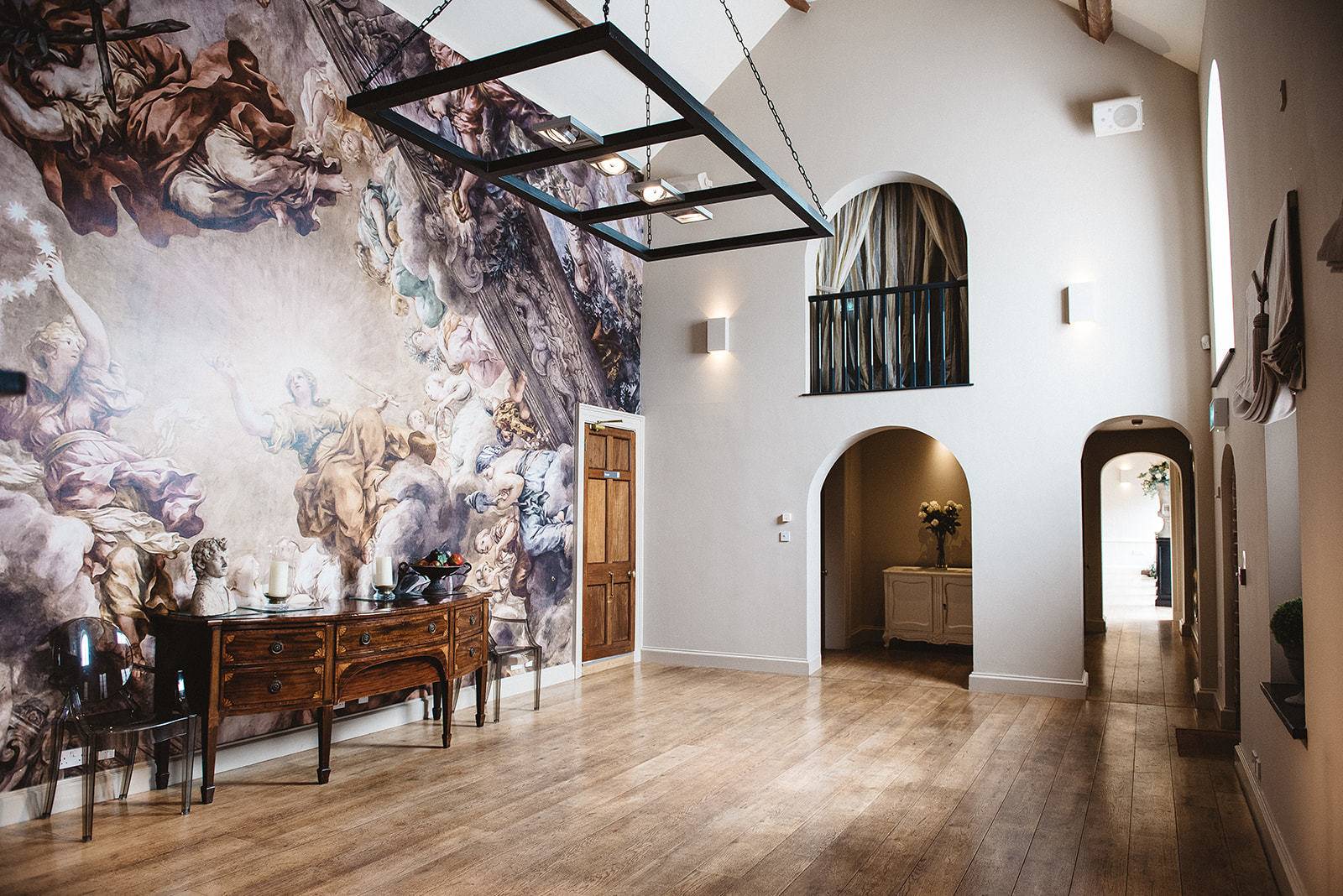
Alrewas Hayes is a versatile venue in the English countryside of Alrewas, England, with event spaces for up to 750 guests. The Great Barn is the largest space, with a sleek contemporary interior and advanced lighting, sound, staging, and image mapping technology, while The Lakeside room looks over a private lake and woodlands.
An activity venue for active team challenges
This type of venue suits active team challenges because it gives groups room to move, compete, and reset between sessions. A corporate escape room challenge works well for teams that need quick thinking under pressure, while a guided bouldering or climbing session adds a physical test that keeps the energy high and the focus tight.
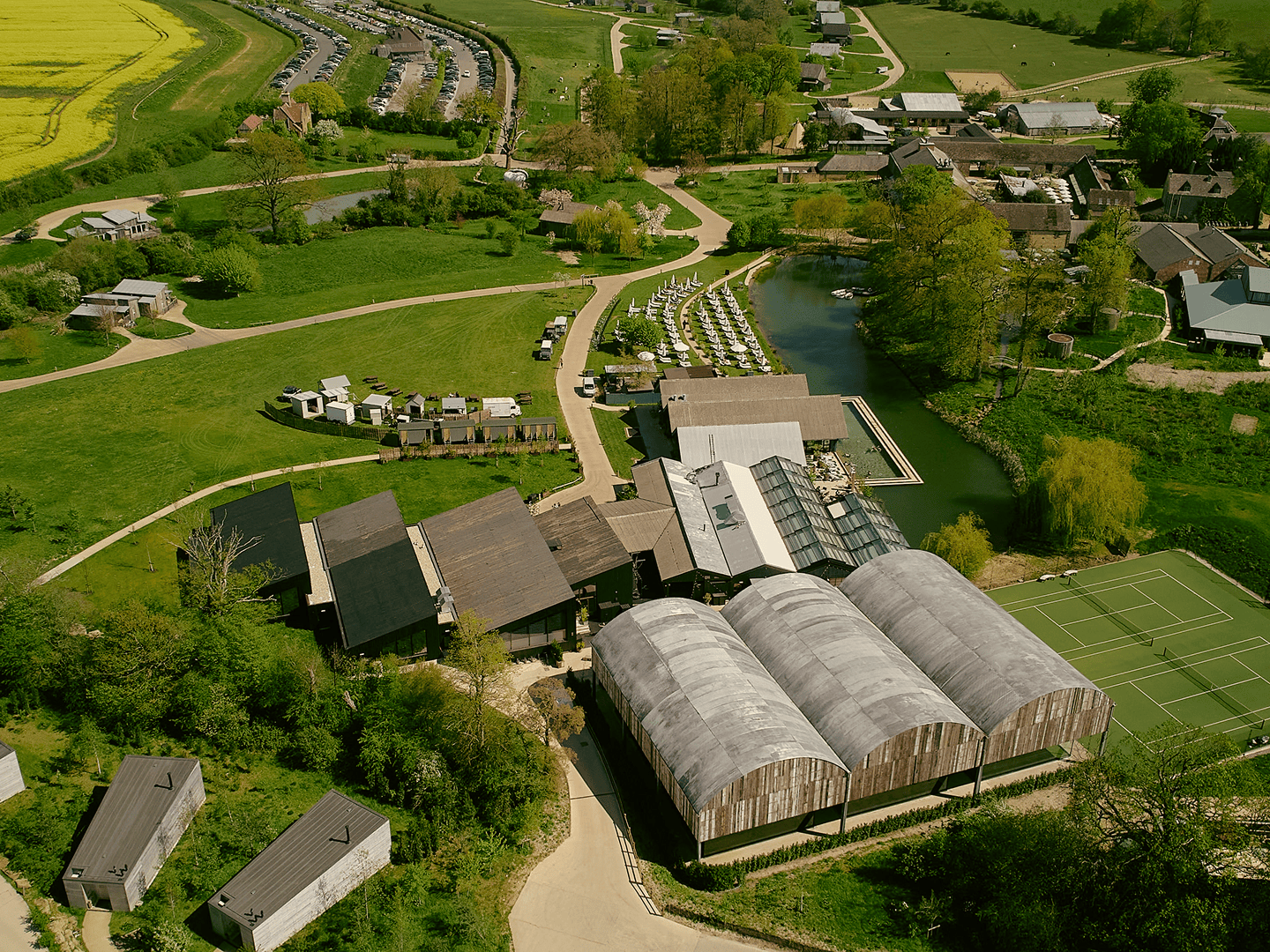
Soho Farmhouse is a rural retreat on a 100-acre estate in the Oxfordshire countryside near Chipping Norton and Great Tew. It offers accommodation, dining, wellness, and outdoor activities for corporate events and private gatherings, with event spaces including Barwell Barn, The Farmhouse, Glasshouse, Electric Barn, and Pen Yen.
A private event venue for hands-on social impact projects
A private event venue like this suits hands-on social impact days because teams can split into practical roles, work side by side, and finish with a clear shared result. It fits activities such as park clean-up and environmental service project or building bikes for charity, where space, flexibility, and a focused setting matter more than formal meeting rooms.
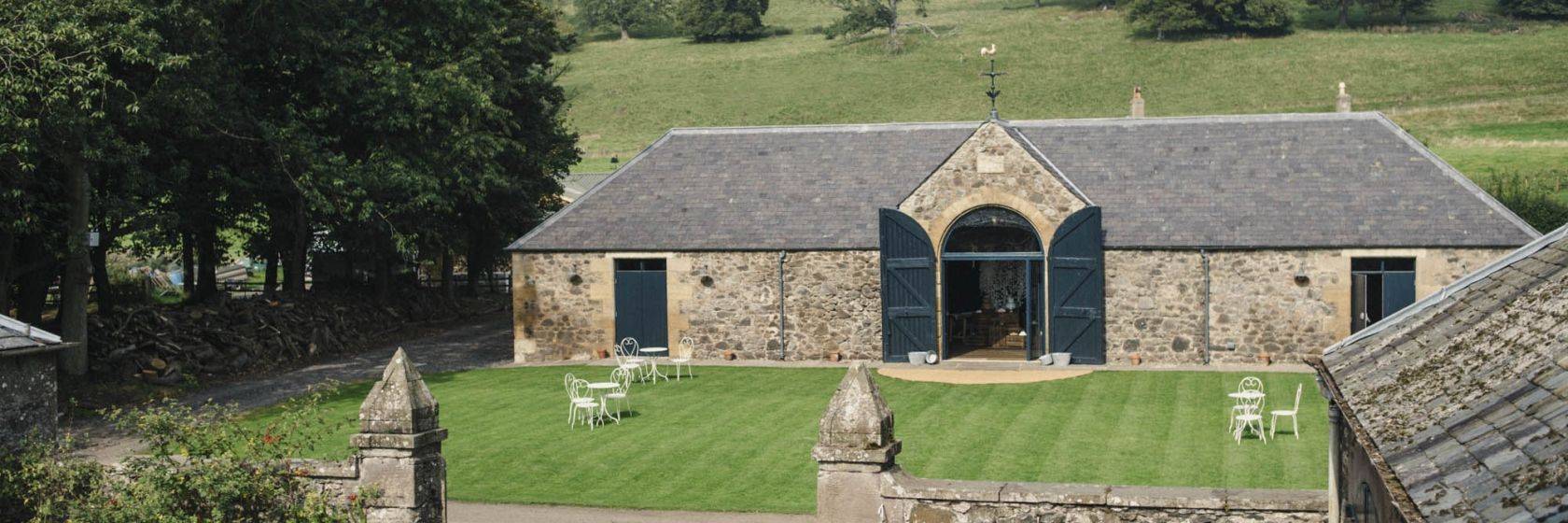
The Byre at Inchyra is a distinctive event venue in the countryside of Perthshire, Scotland. It sits within private parkland around Inchyra House and pairs rustic character with a bohemian, whimsical style, with original barn walls, timbered roofs, and reclaimed maple wood sprung floors.
Frequently asked questions
What makes a one-day team building away day effective?
A one-day team building away day works when it gives people a proper change of scene without the drag of overnight logistics. It works best when the agenda is focused, the logistics are tight, and the activity matches the outcome you want.
How do you choose the right activity?
Choose the activity around the outcome you want, not just the venue. If you need trust, choose something physical. If you need better communication, choose a challenge that forces people to talk and decide together.
How do you run it well?
Define success before the day starts, then keep the brief low-stakes but relevant so people can be inventive without worrying about failure. A skilled facilitator, enough space for visual work, and a proper debrief all help the day feel purposeful.
What group size works best?
Several formats work well for the team, the group, or the whole team at once. Field days, scavenger hunts, catered lunches, and community projects can all work well with bigger teams if the space and timing are planned properly.
Can remote or hybrid teams use these away day ideas?
Yes, some formats suit remote or hybrid teams well, especially digital options such as a group vision board creation. Structured sharing after lunch can also help people connect without a complicated activity.
How do you make sure the day actually has an impact?
Use a simple satisfaction score, then check whether the behaviour you wanted actually changes. That might mean better collaboration, quicker responses, or more open discussion across departments.