
Outdoor team building activities work best when they match the team's energy, confidence, and the behaviour you want to see back at work.
Use this selection to compare physical, creative, and low-intensity options, then choose the format that fits your group, location, and weather plan.
It also helps you spot where trust, communication, planning, or morale needs the most attention.
Key takeaways
- High ropes course challenge, whitewater rafting expedition, and archery tag tournament all put communication under pressure, but in different settings, from aerial obstacles to rivers and fast tactical play.
- Geocaching navigation adventure, urban cultural scavenger hunt, and guided wilderness hike suit teams that need problem-solving, shared judgement, and a stronger sense of place.
- Outdoor found art project, community tree planting initiative, and goat yoga session offer quieter or lighter options when you want creativity, contribution, or an icebreaker with a softer tone.
- Kayaking or canoeing exploration, team wilderness triathlon, and cardboard boat regatta challenge all depend on coordination, handovers, and planning rather than speed alone.
- Bubble soccer match and open-air team field day are the livelier choices for morale, while coastal surf lessons and guided wilderness hike give teams a calmer pace and room to talk.
- Before booking, check physical ability, comfort, weather cover, water, and a backup plan, and make sure the activity still connects to the reason for the day.
1. High ropes course challenge
High ropes courses are a strong choice when you want trust to show up fast. Set at outdoor centres near cities like Leeds or Bristol, they ask people to move through aerial obstacles while others spot, encourage, and guide them.
That mix of risk and support makes communication very visible. It also helps managers spot natural leaders, because the people who stay calm and precise under pressure tend to stand out quickly.
Group setup: the whole team at once
Best for: building trust and seeing leadership under pressure
How to apply: Set people moving through the aerial obstacles while others spot, encourage, and guide them. Keep attention on how the group communicates as the challenge unfolds. Watch for the people who stay calm and precise under pressure.
2. Geocaching navigation adventure
Geocaching turns the British countryside into a treasure hunt. Teams use GPS coordinates, clues, and shared judgement to track down hidden caches, which keeps the focus on problem-solving rather than speed alone.
It suits groups that need sharper planning and better use of resources. Because the challenge is part strategy and part exploration, it keeps people engaged without feeling overly formal or competitive.
Group setup: teams
Best for: sharper planning and better use of resources
How to apply: Give teams GPS coordinates, clues, and a shared goal of tracking down hidden caches. Keep the emphasis on problem-solving rather than speed. Let the search move between strategy and exploration so people stay engaged.
3. Whitewater rafting expedition
Whitewater rafting is one of the most direct tests of coordination. Usually run on rivers in Wales or the Scottish Highlands, it asks everyone to paddle in sync and respond quickly to the guide's instructions.
The pace leaves little room for drift or hesitation. That makes it useful for established teams that need a reset in communication, resilience, and shared focus when conditions change quickly.
Group setup: the whole team on the water
Best for: established teams that need a reset in communication, resilience, and shared focus
How to apply: Put everyone in the raft and have them paddle in sync. Make sure they respond quickly to the guide's instructions. Keep the pace moving so the group has to stay focused as conditions change.
4. Coastal surf lessons
Coastal surf lessons bring individual effort and group encouragement into the same session. On the Cornish coast or near Pembrokeshire, each person works through the frustration of balance, timing, and repetition, while the group keeps morale up from the shore.
It is a good fit for teams that need patience and a lighter tone. The shared learning curve often creates a more relaxed atmosphere than a purely competitive activity.
Group setup: the whole team in one session
Best for: teams that need patience and a lighter tone
How to apply: Let each person work through balance, timing, and repetition while the group supports them from the shore. Keep the tone light and encouraging. Focus on the shared learning curve rather than competition.
5. Team wilderness triathlon
A team wilderness triathlon breaks swimming, cycling, and hiking or running into relay-style sections. That format makes handovers matter, which is useful when a group needs to think more carefully about how tasks move between people.
It highlights interdependence without forcing everyone into the same role. For teams that work across departments, the structure mirrors the way larger projects depend on smooth transitions.
Group setup: relay-style teams
Best for: teams that work across departments
How to apply: Break the activity into swimming, cycling, and hiking or running sections. Treat each changeover as a handover that matters. Keep attention on how tasks move between people and how smoothly the transitions happen.
6. Outdoor found art project
An outdoor found art project gives teams a creative task instead of a physical one. Using natural or discarded materials found along a set route, such as leaves, sticks, stones, or urban debris, the group creates a symbolic piece that reflects shared values or goals.
It works well when you want quieter collaboration and a different kind of participation. The constraints often push people to think more inventively together.
Group setup: small groups
Best for: quieter collaboration and a different kind of participation
How to apply: Send the group along a set route to collect natural or discarded materials. Ask them to create a symbolic piece that reflects shared values or goals. Use the limits of the materials to prompt more inventive thinking together.
7. Kayaking or canoeing exploration
Kayaking or canoeing exploration asks for steady, subtle coordination. On the River Severn or a canal near Manchester, pairs or small groups have to keep pace, steer well, and communicate without overtalking every move.
Compared with rafting, this feels more self-directed and more intimate. It is especially useful for colleagues who do not usually work closely together, because it rewards patience and precision.
Group setup: pairs or small groups
Best for: colleagues who do not usually work closely together
How to apply: Put people in pairs or small groups and have them keep pace and steer well. Ask them to communicate without overtalking every move. Let the activity reward patience and precision rather than noise.
8. Urban cultural scavenger hunt
An urban cultural scavenger hunt works well in parks and historic areas, not just city streets. Hyde Park in London and sites in Edinburgh both give teams a setting where riddles can draw on ecology, local history, and observation.
The activity keeps people moving while asking them to think carefully and share ideas. It suits groups that want a lighter challenge with a strong sense of place.
Group setup: teams in parks or historic areas
Best for: groups that want a lighter challenge with a strong sense of place
How to apply: Set the hunt in a park or historic area and use riddles that draw on ecology, local history, and observation. Keep teams moving as they think and share ideas. Use the setting itself as part of the challenge.
9. Community tree planting initiative
Community tree planting is a low-intensity activity with a clear shared purpose.
The work is simple, but the outcome is tangible and long term, which gives the day a different weight from a standard away day. It suits teams that value contribution as much as competition.
Group setup: the whole team at once
Best for: teams that value contribution as much as competition
How to apply: Everyone works toward the same visible result. Keep the task simple and let the shared outcome do the work. The format builds a strong sense of collective responsibility without pressure.
10. Goat yoga session
Goat yoga session adds humour to a wellness activity.
The yoga supports flexibility and stress relief, while the presence of playful animals changes the mood quickly and often breaks down barriers between colleagues. It suits teams that need an icebreaker with a lighter touch.
Group setup: the whole team at once
Best for: teams that need an icebreaker with a lighter touch
How to apply: Run the yoga as the main activity and let the animals do the rest. Expect unexpected moments to create easy conversation. Keep the tone relaxed so people can settle in without pressure.
11. Bubble soccer match
Bubble soccer is a high-energy option that leans into fun and physical comedy.
Played on large sports centres or open fields, it puts people in inflatable bubbles so they can bounce, collide, and laugh their way through the match. The format still needs teamwork and movement planning, but it never takes itself too seriously.
Group setup: the whole team at once
Best for: when morale needs a lift and the group can handle a lively pace
How to apply: Set the match on a large sports centre or open field. Put people in inflatable bubbles and let them bounce, collide, and play through the game. Keep the focus on teamwork and movement planning. The pace should stay lively from start to finish.
12. Guided wilderness hike
A guided wilderness hike gives teams time to talk without screens, noise, or constant interruption.
Routes through the Peak District or the Yorkshire Dales work well when you want moderate effort and a shared sense of progress. A local guide can add context about the landscape, which gives the day more depth.
Group setup: the whole team at once
Best for: groups that want conversation, movement, and a calmer pace
How to apply: Choose a route through the Peak District or the Yorkshire Dales. Bring in a local guide to add context about the landscape. Keep the pace moderate so people can talk as they walk. The shared progress is part of what makes it work.
13. Cardboard boat regatta challenge
The cardboard boat regatta challenge is a practical test of speed, design, and teamwork.
With limited materials such as cardboard and duct tape, teams have to build a vessel that can float and carry at least one person across a small lake or pool. That puts pressure on planning and testing, not just creativity.
Group setup: the whole team at once
Best for: teams that respond well to planning, testing, and competition
How to apply: Give teams limited materials such as cardboard and duct tape. Ask them to build a vessel that can float and carry at least one person across a small lake or pool. Let the launch add the competitive edge. Keep attention on planning and testing as much as the build.
14. Archery tag tournament
Archery tag tournament combines archery and dodgeball into a fast, tactical game.
Teams need to choose targets, defend space, and manage limited arrows while keeping communication tight. It works well when you want spirited competition without a complicated setup.
Group setup: the whole team at once
Best for: spirited competition without a complicated setup
How to apply: Set up the game with clear rules so it keeps moving. Ask teams to choose targets, defend space, and manage limited arrows. Keep communication tight throughout. The pace should give people plenty of chances to react, adapt, and work as a unit.
15. Open-air team field day
An open-air team field day is the most flexible option on the list.
Set in a large field or park, it can include oversized Jenga, relay races, obstacle courses, and other simple games that suit a wide range of fitness levels. That makes it easy to include everyone without overcomplicating the day.
Group setup: the whole team at once
Best for: shared enjoyment, light competition, and easy participation
How to apply: Use a large field or park as the setting. Mix in oversized Jenga, relay races, obstacle courses, and other simple games. Keep the activities easy to join so everyone can take part. The day works best when participation stays straightforward.
Avoiding common pitfalls in outdoor team events
Poor planning can undo the value of a team day outdoors. The most common mistake is choosing an activity that ignores physical ability, comfort, or weather. If part of the group cannot take part properly, the event loses energy fast. Shelter, water, and a backup plan matter. So does the link between the activity and the reason for doing it. Without a proper debrief, even a strong session can feel like little more than a day out.
Measuring the success of your team building nature investment
Success should be measured after the event, not just during it. A simple three-tier approach works well: first, gather immediate feedback on enjoyment and relevance; second, check a few weeks later for changes in communication, collaboration, and peer relationships; third, look months later at how the team handles pressure and setbacks. Photos capture the day, but behaviour back at work tells you whether the experience actually landed.
How to choose the right wilderness team building activity for your group
The right choice depends on the team you have, not the activity you like most. Start with the group's fitness, confidence, and current challenges. If trust is the issue, choose something that asks for support. If communication is the issue, choose something with planning or coordination. Then check the practical side: travel, budget, accessibility, and time. A good outdoor event feels considered, not forced.
Where to host outdoor team building activities
The venue decides which ideas work, from open lawns to wooded trails and waterfront spaces. Each type below includes a real Naboo venue, so planners can match the activity to the setting with confidence.
A venue with open grounds for group challenges
A venue with open grounds suits activities that need space to move, gather, and reset between rounds. It works well for an open-air team field day and a bubble soccer match, where teams need room for running, quick changes of pace, and clear boundaries for group play without feeling boxed in.
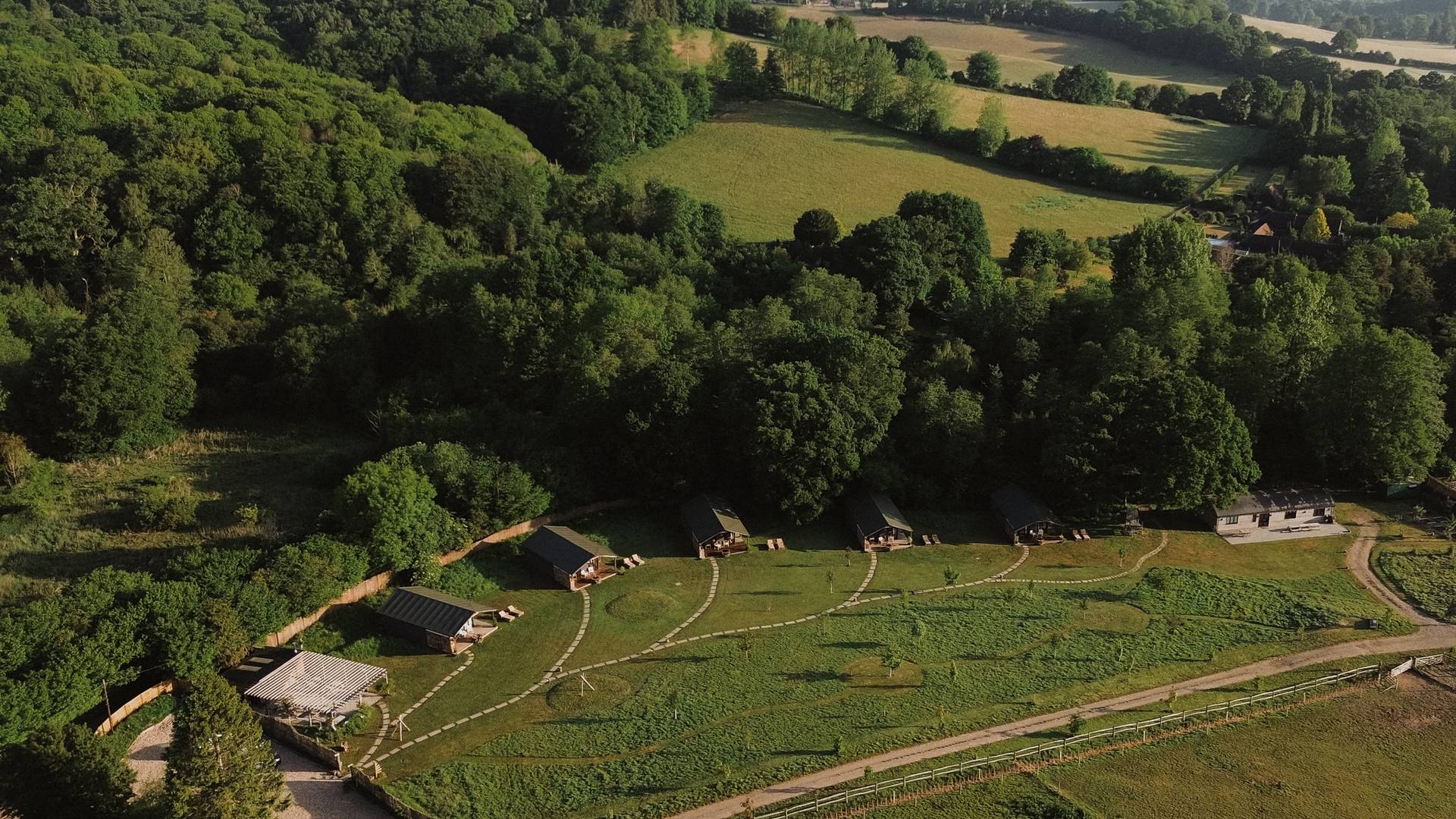
Firesyde is an exclusive-hire nature venue on Thorncombe Street, England. It sits on a private estate among rolling hills on the Surrey/Sussex border, with Wild Lodges, characterful farmhouses and Wild Spaces for teams seeking time together in nature.
A venue with water access
A venue with water access suits activities that need open water, steady supervision, and a change of pace from the meeting room. It works well for kayaking or canoeing exploration and a cardboard boat regatta challenge, where teams can plan, build, and test ideas on the water rather than around a table.
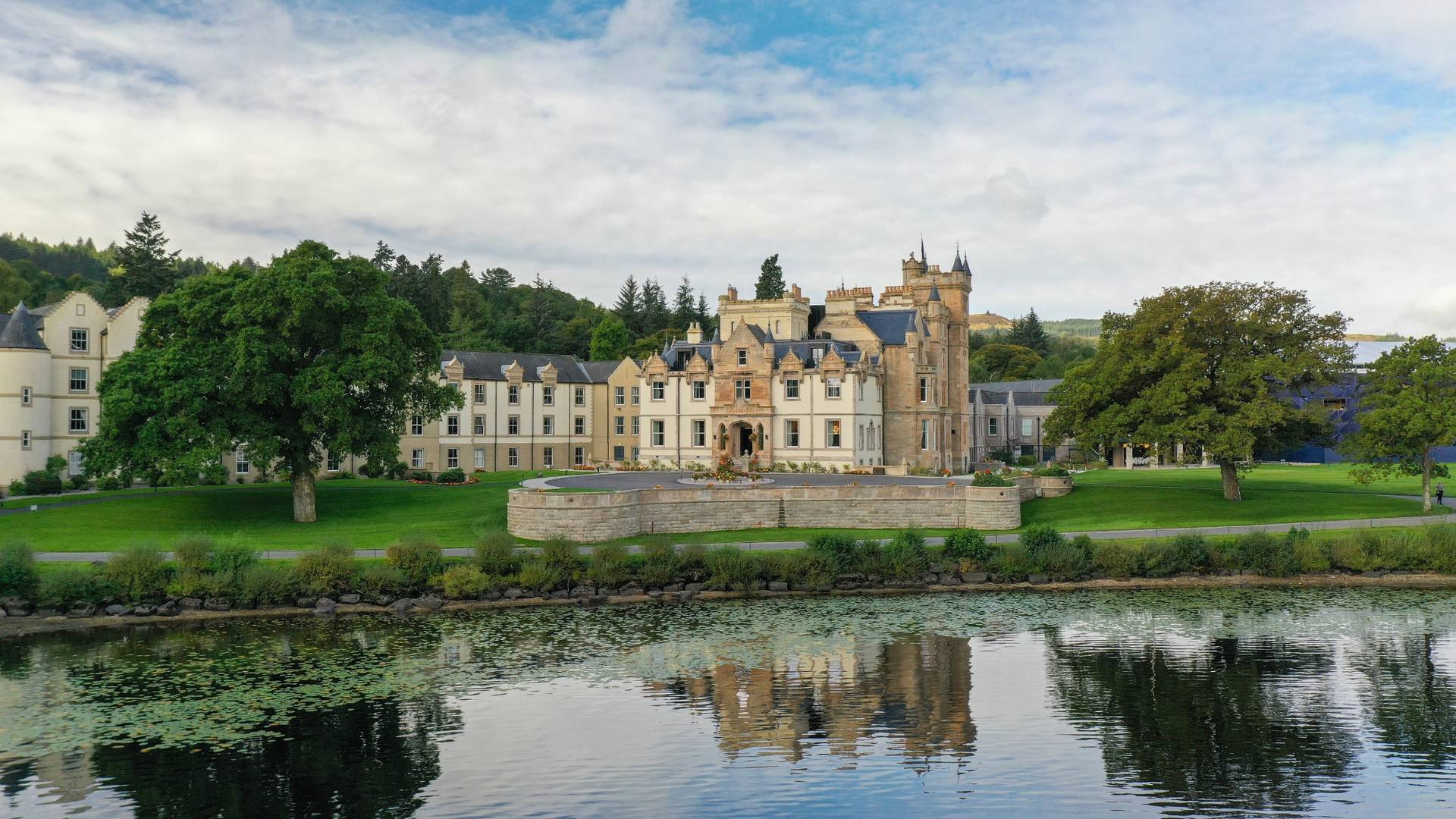
Cameron House is on the shores of Loch Lomond in Scotland, with scenic views of the loch and the hills beyond. It is close to Glasgow and offers a setting that suits corporate retreats, meetings, and time outdoors.
Frequently asked questions
What makes outdoor team building activities work?
They work when the setting changes the way people behave. Outside the office, teams communicate more clearly, rely on each other in new ways, and see strengths that do not always show up in meetings.
How do I choose the right outdoor team building activity?
Choose the activity to match the team's fitness, confidence, and goals. Use the setting to shape the outcome, whether that is trust, problem-solving, or resilience.
How do I run outdoor team building well?
Build in a debrief so the learning carries back to work. Keep accessibility, comfort, and weather plans in view from the start, and give the activity a clear purpose.
What group size works best for outdoor team building activities?
It depends on the format. Guided Fell Walking works for 8-30 people, Outdoor Navigation Challenge for 10-40, Wilderness Survival Workshop for 6-20, Forest Team Challenges for 12-50, Kayaking or Canoeing Expedition for 8-25, and Rock Climbing or Abseiling for 6-18.
Can outdoor team building work for remote or hybrid teams?
Yes. It is especially useful when a group needs sharper communication, better use of resources, or a reset in shared focus, because the setting makes people rely on each other in new ways. Activities like geocaching, whitewater rafting, team wilderness triathlon, and guided wilderness hikes all create space for that.
How do I keep outdoor team building accessible and comfortable?
Keep accessibility, comfort, and weather plans in view from the start. Choose an activity that fits the team's fitness and confidence, and make sure the pace and setting match the group rather than pushing everyone into the same level of effort.