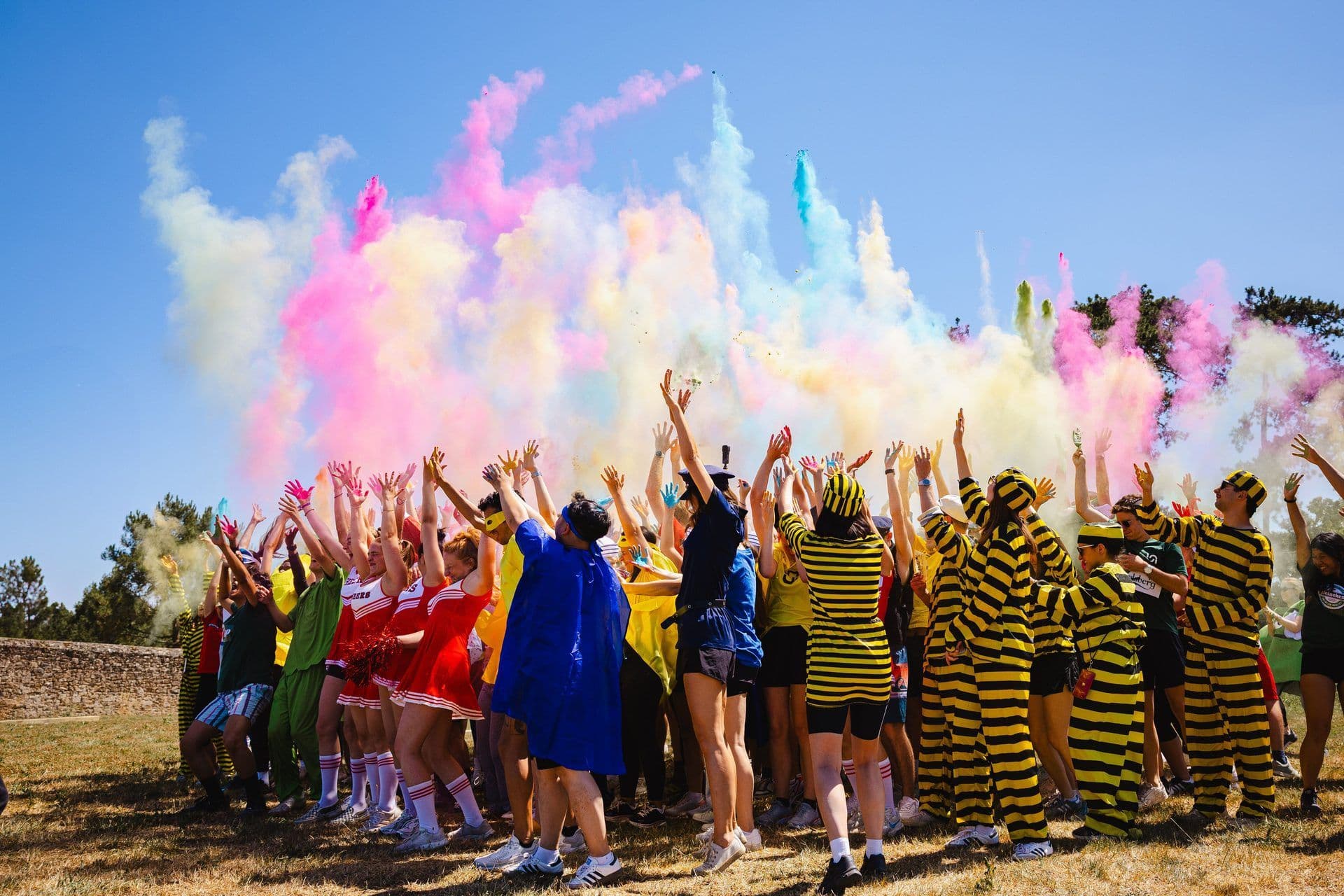
A truly successful team away day transcends a mere change of scenery, offering far greater benefits. More than just a break from the everyday, a well-planned team away day provides a crucial chance to step back from the usual tasks and intentionally foster the trust and connections essential for sustained performance. Thoughtful planning for these focused days of connection can result in improved communication, stronger trust, and better alignment for many months.
However, simply getting everyone together isn't enough. The real value is in choosing the right team building activities—the ones that challenge assumptions, encourage colleagues to open up, and actively promote teamwork. The aim of any good away day is to turn a group of individuals into a tight-knit team. This requires careful planning of impactful company retreat team building activities.
To help UK workplace leaders structure an unforgettable and productive event, we’ve put together 20 of the most effective and engaging ideas available. But first, let’s make sure these activities genuinely address your business needs.
The R.E.S.E.T. Alignment Matrix: Choosing the Right Focus
Before jumping into activity selection, event planners must define the main business need they are trying to solve. We propose the R.E.S.E.T. Alignment Matrix to sort activities and ensure they serve a strategic purpose. Every great company retreat team building activity should be mapped against one of these five pillars:
R: Relationship Building (Icebreakers & Trust): Focused on personal discovery, easing nerves, and building rapport, especially important for hybrid teams or newly merged departments.
E: Engagement & Energy (Fun & Morale): High-energy, low-pressure activities designed purely to boost morale, celebrate achievements, and inject some fun back into the workplace culture.
S: Strategic Problem-Solving (Collaboration & Output): Activities requiring intense communication, rapid decision-making, and critical thinking under pressure.
E: Experiential Learning (Skill & Behaviour): Focused on developing specific soft skills like leadership, conflict resolution, or cross-functional communication through active participation.
T: Thought Leadership & Vision (Alignment & Values): Deeper sessions aimed at defining shared objectives, reviewing company values, or tackling future challenges collectively.
Choosing activities based on this framework guarantees that your company retreat team building activities deliver tangible results beyond just temporary entertainment.
The 20 Great Company Away Day Team Building Ideas
Category 1: High-Impact Strategic Collaboration
1. Design Thinking Sprint
This intensive, structured process asks teams to tackle a real or hypothetical business challenge—moving from defining the issue to creating a prototype in a short timeframe (4-8 hours). It forces cross-functional groups, perhaps mixing the marketing team from London with the engineering staff based in Scotland, to rapidly brainstorm and collaborate on a viable solution. This particular company retreat team building activity is excellent for teams needing to improve innovation speed and break down internal silos.
2. Strategic Planning Simulation
Teams are given a complex scenario, perhaps involving market disruption (like a new competitor moving into the UK sector) or resource allocation, and must collaboratively develop a 12-month strategy. Unlike typical meetings, this is gamified, with success measured by performance metrics tied to their strategic choices. It reveals natural leaders and tests how teams handle uncertainty.
3. Lego Serious Play Workshop
Using specialised Lego kits, participants build physical models to represent abstract concepts, such as their team's vision, their role in the company, or solutions to a work problem. The physical act of building unlocks different cognitive pathways, facilitating richer, more honest discussions about organisational structure and strategy. This company retreat team building activity is brilliant at making abstract ideas concrete.
4. Corporate Debate Tournament
Assigning teams to argue for positions they may not personally hold helps develop persuasive communication, active listening, and the ability to view problems from multiple perspectives. The topics can be business-related (e.g., "Should we prioritise product stability or rapid scaling?") or purely intellectual, focusing solely on the process of argumentation.
5. Skill Share Lightning Talks
Employees volunteer to teach a rapid, 15-minute session on a specific, non-work skill (e.g., basic coding, sourdough baking, photo editing). This activity acknowledges the diverse talents of the workforce, empowers individuals as temporary experts, and fosters mutual respect across departments.
Category 2: Trust and Communication Deepening
6. Blindfolded Obstacle Course
Teams navigate a complex outdoor or indoor course where one member is blindfolded and relies entirely on verbal instructions from their colleagues. This exercise quickly exposes communication gaps, highlights the importance of clear, precise language, and dramatically increases reliance and trust among participants. It is a foundational company retreat team building activity for newly formed groups.
7. Desert Survival Scenario
Teams are presented with a crisis scenario (e.g., a plane crash in a remote location) and must rank a list of resources by importance. The core value of this activity is comparing individual rankings to the team's consensus ranking, revealing natural biases and illustrating effective group decision-making.
8. Group Storytelling Workshop
Teams collectively build a narrative, with each person adding only one sentence or phrase before passing the story to the next person. This continuous, creative exercise demands active listening and collaboration, ensuring that contributions build upon, rather than contradict, previous inputs, which mirrors the need for continuity in project management. To explore more workplace insights on communication skills, read more articles on the Naboo blog.
9. Human Knot Challenge
A classic physical activity where participants stand in a circle, reach across, and grab the hands of two different people, resulting in a complex "knot." The team must work together to untangle themselves without letting go of hands. This simple physical constraint requires detailed spatial communication and cooperative problem-solving.
10. Reverse Mentorship Program
Junior or newer employees mentor senior leaders on topics where younger generations often possess deeper insight, such as social media trends, emerging technologies, or cultural shifts. It breaks down hierarchical barriers and gives emerging talent a voice in front of leadership, driving mutual respect during the company retreat team building activities.
Category 3: Adventure and Morale Boosting
11. Culinary Cook-Off
Teams are assigned a recipe or a selection of ingredients and must collaboratively plan, execute, and present a dish. Success depends on resource management (ingredients), delegating roles, and managing time pressure. It is a highly engaging, rewarding company retreat team building activity that offers immediate sensory reward.
12. Escape Room Challenge
A time-bound puzzle-solving activity that requires every team member to contribute unique skills and perspectives to unlock sequential clues. Escape rooms are effective because they immediately engage problem-solving skills in a low-risk, high-excitement environment, promoting instant communication under pressure.
13. Office Olympics
A series of goofy, lighthearted physical and mental competitions (e.g., desk chair races, paper airplane distance contests, blindfolded taste tests). The goal is pure, unadulterated fun and friendly competition, which serves as a powerful release and morale booster during the retreat.
14. High Ropes Course or Zip-Lining
Outdoor challenge activities that push individuals outside their comfort zone, often involving heights or physical exertion. Whether it's tackling a ropes course in the Peak District or zip-lining over a quarry in North Wales, the most valuable outcome is witnessing teammates offering physical and emotional support, dramatically increasing interpersonal trust and providing a shared sense of accomplishment.
15. Geocaching or Urban Scavenger Hunt
Utilising GPS or mapping skills, teams navigate the retreat location—perhaps the historic streets of Edinburgh or the docks of Liverpool—solving riddles and locating checkpoints. This promotes group exploration, requires navigational collaboration, and encourages the team to interact with their temporary environment.
Category 4: Reflection and Value Alignment
16. Company History Timeline Mural
Participants are given art supplies and asked to collectively illustrate key milestones in the company's past, present challenges, and future aspirations on a large mural. This visual exercise facilitates collective reflection on identity, reinforces shared memory, and aligns the team around future goals.
17. Community Service Project
Dedicate half a day to a hands-on service activity in the local community (e.g., clearing a path in a National Trust park, sorting supplies for a local food bank in Birmingham). Engaging in meaningful work that transcends corporate goals reinforces shared values and provides a powerful, unifying sense of purpose outside of quarterly metrics. This intentional company retreat team building activity often yields the highest emotional reward. For inspiring event ideas including CSR days, check out our events page.
18. Guided Reflection and Feedback Sessions
Structured sessions where small groups practice giving and receiving constructive feedback using a neutral framework (e.g., "Start, Stop, Continue"). Holding these sessions in a relaxed retreat setting, away from daily pressures, lowers anxiety and facilitates more honest professional development conversations.
19. Two Truths and a Lie: Advanced Edition
Instead of simple facts, participants share three statements related to their professional life, including skills, ambitions, or career challenges (two true, one false). Guessing which is the lie requires colleagues to pay close attention to personal career narratives, leading to deeper professional appreciation and insight.
20. Drum Circle
Led by a facilitator, teams are given percussion instruments and taught to collaboratively create music. The activity emphasises the importance of rhythm, listening, and knowing when to lead and when to support, providing a visceral, non-verbal experience of group harmony and unity. It’s a powerful company retreat team building activity for establishing collective flow.
Common Pitfalls When Designing Company Retreat Team Building Activities
Even the best activity ideas can fall flat if they are poorly executed. Workplace leaders planning their away day must actively guard against these three common mistakes:

Mismatched Activity to Goal
The biggest pitfall is choosing activities based on popularity rather than whether they solve a strategic problem. If your team struggles with high conflict and poor decision-making, an activity focused purely on fun (like a wine tasting) will entertain but won't solve the core issue. Every company retreat team building activity should be traceable back to an objective defined by the R.E.S.E.T. framework. Ensure the context of the activity forces the desired behaviour (e.g., if you want better communication, use a challenge that makes success impossible without verbal clarity).
Over-Programming and Exhaustion
A retreat is not a military exercise. Over-scheduling back-to-back workshops and challenging activities leads to mental burnout, resentment, and diminishing returns. Crucial bonding happens during unstructured downtime—meals, coffee breaks, and free afternoons. Always schedule ample breathing room. If employees feel they are being pushed to their absolute limit, the learning becomes forced rather than collaborative.
Lack of Debrief and Application
An activity alone is not team building; it’s just an exercise. The true learning happens during the debrief. If you run an Escape Room, you must dedicate time immediately afterward to ask: "What did we learn about our communication under pressure?" "Who naturally took the lead, and why?" "How can we apply the successful strategy we used here to our next product launch?" Failing to connect the retreat activity back to the day-to-day workflow renders the experience disposable.
Tracking the ROI of Company Retreat Team Building Activities
Measuring the success of a company retreat team building activity goes beyond simple anecdotal feedback. While happiness surveys are useful, measuring actual behavioural change is key to demonstrating return on investment (ROI). Here are actionable metrics:
Pre- and Post-Retreat Surveys
Use concise, targeted surveys focused on quantifiable soft skills. Ask employees to rate confidence levels (on a 1-5 scale) on specific competencies 30 days before the retreat and again 30 days after. Focus areas should include:
- Clarity of organisational vision (T)
- Trust in cross-functional partners (R)
- Comfort level with giving direct feedback (S/E)
- Speed of conflict resolution within the team (S)
Observational Metrics and Output
For activities designed under the Strategic Problem-Solving (S) category, measure the quality and speed of output. For instance, if you run a Design Thinking Sprint, track how many viable concepts were generated, compared to a typical in-office session. Post-retreat, track related operational metrics:
- Reduction in cross-departmental incident reports.
- Increase in employee participation during subsequent strategy meetings.
- Improved scores on internal communication tools (e.g., fewer clarification requests in project chats).
Scenario: Applying the R.E.S.E.T. Matrix to a Newly Distributed Team
A mid-sized UK tech company, perhaps one based in the Leeds digital hub, has recently shifted to a hybrid working model, mixing veteran office staff with newly hired remote engineers located everywhere from Glasgow to Bristol. Their primary needs are clear: rebuilding lost social bonds and establishing reliable cross-functional workflow protocols. They need a mix of R (Relationship) and S (Strategic Problem-Solving) activities.
The company designs its three-day company retreat team building activities itinerary:
- Day 1 Focus (R): Arrival, dinner, and the Two Truths and a Lie: Advanced Edition. This quickly facilitates personal disclosure and rapport among remote colleagues who have only seen each other on video calls.
- Day 2 Morning Focus (S): A mandatory Strategic Planning Simulation. This forces the veterans and new hires to work together on a high-stakes problem, exposing communication styles and necessary hand-offs.
- Day 2 Afternoon Focus (E/R): A Culinary Cook-Off. This releases tension from the morning's intense strategy session, offering a fun, low-stakes collaborative activity.
- Day 3 Morning Focus (T): A Guided Reflection and Feedback Session. Using the context of the prior day's simulation, they formally debrief their communication successes and failures, translating retreat lessons directly into new professional norms.
This balanced schedule ensures strategic goals are met while preventing burnout, making the retreat highly effective for long-term cohesion, a key goal of any well-planned company retreat team building activity sequence.
Frequently Asked Questions
What is the ideal duration for a corporate retreat focused on team building?
The optimal duration is generally two full days and three nights (Day 1 travel/dinner, Day 2 intensive activities, Day 3 reflection/wrap-up, departure). This provides enough time for high-impact company retreat team building activities and necessary downtime without causing excessive disruption to day-to-day work.
Should company retreat team building activities be mandatory?
Core strategic workshops and formal alignment sessions should be mandatory. However, extreme physical or highly personal vulnerability activities should always offer an alternative, low-pressure option. Forcing participation undermines the trust-building aspect of the company retreat team building activity.
How do we ensure learning from the retreat transfers back to the office?
The most critical step is the formal debrief and commitment phase. Teams should conclude the retreat by defining 3-5 specific, measurable behavioural changes or "retreat commitments" they will track and implement back in the workplace, making the company retreat team building activity lessons actionable.
What is the most effective type of activity for remote teams meeting in person for the first time?
For remote teams, prioritise Relationship Building (R) and Engagement (E) activities first, such as the Blindfolded Obstacle Course or the Group Storytelling Workshop. These break down social barriers quickly and build the rapport that asynchronous communication often misses.
How far in advance should we plan company retreat team building activities?
Venue sourcing and logistics should begin 6-9 months out, especially for large groups. Activity planning and scheduling can be finalised 4-6 weeks before the event, allowing organisers to tailor the company retreat team building activities based on current organisational needs and team composition.