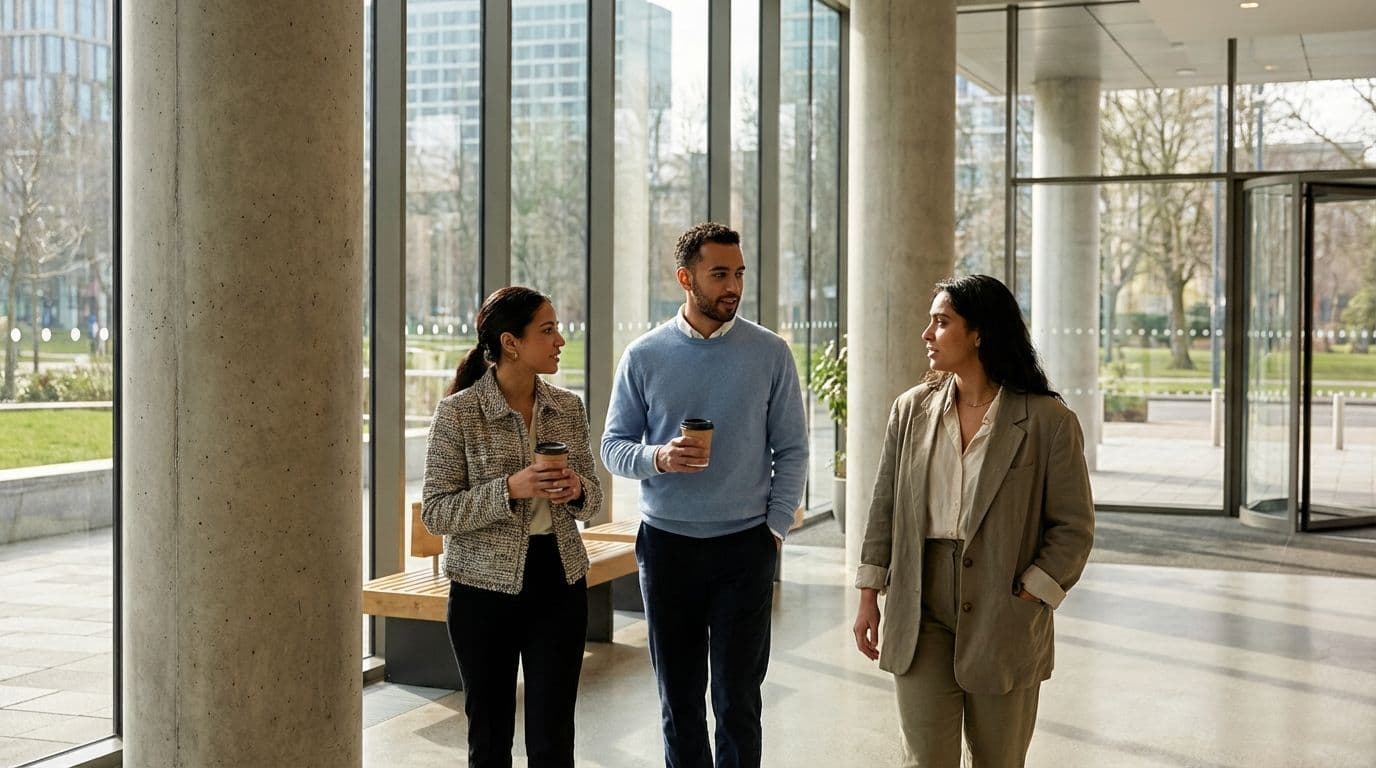
Team morale isn't just a vague concept; it's the core driving force behind productivity, engagement, and staff retention. Managers often rely on gentle team-building, but the reality is that most people enjoy succeeding and a bit of healthy rivalry. When competition is managed within a clear, high-trust environment, it transforms from a potential stressor into a powerful motivational force.
The goal is to provide teams with constructive, engaging, and healthy competitive ideas that allow them to practice communication, strategy, and collaboration under simulated pressure. These activities reveal hidden leadership qualities, expose communication gaps, and create memorable shared experiences that solidify team bonds long after the game is over. Fitting these competitive ideas into your regular calendar, whether for a team away-day in Leeds or a quarterly meeting in the City of London, is key to keeping the company culture buzzing.
The Pillars of Healthy Competition (PHC) Framework
Before launching into any competitive event, it’s essential to establish guidelines that ensure the activities enhance, rather than hinder, morale. We propose the Pillars of Healthy Competition (PHC) framework, which guides organisers in balancing intensity and psychological safety.
Pillar 1: High Trust Environment
Competition thrives when failure is safe. The environment must be clearly non-evaluative of professional performance. Focus on playful success and effort, not results. This is achieved by ensuring prizes are lighthearted (e.g., a tacky plastic trophy, maybe bragging rights) and that leadership participates actively and vulnerably.
Pillar 2: Clear Rules of Engagement
Ambiguity leads to arguments. Every activity must have rules explained concisely before starting, alongside clear scoring metrics. If a disagreement arises, the moderator's decision must be final, emphasising that the primary objective is fun and collaboration, not just winning.
Pillar 3: Balanced Stakes and Effort
Ensure teams are equally matched, especially in high-stakes physical or intellectual challenges. Avoid placing disproportionate pressure on individuals. The effort required should be engaging but manageable within the allotted time, ensuring participants leave feeling energised, not exhausted or frustrated. This approach guarantees that even when seeking competitive ideas, the focus remains on positive group dynamics.
Strategic & Logical Challenges (Competitive Ideas 1–8)
These activities focus on cognitive agility, resource allocation, and advanced communication, forcing teams to leverage diverse skill sets.
1. The Barter Puzzle Challenge
This challenge requires groups to complete standard jigsaw puzzles (e.g., 500 pieces), but some essential pieces are deliberately swapped into other teams' boxes. Teams must identify what pieces they lack and then negotiate, trade, or bribe (with funny, non-monetary items) other teams to obtain them. This excels at promoting negotiation and cross-team communication skills. Success depends not on speed, but on effective diplomacy.
2. Corporate Concentration Memory Match
An adaptation of the classic card game, using pairs of cards featuring internal company imagery (product launches, logos, employee photos, core values). Teams compete to find the most matching pairs within a set time limit. This reinforces internal knowledge and culture in a fast-paced memory challenge, testing observation and recall under pressure.
3. Lego Master Builders: Blueprint Recreation
Teams receive identical sets of Lego bricks and are briefly shown a complex, custom-built structure diagram (e.g., for 60 seconds). They must then work immediately to recreate the structure from memory and consultation. The winning team is judged on structural accuracy, stability, and speed. It highlights the importance of visual communication and dividing tasks quickly.
4. The Napkin Sketch Strategy Session
Teams are presented with a highly abstract, open-ended problem (e.g., "Design the workplace of the future" or "Solve X industry pain point"). They must collaboratively design and sketch their solution entirely on a paper napkin within 15 minutes. Entries are judged on clarity, originality, and persuasive visual communication. This is one of the top competitive ideas for creative brainstorming.
5. Crisis Communications Simulation
A facilitator presents a sudden, unexpected corporate crisis scenario (e.g., a major media gaffe, a system outage). Teams must draft a coherent, multi-channel response plan (press statement, internal email, social media post) within 30 minutes. Judging criteria include tone, coherence, and making sure it aligns with company values. It is ideal for teams focused on communications, PR, or leadership.
6. Scavenger Hunt: The Corporate Quest
This turns the office block or a specific away-day location—perhaps the historic streets of Edinburgh or the docks in Salford Quays—into an exploration zone. Teams follow a sequence of cryptic clues, riddles, and challenges that require collaboration and localised knowledge to solve. The competitive element comes from the race against the clock and the requirement for photographic evidence of completed tasks, often necessitating interaction with external teams or the public.
7. Team Pursuit Relay (Knowledge & Skill)
Teams rotate through four distinct stations: a logic puzzle, a physical dexterity challenge (e.g., stacking plastic cups), a general knowledge trivia round, and a creative task (e.g., writing a limerick about a company product). Success requires quickly transitioning between mental modes and utilising diverse talents within the group. The fastest cumulative time across all four stations wins.
8. Among Us (Virtual Deductive Reasoning)
Utilising a popular virtual platform, this game places employees in a scenario where they must complete tasks (Crewmates) while identifying hidden saboteurs (Impostors). It is a pure test of verbal communication, deductive reasoning, and the ability to persuade others during pressurised discussion rounds. It's one of the best competitive ideas for remote teams.
High-Energy Coordination & Communication (Competitive Ideas 9–17)
These activities require synchronised physical movement, non-verbal cues, and practical problem-solving, demanding instant trust among teammates.
9. The Leaky Pipeline Challenge
Teams are given a vertically positioned pipe with several small holes drilled into the sides and a ping pong ball resting at the bottom. They must use small cups to transport water from a distant source (e.g., 40 feet away) and plug the holes simultaneously to raise the water level until the ball floats out. This is a highly effective, time-sensitive exercise in delegation and collective focus.
10. Human Snakes (Blindfolded Guiding)
Participants line up, blindfolded, except for the person at the very back. The team must navigate an obstacle course and complete a simple task (like placing an item in a container) relying only on non-verbal signals (shoulder taps, pulls) passed down the line from the sighted person. This rapidly builds trust and highlights the necessity of accurate non-verbal messaging.
11. Electric Fence Crossing
A rope or string is suspended between two poles at waist height, representing an electrified barrier. The entire team must cross to the other side without touching the rope, while simultaneously maintaining physical contact with at least one other teammate at all times. It is a classic problem-solving exercise requiring lifting, balancing, and coordinated effort under a time constraint.
12. Build a Bridge: Structural Integrity
Teams are given limited raw materials (e.g., dry pasta, string, tape) and must construct a bridge that spans a predetermined gap (e.g., 3 feet). The competition centres on the structure's integrity. Bridges are tested by incrementally adding weight. The team whose design supports the most load before collapsing wins, focusing on engineering, design constraints, and resource management.
13. Three-Legged Race Synchronisation
Teams are divided into pairs, with adjacent legs tied together. They race a short distance in a relay format. While seemingly simple, it demands intense physical synchronisation and communication ("Left, Right, Left!") to prevent falls and maintain speed. It quickly forces team members to operate as a single unit, breaking down barriers of personal space.
14. Balloon Caterpillar Wiggle
Team members line up single file, with inflated balloons wedged between their bodies (e.g., shoulder to shoulder, hip to hip). The team must navigate a winding course without using their hands to hold the balloons. If a balloon drops or pops, the team restarts. This is a hilarious exercise in non-verbal cooperation and maintaining constant, coordinated movement.
15. The Hole Tarp Maze
A large tarp with several randomly placed holes is held taut by the team members around its perimeter. They must manoeuvre one or more small balls (like tennis balls) across the tarp, guiding them by coordinated movements, ensuring the balls avoid the holes and edges. It demonstrates how minor, individual movements affect the collective outcome.
16. Tug of War: Synchronised Effort
The ultimate test of collective physical strength and synchronisation. Teams face off, often department against department, in a best-of-three pull. Success is less about brute force and more about timing the pull, anchoring correctly, and responding synchronously to the leader’s commands. This builds unified physical effort and department pride.
17. Lava Flow Platform Jump
Teams must cross a designated ‘lava field’ (the floor) using a limited number of small platforms (e.g., fabric squares or tiles). The platforms must be constantly moved and shared to form a path, but no team member can touch the ground. If they do, the whole team returns to the start. It demands foresight, careful planning, and shared responsibility.
Digital, Creative & Knowledge-Based Competitions (Competitive Ideas 18–25)
These activities leverage technology and imagination, proving that competitive ideas don't always require physical movement.
18. Virtual Dance-Off Challenge
Using dance simulation apps or virtual reality setups, teams compete to achieve the highest synchronisation scores in a few rounds of choreographed movement. This reduces inhibitions, encourages physical activity, and provides an instant source of laughter and high-energy fun. Teams can compete head-to-head on a projected screen.
19. Fantasy Football/Esports League
A season-long engagement where participants draft Premier League or other sports/esports players and compete weekly based on performance metrics. This fosters sustained, low-stakes water cooler talk, cross-departmental interaction, and strategic management over several months. It is ideal for long-term morale boosting and sustaining a sense of community.
20. Corporate Charades & Pictionary
Elevate the classic guessing games by integrating corporate themes, product names, or inside jokes into the prompts. Teams compete against the clock to accurately guess non-verbally communicated concepts. This enhances non-verbal communication and uses humour to reinforce shared company culture.
21. Quick Swap Observation Challenge
Two teams stand facing each other. Team A observes Team B for 30 seconds. Team A then turns around while Team B makes 5-10 subtle changes to their appearance or surroundings (e.g., removing a watch, swapping shoes, changing a hair accessory). Team A must turn back and identify all the changes. It sharpens observational skills and attention to detail.
22. The Corporate Dragon's Den Pitch
Teams are challenged to invent a new product or service for the company or the industry, developing a concept, a basic business model, and a name. They must then pitch their idea to a panel of “Dragons” (judges) within a strict time limit. Winning teams are judged on innovation, feasibility, and persuasive presentation style. Discover more exciting event ideas for teams that foster strategic thinking and presentation skills.
23. Heads Up! Industry Edition
Using the popular mobile app structure, custom decks are created featuring industry jargon, client names, or internal team acronyms. One player holds the phone while teammates rapidly shout clues. This is a fast-paced game that tests quick thinking and ensures shared knowledge of professional terminology.
24. The Olympiad Challenge (Multi-Discipline Event)
For large groups, break participants into several "nation" or "region" teams, complete with custom flags and chants—maybe the 'West Midlands Wanderers' versus the 'Northern Powerhouse Ninjas'. Teams cycle through 10-20 short, varied challenges (mental puzzles, quick physical tests, trivia). Points are accumulated over the entire day, culminating in an award ceremony. This is a comprehensive method for fostering large-scale community and sustained competitive engagement.
25. Internal Trivia League
Host a weekly or monthly trivia session focused on general knowledge, pop culture, or company history. Teams compete over several rounds, tracking scores across a season. This provides low-effort, consistent interaction, appealing particularly to analytically inclined staff, and provides continuous competitive ideas throughout the year.
Measuring Success: How to Quantify Morale Boost
Measuring the impact of team activities ensures that competitive energy translates into business value. Success should be assessed across three areas:
1. Qualitative Feedback and Sentiment
Immediately after the event, use short, anonymous pulse surveys. Ask specific questions focused on engagement and communication. For example: "How clearly did your team communicate under pressure?" (1-5 scale) or "Do you feel better connected to your teammates now?" Focus on open-ended comments to capture specific positive takeaways or points of tension that need follow-up.
2. Observational Metrics
During high-stakes activities, moderators should track specific behavioural indicators. Did participation skew heavily toward a few dominant voices? Was there effective rotation of leadership roles? Did cross-team negotiation occur naturally? These insights provide actionable data on team dynamics that self-reporting might miss.
3. Long-Term Health Check Indicators
True success is reflected in sustained workplace health. Track changes in monthly engagement survey scores, cross-departmental meeting attendance, or how many people bother turning up to internal social events. A sustained lift in these metrics indicates that the competitive exercise created lasting psychological safety and stronger relational ties. Teams looking for more structural improvements can explore more workplace insights regarding performance and culture.
Avoiding the Pitfalls: Common Mistakes in Running Competitive Events
While competitive ideas are powerful tools, they carry risks if implemented carelessly. Managers typically make three common errors that undermine morale:
Mistake 1: Unbalanced Teams or Unfair Advantages
The biggest morale killer is perceived unfairness. If one team consistently dominates due to specific skill concentrations (e.g., placing all IT staff on the 'Crisis Communications' team), participation drops. Ensure teams are randomised, or, for multi-departmental activities, purposefully engineer balanced representation of skill sets and seniority. The competition must feel achievable for everyone involved.
Mistake 2: Overemphasising the Prize
When the stakes are too high (e.g., a bonus, an extra day off), the game stops being about fun and starts generating harmful stress and internal conflict. Keep prizes symbolic: a tacky trophy, a pizza lunch, or the privilege of displaying a "Champion" banner. The focus must always be on the collaborative process, not the individual win.
Mistake 3: Lack of Post-Game Debrief
The learning happens after the game, not during it. Simply ending the activity and returning to work wastes the opportunity for insight. Dedicate 10-15 minutes for a facilitated discussion immediately afterward. Ask: "What was your biggest communication breakdown?" or "How did we overcome unexpected challenges?" This reflection solidifies the lessons learned about teamwork and strategy.
Application Scenario: Deploying the Pillars of Healthy Competition (PHC)
Consider a rapidly growing UK startup, "InnovateCo," planning its quarterly away day. The leadership wants high-impact competitive ideas but fears alienating newer, quieter employees. They decide to run the Crisis Communications Simulation (Idea 5).
Scenario Implementation
PHC 1: High Trust Environment. The CEO announces that the judges (senior leaders) will prioritise creativity and collaboration over technical perfection. They also use the opportunity to share a story about a major communication mistake they made early in their career, normalising failure and reducing perceived risk for participants.
PHC 2: Clear Rules of Engagement. The moderator provides a detailed rubric for scoring before the activity begins, defining exactly what constitutes a successful press release, internal memo, and social post (e.g., "Tone must be empathetic and transparent," worth 40% of the score). They confirm that all submissions will be shredded immediately after judging to ensure no ideas or language are reused.
PHC 3: Balanced Stakes and Effort. Teams are formed by blending departments (Sales, Engineering, Marketing) and seniority levels, guaranteeing no single team has a functional advantage. The prize is a custom-made, gilded wooden spoon, emphasising the fun nature of the competition. The allotted time is strictly enforced at 30 minutes, preventing burnout.
This structured approach transforms what could be a stressful activity into a productive, low-risk way for teams to practise collaboration and critical thinking.
Frequently Asked Questions
What is the ideal team size for most competitive activities?
For most strategic or physical competitive ideas, the ideal team size is between 4 and 6 participants. this size ensures everyone has a meaningful role, promotes active communication, and prevents passengers while maintaining enough diversity of thought to solve complex problems.
How often should we incorporate competitive team building?
Organisations benefit most from incorporating competitive, morale-boosting events quarterly (e.g., during away days or large team gatherings) complemented by lighter, smaller-scale activities (like an Internal Trivia League or quick virtual games) monthly. Consistency is key to sustained morale improvement.
Are virtual competitive activities as effective as in-person ones?
Virtual competitive ideas can be highly effective, particularly those that require strong verbal communication and deductive reasoning (like Among Us or a virtual escape room). While they lack the physical coordination benefits of in-person events, they are excellent for developing strategic communication skills among distributed teams.
How do we ensure competitive games do not create negativity or resentment?
To avoid resentment, always ensure the competition is focused on external challenges (the game, the clock, the puzzle) rather than internal personal failings. Strictly adhere to the Pillars of Healthy Competition, prioritising lighthearted prizes, balanced teams, and a mandatory post-game debrief focused on positive takeaways.
What resources are typically needed to execute high-energy competitive ideas?
High-energy competitive ideas often require open space (indoors or outdoors), a dedicated moderator or facilitator to enforce rules, basic materials like ropes, cones, or building supplies, and a budget for minor prizes. Planning complex events often benefits from professional support or utilising platforms specialising in organising inspiring event ideas to manage logistics.