Corporate offsite planning starts with a clear purpose, a realistic budget, and a location that fits the team's travel and working needs.
Use this checklist to shape the agenda, confirm logistics, and avoid the common gaps that turn an offsite into a loose social trip.
Key takeaways
- Core objectives and deliverables should come first, with 2 to 3 specific goals agreed with leadership so the location, agenda, and budget all point to the same result.
- Executive buy-in and sponsorship matters because a formal executive champion helps secure budget, explains why the retreat matters, and gives the offsite weight inside the organisation.
- Fixed budget and financial controls need to be set before venue research, with clear categories for venue and accommodation, travel, food and beverage, programming and activities, and contingency.
- Ideal location, venue style and capacity, and technical and meeting requirements all need checking together, from practical UK transport hubs and regional settings to sleeping space, floor plans, Wi-Fi, audio-visual kit, and room layout.
- Transport and transfer logistics, essential communications plan, and RSVP tracking and final attendee data keep arrivals, updates, and attendance clear, including save-the-dates, travel instructions, and a pre-retreat FAQ.
1. Core objectives and deliverables
A retreat needs a measurable purpose beyond team bonding. Agree 2 to 3 specific goals with leadership, such as finalising a quarterly roadmap, integrating a newly acquired team, or solving a product challenge.
Those outcomes shape the location, agenda, and budget. If the goal is vague, the event will drift. Start with the result you want, then build everything else around it.
Group setup: the leadership team
Best for: setting a clear business purpose
How to apply: Agree 2 to 3 specific goals with leadership. Use those outcomes to shape the location, agenda, and budget. Keep the result in view from the start. Do not let the event drift into general team bonding.
2. Executive buy-in and sponsorship
The retreat should have a formal champion in the executive team. That sponsor helps secure budget, makes attendance feel essential, and gives the away day real weight inside the organisation.
They should also communicate why the event matters, so the team sees it as part of the business plan rather than a nice extra. Without that backing, decisions become slower and priorities blur.
Group setup: the executive team
Best for: securing authority and attendance
How to apply: Name a formal sponsor in the executive team. Ask them to help secure budget and explain why the event matters. Make sure they communicate that it is part of the business plan. Keep their backing visible so decisions do not slow down.
After an overnight seminar for 28 people, one Naboo client wrote:
"We had a 100% flawless seminar! Some participants had tears in their eyes at the end of the event, which says a lot about the quality of the overall experience."
3. Fixed budget and financial controls
Budget is often the main constraint, so set the total first and then split it into clear categories: venue and accommodation, travel, food and beverage, programming and activities, and contingency.
Reserve contingency from the start. Knowing the cost threshold per person before venue research saves time and prevents unrealistic shortlists.
Group setup: the planning team
Best for: setting financial limits before venue search
How to apply: Set the total budget first. Split it into venue and accommodation, travel, food and beverage, programming and activities, and contingency. Reserve contingency from the start. Check the cost threshold per person before you begin venue research.
4. Ideal duration and timing
The length of the retreat should fit the objective. Shorter offsites can work for goal alignment, while deeper cultural integration may need more time.
Timing matters just as much. Avoid peak business cycles, major UK bank holidays, and internal deadlines. A simple poll sent 4 to 6 months ahead can help identify the least disruptive week and improve attendance.
Group setup: the planning team
Best for: matching length and timing to the goal
How to apply: Choose the length based on the objective. Avoid peak business cycles, major UK bank holidays, and internal deadlines. Send a simple poll 4 to 6 months ahead to find the least disruptive week. Use that response to improve attendance.
5. Target attendee numbers and participant segments
Confirm the final attendee count, including leaders, employees, contractors, and essential support staff. Then group attendees by department, seniority, or function, because that affects accommodation, breakout sizes, and activity planning.
If the team spans multiple countries, language matters too. The agenda and pre-event materials only work if everyone can read them, so translation should be part of the planning process.
Group setup: leaders, employees, contractors, and essential support staff
Best for: planning attendance, breakouts, and materials
How to apply: Confirm the final attendee count. Group people by department, seniority, or function. Check whether the team spans multiple countries. If it does, include translation in the planning process so everyone can read the agenda and pre-event materials.
6. Ideal location
The city or region should reflect budget, travel ease, and the tone you want to set. Heathrow and Manchester Airport are both practical choices for international groups because they offer strong flight connections.
It also suggests the Scottish Highlands or the Lake District for a focused strategic session, and central London, Leeds, or Birmingham for a more energetic recognition trip. Visa requirements matter if people are travelling from outside the UK.
Group setup: the planning team
Best for: choosing a location that fits travel and tone
How to apply: Choose a city or region that fits budget, travel ease, and the tone you want. Consider Heathrow or Manchester Airport for international groups. Use the Scottish Highlands or the Lake District for a focused strategic session, or central London, Leeds, or Birmingham for a more energetic recognition trip. Check visa requirements for travellers from outside the UK.
7. Venue style and capacity
The venue sets the feel of the whole retreat. A luxury country hotel sends a different signal from a rustic outdoor centre, so choose a style that fits the company culture.
Capacity needs checking on two fronts: sleeping arrangements and meeting or dining space. Review floor plans as well, because the movement between working sessions and downtime should feel natural, not cramped or awkward.
Group setup: the planning team
Best for: matching venue style and capacity to the retreat
How to apply: Choose a venue style that fits the company culture. Check capacity for sleeping arrangements and for meeting or dining space. Review floor plans before you confirm. Make sure movement between working sessions and downtime feels natural.
8. Technical and meeting requirements
Reliable technology is non-negotiable. Check for high-speed Wi-Fi throughout the property, dependable audio-visual equipment in every meeting room, and the hardware needed for the programme, such as projectors, flip charts, and presentation clickers.
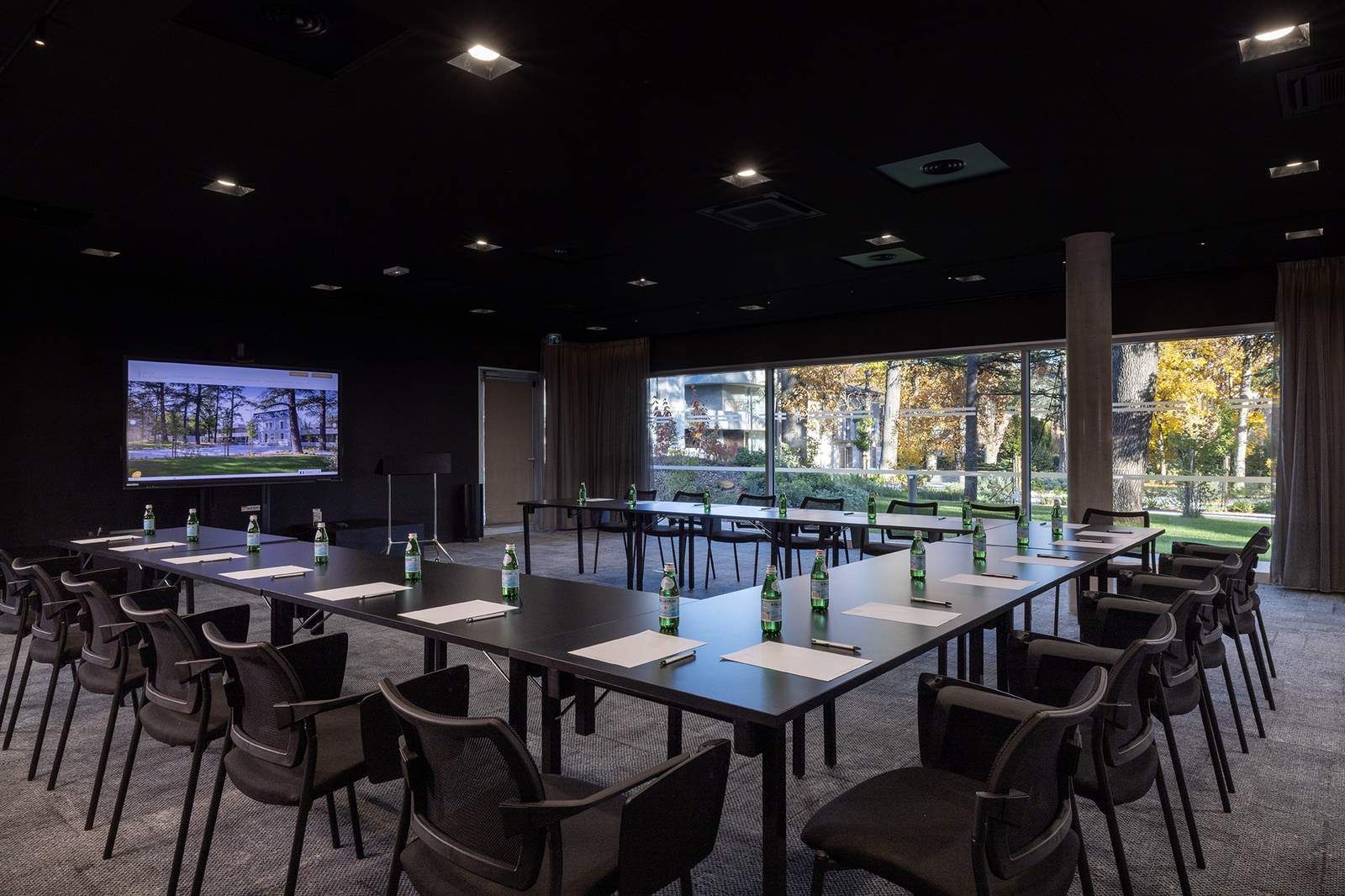
Site tours or virtual walkthroughs help confirm seating, lighting, and room layout. If the space cannot support the sessions, the agenda will suffer no matter how strong the content is.
Group setup: the planning team
Best for: making sure the programme can run properly
How to apply: Check for high-speed Wi-Fi throughout the property. Confirm audio-visual equipment in every meeting room, plus projectors, flip charts, and presentation clickers. Use site tours or virtual walkthroughs to check seating, lighting, and room layout. Do not confirm the space if it cannot support the sessions.
9. Transport and transfer logistics
Travel is often the first point of friction, so map the journey for every attendee from airport or station to venue.
Decide whether centralised transport, such as chartered coaches, or individual reimbursement makes more sense. Clear arrival and departure instructions reduce waiting time and travel anxiety. The goal is simple: people should know exactly how they are getting there and when they need to move.
Group setup: the whole team at once
Best for: arrival and departure logistics
How to apply: Map the journey for every attendee from airport or station to venue. Decide whether centralised transport, such as chartered coaches, or individual reimbursement makes more sense. Share clear arrival and departure instructions so people know exactly how they are getting there and when they need to move.
10. Essential communications plan
A clear communication plan keeps expectations steady and helps people prepare properly.
The article includes a save-the-date, a formal invitation with RSVP tracking, travel booking instructions, and a pre-retreat FAQ covering packing, dress code, and local weather. Timely updates also cut down on last-minute questions for the planning team. Good communication is not decoration. It is part of the event's operating system.
Group setup: the whole team at once
Best for: keeping expectations steady and reducing last-minute questions
How to apply: Send a save-the-date, then a formal invitation with RSVP tracking. Include travel booking instructions and a pre-retreat FAQ covering packing, dress code, and local weather. Keep updates timely so the planning team gets fewer last-minute questions.
11. Agenda narrative and structure
The agenda should balance focused work with breaks and time to connect.
Avoid back-to-back presentations. A better rhythm is to keep most of the day focused on structured work or learning, then leave space for social time and recovery. Put high-energy brainstorming earlier in the day and reserve the afternoon for a slower pace. That balance keeps people engaged and makes the retreat feel purposeful rather than overpacked.
Group setup: the whole team at once
Best for: a balanced agenda with work, connection, and downtime
How to apply: Avoid back-to-back presentations. Keep a clear balance between structured work or learning and time to connect or recharge. Put high-energy brainstorming earlier in the day and leave room for downtime in the afternoon.
12. Purposeful team-building activities
Choose activities with a clear aim, whether that is breaking down silos or recognising strong performance. Research in the International Journal of Managing Projects in Business found that project success was more likely when collaboration improved, and that collaboration was shaped by trust between team members. The point is simple: an activity should do more than fill time. It should give people a reason to work together in a way that supports day-to-day relationships.
Cross-functional challenges and a local culinary tour both fit, as long as they match the aim. A study in Creativity and Innovation Management found that team trust helped create a collaborative culture, which in turn supported team creativity. Keep participation inclusive and voluntary. Not everyone wants the same level of physical activity, so offer choices rather than one format for everyone. Relevance matters more than novelty.
Group setup: the whole team at once
Best for: reducing silos or recognising strong performance
How to apply: Choose activities that support a clear objective. Use examples such as cross-functional challenges or a local culinary tour. Keep participation inclusive and voluntary, and offer choices rather than one format for the whole group.
13. Dietary needs and accessibility requirements
Inclusivity starts with the basics.
Collect allergies, dietary restrictions, and mobility needs during RSVP, then pass that information clearly to the venue and catering teams. The article specifically names vegetarian, vegan, gluten-free, halal, and kosher requirements. When people see that their needs have been considered properly, they can focus on the event itself rather than on what is missing from the table or the room.
Group setup: the whole team at once
Best for: dietary needs and accessibility requirements
How to apply: Collect allergies, dietary restrictions, and mobility needs during RSVP. Pass that information clearly to the venue and catering teams. Include vegetarian, vegan, gluten-free, halal, and kosher requirements where needed.
14. Health, safety and emergency protocols
Prepare for the unexpected before anyone arrives.
Identify the nearest medical facilities, appoint a safety co-ordinator, and share an emergency contact list with attendees. If the retreat includes high-risk outdoor activities, check vendor liability insurance and any required waivers. This is the quiet work that protects the whole event. It rarely gets noticed when done well, but it matters the moment something goes wrong.
Group setup: the whole team at once
Best for: health, safety, and emergency readiness
How to apply: Identify the nearest medical facilities and appoint a safety co-ordinator. Share an emergency contact list with attendees. If the retreat includes high-risk outdoor activities, check vendor liability insurance and any required waivers.
15. Content and facilitator briefings
Presenters, facilitators, and discussion leaders need a proper briefing well in advance.
Share materials, talking points, and time limits so everyone knows the shape of the day. Set clear standards for presentation length and style so each session feels coherent and the strategic purpose stays visible. Strong facilitation is not about polish for its own sake. It keeps the room moving.
Group setup: presenters, facilitators, and discussion leaders
Best for: keeping sessions coherent and on time
How to apply: Brief presenters, facilitators, and discussion leaders well in advance. Share materials, talking points, and time limits so everyone knows the shape of the day. Set standards for presentation length and style.
16. Supplier contracts and service-level agreements
Before the retreat begins, review every vendor agreement, including venue, A/V, transport, and activity providers.
Confirm cancellation clauses, payment schedules, and service level agreements such as meal timings or meeting room access hours. This step protects the budget and reduces surprises on the day. If the contract details are unclear, the event team ends up solving problems that should have been settled weeks earlier.
Group setup: the whole team at once
Best for: vendor contracts and service level agreements
How to apply: Review every vendor agreement before the retreat begins, including venue, A/V, transport, and activity providers. Confirm cancellation clauses, payment schedules, and service level agreements such as meal timings or meeting room access hours. Resolve unclear contract details before the day arrives.
17. RSVP tracking and final attendee data
Keep one central list of confirmed attendees, travel details, and special requirements. That record becomes the reference point for the venue, catering team, and transport providers.
A final triple-check 7 to 10 days before the event helps catch meal guarantees and small changes that can affect rooms, seating, and service planning.
Group setup: the full attendee list, 7 to 10 days before the event
Best for: final attendee management and service planning
How to apply: Keep one central list of confirmed attendees, travel details, and special requirements. Use it as the reference point for the venue, catering team, and transport providers. Do a final triple-check 7 to 10 days before the event, especially for meal guarantees. Check for any small changes that could affect rooms, seating, and service planning.
18. On-site leads and staff roles
Delegate the on-the-ground work clearly. A lead for registration, a lead for food and beverage or venue co-ordination, and a lead for activity timing make it easier to manage the day.
Those people should be easy to identify and should have direct contact with venue staff. Clear roles help the planning team respond quickly instead of stepping on each other's toes or missing small but important tasks.
Group setup: the on-site team
Best for: clear day-of coordination
How to apply: Assign a lead for registration, a lead for food and beverage or venue co-ordination, and a lead for activity timing. Make sure each person is easy to identify and has direct contact with venue staff. Keep responsibilities clear so the team can respond quickly. That helps avoid overlap and missed tasks.
19. Content capture and documentation
Capture the retreat properly so the value does not disappear once people leave. A photographer or a skilled team member can document formal sessions and informal moments.
Decide how strategic discussions and key takeaways will be recorded, whether through note-takers or digital idea-sharing tools. That material supports internal communications and helps the wider business see what was achieved.
Group setup: the retreat team
Best for: content capture and internal documentation
How to apply: Use a photographer or a skilled team member to document formal sessions and informal moments. Decide how strategic discussions and key takeaways will be recorded. You can use note-takers or digital idea-sharing tools. Keep the material ready for internal communications and wider sharing.
20. Post-retreat follow-up and measurement
The retreat only pays off if the work continues afterwards. Define how the deliverables from step 1 will be tracked, then schedule follow-up meetings and post-retreat surveys to keep momentum alive.
Accountability is part of the event, not an afterthought. If decisions are not carried forward into day-to-day work, the retreat becomes a memory instead of a business tool.
Group setup: the post-retreat follow-up phase
Best for: tracking outcomes and keeping momentum
How to apply: Define how the deliverables from step 1 will be tracked. Then schedule follow-up meetings and post-retreat surveys. Keep the momentum alive after the retreat ends. Make sure decisions are carried forward into day-to-day work.
Rather not organise it all yourself? With Naboo you find and book venues and activities for your team in one place. Clients rate the events they organise with Naboo 4.6 out of 5 on average (2,970 rated events, 96% gave 4 or 5 stars).
Frequently asked questions
What should be on a corporate retreat planning checklist?
A strong checklist should keep strategy, logistics, programme, and follow-up in one place. Start with objectives, executive sponsorship, and budget before you look at venues, then finish with contracts, attendee tracking, on-site roles, content capture, and follow-up metrics.
How do you choose the right retreat for your team?
Choose the retreat around the result you want, not around the venue first. Agree 2 to 3 specific goals with leadership, then match the location, capacity, technology, and transport to the programme, and check whether the city or region fits budget, travel ease, and tone.
How do you run a retreat well on the day?
Run it with a clear communication plan, a balanced agenda, and the right support on site. Send a save-the-date, a formal invitation with RSVP tracking, travel booking instructions, and a pre-retreat FAQ covering packing, dress code, and local weather, then avoid back-to-back presentations.
What group size should you plan for?
Plan around the final attendee count, including leaders, employees, contractors, and essential support staff. Then group people by department, seniority, or function, because that affects accommodation, breakout sizes, and activity planning.
How do you plan a retreat for remote or hybrid teams?
Start by checking whether the team spans multiple countries, because language and translation may need to be part of the planning process. If people are travelling from outside the UK, visa requirements matter too, and clear arrival, departure, and travel instructions help everyone know exactly how they are getting there and when they need to move.
How do you keep a retreat useful after everyone goes home?
Finish with content capture and follow-up metrics so the event does more than fill a calendar. A retreat works when it gives the team a clear reason to gather, a workable plan for the day, and a way to carry decisions back into the business.