The most useful event tech trends for 2027 help planners shape the attendee experience, reduce waste, and make faster decisions on the day.
Use them to plan content, rooming, hybrid participation, data capture, and venue layout with less guesswork and clearer proof of value.
Key takeaways
- Ai-driven personalisation and predictive logistics use past sign-ups, session choices, and online behaviour to suggest content, adjust schedules, predict attendance, and support route suggestions at venues such as the NEC in Birmingham.
- Hybrid event technology trends bring integrated polling, central Q&A, and networking tools into one programme so people in the room and people joining from home take part on equal terms.
- Virtual event platforms future uses WebAR and 3D renderings to create digital twin versions of physical venues, letting remote attendees move through exhibition halls or networking lounges from a desktop browser.
- Deep behavioural data tracking uses passive RFID and advanced beacons to capture movement, dwell time, and engagement, then feeds that data into CRM and marketing automation systems for follow-up and value reporting.
- Hyper-personalised mobile event apps combine scheduling, badging, payment, and real-time alerts, then use location and session history to make timely recommendations for attendees.
- Next-generation venue sourcing and visualisation uses high-fidelity 3D modelling and digital twin tools to test seating plans, check sight lines, and try different room layouts before a site visit, while sustainable event tech 2027 tracks travel carbon, resource use, waste output, and energy consumption with digital signage and live dashboards.
1. Ai-driven personalisation and predictive logistics
AI-driven personalisation and predictive logistics shape both the attendee experience and the practical work behind it.
Machine learning can use past sign-ups, session choices, and online behaviour to suggest content, adjust schedules, and predict attendance. The same approach can also support route suggestions for attendees at venues such as the NEC in Birmingham, plus room and staffing changes based on live demand.
Group setup: the whole event
Best for: events that need fewer guesswork and less waste
How to apply: Use past sign-ups, session choices, and online behaviour to guide content suggestions and schedule changes. Apply the same data to predict attendance and adjust room and staffing plans from live demand. Where relevant, add route suggestions for attendees at the venue.
2. Hybrid event technology trends
Hybrid event technology trends make physical and virtual attendance feel like one event, not two separate ones.
Integrated polling, central Q&A, and stronger networking tools let remote guests take part properly, not just watch from the side. The aim is parity of experience, whether the main stage is in a large London venue or streamed to someone joining from home.
Group setup: the whole event
Best for: hybrid programmes that need equal inclusion for both audiences
How to apply: Build integrated polling, central Q&A, and networking tools into the programme. Keep the experience aligned for people in the room and people joining from home. Treat both audiences as part of the same event, not separate tracks.
3. Virtual event platforms future
The virtual event platforms future moves beyond basic video calls into persistent digital environments.
WebAR and 3D renderings can create digital twin versions of physical venues, allowing remote attendees to move through exhibition halls or networking lounges from a desktop browser. Full VR is still niche, but the direction is clear.
Group setup: the whole event
Best for: remote attendance that needs a stronger sense of place
How to apply: Use WebAR and 3D renderings to build digital twin versions of the venue. Let remote attendees move through exhibition halls or networking lounges from a desktop browser. Keep the experience accessible without asking people to buy specialist headsets or learn a new way of attending.
4. Deep behavioural data tracking
Deep behavioural data tracking is becoming a standard part of event measurement.
Passive RFID and advanced beacons can collect information on movement, dwell time, and engagement across physical venues in the UK. The data then needs to feed into CRM and marketing automation systems so planners can show which sessions, meetings, or interactions supported sales follow-up and wider business value.
Group setup: the whole venue
Best for: events that need proof of business value beyond headcounts
How to apply: Use passive RFID and advanced beacons to collect movement, dwell time, and engagement data. Feed that information into CRM and marketing automation systems. Then review which sessions, meetings, or interactions supported sales follow-up and wider business value.
5. Hyper-personalised mobile event apps
Hyper-personalised mobile event apps are turning into practical concierges for attendees.
These apps combine scheduling, badging, payment, and real-time alerts in one place. They also use contextual data such as location and session history to make timely recommendations, so attendees can find the right session, the right contact, or the right next step without friction.
Group setup: the whole event
Best for: attendees who need quick guidance in the moment
How to apply: Bring scheduling, badging, payment, and real-time alerts into one app. Use location and session history to make timely recommendations. Keep the app focused on helping people act on the information they receive.
6. Next-generation venue sourcing and visualisation
Next-generation venue sourcing and visualisation change how planners assess spaces before a site visit.
High-fidelity 3D modelling and digital twin tools let teams test seating plans, check sight lines, and try different room layouts for venues such as the Manchester Central Convention Complex. That saves time and travel while giving a clearer sense of how a space will work in practice.
Group setup: the whole planning team
Best for: venue assessment before a site visit
How to apply: Use high-fidelity 3D modelling and digital twin tools to review the space first. Test seating plans, check sight lines, and try different room layouts. Use the results to make faster decisions and reduce surprises once the event is live.
7. Sustainable event tech 2027
Sustainable event tech 2027 is moving from a nice-to-have to a requirement, especially where public sector contracts are involved.
Tools can measure and manage environmental impact, from travel carbon calculations, such as train versus car journeys to Leeds, to digital signage that reduces printing and material waste. Real-time dashboards for resource use, waste output, and energy consumption add accountability.
Group setup: the whole event
Best for: contracts and programmes that need environmental evidence
How to apply: Use tools that measure travel carbon, resource use, waste output, and energy consumption. Replace printed materials where digital signage can do the job. Keep the dashboards visible so the team has evidence, not just good intentions.
8. Decentralised and on-demand vendor marketplaces
Decentralised and on-demand vendor marketplaces are making specialist procurement faster.
These marketplaces sit within a wider event technology ecosystem and offer pre-vetted integrations for translation, AV, and customised gamification. They shorten the path from need to delivery and reduce the strain of managing multiple suppliers.
Group setup: the whole procurement process
Best for: late changes or specialist requirements that need quick delivery
How to apply: Use the marketplace when a programme needs translation, AV, or customised gamification. Choose pre-vetted integrations to keep procurement moving. Bring in the service quickly without dragging the whole project down.
9. Robust identity and access management
Robust identity and access management is becoming part of the attendee experience, not just the security plan.
Facial recognition and biometric systems can speed up check-in, reduce queues, and improve venue security. Privacy still matters, with GDPR compliance, explicit consent, encryption, and temporary data storage all part of the picture.
Group setup: the whole team at once
Best for: faster entry and better control
How to apply: Use facial recognition and biometric systems to speed up check-in and reduce queues. Keep GDPR compliance, explicit consent, encryption, and temporary data storage in place. Treat it as part of the attendee experience, not just the security plan.
10. Continuous event infrastructure as a service
Continuous event infrastructure as a service treats event technology as an always-on system rather than a one-off tool for a single date.
The most effective companies use an integrated stack that supports everything from small internal meetings in Bristol to major national conferences. It also links events to wider employee engagement and marketing platforms, so the event becomes one node in a longer, connected programme of activity.
Group setup: the whole team at once
Best for: an always-on event programme
How to apply: Use an integrated stack that can support both small internal meetings in Bristol and major national conferences. Connect event activity to wider employee engagement and marketing platforms. Treat the event as one node in a longer programme, not a single date.
Where to host event tech trends
The venue decides which event tech ideas will work, from power and connectivity to layout and flow. Each type below includes a real Naboo venue to help you match the setting to the format.
A hotel with meeting rooms
A hotel with meeting rooms suits AI-driven personalisation and predictive logistics because it gives planners a controlled setting for data-led scheduling, room allocation, and delegate flow. It also fits hybrid event technology trends, since the same venue can support live sessions, remote participation, and the kind of tracking that helps teams read behaviour and adjust quickly.
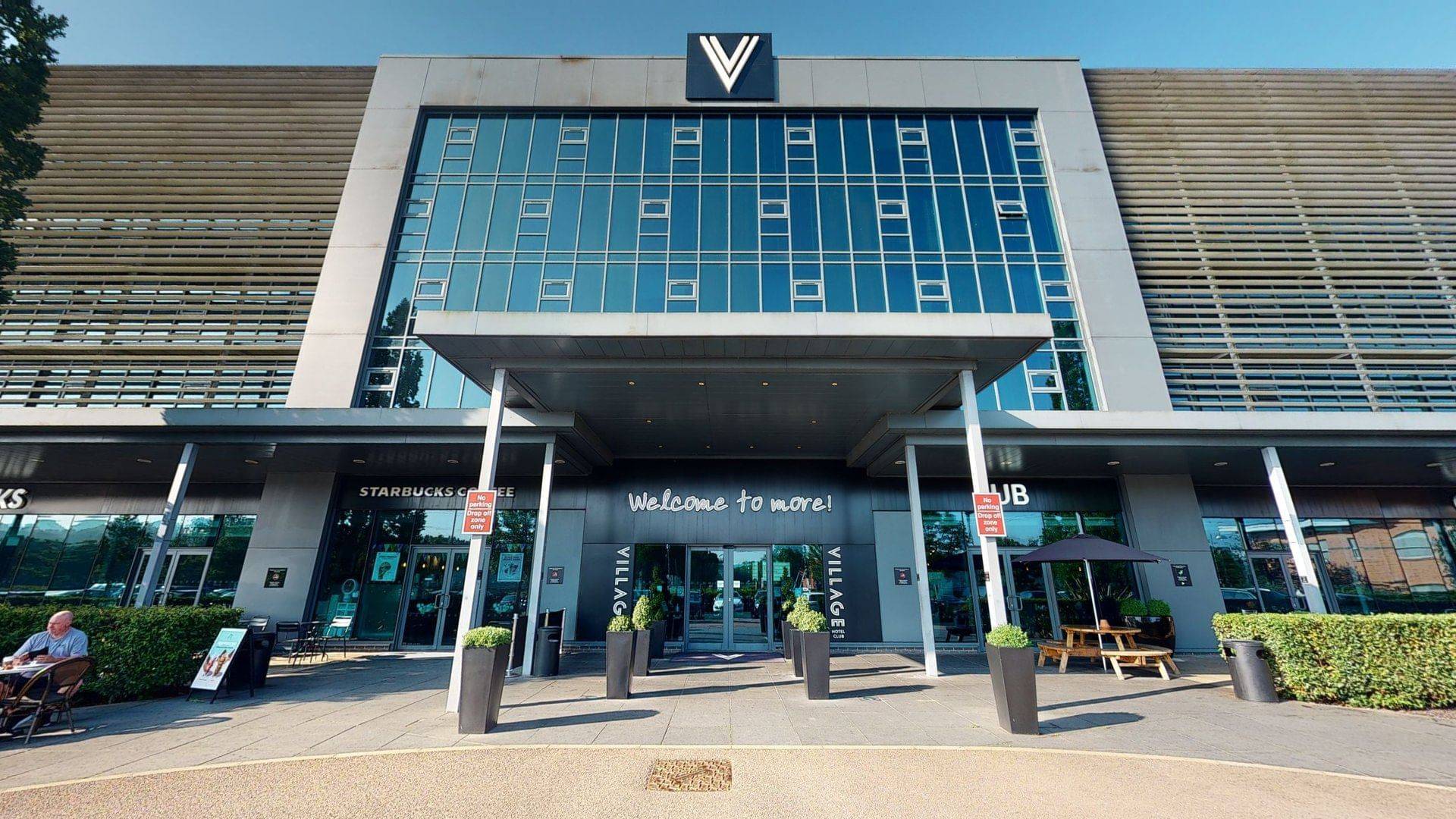
Village Hotel London Watford is on Centennial Avenue in Elstree, England. It is a modern, high-tech venue for corporate events, business trips, and leisure stays, with 10 flexible meeting and event rooms including the Inspiration Suite for up to 300 delegates.
Frequently asked questions
What event tech trends matter most for planners right now?
The strongest trends are AI-driven personalisation and predictive logistics, hybrid event technology, deep behavioural data tracking, hyper-personalised mobile event apps, sustainable event tech, and continuous event infrastructure. The common thread is simple: event technology now needs to connect people, data, and delivery across physical and digital attendance.
How do I choose the right event technology?
Choose the tools that improve the attendee journey, reduce operational friction, and give clearer proof of success. The strongest event technology choices are the ones that connect cleanly with existing systems, so data, sustainability, access control, and integration sit at the centre rather than the edge.
How do I run event tech well on the day?
Use the data and tools to keep the event moving, then adjust quickly when demand changes. That means using live demand to shape room and staffing plans, keeping integrated polling, central Q&A, and networking tools in place, and feeding behavioural data into CRM and marketing automation systems so the team can act on it.
What group size does event tech work for?
It works for the whole event, whether you are planning a small internal meeting in Bristol or a major national conference. The same applies to hybrid programmes, venue assessment before a site visit, and the whole procurement process when specialist delivery is needed.
How should I plan event tech for remote or hybrid teams?
Treat remote and on-site audiences as part of the same event, not separate tracks. Build integrated polling, central Q&A, and networking tools into the programme, and use WebAR and 3D renderings if remote attendees need a stronger sense of place.
How can event tech help prove business value?
Use deep behavioural data tracking to show movement, dwell time, engagement, and which sessions, meetings, or interactions supported sales follow-up and wider business value. Feed that information into CRM and marketing automation systems so the event is measured by more than headcounts.