Teams need energy and connection. 60 second games corporate fun deliver both—fast-paced challenges that break the tension in any meeting, offsite, or stand-up. They require minimal setup, use everyday materials, and the clock itself creates the magic. When the pressure hits, people communicate, strategize, and laugh together. That's the whole point.
These activities work because they're stripped down. No elaborate rules. No long explanations. Just a hard limit that forces immediate action and generates real adrenaline. You'll see teams light up, hierarchies dissolve, and people remember the experience later.
The ROI of High-Octane Engagement
Quick activities shatter social barriers faster than traditional icebreakers. When an executive is balancing balloons or transferring candy with a straw, formal distance evaporates. These moments build psychological safety.
They also reveal how people actually work under pressure—who steps up, who thinks strategically, who supports others. Most importantly, they create shared positive memories. That's what builds culture. To discover more content on the Naboo blog about fostering engagement and culture, you can read more articles on the Naboo blog.
Introducing the A.D.A.P.T. Model for Selecting 60 Second Games
Not every game works for every situation. The Naboo A.D.A.P.T. Model helps you pick the right one for your specific context.
- A - Accessibility: Can everyone participate? Check physical ability, materials (common office supplies), and whether it works in-office or virtual.
- D - Difficulty Calibration: Is it skill-based, luck-based, or team-based? The best mix ensures everyone has a real shot at winning.
- A - Adrenaline Factor: How much intensity does it create? Make sure the energy level matches your group.
- P - Preparation Time: Setup should take less than two minutes. If it doesn't, skip it.
- T - Team Dynamic: Does it reward individual performance or genuine collaboration?
Scenario: Applying A.D.A.P.T. to a Quarterly Review
A product team of 15 is running a quarterly review. Energy is low. You need to inject something fast before strategy discussion.
- Goal: High energy, low skill, zero cleanup.
- Analysis: Skip water transfers (too messy) and complex physical games (too much pressure).
- A.D.A.P.T. Solution: Choose "The Facial Dexterity Test" (Game 1).
- A (Accessibility): One cookie per person. Works at a desk.
- D (Difficulty): Luck and muscle control. Everyone has a fair shot.
- A (Adrenaline): High laughter. Intense focus.
- P (Preparation): Seconds to hand out cookies.
- T (Team Dynamic): Individual competition. Shared laughter.
- Result: The team laughs, tension breaks, and you move into serious work mode energized.
21 Ultimate 60 Second Games for Corporate Fun
These are organized by challenge type. Pick the one that fits your event.
1. The Facial Dexterity Test
Place a cookie on your forehead and move it to your mouth using only facial muscles. No hands. The visual is hilarious—watching someone's face contort is just as entertaining as doing it. Laughter happens instantly.
2. Speed Cup Structuring
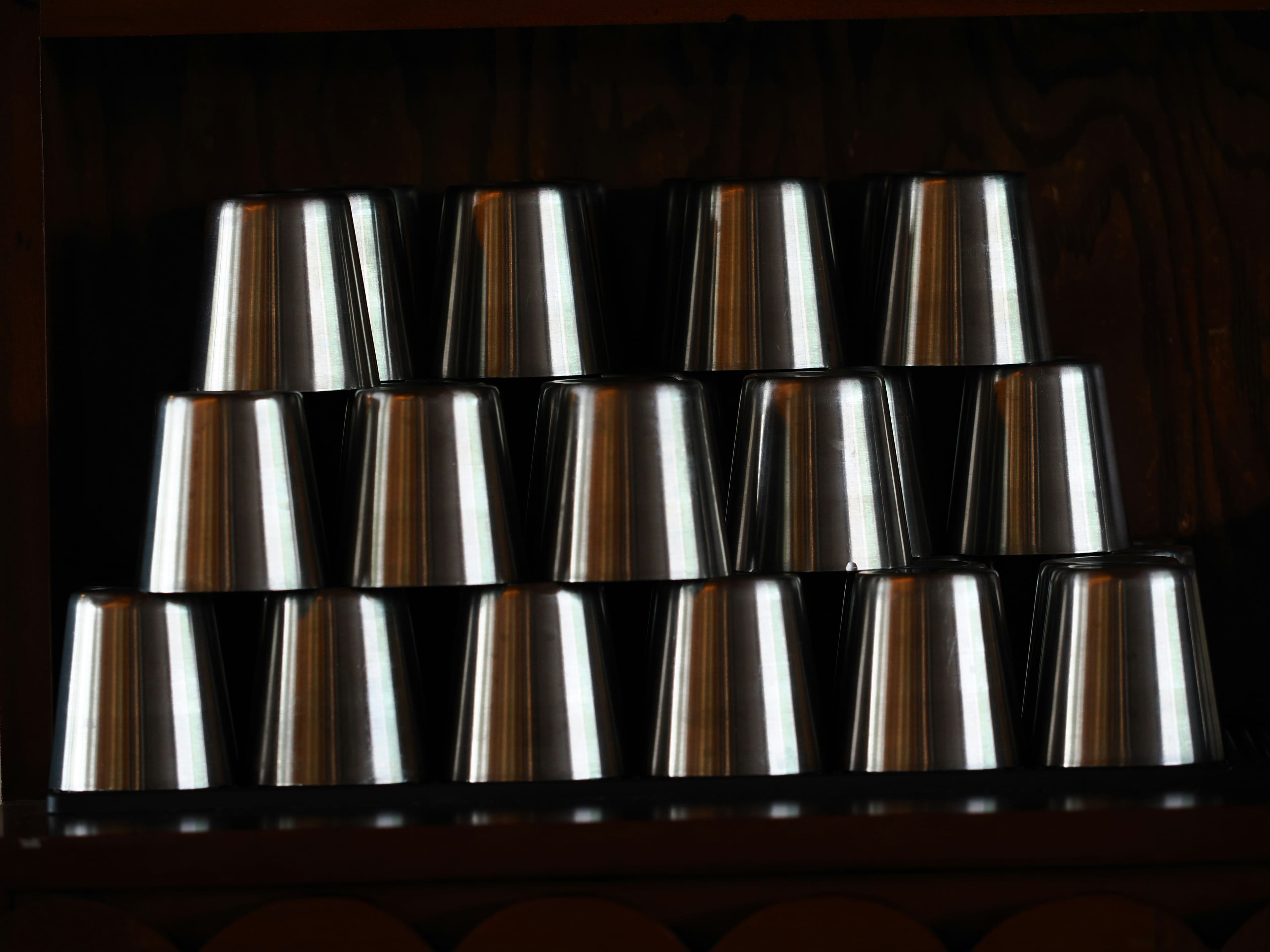
Build a pyramid from 21 plastic cups. Then collapse it back into a stack. Teams need to delegate fast and communicate about where each level goes. It tests planning and fine motor skills under pressure.
3. Forehead Transfer Challenge
Line up and pass a sticky note from forehead to forehead. No hands allowed. If it drops, restart from the beginning. It forces physical proximity and trust.
4. Rapid-Fire Insight Share
Each person gets 30 seconds to share one productivity hack or tool they actually use. The speed keeps it tight. Everyone learns something useful.
5. Synchronized Soundstorm
Stand in a circle. One person starts rubbing their hands, the next snaps, the next claps, the next slaps knees—building the sound of a rainstorm. Then reverse it. It's a coordination exercise that focuses a large group.
6. Single-Handed Coin Stack
Stack as many coins as possible with one hand while the other stays behind your back. Requires extreme focus. Works well as individual competition.
7. Air Traffic Control
A small team (2-4 people) keeps three inflated balloons in the air for the full minute. Add restrictions like using only one hand to raise difficulty.
8. Cup Target Practice
Set up plastic cups at the end of a table. Bounce ping pong balls into them. It's precision-based and scales easily for larger groups.
9. Hip-Driven Dispenser Empty
Affix a tissue box filled with ping pong balls to your waist. Empty it using only hip movements and shaking—no hands. This generates genuine laughter and breaks down physical barriers.
10. The Water Line Relay
Teams line up and pass water from a full bucket at the front to an empty bucket at the back, passing cups over their heads. Winning team has the highest water level when time expires.
11. Pattern Replication Sprint
Give teams a complex cup stacking diagram. Assemble and disassemble it as many times as possible. Tests communication and planning under pressure.
12. Bizarre Fact Blitz
Share the most surprising fact you know in ten seconds or less. No repeats. Fast thinking and unexpected knowledge surface here.
13. Chaos Communication Drill
Stand in a circle and pass a stress ball to your left. Speed up each round. Add a second or third ball. Watch communication collapse under complexity.
14. Reflexive Roleplay Showdown
Form a circle. One person is the Sheriff and points at someone—that person ducks. The players on either side draw imaginary weapons at each other. Slowest person is out or becomes the next Sheriff.
15. Desk Item Design Challenge
Use office supplies—paper clips, rubber bands, sticky notes—to complete a task. Build the tallest sticky note tower or the longest paper clip chain. Creativity with familiar materials.
16. Edible Engineering Tower
Build the tallest freestanding structure using only marshmallows and dry spaghetti. Different teams approach it differently.
17. Mouth-Held Pasta Pickup
Hold an uncooked spaghetti noodle in your mouth. Use it to pick up pasta rings from a plate and transfer them to a bowl. Requires concentration and fine motor control without hands.
18. Digital Drawing Duel
Using a shared digital whiteboard, draw as many perfect circles as possible in 60 seconds. Scalable for remote and hybrid teams.
19. Suction Sweet Transfer
Use a straw to pick up small candies via suction and transfer them from one plate to another. Requires focus and breath control.
20. Binder Pinball Rally
Create a miniature pinball course with binder clips as bumpers on a tilted table. Release a ping pong ball from the top and aim for the designated clips at the bottom.
21. Office Target Takedown
Set up lightweight aluminum cans. Knock over as many as possible using rubber bands within 60 seconds.
Common Pitfalls When Running 60 Second Games
These games are simple to run, but mistakes kill the energy.
Mishandling the Time Constraint
The concept lives on the rigidity of 60 seconds. Don't negotiate. Don't extend. If you do, the adrenaline dies. Reset immediately, even if a team was close. The clock is the whole point.
Unclear Rules or Scoring
Explain the rules in 30 seconds or less. Make the winning condition crystal clear before the timer starts. "Only finished stacks count" or "The water must reach the marker line." Ambiguity creates arguments and kills the fun.
Ignoring the Cleanup Plan
Some games are messy. Have towels, trash receptacles, or cleanup instructions ready before you start. Otherwise a fun break becomes a logistics nightmare.
Gauging Success: How to Quantify Fun and Engagement
Success is measured through energy shift and participation. For these short activities, it's mostly qualitative.
Qualitative Metrics (The Energy Spike)
Look for:
- Laughter Volume: Is the team laughing loudly and genuinely?
- Post-Game Chatter: Are people immediately discussing strategy and what went wrong? That means bonding happened.
- Transition Speed: How quickly did they shift back to work mode? Sharp transitions indicate effective focus reset.
Quantitative Metrics (Participation and Efficiency)
For larger programs, track:
- Voluntary Participation Rate: How many people opted in versus watched? High participation indicates perceived value.
- Time-to-Setup Ratio: Track setup versus execution time. A good ratio is 1:2 or better.
- Game Effectiveness Score: After each session, ask on a 1-5 scale: "How effectively did the activity reset your energy?" Track these over time to refine your selections.
Integrating 60 second games corporate fun into your routine is an efficient strategy for boosting team energy. Whether you need a quick icebreaker or structured segments for a retreat, these deliver immediate value. Planning memorable corporate gatherings requires identifying opportunities for genuine connection, which is why Naboo offers comprehensive support and ideas for planning meaningful events.
Frequently Asked Questions
What is the ideal group size for running 60 second games?
For high-energy physical challenges, smaller teams (4-6 people) competing simultaneously work best. For large groups (30+), choose activities that require minimal setup and can be judged quickly so you can run multiple rounds.
How do 60 second games benefit remote or hybrid teams?
They demand immediate engagement and focus. Digital drawing duels or challenges involving common household items require everyone to put phones down and participate fully.
How do I manage competitive tension in 60 second games?
Keep it lighthearted. About 50% of your games should rely on luck or unexpected physical requirements rather than pure skill. This prevents one person or team from dominating and keeps everyone included.
What kind of materials do 60 second games usually require?
Everyday items: sticky notes, plastic cups, rubber bands, ping pong balls, cookies, M&Ms, coins. Avoid specialized equipment. The simplicity is the point.
Should 60 second games be used as icebreakers or breaks?
Both. As an icebreaker, they set a fun, high-energy tone immediately. As a break, they act as a palette cleanser between demanding sessions, resetting focus.