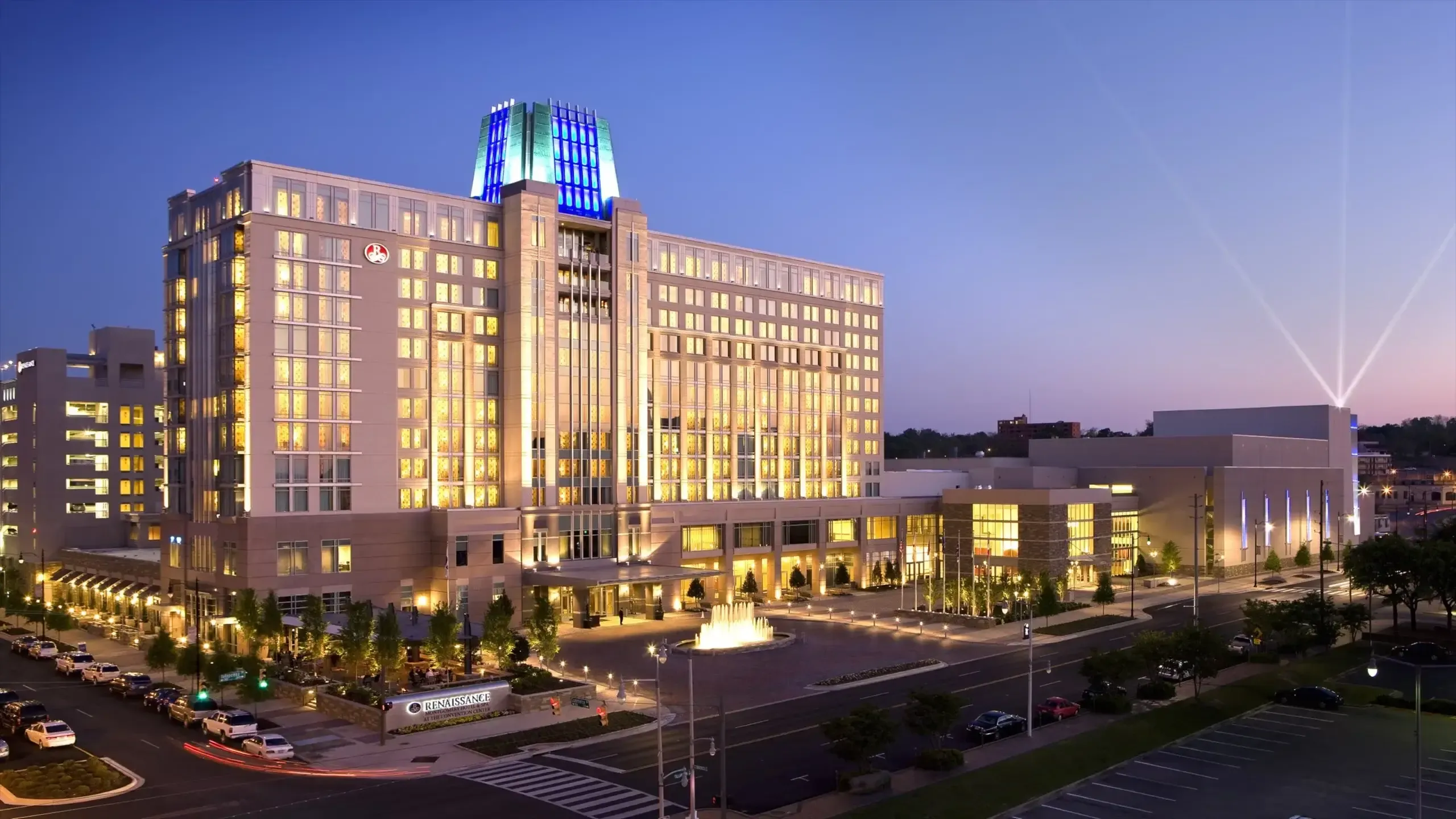
Every corporate event starts with a venue decision. Choosing between a conference hotel vs event location versus an inhouse setting determines the attendee experience, logistical complexity, cost, and whether the event works. The MICE Report 2026 shows 44 percent of companies use conference hotels, 37 percent choose event locations, and 18 percent keep events inhouse. This guide explains which choice works for which event.
The Event Purpose Test: The Starting Point for Any Venue Decision
Before evaluating any venue, ask what the event needs to achieve. A compliance training session has different requirements than an executive strategy retreat or induction. The conference hotel vs event location decision should follow from purpose, not precede it. The MICE Report finds 45 percent of companies choose format and venue based on the specific occasion rather than a single preferred type. This approach consistently produces better outcome-per-euro ratios.
When a Conference Hotel Is the Right Choice
A conference hotel works when logistical reliability and operational simplicity matter most. Conference hotels offer integrated room hire, AV, catering, and accommodation under one contract. For multi-day events with overnight stays—71 percent of all corporate conferences—the single-supplier model cuts coordination effort. Conference hotels also offer predictable pricing: standardised day-delegate packages make budgeting straightforward and reduce cost surprises. For procurement teams managing tight schedules and compliance requirements, this predictability has real value.
Here's how conference hotels, standalone event venues, and in-house settings stack up across the key factors that influence your corporate event decision.
| Venue Type | Typical Capacity | Included Amenities | Cost per Person | Flexibility & Setup Time |
|---|---|---|---|---|
| Conference Hotel | 50–500+ attendees | Lodging, AV, catering, breakout rooms, WiFi, parking | €80–€200/person | Moderate; pre-set layouts, 1–2 days setup, limited custom branding |
| Standalone Event Venue | 20–1,000+ attendees | Space only; catering, AV, and décor sourced separately | €40–€150/person | High; fully customizable, 2–3 days setup, complete creative control |
| In-House (Corporate Office) | 10–200 attendees | Existing furniture, IT infrastructure, internal catering kitchen | €15–€60/person | Very high; minimal setup, same-day flexibility, full brand alignment |
Choose a conference hotel for convenience and all-in-one logistics, a standalone venue for maximum creative control and cost efficiency, or in-house for small, agile events with tight budgets and full brand ownership.
Where Conference Hotels Fall Short
The limitation is environmental homogeneity. Most mid-market conference hotels produce the same experience: neutral carpet, standard catering, basic AV setup. When delegates attend a strategy session in a room identical to every other strategy session, the setting undermines the event's purpose.
When an Event Location Delivers Better Outcomes
An independent event location works when the experience itself is part of the message. Twenty-one percent of companies deliberately seek unusual or experiential venues. These organisations understand that a distinctive setting signals intent—that this event differs, that what happens here matters. Converted industrial spaces, cultural venues, rooftop settings, and purpose-built experiential locations create atmosphere that conference hotels cannot replicate. Attendee engagement and post-event recall measurably improve. Explore event location options across multiple venue types.
The Operational Trade-Off of Event Locations
The experiential premium comes with real operational complexity. Catering, AV, furniture, and sometimes power must be sourced separately. The MICE Report confirms event locations are typically more expensive than conference hotels on a like-for-like basis. For event managers without dedicated support, this complexity is a constraint. The calculation changes for teams using platforms that aggregate supplier coordination, or for events where the experience outcome justifies the premium.
When Inhouse Is the Pragmatic Choice
Inhouse events work for high-frequency, operationally focused formats: weekly team meetings, monthly reviews, and department-level training. Eighteen percent of companies choose inhouse, citing cost advantages and scheduling ease. For events where attendees are in the same location and content is the primary focus, inhouse delivers functional value without external venue coordination. The limitation is context: if the goal is to signal strategic importance or help attendees think differently, the same conference room used for daily work is not optimal.
The Corporate Venue Decision Matrix
Score each venue type against: (1) event purpose alignment, (2) logistical complexity tolerance, (3) budget flexibility, and (4) experience outcome priority. Events scoring high on purpose alignment and experience priority but lower on logistical complexity tolerance point toward conference hotels. Events requiring distinctive environments with operational support point toward event locations. Events prioritising cost efficiency and scheduling ease point toward inhouse. Applying this matrix across the annual event portfolio reveals patterns that help teams develop structured venue strategy.
Common Mistakes in the Venue Type Decision
The most common mistake is choosing on familiarity: defaulting to the conference hotel used last year even when the event purpose would be better served differently. A second mistake is treating the venue type decision as permanent rather than reassessing annually as purpose and priority evolve. A third mistake is failing to brief the event location properly: additional operational demands are manageable with good preparation but not without it. Read how enterprise event teams build venue strategy frameworks.
Key Metrics for Comparing Venue Options: What to Measure Before Deciding
Establish a measurement framework aligned with business objectives. The right venue delivers measurable ROI, not simply popularity.
Calculate true cost per attendee, extending beyond room rental and catering. Include transportation costs, setup and breakdown time, technology requirements, and contingency buffers. Conference hotels often appear economical because meals and lodging bundle together, but event venues may cost less if your attendee base is local. Inhouse events eliminate travel expenses but require capital investment in facilities and staff time. Create a spreadsheet isolating fixed from variable costs to model different attendance scenarios.
Assess engagement and retention metrics specific to your format:
- Attendance rate: Track how venue choice affects who actually shows up versus who registered
- Session participation: Measure breakout session attendance and networking event turnout
- Post-event satisfaction: Survey attendees on venue comfort, accessibility, and atmosphere
- Follow-up conversion: Monitor how many leads generated at the event convert to business within 90 days
Evaluate operational efficiency by documenting setup time, technology integration challenges, staff coordination demands, and incident reports. A venue requiring 12 hours of setup versus 2 hours represents hidden labor costs and scheduling constraints. Establishing these metrics before your venue search begins transforms the conference hotel versus event venue decision from intuition into data-driven strategy.
Frequently Asked Questions
What is the main advantage of a conference hotel over an event location?
Integration and operational simplicity. A conference hotel manages AV, catering, room hire, and accommodation under a single contract. This reduces coordination effort significantly for multi-day events with overnight stays and provides predictable pricing.
When should a company choose an independent event location over a conference hotel?
When the event's purpose requires a distinctive environment that signals strategic importance. Leadership offsites, creative workshops, and culture-building events typically benefit more from unusual settings than compliance trainings or operational reviews.
What percentage of companies use each venue type?
According to the MICE Report 2026, 44 percent primarily use conference hotels, 37 percent use event locations, and 18 percent hold events inhouse. Forty-five percent choose based on the specific occasion rather than having a fixed preference.
Is it more expensive to use an event location instead of a conference hotel?
Generally yes. Independent event locations are typically more expensive on a like-for-like basis due to additional sourcing for catering, AV, and logistics. The premium is offset when the experience outcome justifies the cost, and can be reduced through platforms managing supplier coordination efficiently.
What is the best approach for companies managing a diverse portfolio of event types?
Occasion-led planning: assess each event's purpose, attendee profile, and desired outcome before making a venue type decision. This approach, used by 45 percent of companies, consistently produces better outcome-to-cost ratios than defaulting to a single venue category.