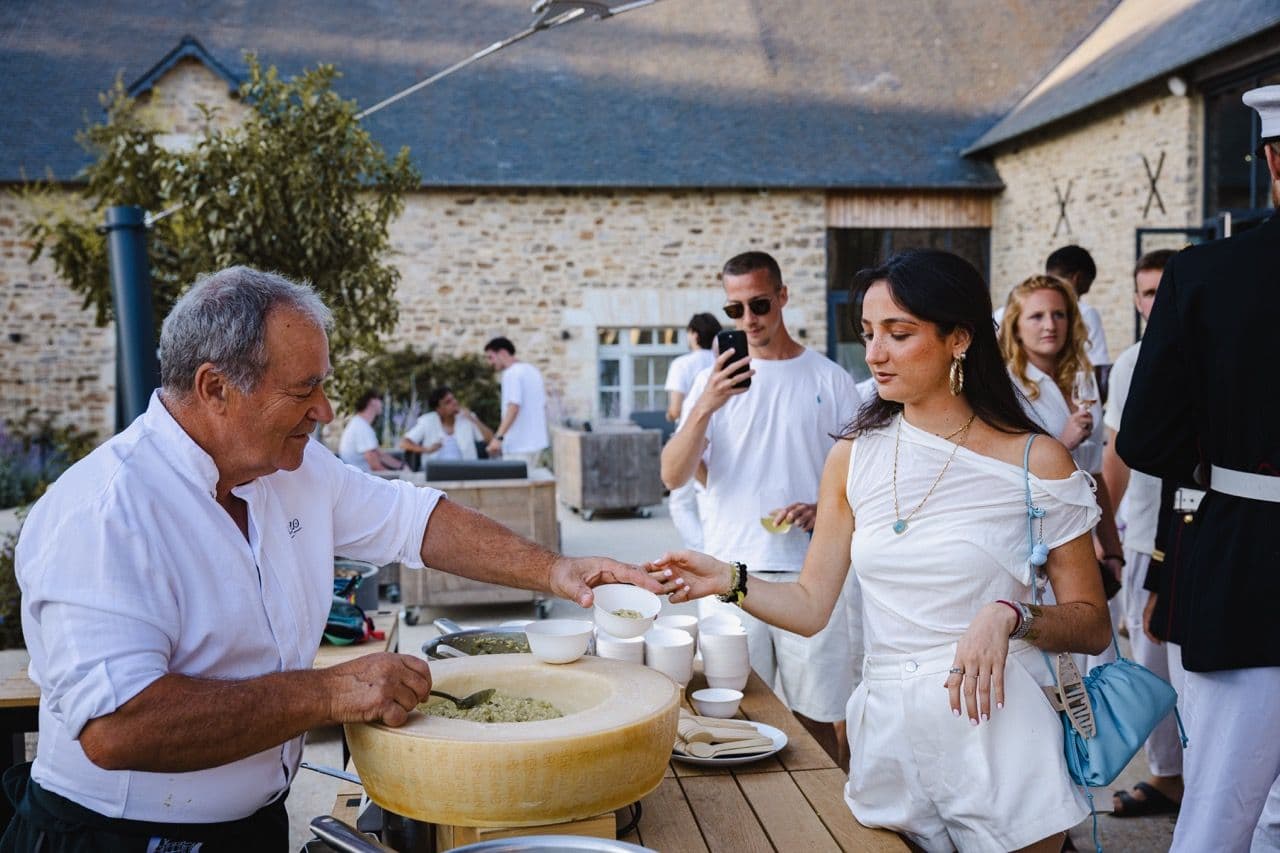
Food brings teams together in ways that standard office meetings never will. Dinner team building activities create real connection through shared cooking experiences—and that's why they work so well for US teams. They demand hands-on collaboration, they're inherently competitive, and they engage the senses in ways that stick with people. The kitchen forces clear communication, quick problem-solving, and ends with something everyone can share and celebrate together.
Whether your team is in one office, spread across regions, or hybrid, cooking creates a neutral space where departments naturally collaborate. A meal takes time, ingredients, and coordination—just like any project. The pressure reveals how people actually communicate, delegate, and adapt when something goes wrong.
Why Cooking Works for Team Dynamics
Cooking mirrors business constraints perfectly: time limits, finite resources, a clear end goal. When something fails—a sauce breaks, equipment malfunctions, an ingredient runs out—teams either communicate clearly and problem-solve, or things fall apart. There's no faking it.
These culinary team building activities build skills that transfer directly to work:
- Enhanced Communication: People have to state what they need clearly and actually listen to coordinate chopping, searing, and plating simultaneously.
- Leadership and Roles: Pressure reveals who steps up and who follows. You see real flexibility in how people lead and support each other.
- Creative Problem-Solving: When a recipe fails or a tool is missing, teams must improvise. That's exactly what agility means in business.
- Stress Reduction: The focus required for cooking pulls people out of their normal work anxiety and creates a shared moment of concentration.
The Planning Checklist: How to Select the Right Cooking Challenge
Choosing the right activity depends on what you actually need to happen. Consider three variables: the goal, your team's cooking skill level, and whether people are in one room or scattered.
Here's how different culinary team building formats compare across key factors to help you choose the right fit for your group.
| Activity Format | Group Size | Cost Per Person | Dietary Flexibility | Skill Level Required | Duration |
|---|---|---|---|---|---|
| Cooking Class (In-Person) | 8–30 people | $45–$85 | High — multiple menu options | Beginner to Intermediate | 2–3 hours |
| Virtual Cooking Session | 15–100 people | $20–$50 | Very High — cook at home | Beginner | 1.5–2 hours |
| Potluck Competition | 10–75 people | $5–$20 | Very High — participants choose | Any Level | 2–3 hours |
| Food Truck Catering Experience | 20–150 people | $15–$35 | Medium — limited customization | None Required | 1–2 hours |
| Dinner Party Hosted at Restaurant | 12–50 people | $35–$75 | High — restaurant accommodations | None Required | 2–4 hours |
| DIY Charcuterie or Dessert Workshop | 6–25 people | $25–$60 | High — mostly vegetarian options | Beginner to Intermediate | 1.5–2.5 hours |
Smaller teams benefit from hands-on workshops where everyone has a real role. Larger groups work better with formats that divide into competing sub-teams or use structured formats like virtual sessions.
- Goal: Competition or Collaboration?
Does the team need to practice executing under pressure (Competition), or does it need to build trust and integration (Collaboration)?
- Expertise: Beginner or Experienced?
Are most people uncomfortable in the kitchen (Beginner), or do you have people who actually cook and want to learn something new (Experienced)?
- Setting: In-Person or Distributed?
Can everyone gather in one location, or do you need to accommodate remote participants?
Applying the Framework: A Scenario
A sales team of 25 people across the country is meeting for an offsite. They need to build cross-regional trust. Most rarely cook. Everyone is in the same room. Goal: Collaboration. Expertise: Beginner. Setting: In-Person.
Result: A hands-on workshop focused on one simple shared dish—pasta making or pizza—works perfectly. A high-pressure competition would stress beginners out. A virtual class misses the entire point of being together.
Common Mistakes When Planning Cooking Team Events
A good concept fails when the details are wrong. Watch for these common problems:
Ignoring Dietary Needs: Not asking about allergies, restrictions, and preferences in advance means people get excluded or stressed. Survey everyone beforehand.
Recipes That Are Too Complex: If the dish requires advanced technique or takes too long, people get frustrated. Pick something challenging enough to require teamwork but simple enough to actually complete in your timeframe.
Uneven Role Division: In competitive events, give everyone a real job. If one or two people take over, you've lost the team-building effect.
Skipping the Debrief: The real value of culinary team building activities comes from connecting the kitchen back to the office. Schedule 15-20 minutes to talk about what actually happened—who led, where communication broke down, how people handled pressure.
How to Measure Success in Cooking Team Events
Team bonding doesn't always show up on spreadsheets. Track these signals:
- Immediate Feedback Scores: Post-event survey: did people feel engaged? Did they see real collaboration?
- Observed Interpersonal Shifts: Did departments that usually clash actually work together? Did junior staff get chances to lead?
- Sustained Behavioral Change: Check back one month later. Are teams communicating differently in daily standups? Are people more willing to ask for help?
- Qualitative Anecdotes: If people are still talking about "that time the chili nearly burned" weeks later, the memory stuck. That's when bonds actually form.
For more event ideas tied to specific outcomes, check out our resources.
20 Impactful Culinary Team Building Ideas
1. The Global Spice Trade Challenge
Give teams a base ingredient and a selection of exotic spices. They build a dish that highlights an unexpected flavor profile. It forces quick research, agreement on flavor combinations, and appreciation for different culinary traditions. Success depends on tapping into what different team members actually know.
2. Blindfolded Taste Test and Recipe Recreation
Teams blind taste complex dishes or sauces, deduce the ingredients, and recreate them from scratch. This forces teams to rely on description and trust. You can't fake understanding or pretend you heard someone correctly—it's painfully obvious.
3. Gourmet Dessert Decoration Duel
Teams compete to create the most visually stunning dessert platter from provided base components. It's low-pressure but high-creativity, revealing hidden artistic talent and testing how a team agrees on decisions under creative constraint.
4. Homemade Pasta Extravaganza Workshop
Making pasta from scratch—kneading, rolling, cutting, saucing—requires constant coordinated effort. This is pure collaboration with no way to coast. Everyone contributes physically to reach the final meal.
5. The Signature Cocktail Mixology Competition
Teams get spirits, mixers, and garnishes. They develop a new signature cocktail, name it, and pitch it to judges. It pushes creativity, storytelling, and rapid iteration—especially useful for marketing and product teams.
6. The Budget Culinary Challenge (Iron Chef Style)
Give teams a fixed small budget. They shop for ingredients and produce a high-quality dish using only what they bought. It tests resource management and strategic spending under time pressure.
7. Artisan Bread Baking Mastery
Bread requires patience: mixing, kneading, proofing, baking. Multiple stages that all demand careful attention. It's ideal for teams working on long-term projects—it teaches the value of diligence over time.
8. The Sustainable Scraps Challenge
Teams build a palatable dish using food scraps and discarded items—carrot tops, cheese rinds, spent coffee grounds. It forces resourcefulness and reveals how teams innovate with constraints.
9. Dim Sum Rolling and Steaming Mastery
Making dumplings or spring rolls requires fine motor control and extreme precision. Teams work in assembly lines, emphasizing process efficiency and quality control. It builds focus and attention to detail.
10. Regional BBQ Techniques Workshop
Low-and-slow cooking forces teams to manage a process over hours, prepare dry rubs, monitor smoke, and hit temperature targets. It teaches delegation over extended periods and requires trusting the process.
11. Vegan World Tour Cooking Class
Teams prepare multi-course vegan menus inspired by different cuisines. It challenges assumptions about what's possible in cooking and requires flexibility with ingredients. It also practices accommodation and inclusivity.
12. The Appetizer Quick-Fire Showdown
30 minutes to create two plated appetizers from a set pantry. Pure execution under extreme time pressure. It mirrors tight workplace deadlines and forces rapid task division.

13. Mastering the Art of Sauces and Emulsions
Hollandaise, beurre blanc, emulsions—technically difficult. This workshop forces precision and scientific understanding. Teams manage delicate temperatures and measurements. Success lies in the details.
14. Virtual Ingredient Scavenger Hunt & Cook
For distributed teams: send a list of specific ingredients to find in home kitchens (oldest spice, something pickled, a red citrus). Teams receive a simple recipe incorporating those items. It forces creative substitution and remote collaboration via video.
15. Themed Lunchbox Creation Challenge
Teams create nutritionally balanced, visually appealing meals for a specific scenario—a picnic, birthday party, or marathon runner's fuel. It integrates real constraints (portability, shelf life) with creative cooking.
16. Coffee Brewing and Tasting Seminar (Virtual or In-Person)
Precise measurement and temperature control applied to different beans, roasts, and brewing methods. Teams learn what small differences actually impact quality—a lesson applicable to any process review.
To discover more content on the Naboo blog about blending work and wellness, read our other articles.
17. Culinary Relay Race
Divide a complex recipe into segments. Each person works their segment for a fixed time, then hands off to the next. It stresses clean handoffs, clear documentation, and accountability across the production chain.
18. Farm-to-Table Preservation Class
Teams make jams, pickles, or ferments using fresh seasonal produce. The products aren't consumed immediately, so it requires planning ahead. It teaches the importance of knowledge retention and long-term thinking.
19. International Soup and Stock Mastery
Deep dive into making flavorful stocks and culturally significant soups—Pho, French Onion, Borscht. It requires patience, simmering, and layering flavors over hours. It emphasizes foundational steps before the final product arrives.
20. Mystery Box Challenge: The Apprentice Edition
Teams receive six unusual ingredients and must build an entire main course and side dish, managing timeline and justifying their choices. This is pure leadership, resourcefulness, and time management under pressure.
How to Choose the Right Culinary Team Building Activity for Your Team Size and Budget
Selecting the right culinary team building activity requires matching your group's size, budget, and work culture to an experience that will actually resonate. A cooking competition works beautifully for a tight-knit team of 8–12 people, but becomes chaotic and exclusionary with 50 participants. Similarly, a professional chef-led cooking class demands a larger budget but delivers polished results, while a potluck-style build-your-own meal works on almost any budget and scales effortlessly.
Start by defining three key constraints: your headcount, your per-person budget, and the time you can dedicate. Teams under 15 people thrive with intimate experiences like private chef demonstrations or small-group cooking challenges. For larger groups, consider activities that break into smaller stations—taco-building bars, pasta-making workshops, or dessert competitions—where multiple teams work in parallel and then reconvene to share results. This keeps energy high and ensures everyone stays engaged rather than standing around watching.
Budget considerations often determine format. Professional culinary experiences typically run $40–75 per person, while DIY options—cooking at your office kitchen or a rented community space with a prepared ingredient kit—cost $15–30 per person. Mid-range options like food truck partnerships or local restaurant private event spaces often balance cost with quality and create memorable local connections.
Consider these practical questions when narrowing your choice:
- Does your team have dietary restrictions or food allergies that demand accommodation?
- Is your venue equipped with kitchen facilities, or do you need an off-site location?
- Would your team prefer competitive energy or collaborative, low-pressure cooking?
- Are there employees who feel anxious in kitchens, and would they benefit from structured instruction?
Answering these upfront prevents disappointing mismatches and ensures your culinary team building activity strengthens bonds instead of creating friction.
How to Choose the Right Dinner Activity for Your Team's Size and Dynamic
Selecting the right dinner team building activity depends on understanding your team's size, skill level, and existing relationships. A cooking class works beautifully for 12–15 people who want structured guidance, but a group of 30 needs a different approach—perhaps a potluck competition or cooking stations where smaller groups rotate through different dishes. The venue, budget, and time available all shape what actually works in practice.
Consider your team's baseline comfort level with each other. New teams benefit from activities with clear roles and instructions—think a guided taco bar build or sushi-making workshop where everyone follows the same process. Teams that already know each other thrive in high-pressure formats like Iron Chef-style competitions or mystery box challenges where they can lean on existing inside jokes and trust. A team with mixed confidence levels around cooking might prefer a collaborative meal prep where the focus is on teamwork rather than culinary skill.
The physical setup matters more than most leaders realize. Long tables encourage natural conversation and allow people to work side-by-side. Kitchen spaces with multiple stations prevent bottlenecks and let introverts and extroverts both find their rhythm. If you're working with a hybrid team, hybrid activities work best—some people attend in person while others cook at home and join a video call during the meal. This removes the pressure of expensive logistics while still creating genuine shared experience.
Before committing, ask yourself these questions: Do people want to learn something new, or prioritize connection? Does your team need low-key bonding or do they thrive on competition? What's your realistic timeline, and do people have dietary restrictions or preferences that matter? The right dinner activity isn't the fanciest one—it's the one that matches your actual team.
Frequently Asked Questions
How much time should we plan for a typical cooking team event?
Most impactful culinary team building activities run 2.5 to 3.5 hours. Shorter, skill-based workshops like cocktail making or appetizer challenges finish in 90 minutes to 2 hours.
Do cooking challenges work for small teams or large departments?
Yes. Small teams of 6-10 can handle complex tasks where everyone has a real role. Larger groups divide into competing sub-teams, building internal cohesion while creating external competition.
What are the biggest challenges for organizing in-person cooking events?
Kitchen access and equipment availability matter. You need a venue with enough station space for all participants. You also need a provider who can source ingredients and accommodate all dietary restrictions without surprises.
Can cooking events actually improve professional results?
Yes. The pressure-filled kitchen environment builds communication, decision-making speed, delegation, and creative adaptation—all of which translate directly to better collaboration at work.
How do we keep remote US teams engaged during virtual cooking sessions?
Send the ingredient list or box well in advance. Use high-quality video instruction, encourage real-time questions, and build in interactive elements—voting, polls, or surprises—to maintain focus.