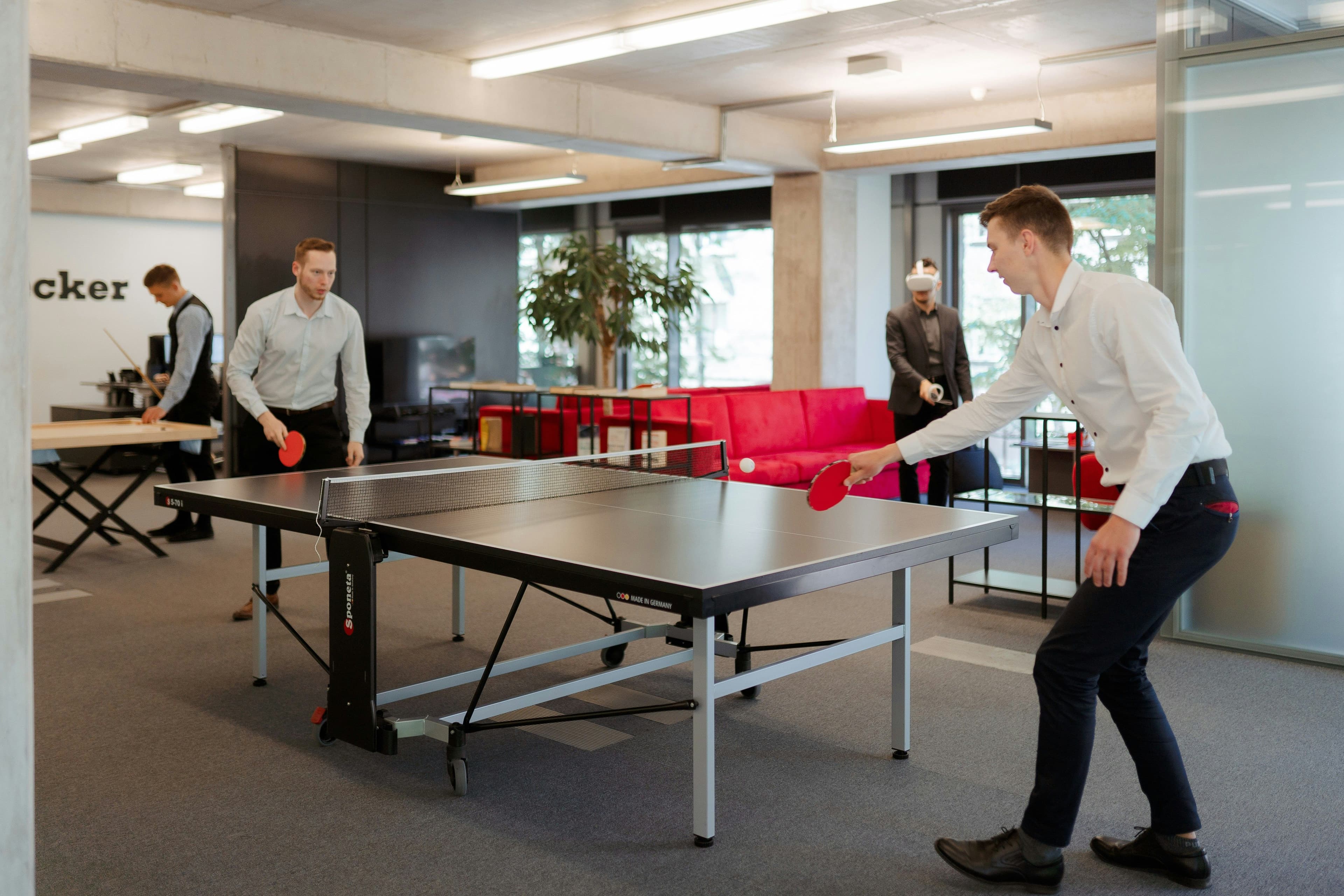
Your team is stuck in the same routine, doing the same work, sitting in the same chairs—so shake things up with office team olympics ideas that transform a regular Tuesday into something people actually want to show up for. A corporate Olympics cuts through the monotony, sparks real competition, and gets people talking to coworkers they'd normally never meet.
Turning office spaces and parks into competition grounds is one of the fastest ways to break down silos. Teams build shared memories and practice problem-solving under real pressure. That matters more than the games themselves.
If you're planning a team engagement activity, shift from passive to active participation. Here are 15 Team Olympics ideas that work for companies across the country, with practical guidance on running them.
The Strategic Value of Office Olympics
Team building gets pushed aside because it seems optional. It isn't. Employees who feel connected to colleagues stay longer. They collaborate better. They perform better.
Fostering Cross-Functional Bonds: Most people work only within their department. Competitive games force interaction between people who rarely collaborate. That mutual exposure builds understanding.
Boosting Employee Retention and Morale: Shared positive experiences create emotional connection to the organization. Employees who enjoy their environment don't look elsewhere.
Practicing Essential Workplace Skills: Games that require quick thinking, resource allocation, and consensus building are real simulations of project management. Teams learn delegation and leadership in a low-stakes setting.
Naboo's CORE Framework for Impactful Team Games
Structure matters. Use the CORE framework to plan events that create lasting change, not just a fun afternoon.
Here's a breakdown of popular office Olympics events to help you choose activities for your team's size, budget, and energy level.
| Event Name | Activity Type | Ideal Group Size | Cost per Person | Energy Level Required | Duration |
|---|---|---|---|---|---|
| Relay Races | Physical/Outdoor | 10–100 people | Free–€5 | High | 30–45 minutes |
| Trivia Tournament | Mental/Indoor | 5–50 people | Free–€10 | Low to Medium | 1–2 hours |
| Scavenger Hunt | Mixed/Indoor or Outdoor | 8–80 people | €5–€25 | Medium | 45–90 minutes |
| Tug of War | Physical/Outdoor | 20–200 people | Free–€3 | High | 20–30 minutes |
| Minute-to-Win-It Challenges | Physical/Mental/Indoor | 6–40 people | €2–€8 | Medium | 1–1.5 hours |
| Virtual Escape Room | Mental/Virtual | 4–20 people per team | €15–€40 | Medium | 1–1.5 hours |
| Obstacle Course | Physical/Outdoor | 15–150 people | €20–€50 | High | 2–3 hours |
Mix high-energy and low-energy activities so everyone can participate meaningfully.
-
C: Clarity of Purpose
Define your goal before selecting games. Are you integrating a newly merged team? Celebrating a win? Addressing burnout? If integration is the goal, choose high-communication, low-skill activities like the Human Knot. If celebration matters most, go high-energy and novel. Your purpose shapes everything about the event.
-
O: Operational Logistics and Budget
Determine scope early. How much time and space do you need? Secure resources—prizes, equipment, judges. Build in a strict timeline. Most people underestimate setup and transition time. Plan for weather or technical failures, especially with hybrid participation.
-
R: Remote and Hybrid Inclusion Strategy
Remote workers need real competition opportunities, not a live-stream. Design specific virtual challenges—coordinated puzzles, synchronized desk exercises—that count equally toward team scores. Remote participants should have the same shot at winning as in-office staff.
-
E: Energy, Engagement, and Follow-Up
Build anticipation with strong internal communication—teasers, team assignments, opening ceremony. The engagement doesn't end when medals are distributed. Follow up with photos, recap videos, and a post-event survey. Capture feedback and solidify the shared experience.
Scenario Application: Using the CORE Model
A tech company with 40% remote staff outside Boston used CORE to plan their first Office Olympics:
- Purpose (C): Improve inter-departmental trust between Engineering and Marketing.
- Operational (O): Half-day event using the main floor and nearby park. $500 budget for prizes and snacks.
- Remote (R): Half the points came from simultaneous online trivia and puzzle races where remote and in-office players contributed equally.
- Energy (E): Simple colored team T-shirts and a closing press conference featuring the winning team.
Common Pitfalls That Derail Office Competitions
Good intentions don't guarantee good outcomes. Avoid these mistakes:
Prioritizing Athleticism Over Accessibility
Heavy physical demands exclude people. Running, lifting, intense cardio—all of that leaves employees out, particularly those with different physical abilities. Focus on coordination, strategy, and cerebral challenge. Structure every event so people can contribute different roles—runner, strategist, scorekeeper. Everyone participates meaningfully.
Failing to Balance Scoring Fairness
Scoring must be transparent and simple. Complicated rules kill momentum. Design competition so one bad event doesn't eliminate a team entirely. Use cumulative scoring across diverse events.
Making Participation Mandatory
Strong encouragement works. Mandatory participation creates stress, especially for introverted employees. Frame the event as an opportunity, not a requirement. Offer roles for people who prefer to observe—photography, judging, logistics. They feel included without being forced into spotlight.
Ready to plan your next engagement? Here are 15 dynamic and inclusive ideas for your Team Olympics event. For detailed guidance, consider collaborating with event design experts.
15 Fun Office Olympics Games
1. The Indoor Sprint Obstacle Course
Goal: Agility, swift decision-making, and communication under pressure. Teams navigate a predetermined course using everyday items—weaving through office chairs, crawling under conference tables, solving puzzles at checkpoints. Time the course and assign penalties for knocking over markers. This is a perfect opening event.
2. Desk Chair Drifting Challenge
Goal: Coordination and precision. Two team members push a third seated member along a winding hallway course marked by cones or tape. The focus is maintaining a straight line without bumping boundaries. This requires excellent nonverbal synchronization between pushers and driver.
3. Rubber Band Biathlon
Goal: Focus and fine motor skills. Two-part event: load paper clips onto a string (dexterity), then shoot rubber bands at tiered targets (precision). Award points for speed and accuracy. This tests the team's ability to transition between different skill sets.
4. Wastebasket Three-Pointer
Goal: Friendly competition and low-resource fun. Shoot crumpled scrap paper into wastebaskets positioned at different distances and heights. Assign higher points to difficult shots. This is accessible and offers immediate stress relief.
5. Ping Pong Precision Drop
Goal: Hand-eye coordination and patience. Participants stand on chairs and drop ping pong balls into small cups below. Pair one player dropping with another directing placement, adding a communication layer to the coordination challenge.
6. The Company Lore Trivia Bowl (Hybrid)
Goal: Knowledge sharing and hybrid inclusion. Rapid-fire questions about company history, recent projects, staff facts, and industry knowledge. Use a synchronized quiz platform for virtual teams. Remote participants have equal footing and the event reinforces organizational culture.
7. Virtual Coding and Puzzle Race (Remote/Hybrid)
Goal: Collaborative problem-solving and technical application. Teams complete logical puzzles, digital scavenger hunts, or simplified coding challenges online. First correct submission wins. This appeals to technical and analytical departments.
8. Paper Plane Long Jump
Goal: Creativity and application of physics. Teams design and launch a paper airplane using identical materials. Measure distance in a hallway or parking lot. The longest flight wins. This teaches iterative design and innovation.

9. The Office Artifact Hunt
Goal: Exploration and resourcefulness. Teams receive cryptic clues leading to hidden objects around the office or in digital folders. Success requires movement and quick searching. Artifacts should relate to company history or inside jokes to build shared identity.
10. The Collaborative Construction Challenge
Goal: Engineering design and resource management. Teams build the tallest free-standing tower or a device that survives a drop using limited, unusual materials—spaghetti, marshmallows, rubber bands. Restrict time to 30 minutes to increase pressure.
11. Human Knot Synchronized Unraveling
Goal: Communication, patience, and trust. Participants stand in a circle, close their eyes, and randomly grab two different people's hands. The challenge is untangling themselves without letting go. This relies entirely on verbal instruction and coordinated movement.
12. Ultimate Frisbee Golf
Goal: Strategic planning and outdoor enjoyment. Set up targets—trees, cones, bins—across an open outdoor area. Teams attempt to complete the course with the fewest throws. This encourages movement, strategy, and assessment of distance and risk.
13. Rope Pull Showdown
Goal: Physical cooperation and collective strength. Traditional Tug of War is a high-energy centerpiece. Ensure soft ground and clear rules. This tests raw teamwork and sustained coordinated effort.
14. Desk Accessory Gymnastics
Goal: Creative performance and presentation. Teams design a timed performance using desk supplies—rulers, highlighters, tape, paper fashioned as ribbon. Perform to music, emphasizing coordination and innovation. Judge based on creativity, synchronous movement, and use of props.
15. The Water Balloon Toss of Trust (Outdoor)
Goal: Mutual reliance and cautious execution. Team pairs toss a water balloon back and forth, taking a large step back after each successful catch. Continue until one pair remains dry. This simple game highlights the need for precise cooperation and trust.
Evaluating Success: Beyond the Gold Medal
Success isn't about who wins. It's about qualitative change afterward. Focus on these metrics:
Participation and Attendance Rate
High turnout, especially from departments traditionally hesitant about team events, indicates success. Track the ratio of observers to active participants, aiming for maximum engagement across all levels.
The Post-Event Engagement Survey
Within 48 hours, distribute a short anonymous survey. Ask participants to rate their agreement with statements like: "I interacted positively with colleagues from other departments," "I feel more connected to my team," and "I gained insight into my colleagues' working styles." Changes in these scores show improved collaboration.
Observed Cross-Functional Interaction
Have managers informally monitor workplace behavior in the weeks following the games. Look for organic changes: Are employees from different departments reaching out for professional input? Is the atmosphere lighter? Increased informal communication is often the most valuable outcome.
Planning Your Office Olympics: Essential Logistics and Setup Tips
Successful execution requires thoughtful planning before you announce schedules and divide teams. Preparation separates memorable events from chaotic gatherings.
Determine your venue and timeline. Single day or staggered across a week? Indoor spaces work for smaller offices; outdoor parks offer more room for physical games. Consider your workforce demographics—ensure inclusive games for varying mobility levels. Have remote employees? Plan digital-friendly competitions like trivia, online scavenger hunts, and creative contests.
Establish clear rules and scoring systems before games begin. Transparency prevents disputes and keeps competition lighthearted. Designate event coordinators to oversee registration, track scores, and handle disputes. Communicate the schedule, rules, and team assignments in advance so employees can prepare.
Plan a medal ceremony or awards presentation for winning teams. Simple medals or certificates add meaning. Consider small perks like reserved parking or gift cards to reinforce achievement. Capture the event through photos and videos to extend the impact and create lasting memories.
Frequently Asked Questions
What is the ideal duration for a successful Office Olympics?
3 to 4 hours works well, including opening ceremony and awards. This allows 5 to 7 diverse events without excessive disruption or participant exhaustion.
How can we ensure fair participation across different departments?
Pre-assign intentionally cross-functional, balanced teams mixing seniority and location. This prevents departments from sticking together and ensures broader interaction.
What is the most critical resource needed for planning these games?
Dedicated volunteer judges and organizers. Without a team committed to managing logistics, keeping score, and ensuring smooth transitions, the event risks collapsing.
Should prizes be monetary or non-monetary?
Non-monetary prizes—traveling trophies, extended lunch breaks, the right to name a conference room—are more effective. They emphasize recognition and bragging rights over financial incentive, keeping focus on fun and teamwork.
How do you include remote employees effectively in physical team olympic games?
Design a parallel digital track where remote employees compete in puzzles, escape rooms, or collaborative software contests. Run these concurrently with physical events. Ensure points from both tracks contribute equally to final team scores.