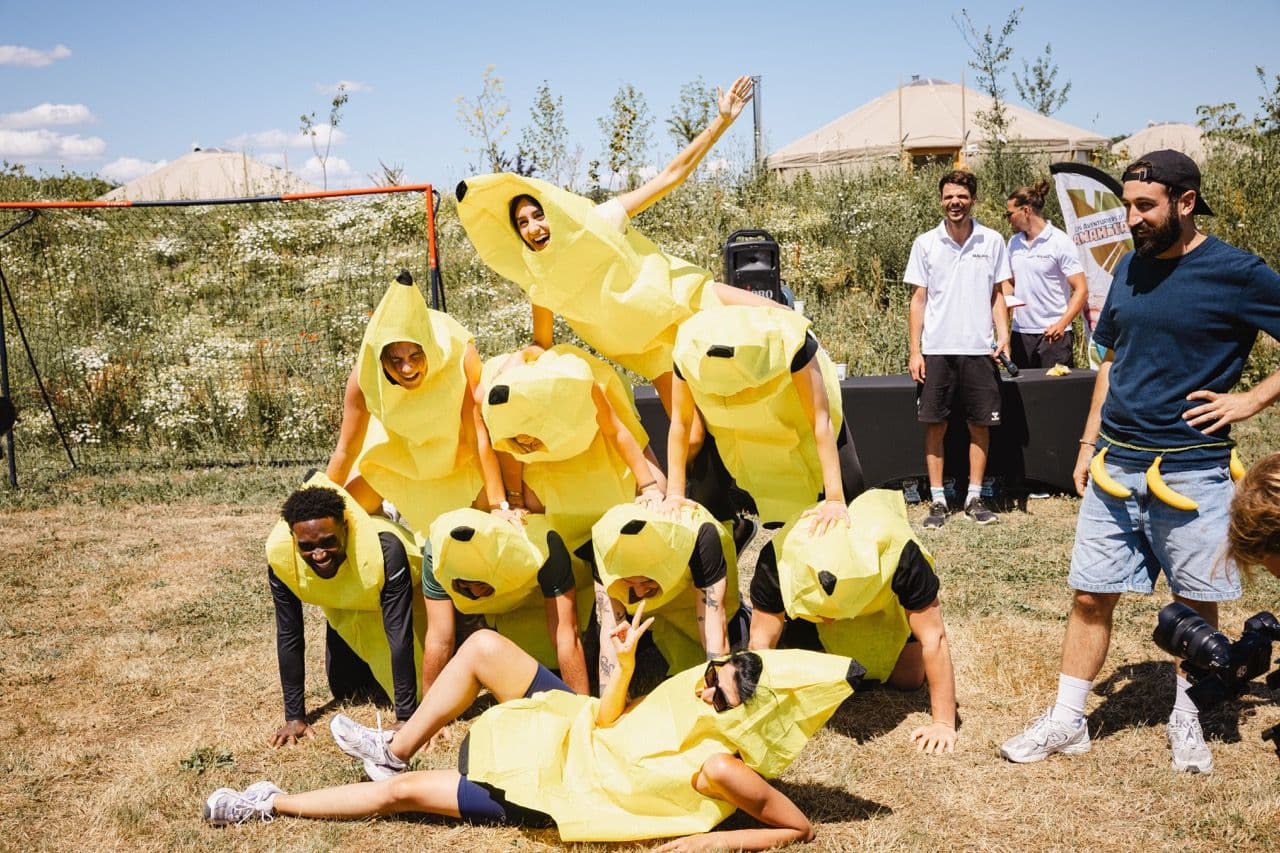
Spring is when US corporate teams should invest in outdoor team building us spring ideas. Fresh air and natural light improve mood and spark creativity in ways a conference room can't. The real value isn't entertainment, it's structured activities that build collaboration skills and improve how teams actually work together.
Finding activities that deliver measurable results is difficult. This guide covers 10 outdoor team-building activities that address specific business problems: communication breakdowns, cross-departmental friction, decision-making under pressure, or burnout.
The Value of Taking Collaboration Outdoors
A natural environment disrupts the routine office dynamic. Teams collaborate differently outside. Quieter team members often emerge as leaders. Stress drops. People participate without being asked.
The best outdoor team-building activities solve a specific problem. If teams struggle with project handoffs, pick an activity that forces clear information transfer. If cross-departmental empathy is low, choose community service.
The ACT Framework for High-Impact Outdoor Activities
Use the ACT Framework to select activities that work:
Here's a breakdown of ten popular spring outdoor team building activities, organized by group size, duration, and cost to help you find the best fit for your team.
| Activity | Group Size | Duration | Cost Per Person | Best For |
|---|---|---|---|---|
| Scavenger Hunt | 8–100 people | 1.5–3 hours | $5–$15 | Communication and problem-solving |
| Outdoor Relay Races | 10–50 people | 1–2 hours | $0–$10 | Energy and friendly competition |
| Hiking Challenge | 6–30 people | 2–4 hours | $0–$20 | Wellness and endurance building |
| Outdoor Cooking Competition | 12–60 people | 2–3 hours | $15–$35 | Creativity and cross-team bonding |
| Team Sports Tournament | 15–100 people | 2–4 hours | $10–$25 | Athletic engagement and morale |
| Outdoor Obstacle Course | 8–40 people | 2–3 hours | $20–$50 | Trust and physical challenge |
A: Alignment with Business Goals
Does the activity fix a known team problem? If you need faster decision-making, a physical building challenge works better than a happy hour.
C: Connection and Psychological Safety
Will people actually interact meaningfully? Low-pressure activities like community service build trust faster than competitive events.
T: Making the Lessons Stick (Transferability)
Can people apply what they learn back at work the next day? A successful activity teaches something about leadership, communication, or resource management they can use immediately.
Applying the ACT Framework: A Scenario
A software development team has QA bottlenecks. Development and QA engineers don't trust each other's information. A generic social activity won't fix that. Run the Ropes Course Relay—something that demands precise communication to succeed. During the debrief, link the communication failures in the relay directly to the QA delays they've been experiencing. Now the activity is evidence of a real problem they can fix.
1. The Geo-Caching Challenge
Teams use GPS devices to navigate to hidden locations using coordinates and clues. This forces delegation and reveals who actually listens to instructions.
2. Improvised Shelter Build
Give teams limited materials—tarp, rope, branches—and tell them to build something waterproof in ninety minutes. This forces fast decisions under real constraints and shows how your team handles failure.
3. The Ropes Course Relay
Teams work through obstacle courses that require trust and clear guidance. One person is blindfolded while others direct them through a challenge. Watch who gives steady feedback and who struggles letting go of control. This reveals actual trust levels.
4. Community Green Space Revitalization
Partner with a local organization to renovate a public space—plant trees, clear invasive species, build garden beds. The shared external purpose cuts through office politics. The visible result builds pride and combats burnout.
5. Outdoor Escape Room Challenge
Spread riddles and puzzles across a park or large yard. Teams solve them in sequence to complete a final task within a time limit. This tests how well team members share information and verify assumptions.
6. The Floating Raft Design Challenge
Teams build a small vessel from cardboard, duct tape, and inner tubes to float a teammate across a pond. The person gets wet if the design fails. High stakes create strong shared memory and teach risk assessment.
7. Field Day Olympics
Organize lighthearted races—three-legged, relay, water balloon tosses—structured so coordination matters more than raw athleticism. This builds quick communication and resilience after failure in a relaxed setting.
8. Team Mural Painting
Divide a large canvas into sections. Each team paints one piece. All sections must integrate into a coherent whole representing company values or mission. This requires negotiation and compromise.
9. Nature Photography Competition
Teams photograph natural elements that represent abstract concepts—synergy, growth, resilience—assigned to them. In the debrief, they explain their choices. This builds empathy and shows how differently people see the same problem.
10. Guided Wilderness Hike & Reflection
A moderate hike with a professional guide includes planned stops for discussion about career goals or project reflection. The physical endurance builds mutual respect and enables real conversation.
Common Mistakes When Planning Outdoor Team Activities
Most organizations fumble the execution of outdoor team-building activities. The main errors:
- Skipping the Debrief: The activity generates data. The debrief converts it to insight. Without structured reflection linking the outdoor experience to office behavior, the event is just an afternoon off.
- Forcing Participation: Mandatory participation in physically demanding outdoor team-building activities breeds resentment. Offer alternatives like scorekeeper or logistics roles for people who don't want to participate physically.
- Ignoring Weather: No backup plan for rain, no shade for heat, insufficient water. Poor weather planning kills morale.
- No Clear Objective: An event without a measurable goal looks frivolous. Align the activity to a specific business need.
Measuring Success
Success means more than "Did people have fun?" Track real business outcomes.
Pre- and Post-Activity Surveys
Measure team trust or communication efficiency before the activity and again 4-6 weeks after. A successful outdoor team-building activity shows measurable improvement.
Behavioral Observation and Transferability Score
During the debrief, teams commit to 1-3 specific behavioral changes—"We'll check assumptions before proceeding," for example. Track whether they actually do this in subsequent work.
Project Metrics
If the activity targeted a specific problem, measure the relevant metric in the weeks after. Fewer handoff errors. Fewer misinterpreted instructions. Lower conflict reports.
Planning Your Spring Team Building Budget and Timeline
Spring offers a narrow window—March through May—when outdoor venues are available and teams haven't fragmented into vacation schedules. Budget $50–$150 per participant. Lock in your venue 6-8 weeks ahead. Send team communications 3-4 weeks out. Finalize logistics two weeks before.
Build in these practical elements:
- Accessibility—Choose activities that work for varying fitness levels so nobody feels excluded
- Weather backup—Have an indoor option or rescheduling flexibility
- Clear expectations—Tell people what to wear, what to bring, what the activity involves
- Fast follow-up—Run the debrief immediately after. Send feedback surveys within a week
Frequently Asked Questions
What is the ideal duration for an outdoor team-building event in the spring?
Four hours. That's enough time for the activity, travel, setup, and a real debrief. Anything shorter and you skip the reflection phase where the actual learning happens.
How do we ensure inclusion in physically demanding outdoor activities?
Build in non-physical roles from the start. In a ropes course relay, some people can be safety spotters or communication directors. They contribute to success without the physical demand.
When should outdoor activities be scheduled?
Early in a quarter, or right after a major stressful project ends. Spring is ideal for revitalization.
What is the most critical logistical consideration for outdoor events?
Weather contingency. Secure a backup indoor space or have an indoor version of the activity ready.
How quickly should we follow up on the results?
Run the debrief immediately after the activity. Wait 4-6 weeks for formal follow-up surveys so teams can apply what they learned in real work.