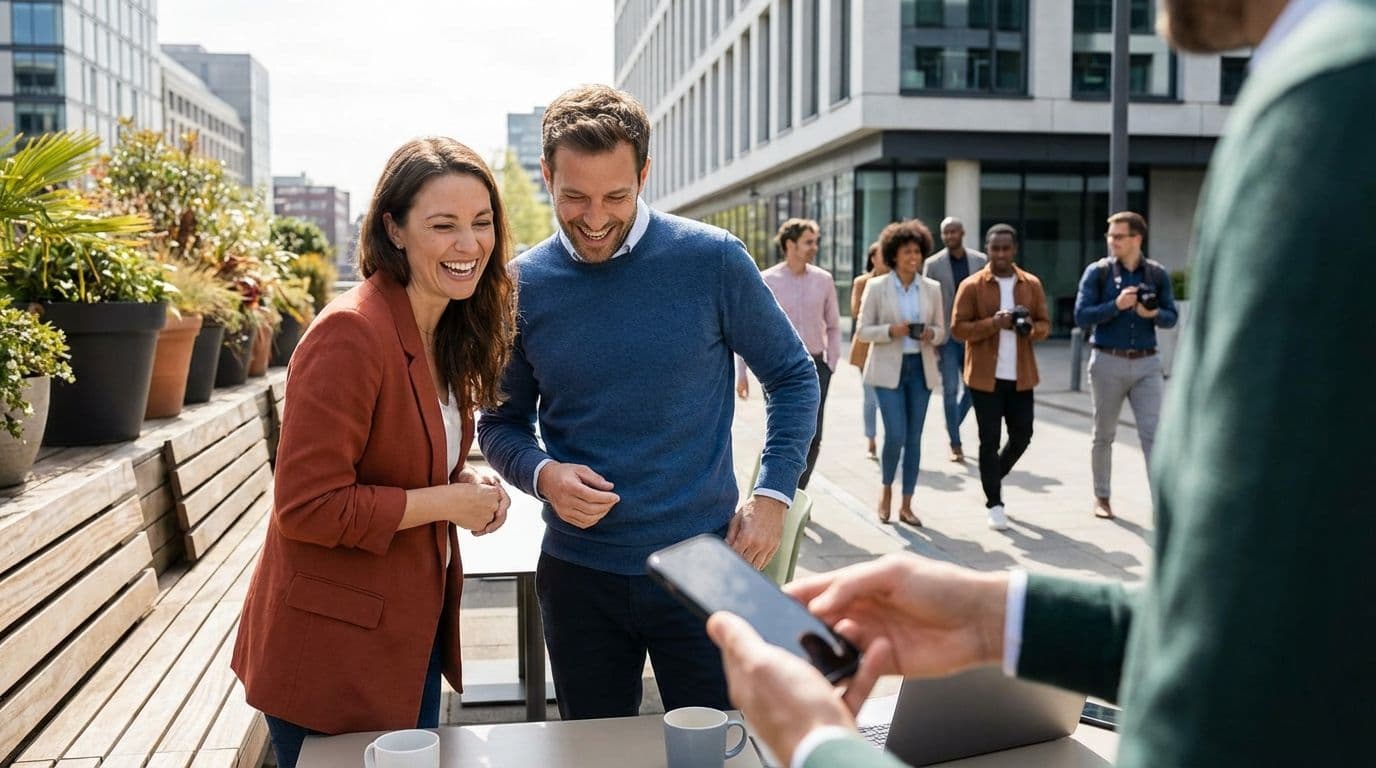
Photo scavenger hunt
Time for the photo scavenger hunt team building activity: 60–90 minutes
Setup effort: Easy to moderate
Estimated cost: Low
Business value: Teams work through creative photo challenges that build problem-solving skills and cross-functional relationships through exploration.
What is a photo scavenger hunt?
A photo scavenger hunt is a team building activity where participants complete photo challenges with smartphones or cameras. Teams read prompts, plan their shots, and work together to create interesting photographs, not just find objects.
Different formats fit different setups:
| Format | Best Setting | Group Size | Duration | Cost | Engagement Level |
|---|---|---|---|---|---|
| Office Indoor Hunt | Corporate office or building | 5–30 people | 45–60 minutes | Free to €15 per person | High (familiar environment, quick setup) |
| Outdoor Urban Hunt | City streets, downtown area | 10–50 people | 60–90 minutes | €10–€40 per person | Very High (exploration, novelty, creativity) |
| Nature/Park Hunt | Local parks, hiking trails | 8–40 people | 75–120 minutes | Free to €25 per person | Very High (immersive, physical activity) |
| Virtual/Remote Hunt | Home or personal location | 5–100+ people | 30–60 minutes | Free to €5 per person | Medium-High (flexible, accessible, less immersive) |
| Hybrid Multi-Location Hunt | Multiple venues combined | 15–60 people | 90–150 minutes | €25–€75 per person | Very High (variety, adventure, memory-building) |
| Theme-Based Hunt | Event venue, festival, campus | 10–80 people | 60–120 minutes | €15–€60 per person | Very High (story-driven, focused challenge) |
Challenges might include recreating famous scenes, photographing specific landmarks, or capturing humorous situations. Teams read prompts, explore a defined area, and use photography to sharpen observation and imagination while working together.
How do you play a photo scavenger hunt?
Split participants into teams of four to six people, then give each team a list of photo challenges.
Examples include:
Take a photo that represents teamwork.
Recreate a famous movie scene.
Capture the most creative group selfie.
Find an unusual object and photograph it creatively.
Teams move through the assigned area and complete as many challenges as they can before time runs out. They submit photos to the facilitator or share them on a group platform. Points go to creativity, accuracy, and originality.
Why it's great for a team
Photo scavenger hunts depend on collaboration. Team members brainstorm ideas, divide roles, and split up the work, with some planning while others direct the scene or take the photos.
The activity also brings out creativity. Teams try unusual angles or funny poses to make their work stand out. Because the setting is outside the usual meeting room, people tend to interact more naturally. The photo review session then gives everyone a chance to tell stories and recognize the results.
How to organize IT effectively
Build a balanced list of challenges with different difficulty levels. Pick a safe, interesting location such as a city center, park, or office campus. At the end, review the photos together and hand out prizes for categories like most creative photo or funniest moment.
Planning and running your photo scavenger hunt
Start with a clear goal. Are you focusing on creativity, cross-department collaboration, or breaking the ice? The goal sets the difficulty level and the type of prompts you use. For 10–20 people, split them into groups of 3–5. That size supports real collaboration without getting hard to manage.
When you write the prompts, keep the balance between challenge and what people can finish in the time you have. Good prompts push for creativity without becoming impossible. Instead of asking for "a photo with a landmark," try "capture your team posing with a landmark while making a funny face." Mix prompt types:
- Creative challenges that call for artistic interpretation
- Collaborative prompts that require teamwork to complete
- Location-based tasks for outdoor hunts
- Time-sensitive missions that reward quick thinking
Set clear boundaries for where teams can go, define the start and end times, and make sure everyone has a working camera or smartphone. Give teams a shared digital folder or email address so they can submit photos before the deadline.
After the hunt, display the winning photos and talk through the creative choices behind them. Hand out prizes in several categories, including most creative, funniest, and most teamwork-intensive. That way, every team gets recognition. If you want a lasting reminder, print the winning photos and put them up in your office.
Frequently asked questions
What is a photo scavenger hunt for team building?
A photo scavenger hunt is a team building activity where groups race to find and photograph specific items, places, or scenes within a set time. Teams work together to finish the list and submit photos as proof.
How long should a photo scavenger hunt team building activity last?
Most photo scavenger hunts run 1 to 3 hours, depending on team size and how long the list is. For offices, 90 minutes works well. Outdoor hunts usually run 2–3 hours so teams have enough time to explore and get creative.
What items should I include on a photo scavenger hunt list?
Use a mix of easy, medium, and hard items that push teams to think and move around. Good examples include specific landmarks, objects in certain colors, funny poses, or prompts like "something that represents teamwork." Keep the list tied to your location, and make sure every item is safe and easy to reach.
Can you do a photo scavenger hunt indoors?
Yes. Indoor hunts work in offices, warehouses, and large facilities when the items stay inside the building or within specific departments. Try prompts like "a candid moment of collaboration," department signs, or themed photo setups that reflect team personality.
How do you judge a photo scavenger hunt team building activity?
Judge it on completion speed, photo quality, how closely teams followed the rules, and bonus points for especially creative submissions. A team vote on the best photos adds another layer of participation.