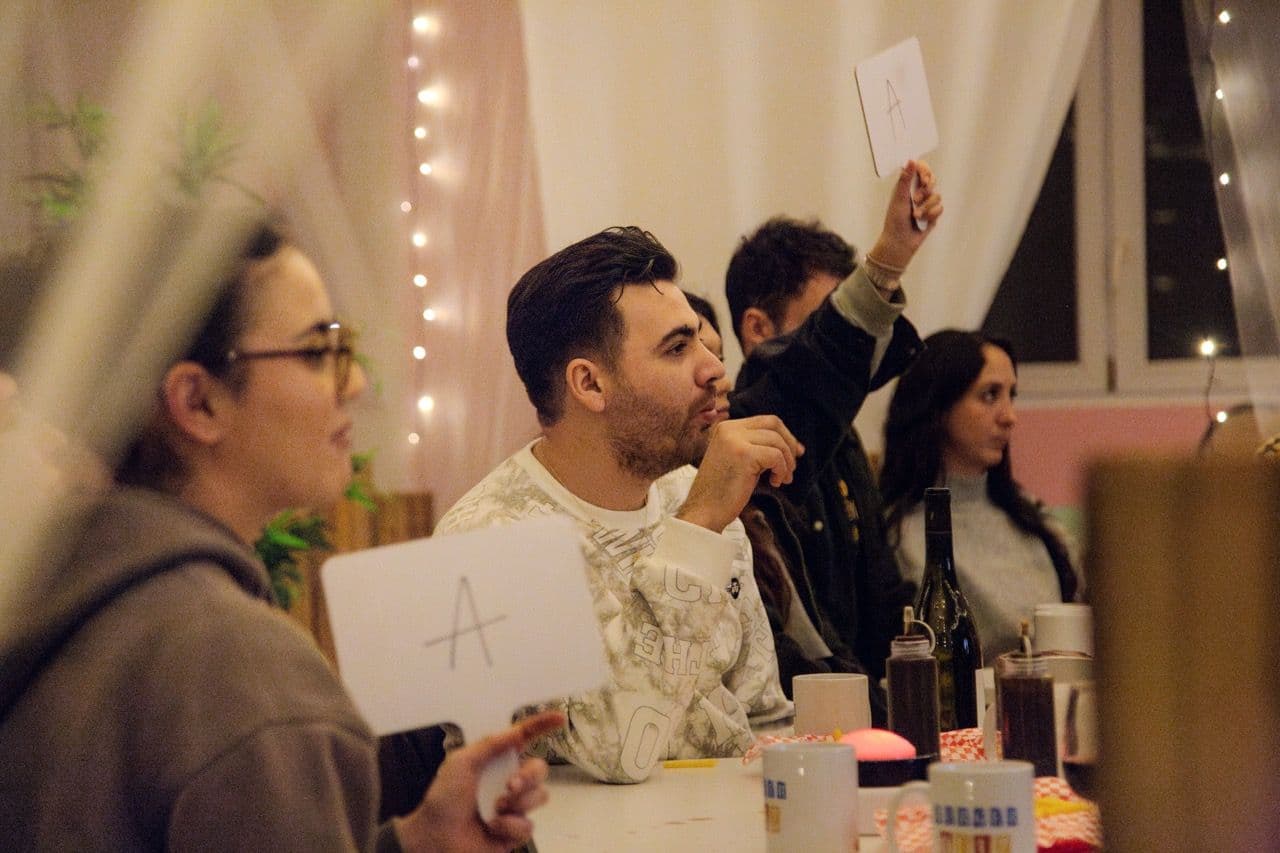
Strategy Board Game Night
Time for the team building activity: 90–120 minutes
Setup effort: Easy to moderate
Estimated cost: Low to medium
Business value: Encourages strategic thinking, communication, and collaborative decision-making in a relaxed and engaging environment
What is a Strategy Board Game Night?
A Strategy Board Game Night is a social and intellectually engaging team building activity where participants gather to play tabletop games that emphasize planning, tactics, and negotiation. Unlike casual party games, strategy games require players to analyze situations, anticipate opponents’ moves, and develop thoughtful approaches to achieving objectives.
This activity can include classic games such as chess or modern strategy games that require resource management, alliance building, or long-term planning. Participants sit around tables and engage in structured gameplay while interacting socially with colleagues.
The appeal of strategy board games lies in their balance between competition and collaboration. Some games involve direct rivalry between players, while others encourage alliances or cooperative problem-solving.
Participants quickly become immersed in the gameplay, discussing strategies, debating decisions, and celebrating clever moves. This type of engagement naturally strengthens communication and teamwork.
Because strategy games require patience and thoughtful planning, they create a different dynamic from high-energy team activities. Participants experience a slower, more reflective form of interaction that many teams find refreshing.
How do you run a Strategy Board Game Night?
Begin by setting up several game stations around the room, each with a different strategy board game. Participants are divided into small groups and assigned to a table.
The facilitator explains the basic rules of each game and provides guidance for participants who may be unfamiliar with certain games.
Players then begin their matches. Depending on the format, games can be played casually or as part of a tournament where winners advance to later rounds.
Examples of strategy games often used include:
Chess or checkers
Resource management board games
Territory control games
Cooperative puzzle-style board games
Participants rotate between tables during the event so they can interact with different colleagues and experience different games.
At the end of the evening, the facilitator announces the winning players or teams and celebrates memorable moments from the games.
Why it’s great for a team
Strategy board games encourage participants to think critically and plan ahead. Players must evaluate risks, anticipate outcomes, and make decisions based on limited information.
These skills are highly relevant in professional environments where teams must analyze situations and develop effective strategies.
The activity also promotes social interaction. Unlike traditional meetings, board games create a relaxed environment where colleagues interact more naturally.
Participants often discover new aspects of their coworkers’ personalities, such as creativity, patience, or strategic thinking.
Another benefit is that strategy games encourage respectful competition. Players challenge each other intellectually while maintaining a friendly atmosphere.
This combination of strategy and social connection makes the activity both enjoyable and meaningful.
How to organize it effectively
Choose a variety of games with different levels of complexity so participants of all experience levels can participate comfortably.
Provide clear instructions or quick tutorials for each game to ensure players understand the rules.
Create a welcoming environment with comfortable seating and enough table space for gameplay.
If running a tournament, prepare a simple bracket system so participants can track progress.
Finally, encourage participants to rotate between games to maximize interaction and variety throughout the event.