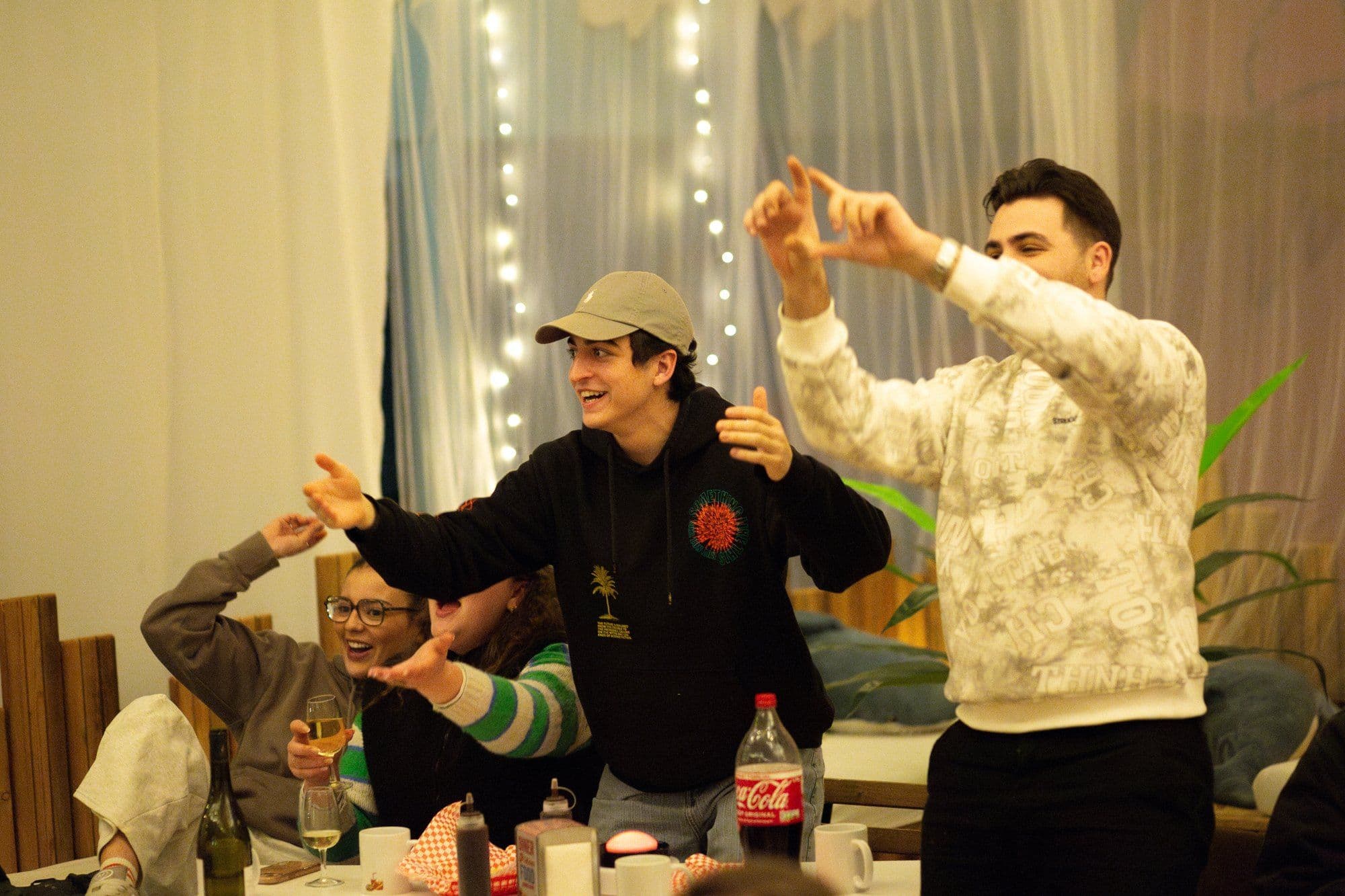
These team building games without materials give planners fast ways to get people talking, moving, and thinking together with almost no setup. Use them to match the room, whether you need a quiet reset, a physical challenge, or a remote activity that still feels social. Pick the format that fits your group, then keep the rules simple and the pace clear.
Key takeaways
- The options span physical games like human knot, trust fall, and charades, silent coordination with line up, and quick conversation starters such as rapid icebreakers and show and tell.
- Remote and hybrid teams have their own choices too, including virtual group map, virtual trivia, remote coffee breaks, guess whose workspace, virtual bingo, and online meditation session.
- Several activities are built for quick coordination or fast thinking, including count to 20, wink murder, and what would you do?, while others are better when you want a warmer tone or lighter conversation.
- The mix also includes playful options like emoji story, animal sounds, and virtual talent show, which work well when you want energy without props or preparation.
1. Human knot
Human knot is a physical cooperation game where the group stands in a circle, grabs hands with two different people, and works together to untangle itself without letting go.
It works because it forces coordination under pressure. The group has to communicate, adjust quickly, and stay aware of everyone else's movement.
Group setup: Group in a circle
Best for: An active challenge that is simple to explain
How to apply: Have everyone stand in a circle and grab hands with two different people. Keep hands linked and work together to untangle the group without letting go. Focus on communication, quick adjustments, and awareness of movement.
2. Two truths and a lie
Two truths and a lie is a personal connection game where each person shares three statements, and the group guesses which one is false.
It works because coworkers learn surprising details about one another without needing any props or preparation. The activity is low-stakes, easy to run, and good for new teams or mixed groups.
Group setup: Individual turns in a group
Best for: New teams or mixed groups
How to apply: Have each person share three statements about themselves. Ask the group to guess which statement is false. Keep the pace light so quieter people also have a chance to speak in a structured way.
3. Charades
Charades is a non-verbal communication game where players act out words, phrases, or ideas without speaking.
The group has to interpret gestures, read body language, and respond fast. That makes it a strong fit when you want energy and creativity without materials.
Group setup: Group play, in person or virtual
Best for: Energy and creativity without materials
How to apply: Give players words, phrases, or ideas to act out without speaking. Have the group interpret the gestures and respond fast. Use it in person, or adapt it for virtual groups too.
4. Count to 20
Count to 20 is a focus and coordination game where the group stands in a circle and counts aloud, one number at a time, with only one person speaking at once.
If two people speak together, the group starts over. The game sounds simple, but it quickly reveals how well people listen and time their responses.
Group setup: Group in a circle
Best for: A short exercise that rewards patience, awareness, and group rhythm
How to apply: Have the group stand in a circle and count aloud, one number at a time. Make sure only one person speaks at once. If two people speak together, start over and keep going until the group finds its rhythm.
5. Line up
Line up is a silent problem-solving game where the group arranges itself in a specific order, such as by height, birthday month, or alphabetical order, without speaking.
It works because people have to create signals, read one another, and agree on a shared approach without using words. That makes it a practical choice for teams that need quick coordination.
Group setup: Silent group format
Best for: Quick coordination
How to apply: Ask the group to line up in a specific order, such as by height, birthday month, or alphabetical order. No one speaks, so the team has to use signals and read one another. Watch how the group handles uncertainty and improvisation.
6. Trust fall
Trust fall is a vulnerability and support exercise where one person falls backward from standing height and trusts teammates to catch them.
It is direct, physical, and easy to understand, which is why it remains a classic trust-building activity. The value comes from the moment of hesitation and the response from the group.
Group setup: One person at a time with teammates ready to catch
Best for: Trust-building when the team is comfortable with physical contact
How to apply: Have one person fall backward from standing height while teammates catch them. Keep participation voluntary. Use clear safety boundaries and only run it when the team feels comfortable with physical contact.
7. Wink murder
Wink murder is an observation and deduction game where one person secretly eliminates others by winking, and the group tries to identify the "murderer" before everyone is out.
It works because players have to watch closely, notice subtle behavior, and make decisions from limited clues. That makes it a lively option for groups that enjoy attention games and quick reasoning.
Group setup: Group observation game
Best for: Groups that enjoy attention games and quick reasoning
How to apply: Choose one person to act as the "murderer" and have them eliminate others by winking. Ask the group to watch closely and identify who it is before everyone is out. Keep the room alert from start to finish.
8. Rapid icebreakers
Rapid icebreakers are quick engagement questions that ask people to answer fast, such as "Coffee or tea?" or "What superpower would you choose?"
They work because the pace keeps people from overthinking and gets the room talking early. The format is flexible, easy to repeat, and useful when you want everyone involved without making the activity feel heavy or formal.
Group setup: Quick group questions
Best for: Meetings, workshops, or new-team sessions
How to apply: Ask a fast question and have people answer right away. Keep the pace moving so no one overthinks. Repeat with new prompts to keep everyone involved and the room talking early.
9. Virtual group map
Virtual group map is a cultural awareness activity for remote or hybrid teams.
Participants mark their location on a shared screen and briefly share a local tradition. It works because it gives people a simple way to see where teammates are based and what daily life looks like in different places. That small exchange can make distance feel smaller and help the group understand one another beyond job titles.
Group setup: Remote or hybrid teams
Best for: Distributed teams that rarely meet in person
How to apply: Ask participants to mark their location on a shared screen. Then have each person briefly share a local tradition. Keep the exchange short so everyone gets a turn. Use it to help the group see where teammates are based and what daily life looks like in different places.
10. Show and tell
Show and tell is a personal connection exercise where participants pick an item nearby and explain why it matters to them.
It works because the object gives people an easy starting point, but the real value is the story behind it. The activity helps coworkers see one another as people with interests, routines, and memories outside work.
Group setup: Group format
Best for: When you want a warmer tone without needing any setup
How to apply: Ask each participant to choose an item nearby. Have them explain why it matters to them. Let the object open the conversation, then give space for the story behind it. Keep it low-pressure and simple to run.
11. Virtual trivia
Virtual trivia is a collaboration game where teams answer questions from different categories using a shared digital document.
It works because the group has to pool knowledge, listen to one another, and move quickly together. The format keeps energy high without requiring materials, and it can be adjusted for small or large groups.
Group setup: Small or large groups
Best for: Remote teams that want something light but still interactive
How to apply: Prepare questions from different categories in a shared digital document. Have teams answer by pooling knowledge and moving quickly together. Keep the pace lively so the energy stays high. Adjust the format to fit a small or large group.
12. What would you do?
What would you do? is a decision-making exercise where the facilitator presents a hypothetical situation and the team explains how it would respond.
It works because it reveals how people think when there is no obvious answer. The group has to weigh risks, compare priorities, and explain choices out loud.
Group setup: Leadership teams, project groups, or mixed teams
Best for: Surfacing different judgment styles without turning the activity into a formal debate
How to apply: Present a hypothetical situation to the group. Ask the team to explain how it would respond. Have people weigh risks, compare priorities, and explain their choices out loud. Keep the discussion focused on judgment, not debate.
13. Remote coffee breaks
Remote coffee breaks are casual bonding sessions with a simple rule: no work talk.
They work because they recreate the informal conversations that often happen naturally in an office. Without an agenda, people can relax, chat, and connect in a way that feels less structured than a meeting.
Group setup: Remote team format
Best for: Teams that need more human contact between project calls
How to apply: Set a simple rule of no work talk. Give people space to relax, chat, and connect without an agenda. Keep the session casual so it feels different from a meeting. Repeat it whenever the team needs a lighter touchpoint.
14. Guess whose workspace
Guess whose workspace is an environment-sharing game where team members anonymously submit photos of their workspaces and the group guesses who owns each one.
It works because it gives people a glimpse into how others organize their day and set up their space. The activity is light, visual, and easy to run in a remote setting.
Group setup: Remote group format
Best for: Creating natural conversation around work habits and personal style
How to apply: Ask team members to anonymously submit photos of their workspaces. Show each photo to the group and have everyone guess who owns it. Use the details people notice to open conversation. Let the guesses lead into stories about work habits and personal style.
15. Emoji story
Emoji story is a creativity and interpretation game where participants tell a short story using only emojis and others try to decode it.
It works because it limits the tools available, which pushes people to think differently. The activity is playful, fast, and useful when you want a low-pressure way to spark imagination.
Group setup: Group format
Best for: Teams that want to practice interpretation and flexible thinking
How to apply: Ask participants to tell a short story using only emojis. Have the others try to decode it. Keep the pace quick and the tone playful. Use the different interpretations to show how people can read the same signals in different ways.
16. Virtual bingo
Virtual bingo is an engagement game where the host calls out prompts tied to common team experiences or work life, and participants mark their cards when something applies.
It works because the prompts feel familiar, so people can join in quickly and recognize shared moments. The first person to call Bingo wins, but the real value is the shared energy in the room.
Group setup: Remote group format
Best for: Remote groups that need something simple, fast, and easy to follow
How to apply: Have the host call out prompts tied to common team experiences or work life. Ask participants to mark their cards when something applies. Keep the prompts familiar so people can join in quickly. End when the first person calls Bingo.
17. Online meditation session
Online meditation session is a short guided mindfulness break that helps the group reset.
It works because it lowers stress and gives people a moment to settle before demanding work.
Group setup: 15-minute session
Best for: calm, attention, or a transition between intense tasks and the next part of the day
How to apply: Run a short guided mindfulness break online. Keep the session focused so it changes the pace of the meeting without taking over the agenda. Use it when the team needs calm, attention, or a transition between intense tasks and the next part of the day.
18. Speed networking
Speed networking is an accelerated introduction activity where participants pair up in short breakout-room conversations and switch partners after each round.
It works because repeated one-on-one chats help people meet more colleagues in less time.
Group setup: large groups, new teams, or hybrid sessions
Best for: a fast way to build comfort and remember names without a long formal introduction
How to apply: Set up short breakout-room conversations and have participants pair up. After each round, switch partners so the pace keeps moving. Use the structure to prevent awkward silence and help people meet more colleagues in less time.
19. Animal sounds
Animal sounds is a coordination and auditory focus game where each participant is assigned an animal sound and has to find others making the same sound.
It works because people have to rely on listening instead of sight, which changes the way the group interacts.
Group setup: movement-based group activity
Best for: attention and a bit of laughter without needing any materials
How to apply: Assign each participant an animal sound. Have everyone move around and listen for others making the same sound. When they find their match, they group together and keep the activity lively and a little chaotic.
20. Virtual talent show
Virtual talent show is a vulnerability and expression activity where participants share a skill, hobby, or performance with the group online.
It works because people get to show a side of themselves that does not usually appear in meetings.
Group setup: voluntary online group format
Best for: building trust, sparking conversation, and making a remote team feel more personal
How to apply: Invite participants to share a skill, hobby, or performance online. Keep participation voluntary and the tone supportive. Let the room stay open rather than performative so people feel comfortable sharing.
Where to host team building games without materials
The venue decides which ideas work, especially when you need team building games without materials. Each type below includes a real Naboo venue, so you can match the activity to the space from the start.
A venue with open space for movement games
A venue with open space for movement games suits human knot, count to 20, line up, trust fall, wink murder, rapid icebreakers, animal sounds, and virtual talent show because each one needs room to gather, shift, react, and reset without crowding. The open layout keeps energy high and makes quick changes between quiet prompts and active group movement feel natural.
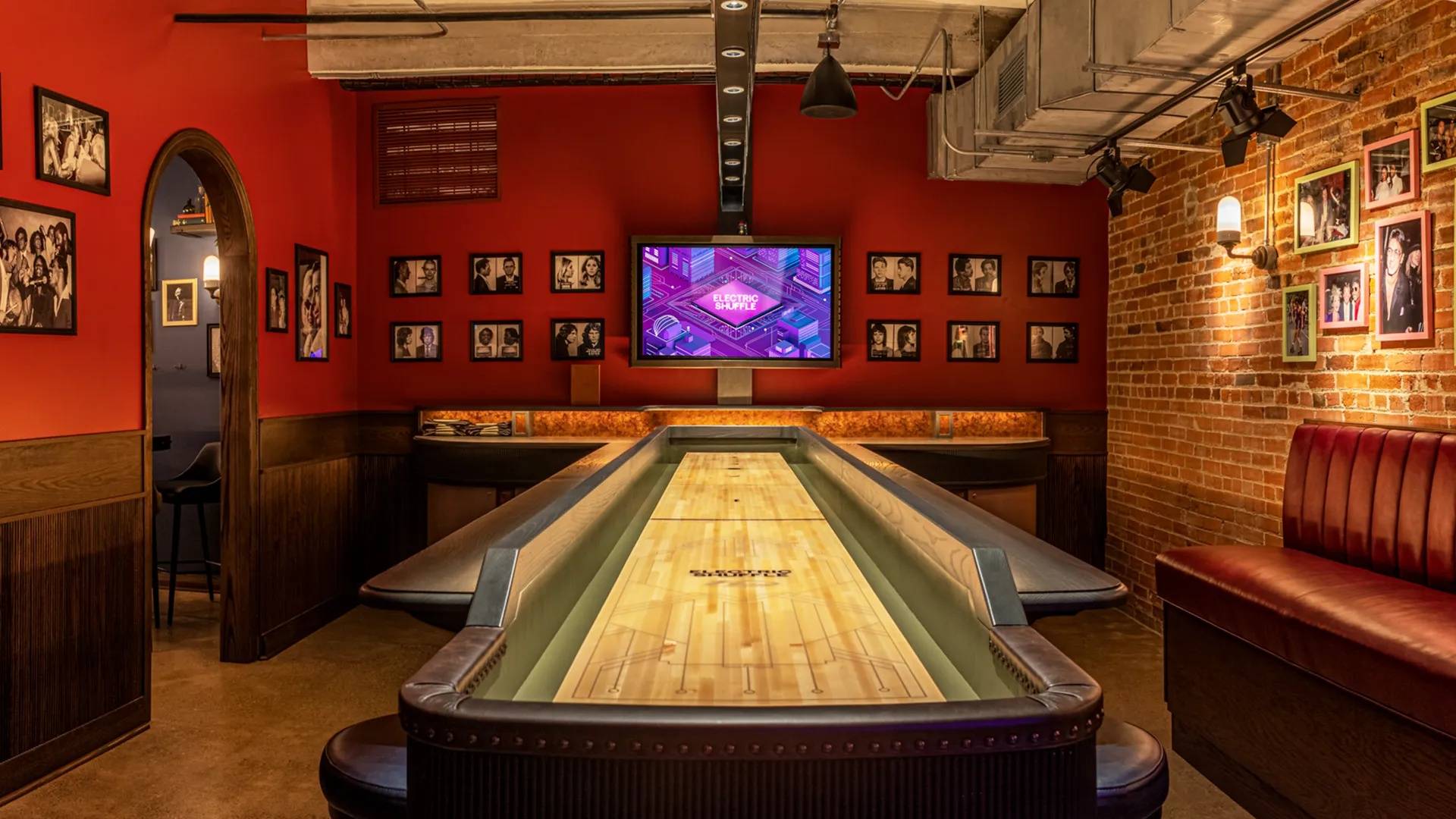
Electric Shuffle Dallas is a venue located on Elm Street in Dallas, Texas, designed for corporate events, team-building, and social gatherings. It combines a high-tech shuffleboard experience with premium food and beverage options, and its event spaces can host groups in cocktail format.
A venue with breakout rooms for quick team rounds
A venue with breakout rooms suits two truths and a lie, charades, rapid icebreakers, what would you do? and speed networking because each round can move fast without disrupting the rest of the group. Separate spaces make it easier to split people up, reset between games, and keep the pace lively for short team sessions.
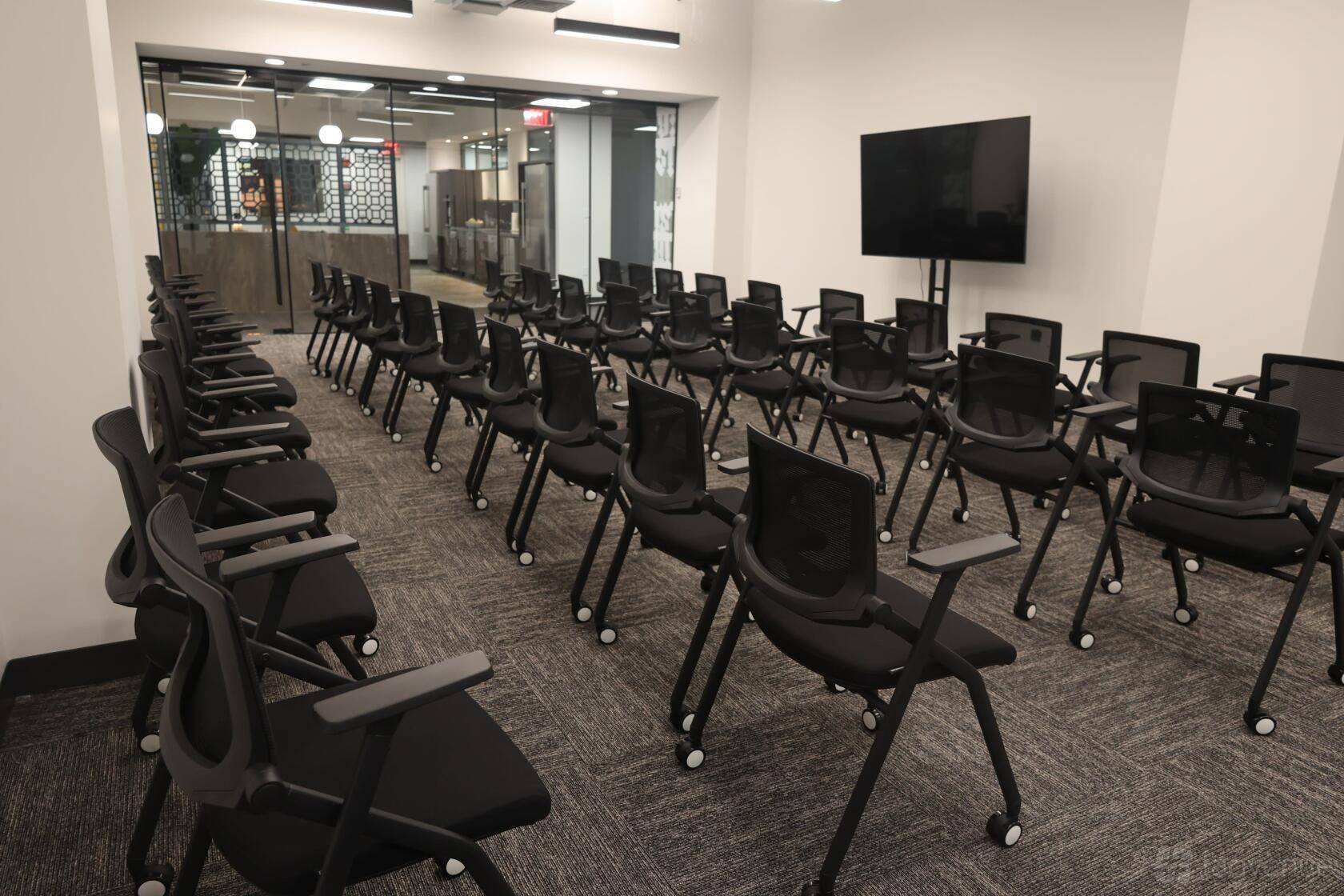
EqualSpace 550 is a professional coworking space on Broad Street in the Essex neighborhood of Newark, New Jersey. It offers flexible private spaces for professional events, with a modern, business-focused setting for small team meetings and larger group gatherings.
A venue with outdoor grounds for active group play
An outdoor grounds venue suits human knot, count to 20, line up, trust fall, wink murder, and animal sounds because these games need room to move, regroup, and hear each other clearly. Open lawn space keeps the pace lively for active group play, while a calm setting helps teams stay focused during quick rounds and simple instructions.

The Mountain Terrace is a corporate events venue in Woodside, California, in Silicon Valley. It is surrounded by redwoods and offers indoor spaces with a large outdoor lawn for group activities and team-building activities.
Frequently asked questions
What are team building games without materials good for?
They are useful when you want connection without setup, props, or budget pressure. They also work well for quick morale boosts, remote groups, and in-person teams that need an easy reset.
How do you choose the right no-material team building game?
Choose based on connection depth, logistics effort, and time available. The best activities also fit different group sizes and work for in-person, remote, or hybrid teams.
How do you run a no-material team building game well?
Keep the pace clear and the instructions simple, then debrief afterward. The learning comes from what the group notices after the activity, and that is where better listening, smoother collaboration, and more comfortable participation show up.
What group size works best for these games?
The right size depends on the activity, but the format can fit different group sizes. Some games work in a circle, some use individual turns in a group, and others are built for small or large groups.
Can no-material team building games work for remote or hybrid teams?
Yes. Some activities are made for remote or hybrid teams, and others can be adapted for virtual groups too.
Which no-material games are easiest to start with?
Rapid icebreakers, Two truths and a lie, and Show and tell are easy to run because they need no props and little preparation. If you want more energy, Charades and Count to 20 are simple to explain and keep the group active.