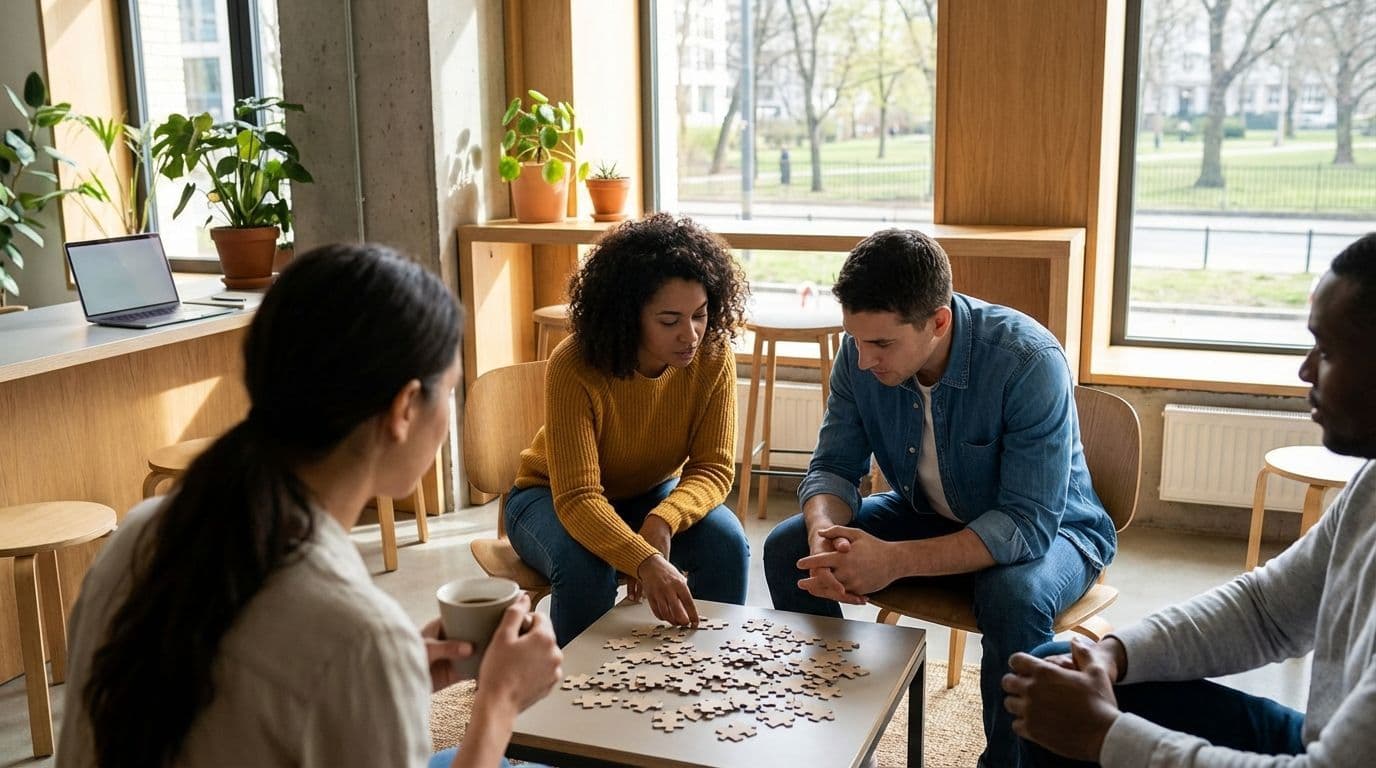
The Puzzle Swap
Time for the team building activity: 15–20 minutes
Setup effort: Moderate (printed mini-puzzles or cut images)
Estimated cost: Low
Business value: The puzzle swap exposes silo behavior, forces real negotiation, and reveals whether teams can actually collaborate across boundaries.
What is The Puzzle Swap?
The puzzle swap is a deceptively simple exercise: small groups get a puzzle to complete, but each team is missing pieces that other teams hold. To finish, they have to communicate, negotiate, share resources, and stop working in isolation.
The constraint is hidden at first. Teams start trying to solve it alone. The moment they realize they can't—that's where the learning happens. It mirrors what actually happens in most organizations.
How do you run The Puzzle Swap?
Prepare identical small puzzles (or printed images cut into pieces). Before the session, remove 3–5 pieces from each team's puzzle and distribute them secretly to the other teams.
Divide participants into teams of 3–5 people and give each team their incomplete puzzle and a flat working surface. Tell them simply: "Complete your puzzle as quickly as possible." Don't mention that pieces are missing.
Set a timer for 10–12 minutes. Watch what happens. Most teams will struggle internally before realizing they need to collaborate across the room.
When teams finish (or time expires), stop and debrief. The whole activity runs 15–20 minutes.
Why it's great for a team
Most collaboration workshops talk about breaking silos. The puzzle swap makes silo behavior visible in real time.
Teams see immediately that success required looking outside their own group. That's the exact dynamic that fails in actual business environments—teams over-focusing internally while ignoring what other groups hold.
The activity works especially well in cross-functional groups, post-merger integration, scaling organizations, and leadership programs. It surfaces whether teams naturally hoard resources or share them, which is a solid indicator of collaboration maturity.
How to organize it effectively
Preparation matters most. Make sure each team is missing different pieces and that the swaps are balanced.
Don't reveal the twist early. Let teams discover they need to collaborate—that's where the insight lives.
As facilitator, observe but don't coach during the activity. Watch for which teams reach out first, whether anyone hoards pieces, and how negotiation actually unfolds.
Keep teams small (3–5 people) to maximize participation. For larger groups, run multiple puzzle clusters in parallel.
The debrief is critical. Ask: "At what moment did you realize you needed others?" "What slowed your team down?" "Where do we see this pattern at work?"
Run well, the puzzle swap vividly exposes collaboration habits and shifts how teams think about working across boundaries.