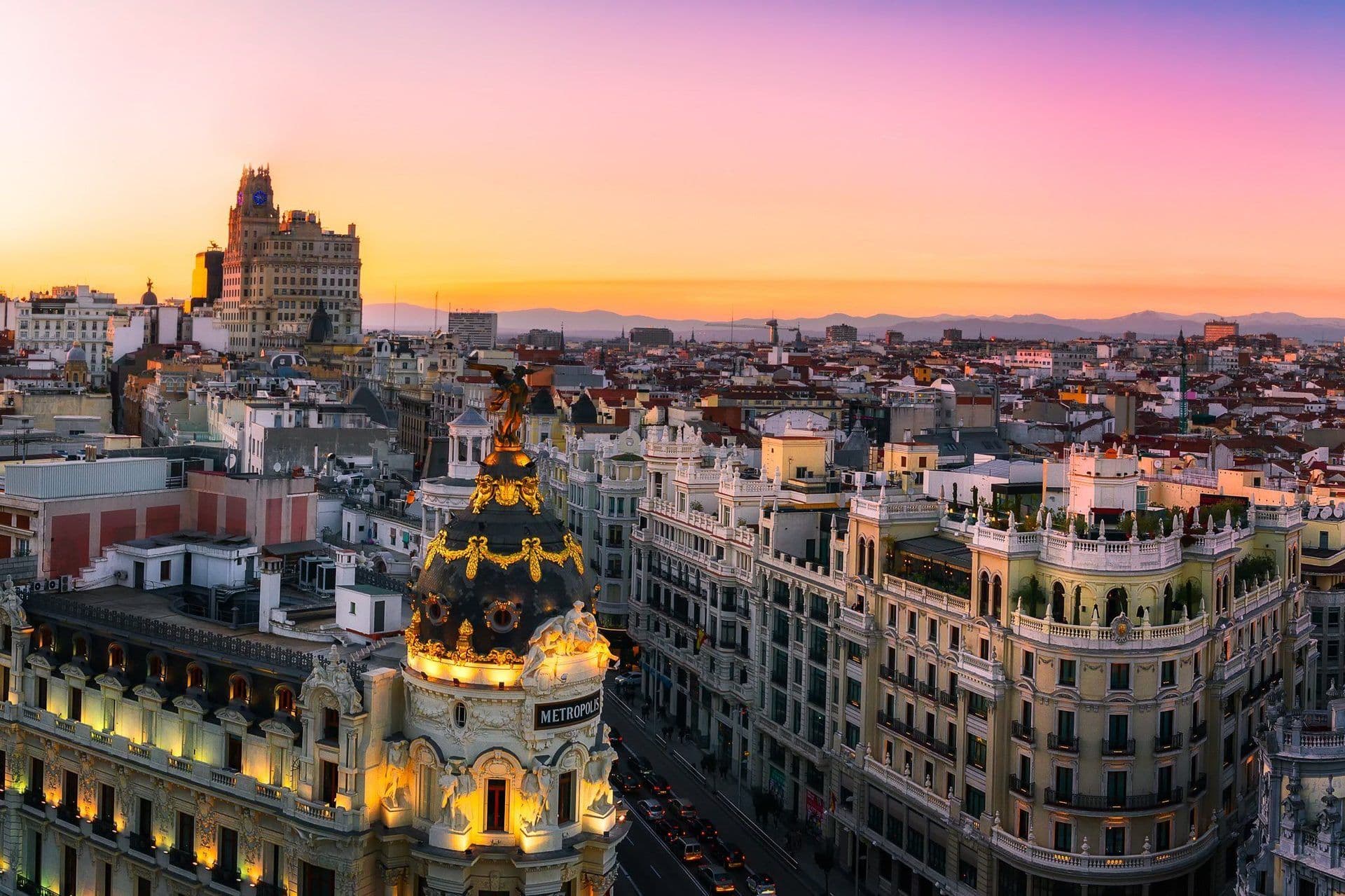
Madrid is a city where imperial history meets contemporary business culture. It's known for world-class art galleries, grand boulevards, and a culinary scene that extends well into the night. For a what to do madrid corporate retreat guide, the city offers more than logistics—it provides an atmosphere of elegance and warmth that breaks down professional barriers naturally.
Whether you're hosting a strategy session in a restored palace or a workshop in Chueca, Madrid gives you a backdrop of prestige without the stuffiness.
Here are 5 in-depth experiences tailored for corporate retreats—activities that blend Spanish heritage with genuine team alignment.
1. The Passion of Strategy: A Private Flamenco Masterclass
Flamenco is far more than performance. It's a rigorous study in high-stakes communication, precision, and the balance between individual expression and collective rhythm. UNESCO recognizes it as Intangible Cultural Heritage for good reason—the art form provides a direct metaphor for modern leadership. Success depends on reading colleagues' cues and responding with absolute timing.

Communication Beyond Words:
- The Soul of "Duende": Your team begins in a private tablao (flamenco venue) with a bespoke performance introducing Duende—the elusive state where an artist transcends technique to connect deeply with their audience. It's a masterclass in executive presence and emotional conviction.
- The Architecture of "Palmas" (Rhythm): Under professional bailaores and palmeros, your team learns Palmas (clapping). In Flamenco, claps aren't applause—they're the rhythmic foundation. You'll master palmas sordas (muted claps) for support and palmas claras (sharp claps) for energy, learning how knowing your role ensures the soloist—or project lead—can succeed.
- Synchronization & Footwork (Zapateado): One out-of-sync beat disrupts the entire ensemble. The footwork requires active listening and coordination that mirrors hand-offs in high-functioning departments.
- The Improvisational Dialogue: Flamenco is a real-time conversation between singer, guitarist, and dancer. You'll explore "Agile Leadership"—the ability to improvise within a strict framework while maintaining alignment with the group's objective.
- Bespoke Tapas & Networking: The session concludes with curated Iberian hams and regional wines in a historic Madrid vault, providing a relaxed setting for discussing how the discipline and passion of the tablao translates to your corporate culture.
By mastering the pulse of Madrid, your team gains appreciation for the intensity, precision, and collaborative soul required to maintain a world-class standard.
2. Imperial Excellence: Private Tour of the Royal Palace
The Royal Palace of Madrid spans 135,000 square meters. As the largest functioning royal palace in Western Europe, it serves organizations focused on scaling with excellence and establishing a long-term professional legacy. Walking these halls gives you a physical encounter with branding, governance, and the relentless pursuit of elite standards.
Here's how Madrid's top corporate retreat activities compare across key logistics and investment factors:
| Activity Type | Group Size | Duration | Cost per Person | Best For |
|---|---|---|---|---|
| Art Gallery & Museum Tours | 8–60 people | 2–3 hours | €15–€35 | Creative teams, cultural immersion |
| Culinary Cooking Class | 10–30 people | 3–4 hours | €60–€90 | Team bonding, hands-on collaboration |
| Walking Food Tour with Tapas | 12–50 people | 2.5–3.5 hours | €40–€65 | Networking, casual team building |
| Private Madrid City Tour | 15–80 people | 3–4 hours | €25–€50 | Orientation, mixed experience levels |
| Wine Tasting & Vineyard Experience | 10–40 people | 4–5 hours | €55–€85 | Executive teams, premium experiences |
| Team Sports Activity (Tennis, Futsal) | 12–50 people | 2–3 hours | €30–€60 | High-energy teams, friendly competition |
Budget between €30–€70 per person for a well-rounded Madrid corporate retreat balancing cultural engagement with active team connection.

Navigating Success Through Heritage:
- The Privilege of Early Access: Private, skip-the-line entry lets your team experience the palace without crowds, focusing on the intricate craftsmanship and strategic messaging hidden within the Baroque and Neoclassical design.
- The Throne Room & Symbolic Branding: In the Salón del Trono, explore "Visual Authority." From Tiepolo-painted ceilings to bronze lions, every element communicates strength and stability—a direct parallel to how modern corporations project leadership globally.
- The Royal Armory (Real Armería): One of the world's most significant collections of ceremonial and combat equipment. For your team, it's a masterclass in "Resource Management" and having the right tools to protect and expand organizational influence.
- The Gala Dining Room: Site of Spain's most prestigious state banquets. Discuss the "Art of Diplomacy"—how space arrangement, service precision, and protocol adherence facilitate high-stakes negotiations and foster alliances.
- Grand-Scale Thinking: Standing amidst 3,418 rooms naturally shifts your mind from tactical daily tasks toward expansive, visionary thinking. It inspires commitment to maintaining the highest professional standards.
Immersing your leadership team in Madrid's imperial history reinforces the values of longevity, precision, and building on a world-class scale.
3. Historic Bonding: The Tapas and Taverns Trail
In Madrid, a meal is a social contract. The city's identity is defined by the Tapeo—moving fluidly from one historic tavern to the next—and the Sobremesa, the cherished time spent talking around the table long after the food finishes. For a corporate group, this tradition offers a powerful alternative to the rigid formal dinner, facilitating authentic connection and networking essential for high-trust teams.
 Bespoke Culinary Diplomacy:
- The Barrio de las Letras Circuit: The "Literary Quarter" hosts century-old taverns where Spanish golden-age writers gathered. This historic backdrop provides a prestigious yet relaxed setting for fluid conversation away from office pressures.
- Guided Sensory Evaluation: Local gastronomic experts guide your team through Spanish excellence—from Jamón Ibérico de Bellota to bold Ribera del Duero wines. Shared discovery of complex flavors catalyzes creative exchange.
- Strategic Small-Group Mobility: Movement between venues maintains a constant social shuffle, preventing static seating and ensuring wider colleague engagement in a high-energy environment.
- Mastering the Sobremesa: The itinerary specifically allows for Sobremesa. This unstructured time is where the most valuable professional insights emerge—where hierarchies dissolve and genuine ideas surface over coffee or digestive Orujo.
- Historic Tavern "Buyouts": For larger groups, private access to hidden back-rooms and "cuevas" (underground vaults) of Madrid's most iconic institutions provides insider privilege and total privacy for strategic discussions.
The Curated Circuit:
Begin at Casa Labra, a 19th-century landmark near Puerta del Sol, famous for political significance and standing-room networking. Move to the Mercado de San Miguel, a glass-and-iron structure offering a dense tour of Spain's finest ingredients.
For innovation-focused teams, Sala de Despiece on Calle Ponzano treats gastronomy as design. Conclude with a long Sobremesa at Taberna La Carmencita, the city's second oldest tavern, where vibrant blue tiles and bohemian history provide the perfect atmosphere for deep storytelling.
By embracing Madrid's dining culture, your team returns with deep, authentic professional bonds that only a true Sobremesa can forge.
4. Architectural Discovery: A Day Trip to Segovia and Avila
Step beyond the city limits to gain perspective on foundational strength and longevity.
A private excursion to the UNESCO World Heritage sites of Segovia and Avila offers more than scenery. You gain a physical journey through Spain's most significant architectural and strategic milestones. Exploring ancient structures prompts deeper dialogue about building organizations designed to last centuries rather than quarters.
The Architecture of Permanence:
- The Roman Aqueduct of Segovia: This 2,000-year-old marvel stands without a single drop of mortar. Its longevity testifies to perfect alignment and structural integrity—a visual metaphor for the hidden systems and values supporting high-performing organizations.
- The Fortress of Segovia (The Alcázar): Perched on a crag between two rivers, this castle served as a royal palace, military academy, and state treasury. Explore its multi-functional history to spark discussions on adaptive thinking and resilient leadership.

The Walls of Avila: Business Fortification: Avila's 11th-century walls are the best-preserved medieval ramparts in Europe. Walking them challenges your team to consider how you protect core values while maintaining agility to engage the world outside your walls.

- Gastronomy of the High Plains: A long, traditional lunch is essential. Segovia's famous Cochinillo (suckling pig) or Avila's renowned veal, served in historic granaries or stone vaults, reinforces the importance of regional identity and the slow-food philosophy of the Castilian heartland.
- The Journey as a "Reset": Premium transit between sites is designed for decompression. Vehicles equipped with high-speed connectivity allow for quiet reflection as Castilian landscapes unfold outside.
Connecting your team with the physical markers of Spain's enduring legacy provides the mental space and historical context needed to build your own fortress of professional excellence.
5. Artistic Innovation: A Private Gallery "Deep Dive"
Madrid's "Golden Triangle"—the Prado, the Reina Sofía, and the Thyssen-Bornemisza—offers an unparalleled laboratory for teams in creative and innovative industries. Stepping away from spreadsheets into galleries engages "Visual Thinking Strategies" (VTS), a methodology designed to sharpen critical thinking and improve clarity of collective communication.
Mastering the Art of Perspective:
- The Riddle of Velázquez at the Prado: Stand before Las Meninas, arguably the most complex painting in Western history. Expert facilitators decode its layers of perspective, mirrors, and meta-narratives. This is a masterclass in "User-Centered Thinking," challenging you to consider multiple stakeholders and the role of the unseen observer in business strategy.
- Rethinking Disruption with Picasso: At the Reina Sofía, analyze Guernica, a monumental 20th-century icon. Explore Picasso's process from initial sketches to final radical composition, understanding how organizations visualize complex data, manage impact, and maintain powerful brand voice during upheaval.
- The Thyssen-Bornemisza Pivot: This private family collection traces perspective evolution from the 13th century to Pop Art. It's a physical timeline of "Disruptive Innovation," where each artistic movement represents radical departure from status quo—an ideal backdrop for R&D and future-readiness sessions.
- Visual Literacy Workshops: Your team participates in active inquiry. Learning to "read" a painting develops skills to observe closely, listen to diverse viewpoints without judgment, and communicate complex ideas with greater visual impact—skills that translate directly to the executive boardroom.
- The "Curator's Eye" for Branding: Explore how global "brands"—from Spanish Hapsburgs to modern surrealists—used visual cues to build influence. This provides your team with a toolkit for storytelling and high-stakes presentation design.
Engaging with Madrid's artistic giants broadens your team's visual intelligence and builds the creative confidence needed to approach old business problems from entirely new angles.
Ready to plan your Madrid retreat?
At Naboo, we handle the logistical precision that makes a Spanish offsite effortless. From securing historic mansions for meetings to arranging private palace tours, we manage details so you can focus on your team's transformation.