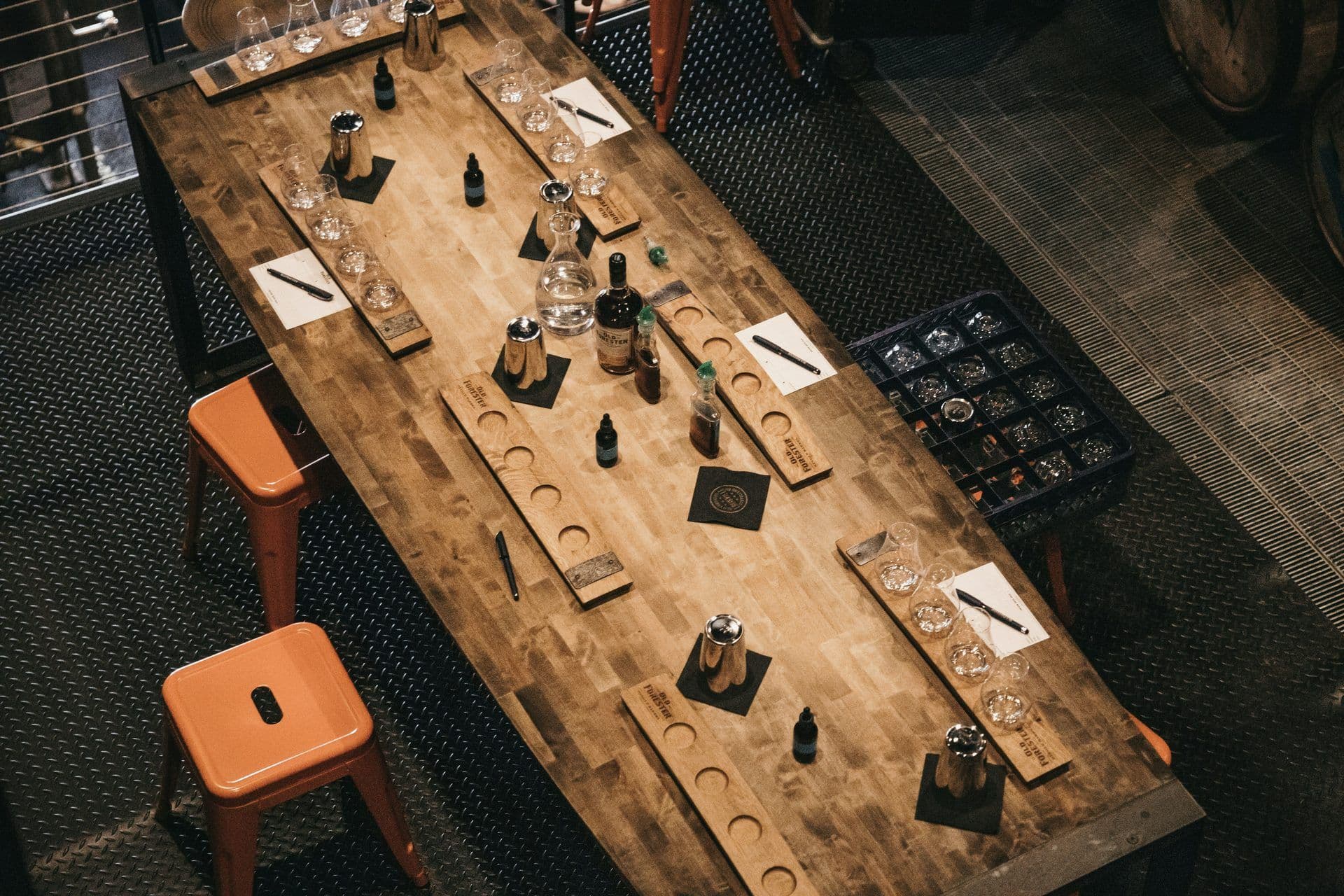
Wine Tasting Challenge
Time for the team building activity: 60–90 minutes
Setup effort: Moderate
Estimated cost: Medium
Business value: Encourages conversation, builds sensory awareness, and strengthens team bonding through a shared discovery experience
What is a Wine Tasting Challenge?
A Wine Tasting Challenge is a sensory team building activity where participants taste a selection of wines and attempt to identify characteristics such as grape variety, region, aromas, or flavor notes. Instead of simply tasting wines casually, the experience is structured as a collaborative challenge where teams discuss observations and make collective guesses.
The activity typically uses blind tasting, meaning participants do not know which wine they are tasting in advance. This format encourages curiosity and discussion because participants must rely on their senses rather than prior knowledge.
Participants often analyze color, aroma, and taste while discussing what they notice with teammates. The process naturally leads to lively conversation as people compare perceptions and debate possible answers.
Because wine tasting is both social and educational, the experience feels sophisticated while still being relaxed and enjoyable.
How do you run a Wine Tasting Challenge?
The facilitator introduces several wines without revealing their identities. Participants taste each wine and discuss their impressions with teammates.
Teams are then asked to answer questions such as:
Which country or region might this wine come from?
Is it a red, white, or rosé grape variety?
What aromas or flavors can you detect?
Which wine is the oldest or strongest?
Teams submit their guesses and receive points for correct answers. The team with the highest score at the end of the tasting wins the challenge.
Between rounds, the facilitator reveals the wines and explains their characteristics, which adds an educational dimension to the experience.
Why it’s great for a team
Wine tasting encourages thoughtful discussion and attentive listening. Because everyone perceives flavors differently, participants must share and compare perspectives before reaching a conclusion.
This collaborative analysis strengthens communication and builds a relaxed atmosphere where colleagues can interact comfortably.
The sensory aspect also makes the experience memorable. Participants often discover new wines while learning how subtle differences in aroma and flavor can be identified.
The activity naturally slows down the pace of interaction, allowing people to connect more meaningfully.
How to organize it effectively
Work with a sommelier or wine expert who can guide participants through the tasting and explain each wine’s characteristics.
Provide tasting cards so participants can record notes about color, aroma, and taste. Encourage teams to discuss observations before submitting their answers.
Offer small snacks or palate cleansers such as bread or cheese to help participants reset their taste between wines.
End the session by revealing the wines and inviting participants to share which ones they enjoyed most.