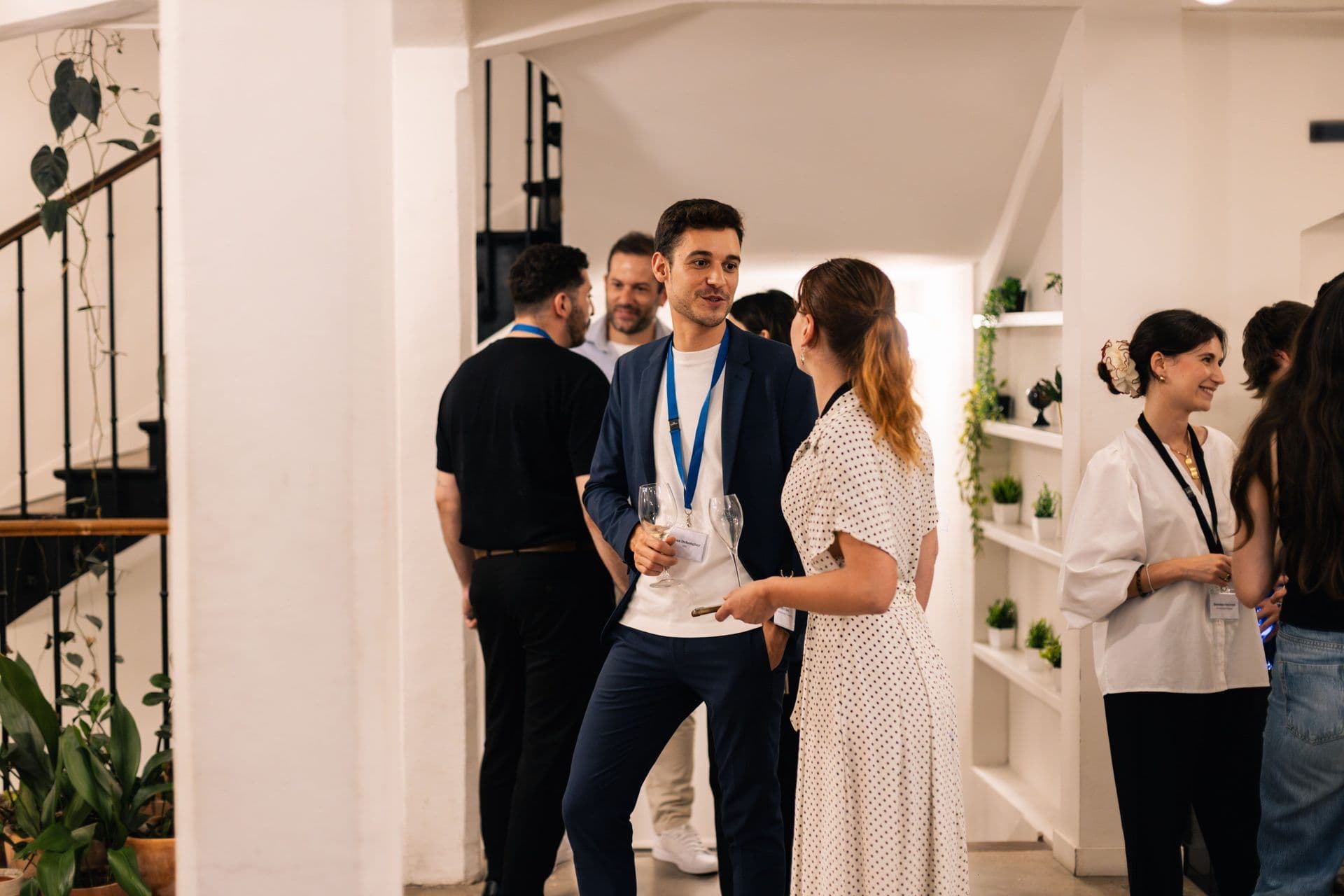
These corporate networking event ideas give planners a practical way to choose formats that lead to real conversation, not just polite introductions.
Use them to match the event to your audience, whether you need skill-sharing, problem-solving, hybrid-friendly structure or a stronger follow-up plan.
Each idea is built to help people talk with purpose and leave with contacts they are more likely to use again.
Key takeaways
- Expert roundtables for skill-sharing and real-world problem-solving labs work when you want people grouped by skills, problems or departments rather than job title, so the conversation stays specific and useful.
- Local community and sustainability challenges, tech-driven connection hubs and themed breakout zones show how the format can change the tone of the day, from practical community work to guided introductions and smaller areas with different purposes.
- A simple connection roadmap, common mistakes in UK networking and measuring success in 2026 all point to the same checks: make the purpose clear, keep the room comfortable, and look at what happens after the event, not just who attended.
- What are the best corporate networking ideas for hybrid teams in the UK?, How do we get younger staff interested in networking? and Does technology make networking feel less personal? all favour active sessions, simple digital matching and a human-led conversation.
- Do themes really matter for business events?, How do we make sure team building has a long-term impact? and What should organisers avoid when planning networking events? all stress that the theme, the follow-up and the room setup need to work together if you want people to reconnect later.
- Which formats are most useful for building stronger internal relationships? points to shared effort, real conversation and formats that give people something to solve, share or build together.
1. Expert roundtables for skill-sharing
Expert roundtables for skill-sharing work because they move the focus from small talk to useful exchange.
Participants are grouped by the skills they have or the problems they are trying to solve, rather than by job title. That makes the conversation sharper and more relevant.
Group setup: participants grouped by skills or problems
Best for: teams that want more than a handshake and a drink
How to apply: Ask people what they are good at before they arrive and build the groups around that information. A clear facilitator helps keep the discussion on track so the room does not drift into generic chat. The result is a session where every minute feels useful, and even quieter attendees have something real to contribute.
2. Real-world problem-solving labs
Real-world problem-solving labs are a strong choice when you want colleagues to work together on something concrete.
Instead of talking about business in theory, the group tackles a specific issue facing the company or the wider industry. That might mean improving a process, testing a new idea or finding a better way to work across departments.
Group setup: different departments together
Best for: a clear brief and deliberate mix of people
How to apply: Bring together different departments so the group has a range of views, then give them enough time to think, discuss and present. People bond quickly when they are solving something side by side. A lab feels active and focused, and it often produces better cross-team understanding than a standard reception ever could.
3. Local community and sustainability challenges
Local community and sustainability challenges give networking a clear purpose.
A team might partner with a charity in Birmingham or support a sustainability project in Glasgow, using the day to solve a practical problem that matters outside the office.
Group setup: a full away-day
Best for: building pride in the workplace while doing something useful for the local area
How to apply: Teams can plan, carry out the work and present their ideas to local community leaders. That sense of contribution changes the tone of the event. Success is measured by the help given and by how much closer the team feels afterwards.
4. Tech-driven connection hubs
Tech-driven connection hubs make it easier for people to meet the right colleagues without awkward guesswork.
Simple software can suggest who should meet based on goals, roles or interests, which helps take the pressure off the room.
Group setup: short face-to-face meeting zones
Best for: hybrid teams and people who do not enjoy working a crowd
How to apply: Use the technology to guide the day, not to replace conversation. Pair the matching with short, face-to-face meeting zones. A 15-minute chat with a few talking points is often enough to get beyond weather talk and into something useful.
5. Themed breakout zones
Themed breakout zones work because they give people choice.
Instead of one large room with one mood, the event is split into smaller areas with different purposes. One zone might be quiet and focused, another might be built for fast brainstorming, and another could support wellness or informal conversation.
Group setup: smaller themed areas
Best for: a mixed group that needs to feel comfortable throughout the day
How to apply: A passport-style system can encourage people to visit more than one zone, which keeps the event from becoming too static. It also helps different kinds of networking happen in the same space, from one-to-one chats to higher-energy group sessions. That variety helps people move at their own pace and choose the setting that suits them best.
6. A simple connection roadmap
A simple connection roadmap helps organisers keep the day clear, calm and useful.
The idea rests on three practical steps: be clear, create a relaxed atmosphere and follow up properly.
Group setup: the whole event flow
Best for: bringing offices together, sparking new ideas or helping people work across teams
How to apply: Every event needs a reason for happening, whether that is bringing offices together, sparking new ideas or helping people work across teams. Ground rules, a thoughtful room layout and an inclusive tone all help people feel safe enough to speak. The final step is follow-up, because the value of the event often appears in the weeks afterwards. A digital group, a lunch meetup or a short check-in can keep the conversation going and turn a one-off gathering into something more lasting.
7. Common mistakes in UK networking
Common mistakes in UK networking usually come down to quantity, structure and comfort.
The biggest error is measuring success by the number of contacts made rather than the quality of the conversations. Three proper discussions are worth far more than fifty rushed introductions.
Group setup: the event as a whole
Best for: avoiding weak networking sessions
How to apply: Another mistake is designing the day for only one personality type. If the format only suits loud extroverts, quieter staff will be left out. Structure matters too. Telling people to go and network often leads to small groups sticking together and nothing new happening. A lack of icebreakers, poor room temperature, too much noise or not enough chairs can all weaken the experience.
8. Measuring success in 2026
Measuring success in 2026 means looking at what happens after the event, not just who attended.
The real question is whether people work together more often afterwards. That can be tracked through new cross-team projects, follow-up meetings or changes in how often colleagues reach out across offices.
Group setup: post-event follow-up
Best for: judging whether the event was worth the time and effort
How to apply: If the event has done its job, the connections should show up in daily work. Feedback also matters, but it needs to go beyond food and venue comments. Ask whether people now feel more comfortable contacting someone in another team or office. Look at how long those new relationships last and whether they lead to practical collaboration.
9. What are the best corporate networking ideas for hybrid teams in the UK?
The best corporate networking ideas for hybrid teams in the UK combine digital preparation with strong in-person moments. Start online with short introductions or simple matching so people arrive with some context, then use the face-to-face part for workshops, roundtables or community projects that give people a reason to talk beyond their job titles.
Hybrid teams need events that feel worth the journey. A good format gives remote and office-based colleagues the same chance to contribute, while creating a shared experience that cannot be replicated over video alone.
Group setup: hybrid teams, online and in person
Best for: events where remote and office-based colleagues need equal footing
How to apply: Start online if you can, using short introductions or simple matching. When the group meets, choose workshops, roundtables or community projects. Keep the digital tools in place so the day runs more smoothly. Make sure the format gives everyone the same chance to contribute.
10. How do we get younger staff interested in networking?
Younger staff tend to respond well to networking that feels honest, useful and purposeful. Formats built around skill-sharing, problem-solving or sustainability often work better than a standard drinks reception because they give people a reason to show up and stay involved.
It also helps to be clear about what the event is for and what people will get from it. If the format helps younger professionals build confidence, learn from others and make useful contacts, they are far more likely to engage properly.
Group setup: younger staff, active sessions
Best for: building confidence and useful contacts
How to apply: Choose a format built around skill-sharing, problem-solving or sustainability. Be clear about what the event is for and what people will get from it. Keep the session active rather than formal. Make sure it helps people learn from others and make useful contacts.
11. Does technology make networking feel less personal?
Technology does not have to make networking feel less personal if it is used properly. Smart matching and simple digital prompts can help people find each other more easily and spend time with colleagues they actually want to meet, especially in larger groups where it is hard to know where to begin.
The key is to keep the human part front and centre. Tech should support the event by suggesting useful introductions and giving people a little structure, while the conversation itself still happens face to face.
Group setup: larger groups, tech-supported networking
Best for: making introductions easier without losing the human side
How to apply: Use smart matching and simple digital prompts to help people find each other. Keep the structure light so the event does not feel mechanical. Let the conversation happen face to face. Use tech to support useful introductions, not replace them.
12. Do themes really matter for business events?
Yes, themes matter because they give the day a clear shape and help people understand what kind of conversation is expected. A good theme can make it easier to start talking, especially when the room is full of people who do not know each other well.
The best themes are not decorative. They should support the format, whether that means a focused innovation session, a community challenge or a set of breakout zones with different moods, so the event feels coherent and more memorable than a standard reception.
Group setup: themed business events
Best for: giving the day direction and helping people start talking
How to apply: Choose a theme that supports the format. Match it to a focused innovation session, a community challenge or breakout zones with different moods. Keep the theme practical rather than decorative. Make sure the activity and the theme work together.
13. How do we make sure team building has a long-term impact?
Long-term impact comes from follow-up, not from the event itself alone. If people meet once and then never speak again, the value fades quickly, so the strongest events create a reason to reconnect through a shared project, a follow-up lunch or a digital space where the conversation can continue.
It also helps to choose formats that create real working relationships rather than just social contact. When people solve a problem together, share expertise or contribute to a community project, they are more likely to remember each other afterwards.
Group setup: events with follow-up built in
Best for: creating relationships that last beyond the day
How to apply: Plan a reason for people to reconnect after the event. Use a shared project, a follow-up lunch or a digital space for the conversation to continue. Choose formats that create real working relationships. Give people something to solve, share or build together.
14. What should organisers avoid when planning networking events?
Organisers should avoid anything that makes the event feel vague, noisy or one-sided. If people do not know why they are there, they will drift, and if the room is too loud or too formal, they will hold back.
It is also worth avoiding overcomplicated formats that look clever on paper but are hard to use in practice. People need enough structure to feel comfortable, but not so much that the day feels rigid.
Group setup: any networking event format
Best for: avoiding low engagement and awkward delivery
How to apply: Make the purpose clear from the start. Keep the room from feeling too loud or too formal. Avoid formats that are hard to use in practice. Give people enough structure to feel comfortable without making the day rigid.
15. Which formats are most useful for building stronger internal relationships?
The most useful formats for building stronger internal relationships are the ones that create shared effort and real conversation. Expert roundtables, problem-solving labs, community challenges, tech-driven connection hubs and themed breakout zones all work for different reasons, but they share one thing: they give people a reason to talk properly.
If the goal is stronger internal relationships, choose the format that matches the team's needs. Use roundtables when expertise matters, labs when a problem needs solving, and community projects when purpose is important.
Group setup: roundtables, labs, community projects and breakout zones
Best for: building stronger internal relationships
How to apply: Choose the format that matches the team's needs. Use roundtables when expertise matters, labs when a problem needs solving, and community projects when purpose is important. Pick the option that fits the outcome you want. Keep the event centred on shared effort and real conversation.
Frequently asked questions
What corporate networking event ideas work best for UK teams?
The strongest formats are expert roundtables, real-world problem-solving labs, local community and sustainability challenges, tech-driven connection hubs, themed breakout zones and a simple connection roadmap. They work because they create real conversation, mix structure with flexibility and give people a reason to stay engaged.
How do you choose the right networking format?
Choose the format around what you want people to do together, not around a generic reception. If you want skill-sharing, use expert roundtables; if you want cross-team thinking, use problem-solving labs; if you want purpose, use a community or sustainability challenge; if you need comfort and choice, use themed breakout zones.
How do you run a networking event well?
Start with a clear reason for the event, then set ground rules, a thoughtful room layout and an inclusive tone. A clear facilitator helps keep discussion on track, and follow-up matters because the value often appears in the weeks afterwards.
What group size or setup works best for networking?
The best setup depends on the format, but smaller groups work well when you want sharper conversation and more room for quieter voices. Group people by skills or problems for roundtables, bring different departments together for labs, and use smaller themed areas when you want choice and variety.
How do you make networking work for remote or hybrid teams?
Start online with short introductions or simple matching, then use the face-to-face part for workshops, roundtables or community projects. Keep the digital tools in place so the day runs more smoothly, and make sure remote and office-based colleagues have the same chance to contribute.
How do you keep networking useful after the event?
Follow-up is where the value shows up, so keep the conversation going with a digital group, a lunch meetup or a short check-in. Success is measured by what happens afterwards, such as new cross-team projects, follow-up meetings or people feeling more comfortable contacting someone in another team or office.