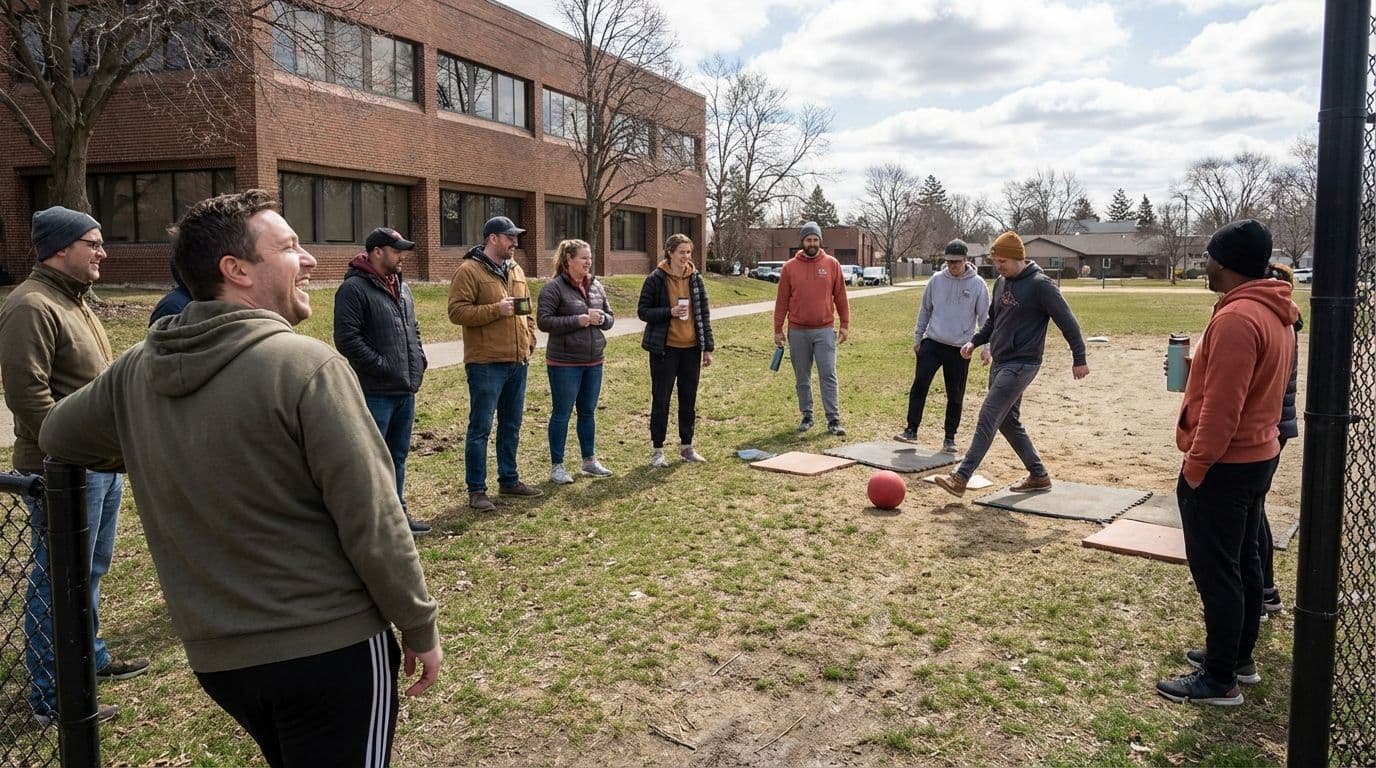
Kickball Game
Time for the kickball team building activity: 45–60 minutes
Setup effort: Easy
Estimated cost: Low
Business value: Kickball team building encourages teamwork, creates energetic participation, and strengthens team spirit through active engagement and fun competition.
What is Kickball?
Kickball combines baseball's structure with a simple mechanic: kick a large rubber ball instead of hitting it with a bat. The rules are straightforward enough that anyone can pick it up in minutes, regardless of athletic background. In a corporate setting, it works well as a team building activity because people collaborate, move around, and compete without taking themselves too seriously.
Here's how kickball compares to other popular outdoor team building formats across key factors that matter for event planning.
| Activity Format | Group Size | Cost per Person | Physical Demand | Engagement Level | Setup Time |
|---|---|---|---|---|---|
| Kickball | 10–50 people | €5–€15 | Medium to High | Very High | 10–15 minutes |
| Relay Races | 8–40 people | €3–€10 | Medium to High | High | 5–10 minutes |
| Capture the Flag | 15–60 people | €2–€8 | High | Very High | 15–20 minutes |
| Outdoor Scavenger Hunt | 10–80 people | €8–€20 | Low to Medium | High | 20–30 minutes |
| Tug of War Tournament | 12–50 people | €4–€12 | High | High | 10–15 minutes |
| Obstacle Course Challenge | 15–80 people | €15–€40 | Medium to High | Very High | 30–45 minutes |
Kickball is affordable, highly engaging, and balances moderate physical demand with easy setup—ideal for medium to large teams seeking maximum participation and genuine fun.
The game happens on a large field where teams score runs by kicking the ball and running around bases before the opposing team retrieves it and makes a play. Unlike more technical sports, kickball requires no specialized equipment or advanced athletic ability. This accessibility matters: diverse groups with varying comfort levels around physical activities can all participate equally.
The energy is contagious. Players laugh, cheer for teammates, and celebrate successful plays. These shared moments build genuine connections between colleagues.
How do you play Kickball?
Divide participants into two teams. One team kicks; the other fields. A player rolls the ball toward home plate, and the kicker launches it as far as possible. After kicking, the player runs toward first base and tries to advance around the bases to score a point.
The fielding team catches the ball or tags the runner before they reach the base to record an out. Teams alternate between kicking and fielding through several innings. The team with the most runs wins.
Why it's great for a team
Kickball works because it combines movement, strategy, and teamwork in a format that feels genuinely fun rather than forced. Players must communicate with teammates, coordinate defensive plays, and support each other.
The relaxed nature means people feel comfortable participating even if they typically avoid athletic activities. Since the goal is fun, not performance, the experience stays inclusive for everyone. Spectators also participate by cheering for teammates and celebrating key moments.
How to organize it effectively
Pick a safe outdoor location—a park, sports field, or large open space. Mark the bases clearly and explain the rules upfront so everyone knows how to participate. Encouraging teams to create fun names, colors, or chants adds engagement. End with a small awards ceremony or group photo to reinforce the positive experience.
How to Organize and Run a Successful Kickball Team Building Event
Start by selecting an appropriate outdoor venue—a large open field, park, or sports complex. Scout the location in advance to confirm adequate space, fair playing conditions, and accessibility. Send invitations at least two weeks ahead with the date, time, duration, and what to bring (comfortable shoes, sunscreen, water bottles).
Prepare equipment before the event: a kickball (with backups), bases or cones for the diamond, and a whistle for the referee. Assign a neutral moderator to serve as umpire—someone who can enforce rules fairly while keeping the atmosphere light. Spend 10–15 minutes explaining the rules to all participants before gameplay begins, even if some already know kickball. This prevents confusion during the game.
Divide employees into balanced teams, mixing departments to encourage cross-functional connections. Aim for 8–12 players per team to maintain engagement and minimize wait times. Consider rotating players between innings so everyone gets quality playing time. Emphasize fun and participation over winning.
After the game, gather everyone for a debrief. Recognize accomplishments, award fun prizes like "Best Team Spirit" or "Most Improved Player," and allow 15–20 minutes for informal socializing. This wrap-up reinforces positive team connections and extends the benefits beyond gameplay.
Frequently Asked Questions
What are the basic rules of kickball for team building?
Kickball mirrors baseball but with a rubber ball you kick instead of hit with a bat. Players run around bases to score points. Teams alternate between kicking and fielding. The simplicity means players of all skill levels understand and enjoy kickball team building events immediately.
How many people do you need to play kickball?
A standard game needs a minimum of 9 players per team, though you can adapt team sizes and field dimensions for your group. Smaller teams of 5–6 players per side work well for casual office events. Kickball scales flexibly for any company size.
What equipment is needed for a kickball team building game?
You need a rubber kickball, bases (cones or markers work fine), and a flat playing area like a field or parking lot. Most setups don't require expensive gear, making kickball affordable and accessible. Optional additions like colored shirts help distinguish teams and add competitive spirit.
How does kickball improve team spirit and morale?
Kickball encourages collaboration and communication among employees who might not regularly interact. The casual, fun format creates a relaxed environment where team members bond while working toward a common goal. Celebrating individual plays and team victories naturally boosts morale and strengthens workplace relationships.
What's the best time of year to organize a kickball team building event?
Spring and fall offer mild weather and comfortable outdoor conditions. Summer works too—just schedule early morning or evening games to avoid excessive heat. Plan during dry weather and have a backup indoor activity in case of rain.