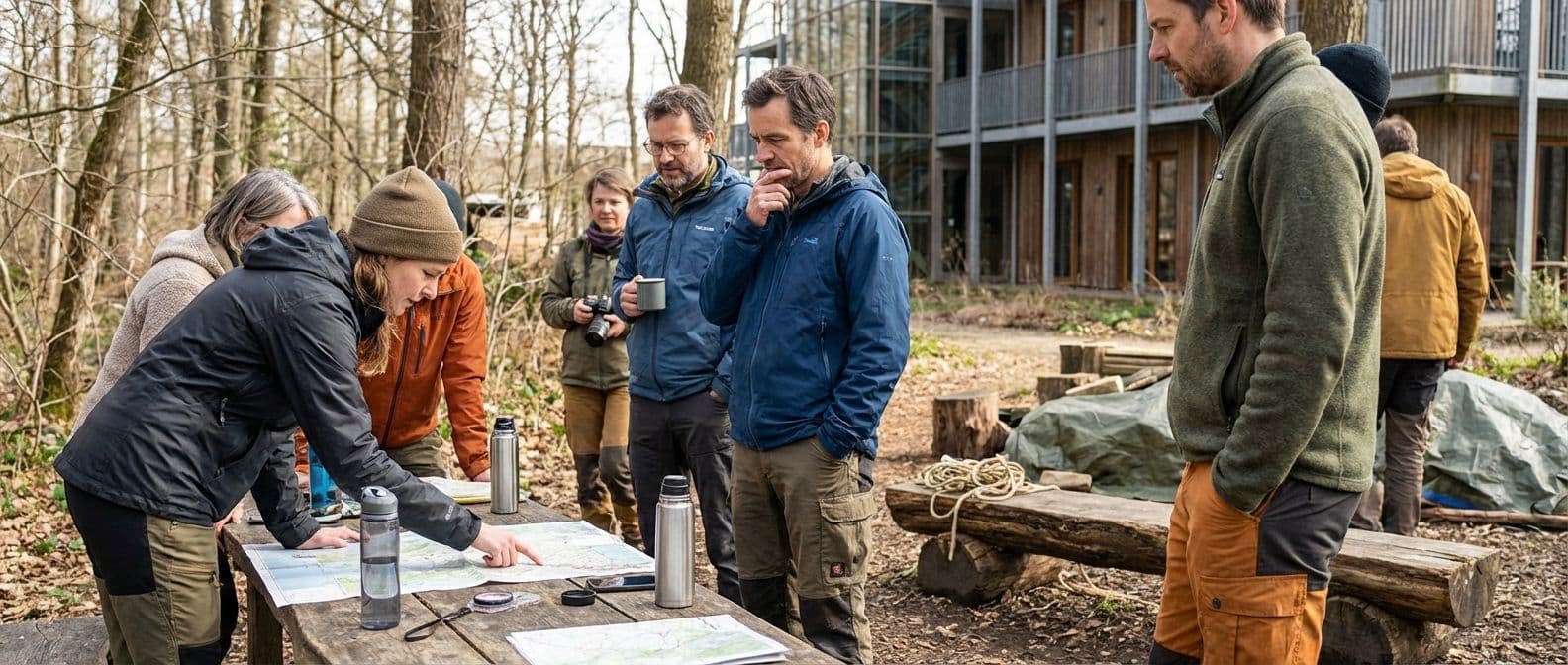
Outdoor survival game
Time for the team building activity: 2–3 hours
Setup effort: High
Estimated cost: Medium to high
Business value: Builds resilience, adaptability, and collaborative problem-solving in demanding settings
What is an outdoor survival game?
An outdoor survival game is a team building activity based on wilderness survival training. Teams work through practical challenges that mirror real survival situations.
It usually takes place in natural settings such as forests, mountains, or the countryside. To complete the tasks, teams rely on teamwork, creativity, and resourcefulness.
The focus is not physical endurance alone. Participants assess situations, set priorities, and use limited resources with care.
Common challenges include building shelters, starting fires, navigating terrain, and finding resources.
That mix of pressure and play gives the activity a clear sense of adventure while reinforcing teamwork and resilience.
How do you run an outdoor survival game?
Participants are split into teams of four to six people.
The facilitator sets out a survival scenario and explains the activity goals.
Teams then rotate through survival challenges such as:
Building a temporary shelter using natural materials
Starting a fire using primitive techniques
Navigating using a map and compass
Solving problem-solving challenges related to survival
Points are awarded for teamwork, creativity, and successful completion.
Time matters throughout, so teams need to move efficiently from one station to the next.
At the end, the facilitator reviews the results and names the winning team.
Why IT works for a team
Survival challenges ask people to work closely under pressure.
Team members share ideas, divide tasks, and adjust quickly when obstacles appear.
The setting pushes people out of their usual roles, which often reveals strengths that stay hidden in the office.
It also creates shared memories that stick, and those moments strengthen team bonds.
Most participants leave with a sharper view of teamwork and resilience.
How to organize IT well
Choose a natural location that suits outdoor activity.
Work with experienced survival instructors who can keep the group safe and on track.
Provide the right equipment, but keep the challenges realistic.
Explain safety procedures clearly before the activity begins.
Finish with a reflection session on lessons learned and teamwork strategies.