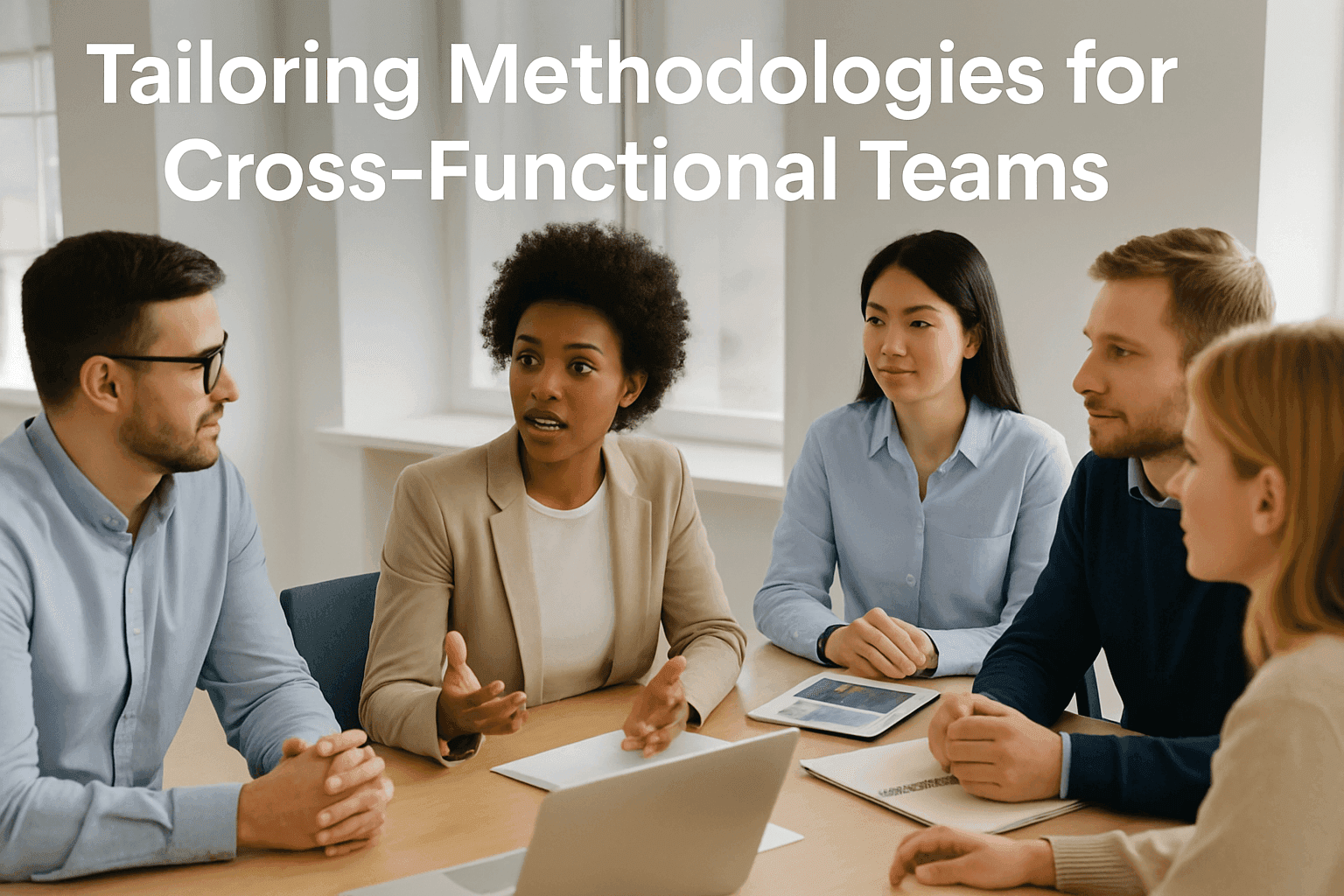
Large US organizations from New York startups to operations teams in the Rocky Mountains face pressure in 2026 to move faster and ship higher quality work. Cross-functional teams that bring marketing, finance, operations, and product together are common, but putting great people in a room does not guarantee results. The difference is how you design practical, localized methods that fit how each department actually works.
Why standard frameworks often fail
Most project methods were built for specific settings. Agile started in software shops, waterfall in construction, and lean in manufacturing. Each has assumptions about who sits on the team and how work flows. When you apply them without change, people from different functions and regions clash. A designer in San Francisco may need flexible time for creative work, while finance teams in Washington expect clear audit trails and approvals. That mismatch creates frustration and wasted effort.
The practical value of customization
Tailored methods reduce friction. Aligning processes with existing work rhythms lowers the mental load on people. Instead of forcing everyone into a single pattern, pick and keep the parts that match how each department in Boston, Miami, or Las Vegas works, and create bridges where they need to connect.
Tailored methods build ownership. When team members help design the rules, they adopt them faster. Workshops that include reps from product, marketing, operations, and legal create a shared language and fewer surprises during execution.
Tailored methods bake in communication. Specify who needs what information, when, and in what format. That prevents the common scenario where a team delivers work efficiently but forgets to inform a stakeholder in time.
Common mistakes that hurt cross-functional work
Typical errors include treating framework choice as the same as implementation, leaving out key stakeholders during design, underestimating the change management effort, freezing a methodology even when it stops working, and making overly complex processes that slow people down.
The ADAPT model: Assess, Design, Align, Pilot, Transform
The ADAPT model helps teams create practical workflows. Start by assessing team composition, work patterns, deliverables, and constraints. Next, design a baseline method and modify it for meeting cadence, decisions, documentation, roles, and escalation paths. Then align the team with a workshop and simple reference guides. Pilot the approach on one project or for a set time while collecting feedback. Finally, transform the pilot into a stable process and schedule regular reviews so the method continues to evolve.
If you want templates and examples to help with the ADAPT steps, read more articles on the Naboo blog and adapt them to your context.
Applying ADAPT: a realistic US example
Imagine a mid-size tech company in Austin launching a customer experience project that needs product, customer success, marketing, and data analytics to work together. During Assess, interviews reveal product runs two-week sprints, marketing plans monthly campaigns, customer success responds reactively, and analytics needs clear requirements and heads-down time.
In Design, they keep two-week sprints for product but avoid daily standups for everyone. Instead they set a weekly cross-functional sync and a shared dashboard updated each Friday. They define which decisions each group can make on their own and which need cross-team signoff. During Align, a half-day workshop surface issues and adds a two-week lookahead to the weekly sync so analytics can plan work in advance.
They Pilot the approach for three months on the onboarding redesign and collect feedback weekly. After the Pilot, they Transform the method by adding an escalation protocol for urgent customer issues and committing to quarterly process reviews.
Essential elements for US multi-department coordination
- Clear roles so everyone knows responsibilities and handoffs.
- Structured rhythms like brief tactical updates plus longer strategic sessions.
- Conflict resolution paths such as a rotating facilitator or agreed decision criteria.
- Transparency through shared dashboards and simple written updates.
- Regular learning with safe retrospectives and process tweaks.
How to measure if a tailored method works
Track a mix of delivery metrics, process health metrics, engagement scores, and knowledge sharing indicators. Ask whether projects finish on time, how often decisions get escalated, whether team members feel heard, and if knowledge spreads across the team. Combine data with short conversations to understand the root causes behind the numbers.
For teams planning offsites or coordination events to support this work, consider ideas for planning meaningful events that reinforce alignment and build relationships across functions.
Scaling capability across the organization
Capture case studies when teams succeed, build an internal library of templates, train internal coaches, and create communities of practice. Leadership development should include practical skills for running cross-functional teams. Periodic enterprise-level reviews help leaders spot where to invest in more support or simpler standards.
The near future of cross-functional work in US companies
As work gets more complex, the need for good cross-functional practices grows. Remote and hybrid work requires more deliberate coordination but also makes cross-department collaboration easier across regions like Seattle, Denver, and Miami. Technology helps, but teams still need clear, adapted processes to make the tools effective. Organizations that treat methodologies as living systems and keep improving them will be better positioned for the changes ahead in 2026 and beyond.
Frequently Asked Questions
What makes cross-functional teams different from regular project teams?
Cross-functional teams bring people from different departments together. That creates more potential for innovation but also more need for coordination because different functions have different goals, vocabularies, and work rhythms.
How long does it take to implement a tailored methodology?
Most teams can complete Assess, Design, Align, and a short Pilot in six to eight weeks. Real improvement happens over time as teams refine the method after real work exposes gaps.
What signs show a team needs a customized methodology?
Look for repeated miscommunication, late surprises, decisions that keep getting reopened, people complaining about pointless meetings, and deliverables that do not meet expectations even though individuals are trying.
Can small companies use these ideas too?
Yes. Small companies can move faster and experiment more, though they may not document everything. The same principles apply; scale the formality to fit your size and culture.
How do you balance standardization with team-level customization?
Set a few organization-wide principles like regular retrospectives and clear decision records, then let teams choose specific cadences, tools, and role details. Share successful patterns so good local practices can spread without forcing one-size-fits-all rules.
Next steps
Start with a short assessment of your team this week: map out who needs what and when, run a one-hour design workshop, then pilot the changes for one project. Repeat the cycle and document what you learn so your organization builds real capability over time.