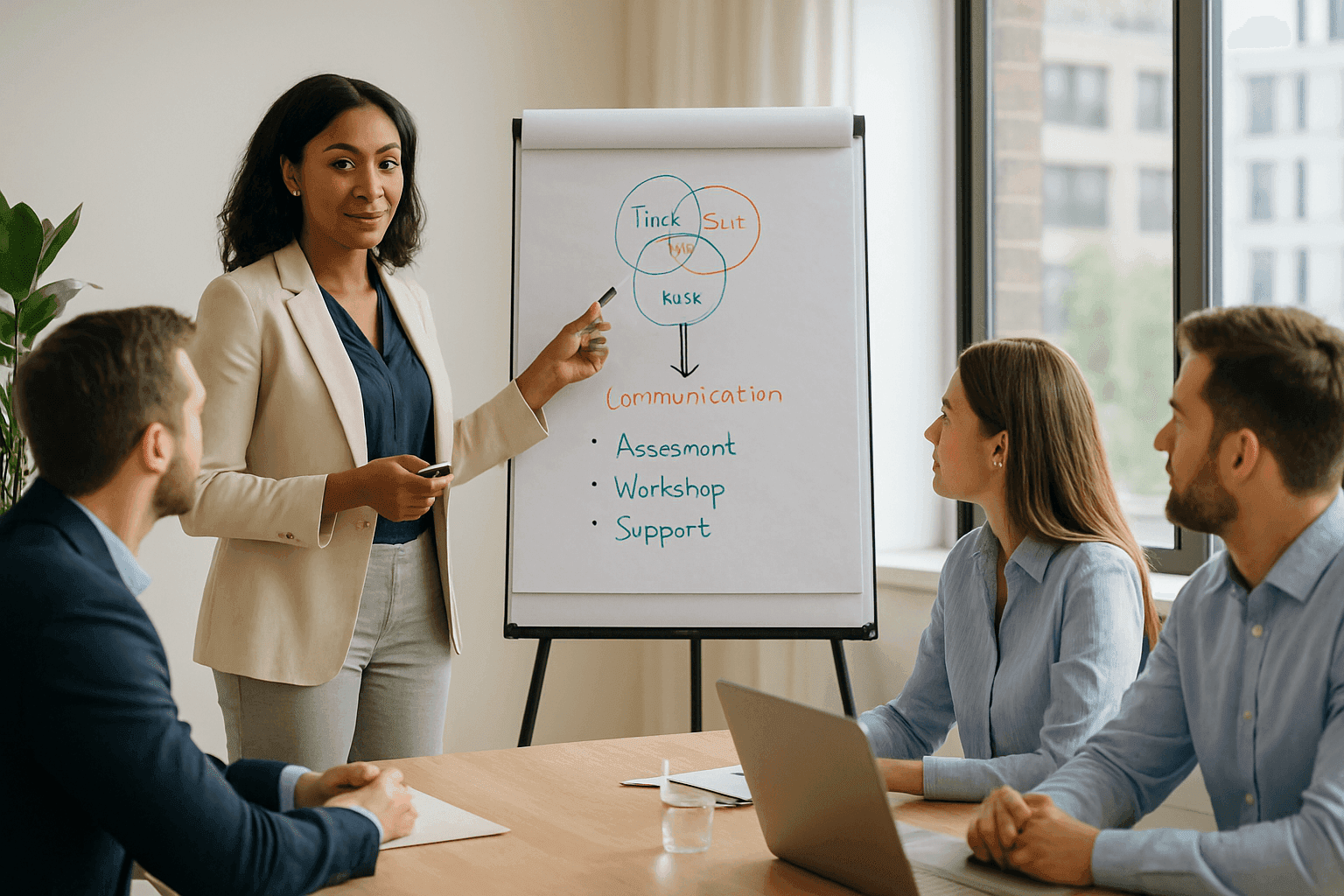
When workplace teams in New York, San Francisco, or a regional office outside Denver underperform, miss deadlines, or struggle with internal conflict, organizations often blame individual contributors. In most cases the real issues are communication breakdowns, unclear roles, and misaligned expectations that individual effort alone cannot fix. A team building consultant is not there to run trust falls but to diagnose structural problems and deliver practical, evidence-based fixes that stick.
Large US organizations face specific complications. Matrix reporting in Washington DC agencies creates competing loyalties. Hybrid teams dispersed from Seattle to Miami fragment communication. Cross-functional projects in healthcare systems or manufacturing plants around the Rocky Mountains require coordination among groups with different priorities and vocabularies. Even skilled people struggle to collaborate without clear systems and strong facilitation.
This article walks through ten proven tools consultants use in 2026 to turn struggling groups into dependable teams. These are applied, day-to-day practices used in finance teams in Chicago, product groups in Silicon Valley, hospital units in Boston, and operations hubs in Las Vegas. Understanding these tools helps leaders evaluate consulting partners and spot effective interventions.
What Makes Professional Team Building Consulting Different
A team building consultant starts with diagnosis, not activities. They use validated assessments, confidential interviews, direct observation of meetings, and performance data to find root causes. Their job is to transfer skills so teams can sustain gains after the consultant leaves.
Good consultants design workshops that respond to diagnosed needs. A team frozen on decisions needs different work than one recovering from a reorganization. Consultants translate solid research on psychological safety and team effectiveness into simple practices teams can use the next day.
Tool One: Multi-Source Team Health Diagnostics
Effective team dynamics assessment blends anonymous surveys, one-on-one interviews, meeting observation, and metrics such as project completion rates and defect counts. This multi-source view reveals problems teams miss, like unclear decision rights behind what looks like personality conflict.
Assessment alone often creates value by building shared awareness. When everyone sees that meetings consistently silence quieter voices, the issue stops being personal and becomes a clear team problem to solve.
Tool Two: Structured Facilitation Protocols For Difficult Conversations
Consultants run structured conversations that let teams surface tensions without turning personal. Techniques include clear ground rules, reflective listening, separating interests from positions, and guiding the group to mutual commitments. The goal is to teach teams how to hold these conversations themselves over time.
Tool Three: Behavioral Style Mapping For Collaboration
Validated behavioral tools help teams understand how different work styles interact. This is not about labeling people but creating language so a detail-oriented analyst and a big-picture product manager in a Miami office can coordinate better. Consultants help teams translate those insights into working agreements.
Tool Four: Team Charter Development Process
A team charter records purpose, roles, norms, and accountability. Effective charters are specific: instead of vague commitments, teams agree on things like response times, decision escalation paths, and meeting norms. Consultants guide teams to create a living charter and schedule regular check-ins to keep it current.
Tool Five: Psychological Safety Building Techniques
Psychological safety predicts performance. Consultants coach leaders to model vulnerability, invite dissent, and respond constructively to bad news. They set up practices like anonymous feedback channels, rotating facilitation, and regular retrospectives so safety becomes part of the team's routine.
When safety improves, innovation rises and employees stay longer, whether your office sits in downtown Los Angeles or a branch in Minneapolis.
Tool Six: Meeting Architecture Redesign
Unproductive meetings kill time and morale. Consultants clarify meeting purposes, separate decision meetings from information sessions, require brief pre-reads, timebox agenda items, and set clear decision roles. For hybrid teams across time zones, they introduce digital engagement rules so remote members in Phoenix or Boston are included, not sidelined.
Teams that redesign meetings report faster decisions and less overtime work.
Tool Seven: Leadership Coaching For Team Dynamics
Leader behavior shapes team culture. Consultants coach leaders on emotional intelligence, inclusive decision-making, clear delegation, and conflict handling. Coaching includes real-time feedback from meeting observations so leaders develop practical habits instead of abstract insight.
Tool Eight: Cross-Functional Collaboration Frameworks
Most work happens across functions. Consultants run joint planning sessions, define liaison roles, set shared metrics, and create cross-functional retrospectives that surface coordination problems between sales teams in Atlanta and product teams in San Diego.
When broader enterprise design blocks collaboration, consultants advise senior leaders on changes like clarifying decision rights or realigning incentives. For related planning and activation, teams can also look for event support and ideas for planning meaningful events that build cross-team relationships.
Tool Nine: Performance Measurement And Feedback Systems
Consultants help teams pick sensible metrics that include quality, cycle time, and customer feedback plus measures of collaboration like psychological safety scores and meeting effectiveness. They set baselines before work begins, track progress, and separate developmental feedback from performance evaluation so teams can be candid and learn.
To keep learning and stay current with practical workplace trends, leaders often explore more workplace insights and adapt successful practices to their organization.
Tool Ten: Change Navigation Support
Restructures, new software rollouts, and strategy shifts disrupt teams. Consultants help teams process impacts, redefine purpose, rebuild trust after reorganizations, and keep performance steady while people adjust. Teams supported during change adopt faster and retain more staff.
Common Mistakes Organizations Make With Team Building Consultants
Typical errors include treating team development as a one-off workshop, hiring without clear objectives, ignoring confidentiality concerns that block honest feedback, choosing consultants solely on price, and failing to embed consultant recommendations into operating systems and incentives.
The Team Performance Acceleration Framework
The framework organizes team effectiveness into five practical dimensions: structural clarity, process effectiveness, relational health, leadership quality, and learning orientation. Consultants assess each dimension, prioritize the gaps, and sequence interventions so teams fix root causes instead of symptoms.
Applying The Framework: A Realistic Scenario
Imagine a 12-person product team in a Seattle startup missing deadlines and arguing about scope. A consultant conducts interviews, observes meetings, and runs a pulse survey. Findings include unclear role boundaries between product and design, inefficient decision processes, low trust after a failed release, a new leader who lacks coaching experience, and no retrospectives.
The consultant phases work: fix structure with a charter and role clarifications, improve processes with meeting redesign and prioritization, rebuild relationships with facilitated conversations and trust work, coach the leader, and introduce regular retrospectives to build a learning habit. Over six months the team meets deadlines more reliably and keeps improving without outside help.
Measuring Success: Key Indicators
Pick leading indicators like meeting effectiveness scores, frequency of productive conflict, adherence to working agreements, and psychological safety. Track lagging indicators like on-time delivery, customer satisfaction, quality measures, and retention. Use pulse checks for qualitative nuance and keep measuring beyond the initial workshop to confirm lasting change.
Selecting The Right Team Building Consultant
Match the consultant to your needs. Ask about their assessment tools, examples of similar work in US industries, and how they adapt to different cultures from hierarchical government offices in Washington to flat tech teams in Silicon Valley. Watch for facilitators who listen first and jump to solutions later.
Get a detailed proposal with clear outcomes and timelines. Preference goes to consultants who aim to build internal capability and work themselves out of a job rather than those who profit from indefinite retainers.
The Future Of Team Building Consulting
In 2026 consultants need virtual facilitation skills, fluency with collaboration tools, and the ability to show measurable business impact. DEI lens and cultural competence are essential. New analytics can supplement human judgment, but behavior change still requires skilled facilitation and leader buy-in.
Integrating Team Building Into Organizational Culture
Top companies treat team development as routine. Practices include charters for new teams, retrospectives after projects, leadership transitions that include team realignment, and internal facilitator training. When leaders model continuous team improvement, collaboration becomes sustainable.
Frequently Asked Questions
How long does it typically take to see results from team building consulting?
Teams often notice practical improvements within weeks. Sustained behavior change and measurable performance gains usually take three to six months. Complex issues like rebuilding trust or shifting leader behavior can take six to twelve months, depending on commitment and context.
What is the difference between team building and team development consulting?
Team building usually refers to specific activities or workshops. Team development is broader and ongoing, combining assessment, coaching, process work, and skills training. For lasting results choose development over a single bonding event.
How much should organizations budget for professional team building consulting?
Costs vary. A diagnostic and single workshop for a small team can be five to fifteen thousand dollars. Multi-month engagements with coaching and measurement for larger teams often range from twenty-five thousand to over one hundred thousand dollars. Consider the cost of ongoing dysfunction when budgeting.
Can team building consulting work effectively in fully remote environments?
Yes. Virtual consulting requires shorter sessions, creative use of breakout rooms, and strong facilitation to build trust. Remote work also makes scheduling across locations easier and lets teams record sessions for later reference.
What should teams do to maintain improvements after the consultant engagement ends?
Embed practices like regular retrospectives, quarterly charter reviews, leader behavior commitments, and peer learning networks. Keep measuring key indicators and refresh skills as needed so the team does not slide back into old habits.