How to Write a Venue Description ?
That Makes Companies Want to Book
They say you shouldn’t judge a book by its cover. Fine. But you still read the back before you buy it.
Your venue works the same way. The photos make people stop scrolling. The description tells them whether they’ve found the right place. And between “a stunning setting for all your events” and a description that explains what a team can actually do there, there’s already a good chunk of the sales work.
You know your venue inside out. You know which room gets the morning light, where you can seat thirty for dinner and why groups always stretch their break out in the garden. The person discovering your listing knows none of that.
Whether you’re already listed with us or thinking about becoming a Naboo partner, your description should let that person picture their event without having to ask you everything.
Start with what an event planner needs to know
Picture someone looking for a place to bring their team together. They have a budget, a headcount, a region in mind and probably a dozen other things on their plate that day.
Before they learn the history of your barn beams, they need to know where you are, how many people you can host and what kinds of events your space is built for.
That doesn’t mean you have to open with a spec sheet. You can give that information in a sentence that sounds like your venue.
Here’s a made-up example:
Twenty minutes from Nashville’s airport, our former family farmhouse hosts up to thirty people for a day of meetings or an overnight team retreat. Two meeting rooms open onto the garden, where teams can have lunch and regroup between sessions.
You get the access, the capacity, the uses and the vibe. You already have a few good reasons to keep reading.
“A unique venue for unforgettable moments” takes up less space. But it could just as easily describe a castle or a bowling alley.
Show what the photos can’t tell
A photo shows a big table. It doesn’t tell you whether the whole team fits around it, whether the room is private or whether lunch will be served right next door.
That’s where your copy earns its keep.
Describe how the spaces work together. Can a group go from a general session to small breakouts? Is the lounge still open after dinner? Is the lawn big enough for a team building activity? What’s the plan if it rains?
For atmosphere, lean on concrete details too. A lounge with a fireplace, a skylight over the workspace or a patio tucked away from the street says a lot more than a string of adjectives.
You don’t need to claim your venue has character if you give the reader what they need to discover it for themselves.
On Naboo, describe your venue from a company’s point of view
Your venue might host weddings, family reunions, birthday parties and corporate offsites. That’s a strength. But those audiences aren’t looking for the same information.
A couple wants to know where the ceremony happens. A family looks for what’s there for the kids. A corporate event planner is looking for meeting space, enough rooms to sleep the team and a way to bring everyone together over a meal.
On Naboo, that last person is who you’re talking to.
If your description opens with weddings and family vacations, you’re asking them to do the translation themselves: “Could this place also work for my team?” Might as well give them the answer up front.
We’re obviously not asking you to hide your other business. The idea is to use Naboo to grow your corporate bookings, including with very large companies, by showing them what you’ve set up specifically for them.
The same logic applies to an activity. A cooking class might welcome couples on Saturday night and teams during the week. On your Naboo listing, explain how a group session runs, how many people can cook together and whether the class ends with a shared meal.
Those are the details that turn a fun activity into an offer built for a corporate event.
Good SEO starts with the words your clients actually use
There’s also a visibility angle. For search engines to connect your offer to a search, they need to understand what your page is about. Google’s SEO Starter Guide recommends using the words people would use to look for your content, in your title and in the relevant descriptive passages.
If you host corporate retreats, say so. If you offer team-building activities, say which ones and where they happen.
“Corporate retreat in Austin,” “meeting room in downtown Chicago” or “cooking class team building in Brooklyn” connect an offer to a real need. As long as those phrases match what you actually offer.
Here’s a made-up example.
A general-purpose description might open like this:
Our estate hosts weddings, birthday parties and family reunions in a peaceful setting, with sprawling grounds and several event spaces.
To present the corporate side of the same venue, if its facilities support it, you could write:
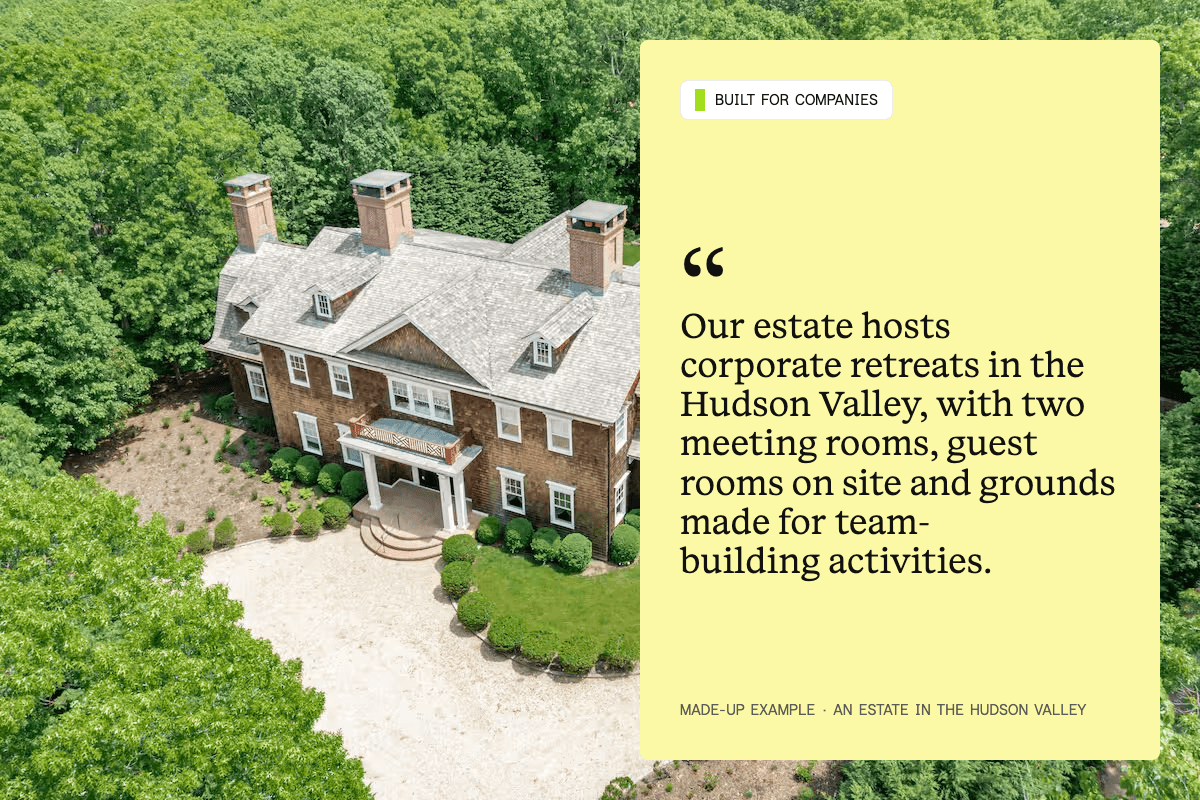
Our estate hosts corporate retreats in the Hudson Valley, with two meeting rooms, guest rooms on site and grounds made for team-building activities. Our event spaces let teams come together over dinner at the end of the day.
The venue hasn’t changed. You’ve just made what it offers a company a lot more obvious.
So avoid spending most of your Naboo listing on kids, weddings or family vacations. Simply mentioning them won’t hurt your SEO. It’s a question of focus: your corporate offer deserves a description that’s actually about it.
On the other hand, there’s no need to repeat “corporate retreat” in every sentence. Google advises against keyword stuffing and can match a page to different searches without every exact phrase appearing on it. Write naturally, and describe exactly what you offer.
Be precise about capacity and equipment
“Up to a hundred people” sounds clear. Right up until someone realizes that number is for a standing cocktail reception, and they needed a hundred people seated for a presentation.
Break capacity down by the setups you offer: meeting, theater-style, breakouts, seated dinner or reception. If you have lodging, give the number of rooms and how they can be split up. Thirty beds doesn’t necessarily mean thirty people in single rooms.
For equipment, say what’s available and what’s included. A screen, Wi-Fi, mics, furniture or a sound system don’t meet the same needs. Some items may also need to be reserved or come at an extra cost.
That precision saves you from inquiries that don’t fit what you offer. More importantly, it lets the planner move forward with information they can count on.
Tell your story where it adds something
A converted textile mill, a former warehouse turned loft or a farmhouse that’s been in the family for generations all have good reasons to tell their story.
But the reader doesn’t necessarily need the full timeline before finding out where their team is having lunch.
Pick what helps them understand the place today. The restoration of an old barn explains its high ceilings. Your work with nearby farms gives a sense of what guests will find on their plates. The fact that the owners welcome every group in person tells them what kind of relationship you offer.
Skip the big statements when a fact can do the job. “We build our seasonal menus with the farm two miles down the road” says more than “an authentic, sustainable experience,” as long as that’s really what you do.
Your story deserves to be told in your own words. That’s often where your description starts to sound like your venue instead of the one down the street.
A few examples to find the right angle
The examples below are made up. They show how to present different kinds of offers without giving them all the same pitch.
A country house for a small team
Our house welcomes up to twenty people for a quiet retreat, thirty minutes outside Asheville. The meeting room looks out onto the garden, and lunch is served in the shared dining room. At the end of the day, the living room and porch are all yours to keep the conversation going. Our ten bedrooms make it easy to stay over, with room assignments arranged the way you’d like.
The copy helps you understand how the team can live together during the stay. That’s more useful than promising an instant digital detox.
A loft for a workday in the city
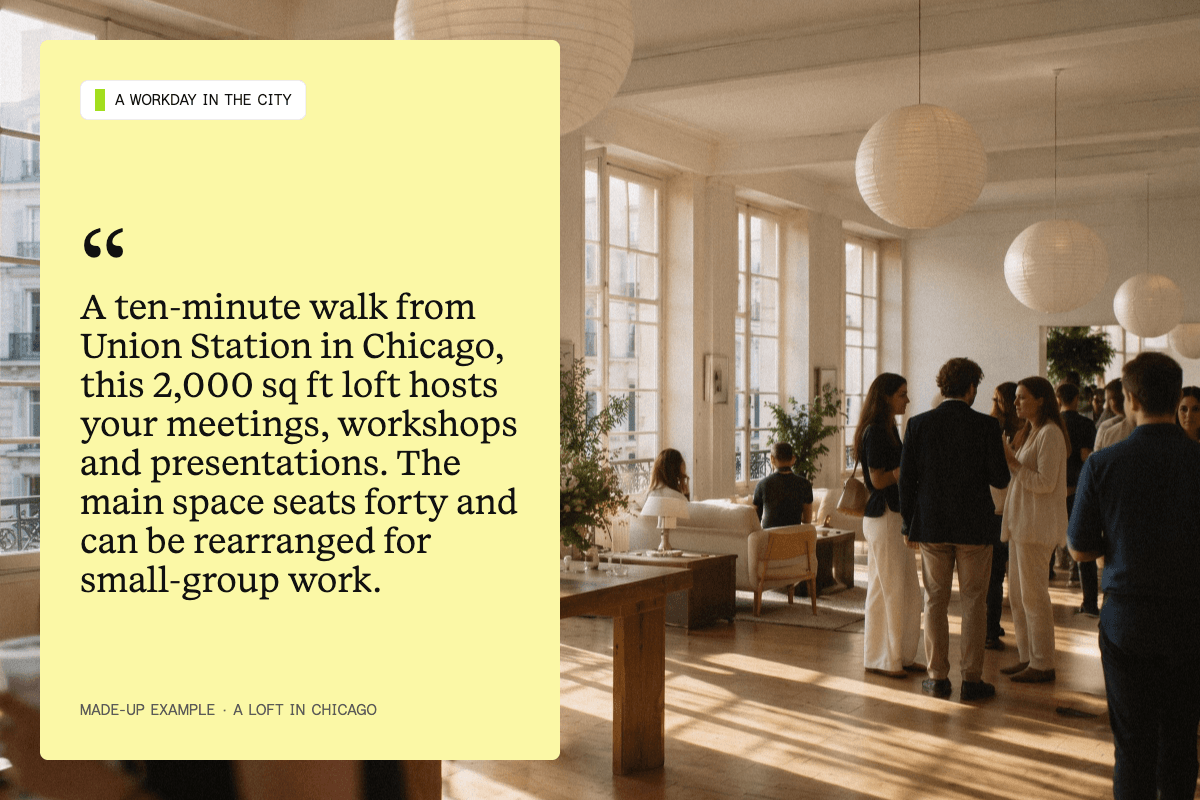
A ten-minute walk from Union Station in Chicago, this 2,000 sq ft loft hosts your meetings, workshops and presentations. The main space seats forty and can be rearranged for small-group work. A screen, flip charts and Wi-Fi are included. The kitchen area lets you take breaks and have lunch on site.
Here, access and how the day flows matter as much as the style of the space.
An activity built for companies
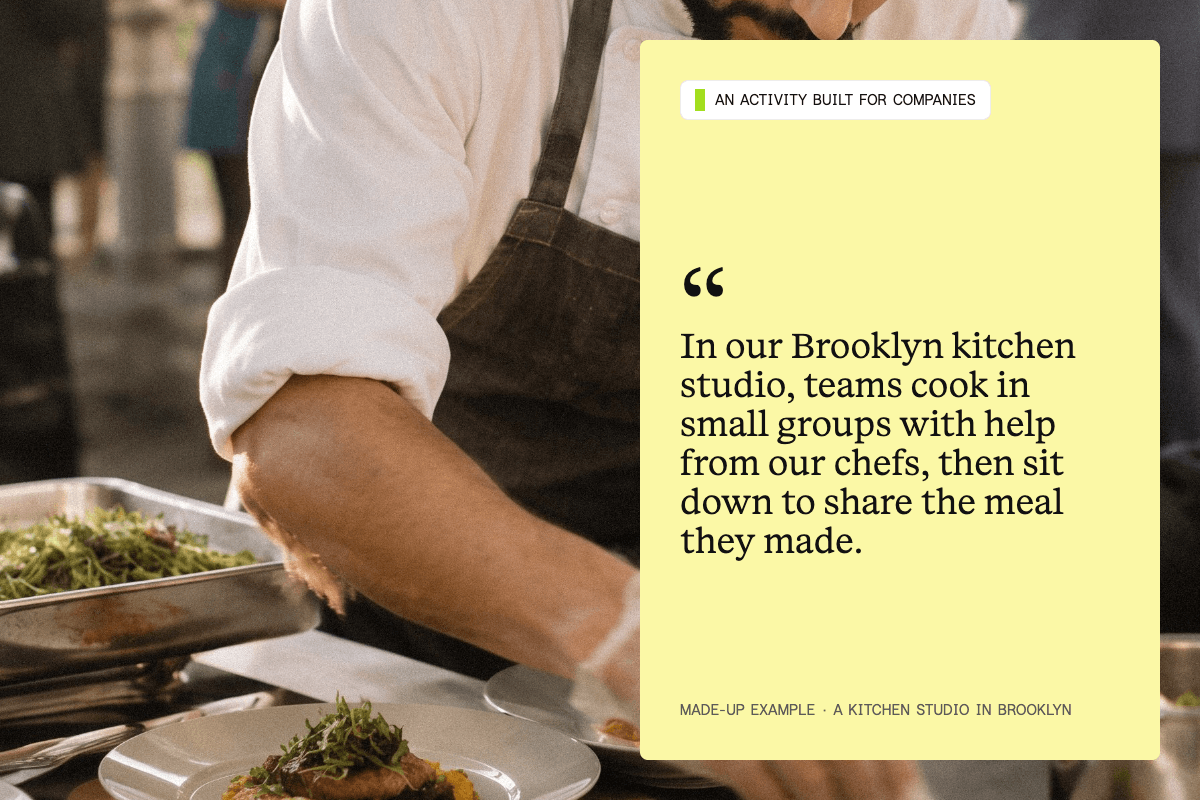
In our Brooklyn kitchen studio, teams cook in small groups with help from our chefs, then sit down to share the meal they made. This culinary team-building experience welcomes twelve to thirty people, no cooking experience needed. Plan on three hours for the class and lunch. Dietary needs are collected ahead of time so we can adapt the menu.
The planner knows the format, the length and what’s required to take part. They can start fitting the activity into their agenda.
Make the copy and the photos match
If you talk about corporate retreats, show your spaces set up for work. If you highlight team meals, show the dining room and how it’s laid out. If your strength is hosting small groups, there’s no point showing only big reception photos.
A room decorated for a wedding can be gorgeous. But it takes extra effort for someone trying to picture a meeting in it.
Your photos and description should help them imagine the same event. And remember to update them when your spaces or services change: a beautiful listing loses its value fast if it no longer matches what people can actually book.
The test before you hit publish
Reread your description as if you had to plan an event there next week.
Is it clear where the venue is? What size team it can host? What you can do there? What’s included and what still needs to be confirmed?
Then ask yourself one last question: if I took my venue’s name off this text, could it be posted on the listing of twenty other venues?
If the answer is yes, add what’s truly yours: the way you welcome people, a practical layout, a one-of-a-kind setting, an activity you know inside out.
That’s what companies should be able to discover on Naboo. A venue whose possibilities they understand, and people they’d like to trust with their next event. Listing on Naboo is free, and you only pay a commission when a booking comes through, so if you’re not on the platform yet, become a Naboo partner and put this description to work.