Food brings teams together in ways standard meetings never do. Culinary team building works because it asks people to plan, divide roles, adapt under pressure, and finish with something everyone can share. The strongest formats are the ones that feel practical for a corporate group, not theatrical.
Key takeaways
- Cooking formats reveal communication, leadership, and problem-solving in real time.
- The best choice depends on team size, skill level, setting, and how much structure the group needs.
- Dietary planning, clear roles, and a short debrief make the experience more useful.
- Simple constraints often work better than elaborate recipes.
| Idea | Best for | What it builds |
|---|---|---|
| Cooking class in person | Teams that want a guided, hands-on shared activity | Coordination, communication, and shared focus |
| Virtual cooking session | Distributed teams working across locations | Connection, clear instruction, and participation from home |
| DIY charcuterie or dessert workshop | Groups that want a lighter, lower-pressure format | Creativity, quick decisions, and easy collaboration |
| Homemade pasta workshop | Teams that can work side by side and share physical tasks | Steady cooperation and attention to sequence |
| Budget culinary challenge | Groups that need to practice tradeoffs and resource management | Planning, prioritization, and practical decision-making |
| Mystery box challenge | Teams that handle pressure well and like fast problem-solving | Leadership, adaptability, and time management |
1. Cooking class in person
An in-person cooking class is the most reliable format for culinary team building because it gives every person a clear role while keeping the group in the same room. It works well for teams that need structure, shared attention, and a setting where people can talk while they work. The format is simple, but that is its strength. A guided class removes guesswork, so the group can focus on how it communicates, divides tasks, and handles small mistakes together.
Best for: Teams that want a guided experience with enough structure to keep everyone involved.
How to set it up: Choose a venue or private dining space with enough room for the group to work comfortably. Ask about dietary needs early, then confirm that the menu can accommodate them. Keep the recipe list manageable so the event stays active instead of overwhelming. Assign roles before cooking starts, such as prep, plating, and cleanup, so no one ends up standing aside. End with a shared meal and a short conversation about what the team noticed while working together.
2. Virtual cooking session
A virtual cooking session is the strongest option for distributed teams because it gives people a shared task without requiring the same location. It works when the goal is connection across offices, regions, or hybrid schedules. The format keeps everyone active at the same time, which matters more than simply watching a demonstration. People still need to listen, follow instructions, and keep pace with the group, so the event feels like a real team activity rather than a passive call.
Best for: Remote or hybrid teams that need a shared experience across locations.
How to set it up: Send the ingredient list and equipment needs well in advance so participants can prepare without stress. Keep the recipe straightforward and make sure it can be completed in a home kitchen. Build in time for questions at the start, since remote groups need clearer direction than in-person groups. Ask one person to lead the session and another to watch the chat so no one gets left behind. Close with a quick round where people compare results and share what worked in their kitchens.
3. DIY charcuterie or dessert workshop
A DIY charcuterie or dessert workshop is a smart choice when you want a lighter event that still feels hands-on. It works because the task is approachable, visual, and easy for people with different comfort levels in the kitchen. Teams can contribute without needing advanced technique, which lowers pressure and keeps the mood open. That makes it especially useful for mixed groups where some people are confident cooks and others are not.
Best for: Groups that want a creative, low-pressure format with broad participation.
How to set it up: Prepare a simple set of ingredients or base components that can be arranged in different ways. Include options that work for common dietary needs, especially vegetarian choices. Give the group a clear goal, such as building a shared board or dessert spread, so the activity has direction. Keep the time frame short enough to stay lively. If possible, add a light judging or presentation moment so teams explain their choices and talk through how they worked together.
4. Homemade pasta workshop
A homemade pasta workshop is one of the clearest shared-effort formats because the group has to move through each step together. It works well for teams that need to feel the value of steady coordination, since kneading, rolling, cutting, and saucing all depend on timing. The process is physical, but not complicated in a way that shuts people out. That balance makes it useful for teams that want a hands-on event with a clear beginning, middle, and finish.
Best for: Teams that benefit from a tactile, step-by-step activity with visible results.
How to set it up: Use a venue with enough prep space and tools for the group to work without crowding. Keep the recipe focused on the core pasta process so the event stays manageable. Split the group into small working teams if needed, then rotate tasks so everyone contributes. Plan for a final meal that uses the pasta the group made, since the shared finish is part of what makes the format work. A short debrief at the end helps connect the kitchen experience back to everyday teamwork.
5. Budget culinary challenge
A budget culinary challenge is a strong fit when you want teams to think carefully about tradeoffs. It works because the constraint forces people to prioritize, negotiate, and make practical decisions quickly. Instead of relying on a long ingredient list, the group has to decide what matters most and build a dish around that choice. That makes the activity useful for teams that need to practice resource management in a setting that feels real but still fun.
Best for: Teams that need to practice planning, prioritization, and working within limits.
How to set it up: Set a clear spending limit or ingredient cap before the event begins. Make sure the shopping or ingredient selection process is simple enough that the challenge stays focused on decision-making, not logistics. Give teams enough time to plan before cooking starts, then keep the rules consistent for everyone. Choose a venue or kitchen setup where the group can move efficiently without bottlenecks. End by having each team explain the choices they made and what they would do differently with more time or resources.
6. Mystery box challenge
A mystery box challenge is the most pressure-driven option on this list, and that is why it works. It pushes teams to make decisions with incomplete information, then stand behind those decisions as they cook. The format reveals who steps up, how the group handles uncertainty, and whether people can stay calm when the plan changes. For corporate groups, that makes it a useful mirror of real work, where not everything is known at the start.
Best for: Teams that are comfortable with fast decisions and want a more energetic challenge.
How to set it up: Prepare a set of unusual ingredients that still allow for a workable main dish and side. Keep the rules clear so the pressure comes from the task, not confusion. Set a firm timeline and make sure the group understands what they need to deliver. If the team is larger, split it into smaller groups so everyone has a role. Finish with a short presentation where each team explains its choices, because the discussion is part of the learning.
How do you choose the right format for your team?
The right format depends on how much structure your group needs, how comfortable people are in the kitchen, and whether everyone will be in the same place. A guided class works well when you want a safe starting point. A virtual session fits distributed teams. A challenge with constraints suits groups that already work well together and want more energy. The best choice is the one that matches the team's current dynamic instead of forcing a style that feels out of place.
Best for: Planners deciding between a guided, creative, or high-pressure format.
How to set it up: Start with three questions: how many people are coming, where will they be, and how much structure do they need? Then check dietary needs, kitchen access, and the amount of time available. If the group is mixed or new, choose something simple and inclusive. If the team already knows each other well, add a bit more challenge. Keep the format practical, and the event will feel more natural for everyone involved.
How do you keep the event inclusive?
An inclusive event starts with planning for different diets, comfort levels, and levels of kitchen experience. It works best when no one is expected to perform like a professional cook. The goal is participation, not perfection. When people can contribute in different ways, the event feels fair and the group gets more out of it. That matters in corporate settings, where mixed teams often include very different backgrounds and preferences.
Best for: Teams with varied dietary needs, skill levels, or cultural backgrounds.
How to set it up: Ask about allergies and restrictions before the event, then build the menu around those answers. Choose recipes with flexible components so people can participate without feeling boxed out. Give clear instructions and simple roles, especially for beginners. If the group includes remote participants, make sure they have the same information and materials as everyone else. A little planning here prevents stress later and makes the experience better for the whole room.
How do you know if the event worked?
You know the event worked when people leave with a shared memory and better energy in the room. The value is not only in the meal. It shows up in how people talk to each other during the event, how quickly they solve small problems, and whether the experience comes up again later in conversation. For planners, those signs matter because they show the event did more than fill time.
Best for: Teams that want a clear way to judge whether the experience had an effect.
How to set it up: Ask for immediate feedback after the event, then watch for changes in how people interact in the following weeks. Notice whether departments communicate more easily or whether people reference the event in meetings. A short debrief helps capture what the group learned while it is still fresh. If the team keeps talking about the experience, that is usually a good sign it landed.
Where to host culinary team building
The venue decides which culinary team building ideas will work, from hands-on cooking to tasting-led formats. Here is the venue type that matters most, with a real Naboo venue.
A venue with a professional kitchen
A venue with a professional kitchen fits cooking class in person, homemade pasta workshop, budget culinary challenge, and mystery box challenge because the setup gives teams real tools, real heat, and enough room to cook together. That makes it easier to teach technique, keep costs in check, and turn a surprise ingredient round into something collaborative instead of chaotic.
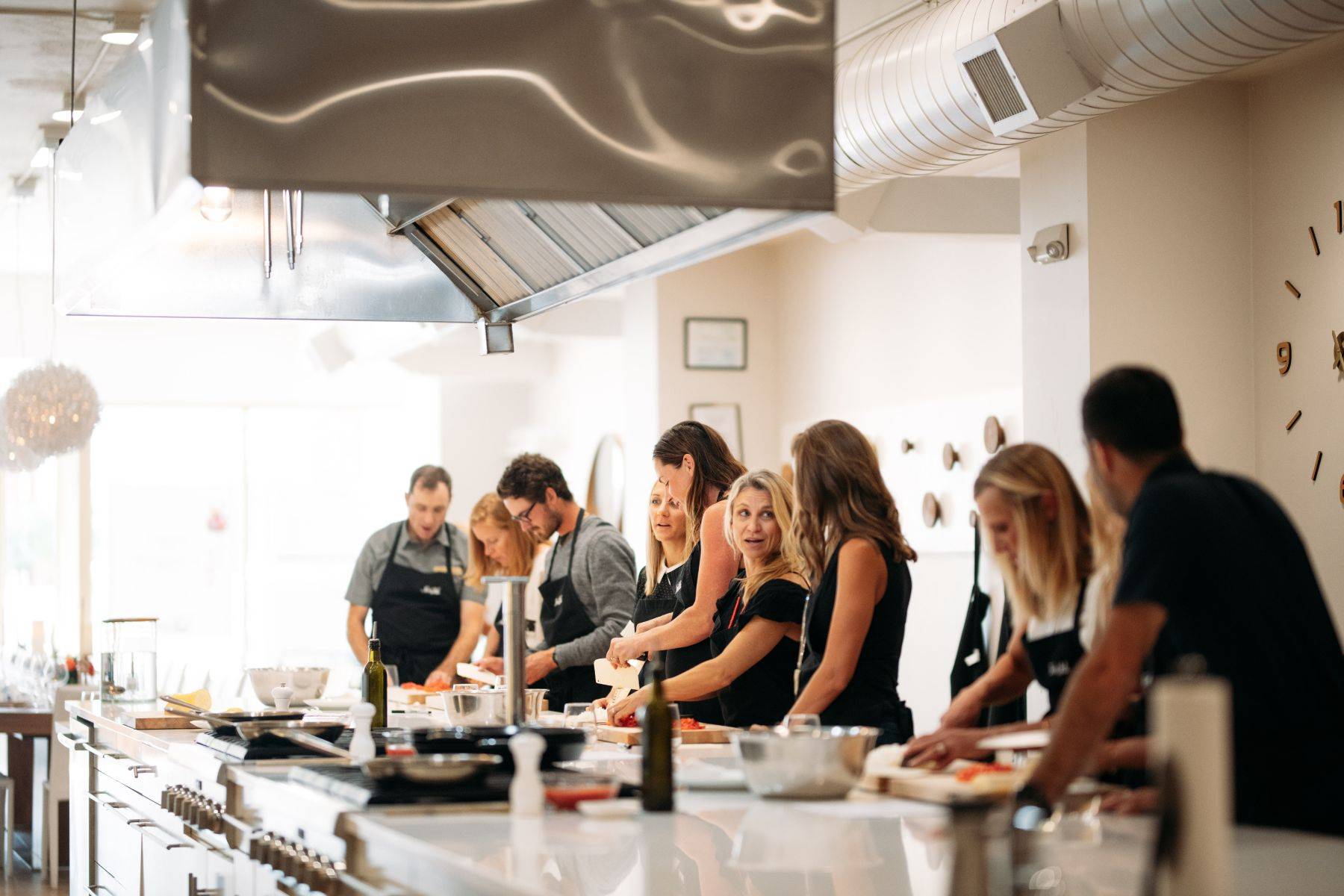
Food Lab Boulder is in Downtown Boulder, Colorado, on Pearl Street. It is a culinary studio for hands-on cooking classes, team-building activities, and private events, with an interactive setting where participants cook, learn, and dine together. The space supports culinary creativity and teamwork in a welcoming, educational atmosphere.
Frequently asked questions
What makes a cooking activity useful for team building?
It gives people a shared task with clear roles, time pressure, and a visible result. That setup makes communication, leadership, and problem-solving easy to observe in real time.
How do you choose the right culinary format for your team?
Start with how much structure the group needs, how comfortable people are in the kitchen, and whether everyone will be in the same place. A guided class works well for a safe starting point, a virtual session fits distributed teams, and a challenge with constraints suits groups that already work well together.
How do you keep a culinary event inclusive?
Ask about allergies, restrictions, and comfort levels before the event, then build the menu around those answers. Choose recipes with flexible components, give clear instructions, and make sure remote participants have the same information and materials as everyone else.
What works best for remote teams?
Virtual cooking sessions work well because they keep everyone involved without requiring the same location. Send the ingredient list and equipment needs in advance, keep the recipe straightforward, and build in time for questions at the start.
How do you know if the event worked?
Look for a shared memory, better energy in the room, and the way people talk to each other during the event. A short debrief helps capture what the group learned, and if people keep talking about the experience afterward, that is usually a good sign it landed.
Should the event be competitive or collaborative?
It depends on the goal. Competition sharpens execution, while collaboration usually does more for trust and connection.