
Where every rule lives: harness engineering at Naboo
By the end of 2026, the advice on AI coding agents has converged. Keep your AGENTS.md short. Prefer a lint rule to a line of text. Give the agent clean code to copy. Anthropic, Vercel and Cloudflare have written it down. We agree with all of it, and we will not repeat it here.
This post is about what comes after the advice. At Naboo, every engineer ships code with an AI coding agent, such as Claude Code, Codex or Cursor. Our frontend team runs the harness around those agents as a product: what OpenAI calls harness engineering. The hard part is not knowing the principles. The hard part is applying them every week, to every change, without exceptions.
So we wrote down how we decide. Where does a new rule go? When do we write a line of text, and when do we refuse to? What does a migration owe the next agent? Here are our answers.
Every rule gets a home
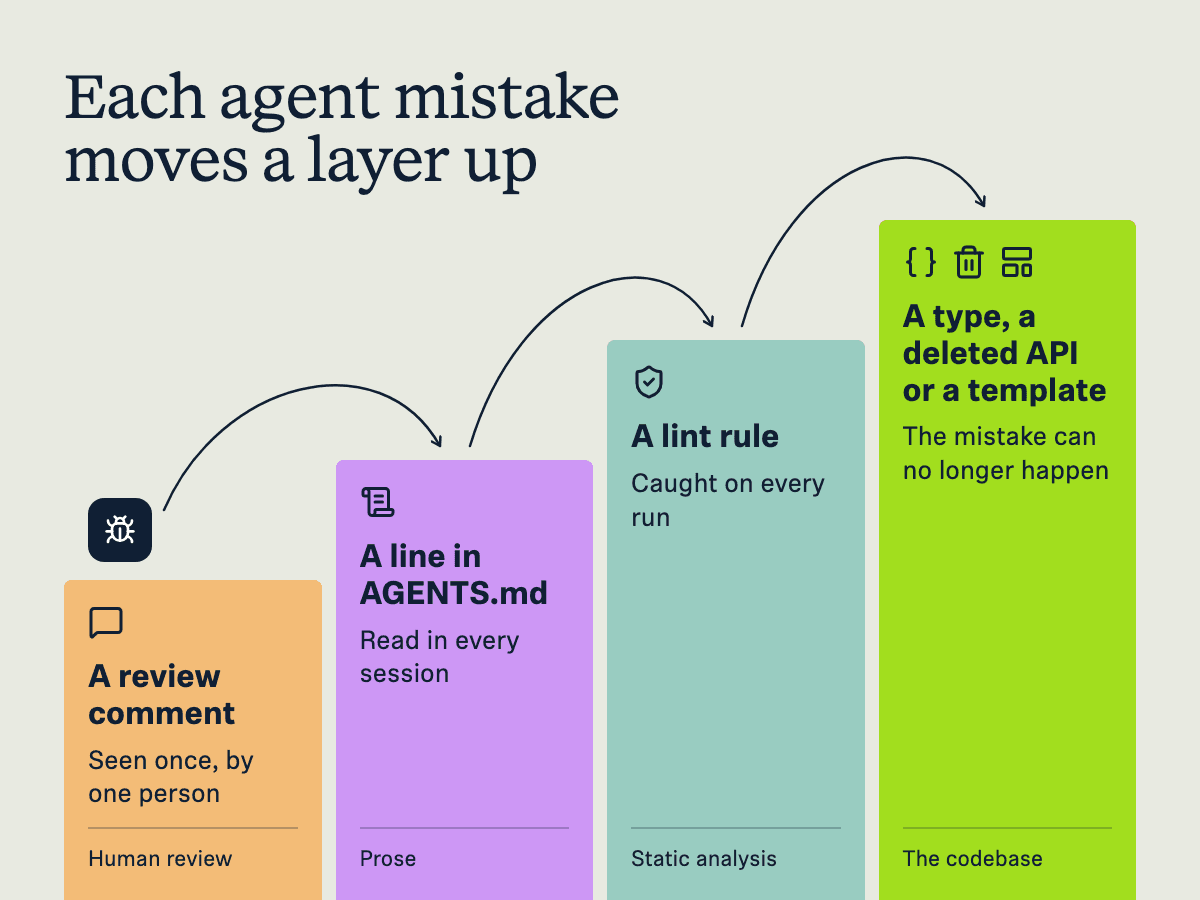
A rule that lives in 2 places drifts. The lint config and the docs start to disagree, and the agent follows whichever it read last. So each rule at Naboo gets a home, and only one, picked in a fixed order:
- The code makes the mistake impossible. A strict type, a deleted API, or a template that never had the problem.
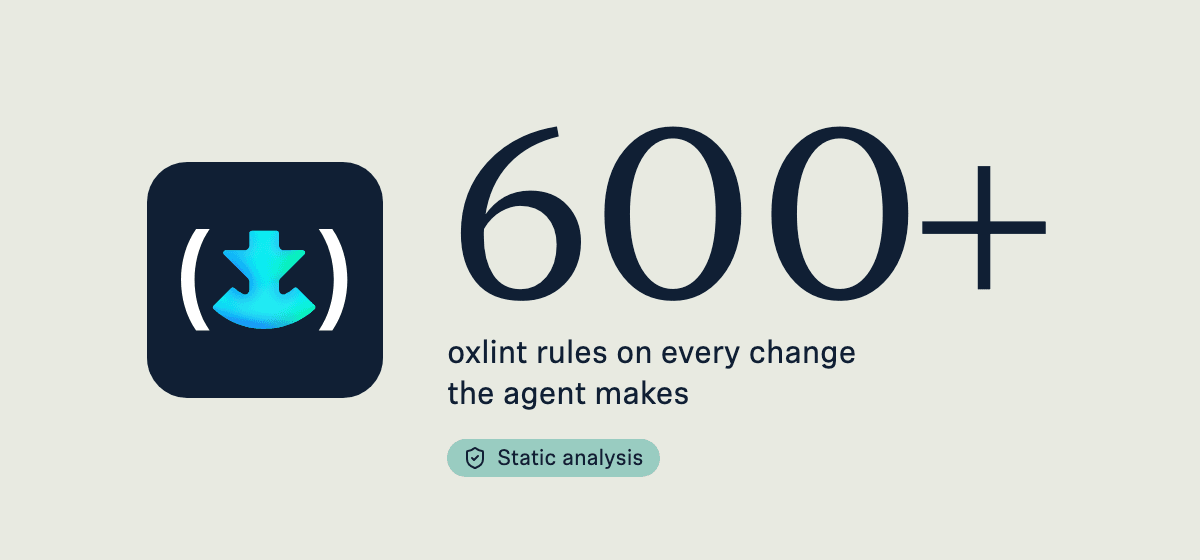
- A lint rule catches it. First a native oxlint rule, then a rule from a plugin we already load, then a new plugin, then a rule we write ourselves.
- A line of text asks the agent to avoid it. Only when no rule can express it: the meaning of a name, a trade-off, a judgement across files.
Default to building the check over writing the rule."
The pull request that adds a rule also deletes the line of text that the rule replaces. And each side checks the other: a new lint rule searches the docs for the line it replaces, and a new line of text searches the lint config for a rule that already checks it.
No line without a real mistake
Each line in an agent doc costs context in every session. The research on context rot and on instruction following agrees: the more you load, the less the model follows. This is context engineering, applied to a repository. So we add a line only for a mistake that someone saw: in a review, a pull request comment or a session. A mistake that nobody saw gets no line. And when a new model stops making the mistake, the line goes.
The coding standards also stay out of the context of the agent that writes the code. A separate review skill reads them, with a module for each stack that the project uses.
don't put coding standards in your implementer agent"
Every migration ships its lock
Moving to a new API is half of a migration. The other half stops the old API from coming back. Without that half, the next agent finds the old pattern in the only file nobody migrated, and copies it everywhere. That is how AI slop spreads.
agents love to copy what exists and take the shortest path, so make the easy thing the right thing."
So each change at Naboo ships its lock. The old API is deleted. A lint rule moves to error. A type rejects the old shape. The app generator stops writing it. A change across many files runs as a codemod, and we run it again on the latest code before the merge, instead of solving conflicts by hand.
We hold the same line on settings. The strictest setting of a tool is our default, starting with TypeScript strict mode. Each library runs the version its maintainers would recommend today. Even our TypeScript config follows the browsers we support: each app gets the language features of its browsers, so the type check rejects an API that a browser lacks.
Our agent docs ship like software
Our own packages have a problem that public libraries do not: no model has ever seen them. So their docs for agents ship with the code, as agent skills inside each npm package, through TanStack Intent.
Intent is still young, and few teams use it yet. Here is what it gives us. The agent finds the skill in node_modules, and reads the skill of the exact version the project installed. A new version of the package brings a new version of its skill, through the normal dependency update.
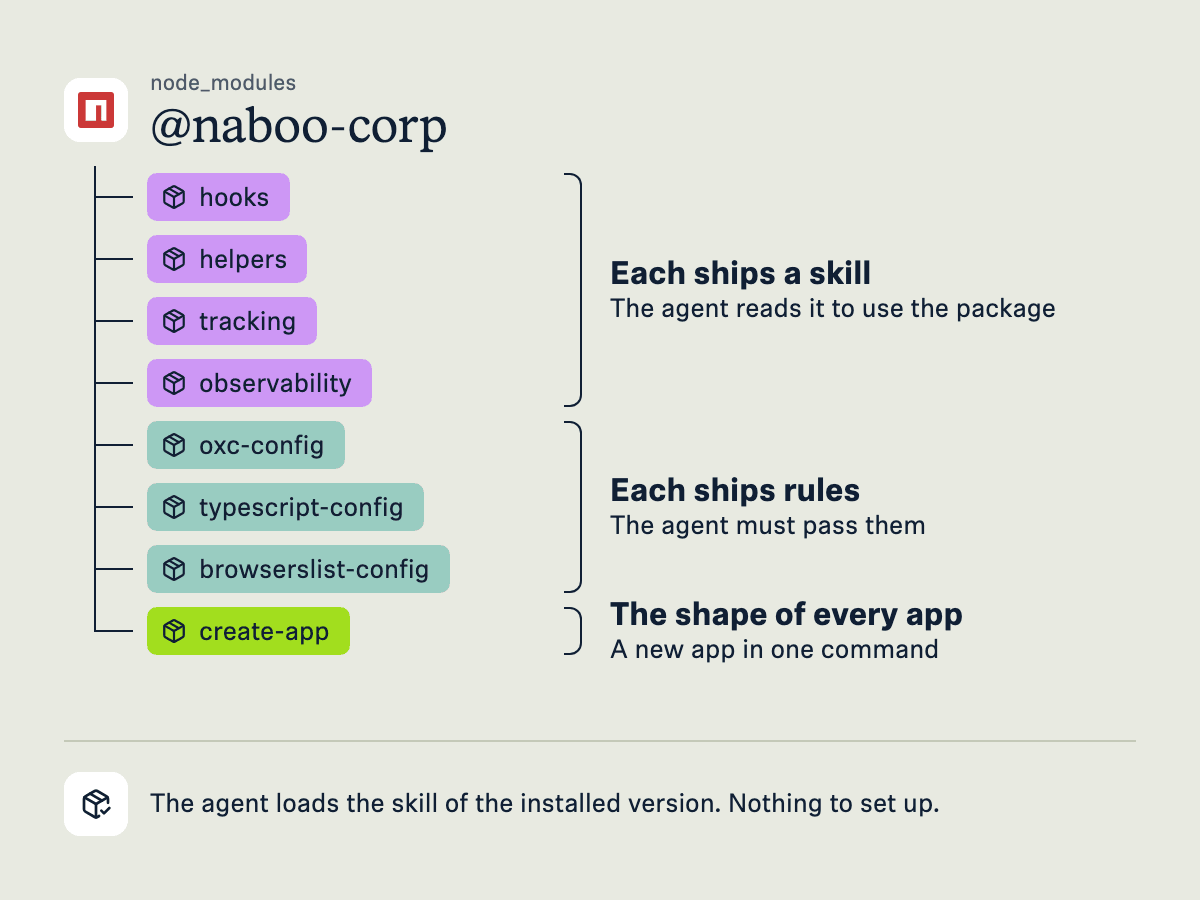
We treat each skill as a prompt that can change with any release. 3 rules follow from that:
- A skill cannot drift. After each release, the pipeline lists each skill whose source changed, and it fails until someone records a review of that skill.
- A skill is trusted, not found. Each project allows 2 scopes only: our own packages, and TanStack, the first choice of our stack.
- A release needs a person, not a token. A person merges the release pull request opened by release-please, and the pipeline publishes to npm as a trusted publisher, with no write token on any computer.
We do not only use Intent. When it breaks on our setup, we send the fix upstream.
Engineers install nothing
A harness that each engineer must set up is a harness that half of them run out of date. So ours reaches 50 engineers through channels they already use.
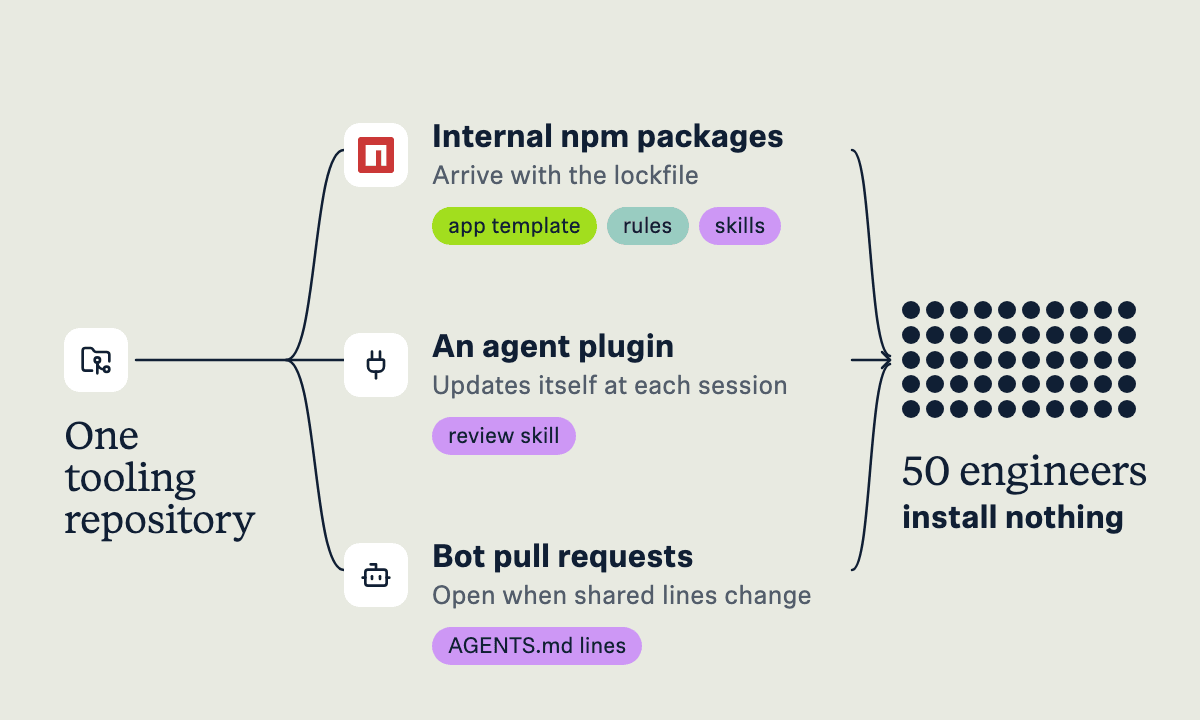
- Packages arrive with the lockfile, like any dependency.
- The agent plugin carries our review and design skills. It updates itself at each session, and a release is a version bump. The pipeline blocks a change to the plugin that does not bump its version.
- A bot writes the lines that every AGENTS.md must hold, between markers, the same way other tools write their own blocks. A keyword in each package.json marks a frontend project, so a moved folder keeps its block.
Every rule has a written reason
Each decision above has an Architecture Decision Record: its context, the decision, the sources, and the options we rejected. The rejected options are the most useful part. They show how we think:
- The same rule in the lint config and in the docs, as a safety net? Rejected: the 2 copies drift, and the review repeats the linter.
- A script that installs the tooling after each install? Rejected: package managers skip it in common cases, and an engineer never notices.
- Write down every good practice, just in case? Rejected: the context fills up, and the model follows each line less.
When a teammate asks why, the answer is a link.
Where we are going
Our long-term goal fits in a sentence: an agent should not be able to make the wrong change.
spend that effort on the highest leverage point, designing an environment where agents do the right thing by default."
Lauren, @poteto
Each mistake an agent makes moves a step up, until the code makes it impossible. Over time, the text shrinks and the tooling grows. Every frontend app converges to a single shape, with the same framework, the same structure and types from end to end. And the harness itself keeps shipping like a product, with versions, release notes and reviews.
We also want to share it. We are working to open source our frontend tooling, so that any team can give its agents the same foundation.
The best instruction is the one that no agent ever needs to read.
Written by Victor de la Fouchardière and Julien Caron, from the frontend team at Naboo.