
Field day activities for adults work best when they are easy to run, physical enough to wake people up, and clear enough to reveal how a group communicates under pressure.
Use this set to choose activities that fit your space, your team dynamic, and the kind of coordination you want to test, from quick handoffs to blindfolded guidance.
The strongest options mix movement with decision-making, so people are not just competing, they are solving problems together.
Key takeaways
- The list spans relay-style courses, blindfolded navigation, team races, and group builds, including the strategic pipeline challenge, executive three-legged race, and the office sack relay.
- Several activities focus on communication and coordination, such as the human knot collaboration, blindfolded navigation course, and minefield communication challenge.
- Other options test planning and shared problem-solving, including marshmallow tower prototype, collaborative bridge building, and puzzle piece negotiation.
- Some games are built around adjusting to changing conditions or using strategy under pressure, such as strategic tug of war, water balloon toss with strategy, and water transfer relay race.
- The activities work across different setups, from pairs and small groups to larger teams, with formats that include courses, relays, line-ups, and shared containers.
- The mix also includes lighter, high-energy choices like giant beach ball volleyball and chain tag, alongside more controlled challenges that reward timing, accuracy, and clear instructions.
1. The strategic pipeline challenge
The strategic pipeline challenge is a handoff exercise where teams move small objects through short PVC pipe sections without stopping or dropping them.
It works because every pass matters. Moving items from a start bucket to a finish bucket within a set time shows how one rushed handoff can disrupt an entire process.
Group setup: teams using short PVC pipe sections
Best for: workflow, timing, and communication
How to apply: Set up a start bucket and a finish bucket, then give each team short PVC pipe sections. Teams move small objects through the pipes without stopping or dropping them. Keep the pace moving until the set time ends.
2. Executive three-legged race
The executive three-legged race pairs people together by tying adjacent legs and sending them down a course.
It works because the awkward pace forces coordination. Adding rules such as only one person speaking or using code words makes it less about speed and more about teamwork.
Group setup: pairs on a course
Best for: quick trust between coworkers who do not usually work side by side
How to apply: Tie adjacent legs together and send each pair down a course. Add rules such as only one person speaking or using code words. Use padded ties and a safe surface so the focus stays on teamwork.
3. Corporate wheelbarrow trust run
The corporate wheelbarrow trust run asks one person to hold another's legs while the partner moves forward on their hands.
It works because the emphasis is on control and accuracy, not raw speed. Points for staying aligned through turns make dependence visible and show how trust changes behavior.
Group setup: pairs on a course
Best for: teams that need to trust each other quickly
How to apply: Have one person hold another's legs while the partner moves forward on their hands. Score control and accuracy, with points for staying aligned through turns. Use knee pads and clear comfort checks because the activity is physically demanding.
4. The human knot collaboration
The human knot collaboration has teams of 8 to 12 stand in a circle, grab two non-adjacent hands, and untangle into a perfect circle without letting go.
It works because some problems get solved by stepping back, not pushing harder. Teams often see that the messiest moment can come right before the structure starts to make sense.
Group setup: teams of 8 to 12
Best for: problem-solving and collaboration
How to apply: Have teams of 8 to 12 stand in a circle and grab two non-adjacent hands. Ask them to untangle into a perfect circle without letting go. If the chain breaks, the group starts again.
5. Blindfolded navigation course
The blindfolded navigation course pairs one blindfolded participant with a guide who gives verbal directions through an obstacle course.
It works because clarity matters fast. Vague directions lead to mistakes, so the activity shows whether a team can communicate with precision when the pressure rises.
Group setup: one blindfolded participant and one guide
Best for: communication under pressure
How to apply: Pair one blindfolded participant with a guide and send them through an obstacle course. The guide cannot touch the blindfolded person. Hitting obstacles adds time penalties, so the directions need to stay clear and precise.
6. Team synchronized ski race
The team synchronized ski race puts groups of 4 to 6 on long wooden planks connected by ropes so they must move in unison.
It works because the race reveals who sets the pace, who keeps the rhythm, and how much a team depends on shared timing. A rhythmic chant or non-verbal cueing helps the group cross the finish line together.
Group setup: groups of 4 to 6
Best for: shared timing and coordination
How to apply: Put groups of 4 to 6 on long wooden planks connected by ropes. Have them move in unison toward the finish line. Use a rhythmic chant or non-verbal cueing to help the group stay together.
7. The office sack relay
The office sack relay sends participants hopping in burlap sacks to a finish line before tagging the next runner.
It works because the extra office task shifts the focus from pure athleticism to transitions and task efficiency. That mirrors the quick handoff and follow-through that keeps modern project work moving.
Group setup: relay teams
Best for: handoffs and task efficiency
How to apply: Have participants hop in burlap sacks to a finish line and tag the next runner. Before each tag, the runner completes a quick office task, such as sorting three colored paper clips correctly. Keep the relay moving from one handoff to the next.
8. Precision egg and spoon race
The precision egg and spoon race asks participants to balance a hard-boiled egg on a spoon while racing.
It works because steady focus beats frantic effort. A transfer station midway through the course adds another layer, since the egg must move from spoon to spoon without hands touching it.
Group setup: individual racers with a transfer station
Best for: control and consistency
How to apply: Have participants balance a hard-boiled egg on a spoon and race to the course. Add a transfer station midway through the course. At the transfer, move the egg from spoon to spoon without using hands.
9. Marshmallow tower prototype
The marshmallow tower prototype is a timed build where teams use spaghetti, tape, string, and one marshmallow to make the tallest freestanding structure they can. The marshmallow has to sit on top.
It works because it rewards early testing and constant adjustment. Teams that spend too long planning usually fall behind teams that try ideas quickly and keep moving.
Group setup: Teams, 18 minutes
Best for: Building early and adjusting often
How to apply: Give each team spaghetti, tape, string, and one marshmallow. Ask them to build the tallest freestanding structure they can, with the marshmallow on top. Keep the focus on testing ideas early and adjusting as they go.
10. Collaborative bridge building
Collaborative bridge building splits two teams into separate halves of a bridge using identical materials like newspaper, straws, and tape. The halves must connect and support a toy car.
It works because it shows what happens when measurements and instructions do not match. The exercise makes cross-team coordination visible through shared standards.
Group setup: Two teams, separate halves
Best for: Cross-team coordination
How to apply: Give both teams identical materials like newspaper, straws, and tape. Keep them from seeing each other's work and allow only one brief written message before building. When both halves are finished, connect them and test whether they support a toy car.
11. Minefield communication challenge
The minefield communication challenge has one blindfolded person move through obstacles while a partner gives precise verbal guidance. Touching a mine brings a heavy time penalty or a restart.
It works because exact language matters. Directions like step forward three inches are more useful than vague instructions, which makes the exercise useful for teams that need repeatable communication in risk-sensitive work.
Group setup: Pairs, blindfolded navigation
Best for: Repeatable communication in risk-sensitive work
How to apply: Set obstacles close together and blindfold one person. Have a partner guide them with precise verbal instructions. Use exact language, and apply a heavy time penalty or restart if a mine is touched.
12. Puzzle piece negotiation
Puzzle piece negotiation gives multiple teams large puzzles with pieces mixed into a central container. One person at a time retrieves a piece, and if it belongs to another puzzle, the teams have to trade.
It works because it rewards sharing over hoarding. Teams see that progress speeds up when they treat the room like a shared system instead of separate piles.
Group setup: Multiple teams, shared container
Best for: Sharing and coordination
How to apply: Place mixed puzzle pieces in a central container and give each team a large puzzle. Let one person at a time retrieve a piece. If a piece belongs to another puzzle, have the teams trade.
13. Strategic tug of war
Strategic tug of war changes the rules mid-game with timed interruptions, such as losing two members, gaining a strategy card, or pulling one-handed. The point is not just effort, but the ability to rethink the plan when the setup shifts.
It works because teams that pause to adjust technique usually do better than teams that rely on strength alone. It is a good fit when you want people to adapt under changing conditions.
Group setup: Teams, changing rules mid-game
Best for: Adapting under changing conditions
How to apply: Start a tug of war and introduce timed interruptions during play. Use changes such as losing two members, gaining a strategy card, or pulling one-handed. Watch which teams pause to adjust technique instead of relying on strength alone.
14. Human rock-paper-scissors team match
The human rock-paper-scissors team match has teams line up facing each other and choose one move together before executing it at the same time. Rock is crouching, paper is spreading wide, and scissors is extending limbs.
It works because the whole group has to agree fast. That makes it a quick test of internal communication, and it also works well as an opening activity when you want energy without a long setup.
Group setup: Teams, line-up format
Best for: Quick internal communication and opening energy
How to apply: Have teams line up facing each other. Ask each group to choose one move together and then execute it at the same time. Use the agreed actions for rock, paper, and scissors.
15. Water balloon toss with strategy
Water balloon toss with strategy starts with pairs throwing balloons and stepping farther apart after each catch. Each pair gets three balloons and has to decide when to use each one as the distance increases.
It turns a simple toss into a lesson in risk assessment and resource allocation. Teams have to talk through limits and probability before each throw, which keeps the game grounded in judgment, not luck.
Group setup: Pairs, three balloons each
Best for: Risk assessment and resource allocation
How to apply: Give each pair three balloons and start the toss. After each catch, have them step farther apart. Before each throw, ask them to talk through limits and probability and decide when to use each balloon.
16. Water transfer relay race
The water transfer relay race asks teams to move water from a full bucket to an empty measuring bucket using perforated cups or small sponges. The course should be set up so they can race without spilling too much.
It works because it rewards efficiency over speed. Teams often find that a human chain or a sponge-based approach works better than rushing, which makes it a useful process-improvement exercise.
Group setup: Teams, relay race format
Best for: Process improvement and efficiency
How to apply: Set up a course that lets teams race without spilling too much. Have them move water from a full bucket to an empty measuring bucket using perforated cups or small sponges. Let them try a human chain or a sponge-based approach and compare it with rushing.
17. Giant beach ball volleyball
Giant beach ball volleyball uses standard volleyball rules, but the ball is oversized and lightweight.
Every team member must touch it before it goes over the net, and each side needs at least three touches. That structure keeps one strong player from taking over. It forces the group to stay involved, communicate quickly, and build a point together instead of relying on a single hitter.
Group setup: Teams, standard volleyball format
Best for: Keeping everyone involved and building quick communication
How to apply: Play with standard volleyball rules, but use an oversized, lightweight ball. Make sure every team member touches it before it goes over the net. Keep the three-touch minimum on each side. Use the format to keep the point shared across the group.
18. Chain tag
Chain tag starts with one person as "it," and each tagged person joins hands with the tagger to form a chain.
Only the ends of the chain can tag others, and the game ends when everyone is linked. It is a simple way to show how coordination gets more complex as a group grows. The chain has to move as one body, which makes leadership and timing visible in a very direct way.
Group setup: Group tag game
Best for: Showing coordination, leadership, and timing
How to apply: Start with one person as "it." When someone is tagged, they join hands with the tagger to form a chain. Let only the ends of the chain tag others. Continue until everyone is linked.
19. Human scavenger hunt connections
Human scavenger hunt connections gives participants a list of non-work traits, such as traveling to four continents or playing an instrument, and asks them to collect signatures.
No person can sign the same sheet twice. This is one of the easiest ways to help people find common ground outside job titles. It works especially well when the goal is to spark conversation and surface unexpected connections across the group.
Group setup: Participants with signature sheets
Best for: Sparking conversation and finding common ground
How to apply: Give participants a list of non-work traits to look for, such as traveling to four continents or playing an instrument. Ask them to collect signatures from people who match those traits. Make sure no person signs the same sheet twice. Use the activity to surface shared interests across the group.
20. Office chair slalom relay
The office chair slalom relay sets up a cone course and has one person ride in a rolling office chair while a teammate pushes.
The pair switches roles at the halfway mark and races for time. It turns everyday office gear into something playful while still demanding careful control. Smooth flooring matters, and the course works best when the team stays alert enough to avoid crashes.
Group setup: Pairs, cone course relay
Best for: A playful race that still needs careful control
How to apply: Set up a cone course. Have one person ride in a rolling office chair while a teammate pushes. Switch roles at the halfway mark and race for time. Use smooth flooring and keep the team alert to avoid crashes.
Common pitfalls in organizing adult field day activities
Even strong ideas can fall flat if the logistics are messy. The first mistake is choosing games that do not match the goal. If the team needs better strategic planning, a marshmallow tower or bridge-building challenge will do more than a race built only on speed.
The second mistake is overcomplicating the setup. Adults usually respond better to clear rules, simple scoring, and gear that is easy to manage. The third is ignoring inclusion. Mix physical, moderate, and mental activities so more people can participate comfortably.
How do you choose the right activity mix?
Choose the mix by starting with the team problem you want to solve, then matching it to the kind of challenge that exposes that behavior. New teams usually need trust and vulnerability. Groups with process issues need rhythm and workflow. Teams facing creative pressure need strategy and quick decisions.
That approach keeps the day focused. It also helps you avoid filling the schedule with games that are fun in the moment but do not support the outcome you actually want.
Measuring success beyond the finish line
Success is not only about who finishes first. It is about whether the event changes how people work together afterward, especially in communication, trust, and cross-team awareness.
One simple way to measure that is a short debrief after each main challenge. Ask what approach the group used, where trust slipped, and what they would do differently next time. You can also track how much interaction happens across departments after the event and compare it with the week before.
Where to host field day activities for adults
The venue decides which field day ideas work, from open lawns to indoor halls and mixed-use spaces. Each activity below includes a real Naboo venue that fits the format.
A venue with open indoor-outdoor event space
A venue with open indoor-outdoor event space fits the strategic pipeline challenge, executive three-legged race, corporate wheelbarrow trust run, the human knot collaboration, blindfolded navigation course, team synchronized ski race, the office sack relay, precision egg and spoon race, marshmallow tower prototype, and collaborative bridge building because teams need room to move, regroup, and switch between active play and table-based problem solving. The mix of covered and open areas keeps the pace flexible and the energy high.
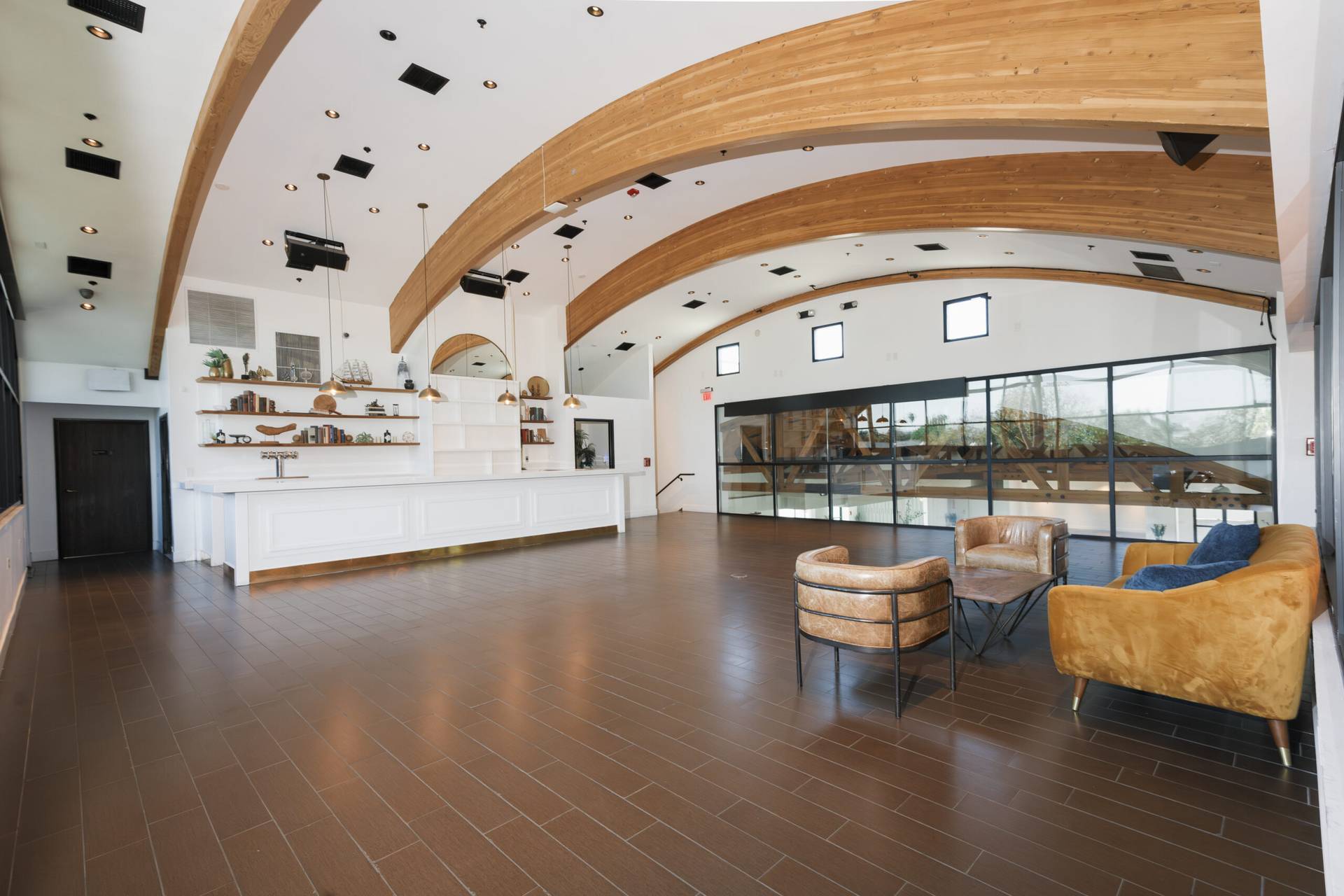
The Colony House is a venue in Anaheim, California. It offers indoor and outdoor event space for corporate events, with a modern and elegant feel shaped by local artisanal details.
A team activity venue with equipment and instructors
A team activity venue with equipment and instructors fits minefield communication challenge, puzzle piece negotiation, strategic tug of war, human rock-paper-scissors team match, water balloon toss with strategy, water transfer relay race, giant beach ball volleyball, chain tag, human scavenger hunt connections, and office chair slalom relay because each one needs clear rules, quick setup, and active guidance. The right space keeps groups moving, gives instructors room to run the game, and lets teams switch from planning to play without losing momentum.
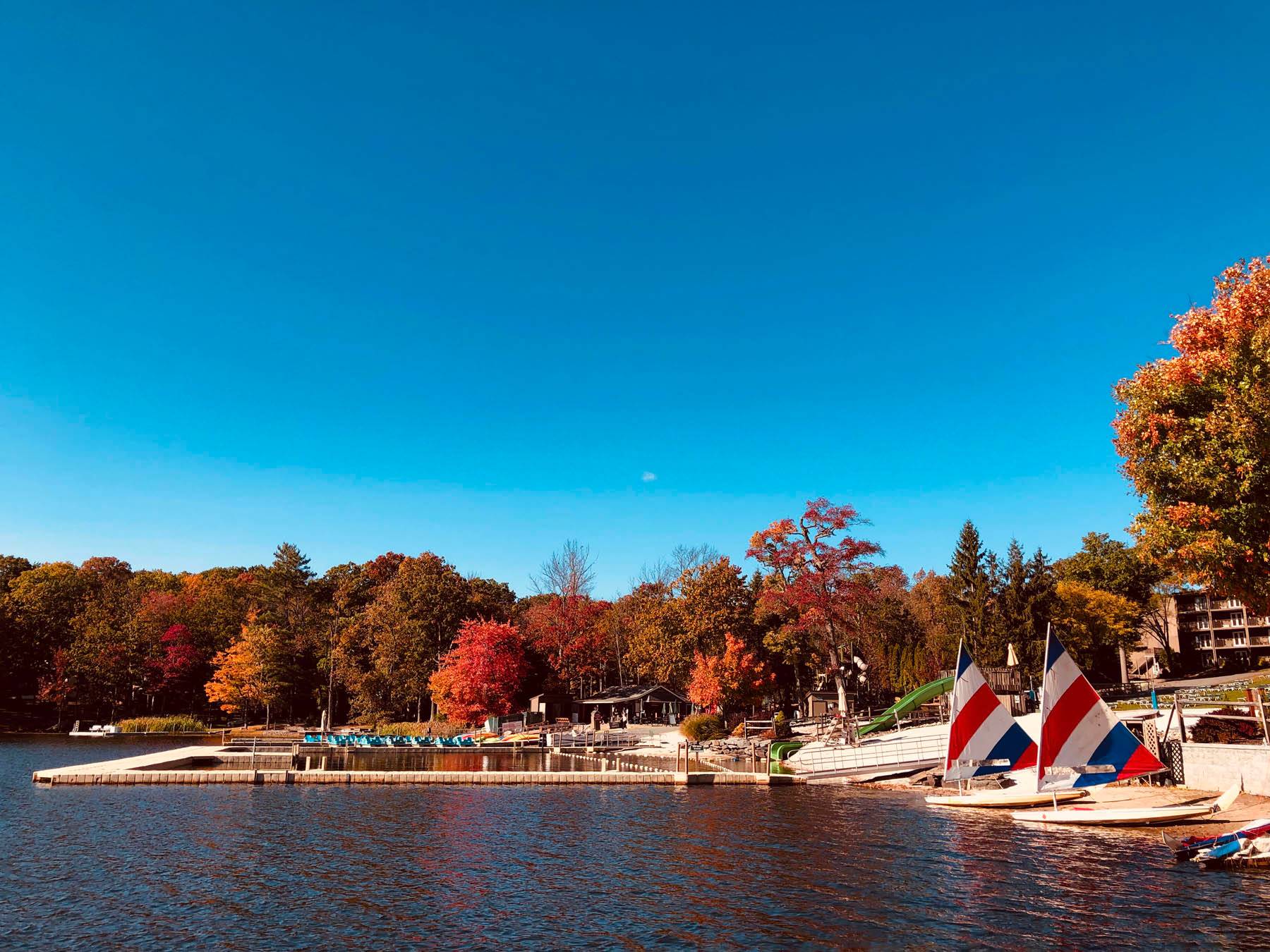
Woodloch Resort is in Hawley, Pennsylvania. It is a venue for corporate events, meetings, retreats, and group events, with a natural setting, modern facilities, meeting spaces with the latest technology, flexible catering options, and 57 guest rooms.
A private estate with room to spread out
A private estate with room to spread out suits field day activities that need space, movement, and clear team roles. Corporate wheelbarrow trust run, the human knot collaboration, blindfolded navigation course, team synchronized ski race, the office sack relay, precision egg and spoon race, marshmallow tower prototype, collaborative bridge building, minefield communication challenge, water balloon toss with strategy, water transfer relay race, giant beach ball volleyball, chain tag, human scavenger hunt connections, and office chair slalom relay all work better when teams can move without crowding each other.

Aspects Big Sky is in Gallatin Gateway, Montana. It is a private estate with ten individual houses and a total of 30 bedrooms, and it can host groups of up to 65 guests. The meeting space includes high-speed Wi-Fi, audio-visual equipment, and flexible seating arrangements.
A hotel or resort with flexible meeting and leisure areas
A hotel or resort with flexible meeting and leisure areas suits the strategic pipeline challenge, executive three-legged race, human knot collaboration, blindfolded navigation course, and marshmallow tower prototype because you can move from open team games to focused problem-solving without changing venues. The mix of meeting rooms and casual spaces also works well for collaborative bridge building, puzzle piece negotiation, giant beach ball volleyball, and office chair slalom relay.
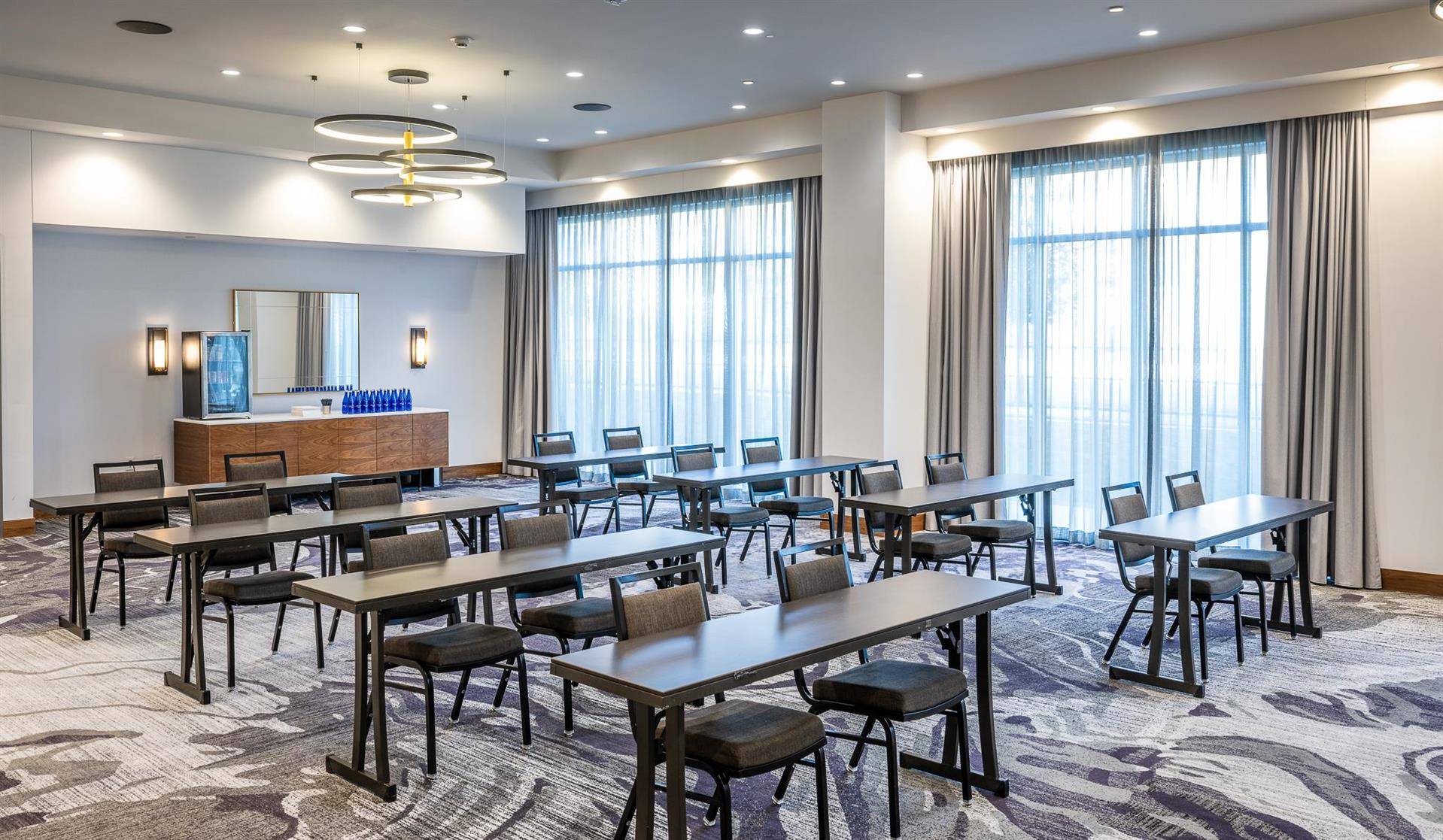
Hyatt Place Fort Worth/TCU is a hotel in Fort Worth, Texas. It offers flexible meeting and breakout spaces, a largest room of 3,000 square feet, and event settings that fit conferences, seminars, and corporate events.
Frequently asked questions
What makes field day activities for adults work well?
They work best when they mix movement, coordination, and problem-solving, because that combination shows how people communicate under pressure and where handoffs break down. The right mix also lets more people contribute, not just the most athletic participants.
How do I choose the right field day activities for adults?
Choose the format that fits your group, then match the activity to the team need. Use trust-building games for new teams, coordination games for groups that need better handoffs, and strategy games for teams that need sharper problem-solving.
How do I run a field day well?
Keep instructions short, the setup simple, and the scoring easy to follow. Plan for inclusion with options that work for different mobility levels and comfort levels, and keep the pace steady from start to finish.
What group size works best for these activities?
The right group size depends on the activity. The strategic pipeline challenge works with 6-12 people, the human knot collaboration with 8 to 12, the blindfolded navigation course with 4-12, and the team synchronized ski race with groups of 4 to 6.
Which activities work best for remote or hybrid teams?
The text focuses on in-person activities, so the best fit for remote or hybrid teams is the one that still supports clear communication, coordination, and problem-solving. Collaborative bridge building, puzzle piece negotiation, and the strategic pipeline challenge all make those habits visible in a structured way.
How do I keep field day activities inclusive for adults?
Plan for inclusion with options that work for different mobility levels and comfort levels. Mix physical and mental challenges so more people can contribute, and use clear comfort checks for physically demanding activities like the corporate wheelbarrow trust run.