
Brain teasers for work give teams a short mental reset while they practice clear thinking, and you can use them as timed prompts in meetings, offsites, or quick breaks.
Pick a puzzle that fits the room, then use the answer to start a discussion about assumptions, reasoning, and how the group works through problems.
The right format keeps the exercise light, useful, and easy to connect back to the work at hand.
Key takeaways
- The list spans logic, lateral thinking, wordplay, process analysis, and narrative puzzles, so different teams can find a format that fits the room.
- The map riddle, the pencil lead puzzle, and the family photograph all ask people to slow down, read clues carefully, and test first assumptions.
- The traveling stamp, the dinner paradox, and day and night work as quick resets when a meeting needs a short change of pace.
- The unseen product and the empty keyboard push teams to think about a full process or an object's traits before naming the answer.
- The reversible weight and the dictionary anomaly rely on wording, reversal, and language shifts, which makes them useful for naming, editing, and messaging.
- Before booking, check the group size, the time you actually have, and whether the puzzle lets everyone in the room contribute without turning it into a test.
Why use brain teasers at work?
Brain teasers at work are a practical way to give people a short mental reset while they practice clear thinking. They are not just icebreakers. They help teams shift perspective, talk through problems, and return to routine tasks with a sharper frame of mind.
Encouraging mental agility
Mental agility means moving between ideas without getting stuck on the first answer. When employees face a new puzzle, they have to question assumptions, test different approaches, and adjust quickly. That habit carries over to project work, where the first solution is rarely the only one.
Building team problem-solving
Complex work often depends on people from different functions weighing in at the same time. Brain teasers give teams a low-stakes way to practice listening, explaining a point of view, and combining different perspectives. The value is in the conversation itself, which can make later group decisions feel more grounded.
Offering useful mental breaks
Short puzzles can break up a long stretch of routine work without pulling people far from the task at hand. They shift attention to a different kind of thinking for a few minutes, which can help people return to emails, planning, or analysis with a cleaner focus. Used well, they are a simple change of pace, not a distraction.
How should you use brain teasers in a team meeting?
Use them as short, timed prompts that fit the meeting's energy, then connect the answer back to the work at hand.
A simple structure keeps the exercise useful instead of distracting. Match the puzzle to the group, the agenda, and the time you actually have.
| Brain Teaser Type | Difficulty Level | Ideal Group Size | Time Required | Cognitive Skill Targeted |
|---|---|---|---|---|
| Logic Puzzles | Intermediate to Advanced | 1-5 people | 5-15 minutes | Analytical reasoning and deductive thinking |
| Lateral Thinking Riddles | Beginner to Intermediate | 3-15 people | 10-20 minutes | Creative problem-solving and perspective shift |
| Word Association Games | Beginner | 5-30 people | 5-10 minutes | Verbal fluency and quick cognitive processing |
| Pattern Recognition Challenges | Intermediate | 2-20 people | 8-18 minutes | Visual-spatial reasoning and pattern identification |
| Math Brain Teasers | Advanced | 1-8 people | 10-25 minutes | Numerical reasoning and abstract thinking |
| Team Escape Room Scenarios | Intermediate to Advanced | 6-12 people | 30-60 minutes | Collaborative problem-solving and communication |
Choose the format that fits the room. A quick word riddle works in a Monday standup. A longer lateral puzzle fits a retreat or offsite where small groups can talk through the clues.
1. Deploy: strategic timing and context
Bring a teaser in when the room needs a reset, not as filler. It works best after a dense update, before a planning discussion, or at the start of a session when people are still settling in.
- Icebreakers: Start a Monday morning standup with a short word riddle.
- Transition moments: Use a logic puzzle after a heavy data review to shift the group into planning mode.
- Team retreats: Give a multi-step lateral puzzle that gets small groups talking and comparing approaches.
2. Discuss: facilitation and collaboration
The real value is in the discussion around the answer. Ask people to explain how they ruled out options, what they noticed first, and where they changed course.
- Focus on the why: Have team members talk through their reasoning out loud.
- Level the playing field: Pick challenges that let different roles contribute, so the conversation does not default to the loudest voice in the room.
3. Document: learning and follow-up
Close the loop by tying the exercise back to the meeting topic. A short reflection helps the group notice patterns in communication, assumptions, and decision-making.
- Post-riddle reflection: Ask, "What did our approach to this puzzle reveal about how we handle the next project?"
- Riddle repository: Keep a rotating list of teasers so the activity stays fresh from one session to the next.
What mistakes should you avoid when using brain teasers at work?
Avoid turning them into tests, skipping the debrief, or choosing puzzles that only a few people can solve. If the goal is to support team energy and keep the session light, the format should feel inclusive from the start.
Mistake 1: treating them as mandatory assessments
If people feel judged or ranked, the activity stops being a break and starts feeling like a performance review. Keep the tone low-pressure, and do not score individual answers. The point is participation, not proving who is quickest.
Mistake 2: failing to debrief the process
The discussion after the answer matters as much as the puzzle itself. If you move on too fast, you miss the chance to hear how different people approached the same problem. Leave a few minutes for the group to compare strategies, clarify assumptions, and notice where collaboration helped.
Mistake 3: choosing riddles that are too niche or obscure
Puzzles that depend on specialist knowledge, hidden references, or heavy math can leave part of the room out. Pick something people can approach through logic, language, or lateral thinking. A good work puzzle gives everyone a fair entry point, even if they arrive at the answer in different ways.
20 effective brain teasers for work
Here are 20 brain teasers for work, grouped by the skill they help develop.
1. The map riddle (logic and observation)
The Teaser: I have cities, but no houses. I have mountains, but no trees. I have water, but no fish. What am I?
Answer: A map.
This is a logic puzzle about reading descriptions literally, because the clues only make sense when you stop assuming they refer to real places and things.
It works well for analytical groups working with data visualizations, since it trains people to notice exactly what is stated before jumping to conclusions.
Group setup: the whole team at once
Best for: analytical groups working with data visualizations
How to apply: Use it to practice reading exactly what is stated before jumping to conclusions. Ask the team to explain why each clue fits a map. Then connect that habit to reviewing charts, dashboards, and written briefs with more care.
2. The pencil lead puzzle (assumption check)
The Teaser: I am taken from a mine and shut up in a wooden case, from which I am never released, yet I am used by almost every person. What am I?
Answer: Pencil lead (graphite).
This is an assumption check puzzle that uses everyday objects in an abstract way, so people have to separate origin, form, and use instead of assuming they all match.
It works because it gets each person to name the first assumption they made, which is useful when product reviews or vendor conversations can be distorted by quick guesses.
Group setup: the whole team at once
Best for: product reviews or vendor conversations
How to apply: This puzzle trains people to separate origin, form, and use instead of assuming they all match. Run it by asking each person to name one assumption they made first. Then discuss how that same habit can distort product reviews or vendor conversations.
3. The family photograph (relational logic)
The Teaser: A man is looking at a photograph. He says, "Brothers and sisters, I have none. But that man's father is my father's son." Who is in the photograph?
Answer: His son.
This is a relational logic puzzle that requires careful step-by-step reasoning about family ties, with the answer depending on how the pronouns connect.
It works because it builds step-by-step reasoning and careful use of pronouns, which matters when teams trace reporting lines or project ownership.
Group setup: the whole team at once
Best for: tracing reporting lines or project ownership
How to apply: Have the group restate the clue in plain language before solving. Then compare how small wording changes can alter the answer. Use it to practice careful reasoning about family ties and pronouns.
4. The traveling stamp (lateral thinking)
The Teaser: What can travel around the world while staying in a corner?
Answer: A stamp.
This is a quick lateral thinking teaser that works by shifting away from the obvious meaning of travel.
It works well to ease tension during intense meetings, and it helps teams notice when a work problem is only hard because they are treating it as a standard case.
Group setup: the whole team at once
Best for: intense meetings
How to apply: Use it as a quick reset. Ask the team to name one work problem that improved once they stopped treating it as a standard case. Then talk through how the answer depends on a different reading of the clue.
5. The unseen product (process analysis)
The Teaser: The person who makes it, sells it. The person who buys it never uses it. The person who uses it never sees it. What is it?
Answer: A coffin.
This is a process analysis riddle that pushes people to consider the full chain, from creation to end use, not just the visible handoff.
It works because it helps product teams map every role in the chain and spot where assumptions about the final user can hide risk or waste.
Group setup: the whole team at once
Best for: process mapping and lifecycle thinking
How to apply: Ask people to identify every role in the chain. Then discuss where assumptions about the final user can hide risk or waste. Use it to map a process from creation to end use, not just the visible handoff.
6. The empty keyboard (wordplay and function)
The Teaser: I have many keys but no locks. I have space but no room. You can enter, but you can't go outside. What am I?
Answer: A keyboard.
This is a feature-based word puzzle that uses office tools in a descriptive, non-functional way, so people have to analyze an object by its traits before naming it.
It works because feature-based thinking helps teams describe tools, systems, or workflows clearly, which supports sharper internal instructions and product notes.
Group setup: the whole team at once
Best for: writing internal instructions and product notes
How to apply: Ask the group to list the object's traits before naming it. Then connect that to writing sharper internal instructions and product notes. Keep the focus on features first, purpose second.
7. The reversible weight (linguistic agility)
The Teaser: Forward I am heavy, but backward I am not. What am I?
Answer: The word "ton."
This is a linguistic puzzle that shows the value of looking at the same word from more than one angle.
It works because that habit is useful in naming, editing, and messaging, where small wording shifts can change meaning at work.
Group setup: the whole team at once
Best for: naming, editing, and messaging
How to apply: Run it by asking what changes when the word is reversed. Then relate that to how small wording shifts can change meaning at work. Use it to practice looking at the same word from more than one angle.
8. The dinner paradox (narrative analysis)
The Teaser: A woman shoots her husband, holds him underwater for five minutes, then hangs him. Five minutes later they enjoy dinner together. How?
Answer: She took a picture, developed it, and hung it to dry.
This is a narrative analysis puzzle that asks people to move beyond usual story assumptions and look for the hidden context.
It works because it builds narrative discipline and shows how a strange story can make sense once the missing step is found, which matters when a surprising update needs careful checking.
Group setup: the whole team at once
Best for: checking facts before reacting to a surprising update
How to apply: Ask the team to identify the missing step before the reveal. Then connect that to checking facts before reacting to a surprising update. Use it to show how a strange story can make sense once the hidden context is found.
9. Day and night (abstract opposites)
The Teaser: What breaks yet never falls, and what falls yet never breaks?
Answer: Day breaks and night falls.
A poetic riddle about everyday opposites, this one asks the team to think beyond literal meaning.
It works because it nudges people into metaphorical thinking, which helps creative groups move between literal and creative modes.
Group setup: the whole team at once
Best for: creative groups
How to apply: Use it in a brainstorm by asking for other everyday phrases that work the same way. Then link that flexibility to better naming and concept work.
10. The boat of singles (linguistic sleight of hand)
The Teaser: You see a boat filled with people. It has not sunk, but when you look again, you don't see a single person on the boat. Why?
Answer: All the people on the boat are married (not single).
A word riddle about close attention, this one depends on noticing how language can carry a second meaning.
It works because it tests language nuance, which matters when teams need to write clear internal messages.
Group setup: the whole team at once
Best for: writing clear internal messages
How to apply: Have the team explain why the first reading fails. Then use that discussion to stress clarity in internal messages, briefs, and client notes.
11. The fragility of silence (attention to detail)
The Teaser: What is so fragile that saying its name breaks it?
Answer: Silence.
A quick, sharp brain teaser, this one is built around a simple attention trap.
It works because the answer depends on noticing the effect of the word itself, which makes it useful for shifting the mood in a meeting.
Group setup: the whole team at once
Best for: shifting the mood in a meeting
How to apply: Ask the group to pause before answering. Then discuss how a brief reset can help people catch small errors in fast-moving meetings.
12. The paradoxical growth (elemental logic)
The Teaser: I am not alive, but I grow; I don't have lungs, but I need air; I don't have a mouth, but water kills me. What am I?
Answer: Fire.
An elemental logic puzzle, this one asks teams to build a clear profile from characteristics alone.
It works because it teaches teams to rely on observed traits rather than labels or assumptions.
Group setup: the whole team at once
Best for: diagnosing a process issue or reading a new situation
How to apply: Run it by listing each clue on a board. Then ask how that same method helps when diagnosing a process issue or reading a new situation.
13. The missing hand (self-reference)
The Teaser: What can you hold in your right hand, but never in your left hand?
Answer: Your left hand.
A simple self-referential puzzle, this one turns on perspective and ownership at the same time.
It works because it forces people to think about both at once, which makes it a good quick break challenge.
Group setup: the whole team at once
Best for: a quick break challenge
How to apply: Use it as a quick warm-up. Then ask the team how self-referential questions can trip people up in reviews, planning, or feedback.
14. The carpet anagram (compound wordplay)
The Teaser: I am a five-letter word; my first three letters refer to an automobile; my last three letters refer to a household animal; my first four letters is a fish; my whole is found in your room. What am I?
Answer: Carpet (car-pet, carp-et).
A complex wordplay puzzle, this one asks people to break a word into parts and test each clue against the others.
It works because it develops pattern recognition and patience, which suits quality control or data teams.
Group setup: the whole team at once
Best for: quality control or data teams
How to apply: Ask the team to break the word into parts. Then connect that method to checking data fields or spotting inconsistencies in reports.
15. The dictionary anomaly (metacognition)
The Teaser: What is spelled incorrectly in every dictionary?
Answer: "Incorrectly."
A metacognition riddle, this one pushes people to think about the question itself before looking for an outside answer.
It works because it trains metacognition and gets people to notice how the question is built before they search for an answer.
Group setup: the whole team at once
Best for: clarifying requirements before starting work
How to apply: Run it by asking what the riddle is really asking. Then relate that to clarifying requirements before starting work.
16. The bartender's cure (deductive reasoning)
The Teaser: A man walks into a bar and asks for a glass of water. The bartender pulls out a gun and points it at him. The man says "Thank you" and walks out. Why?
Answer: The man had hiccups, and the bartender scared them away.
A deductive reasoning puzzle, this one asks people to fill in unstated context before the answer makes sense.
It works because it rewards teams that look for the hidden condition behind the scene, which is useful when a request or issue seems illogical.
Group setup: the whole team at once
Best for: spotting hidden factors in complex situations
How to apply: Ask people to name the missing context before the answer. Then connect that habit to troubleshooting when a request or issue seems illogical.
17. The bridge crossing (constraint optimization)
The Teaser: Four people need to cross a bridge at night, taking 1, 2, 7, and 10 minutes, with only one flashlight. Max two people cross at once, moving at the slower pace. How can they cross in exactly 17 minutes?
Answer: 1+2 cross (2 min), 1 returns (1 min), 7+10 cross (10 min), 2 returns (2 min), 1+2 cross again (2 min). Total: 17 minutes.
A classic operations research problem, this bridge crossing puzzle asks people to coordinate time, order, and a shared flashlight under tight limits.
It works because the group has to plan carefully, track the clock, and make decisions together while moving at the slower pace.
Group setup: the whole team at once
Best for: a challenging brain teaser for work that builds resource management and teamwork under tight limits
How to apply: Have one person track the clock while others propose moves. Let the group work through the crossings and returns. Then discuss how the same discipline helps when deadlines and dependencies collide.
18. The hotel bill mystery (accounting logic)
The Teaser: Three people pay $10 each for a room ($30 total). The room is $25, so the manager returns $5 via the bellboy. The bellboy keeps $2 and gives $1 back to each person. Where is the missing $1 when you calculate: $9 paid by each person (3 x $9 = $27) + $2 kept by bellboy = $29?
Answer: There is no missing dollar. The $27 the guests effectively paid already includes the bellboy's $2 tip ($25 for the room + $2 tip = $27).
Three people pay $10 each for a room, then the refund is split in a way that makes the totals look wrong at first glance. It works because the puzzle exposes how easy it is to mix totals and categories when calculating money flows.
This accounting logic puzzle is useful for finance or audit teams. It sharpens careful calculation and framing by making people trace the numbers step by step.
Group setup: 3 people, accounting puzzle
Best for: finance, audit, and careful calculation
How to apply: Ask the team to redraw the money flow step by step. Have them separate what was paid, what was returned, and what was kept. Then connect that to checking invoices, reconciliations, or budget summaries.
19. Seven becoming even (algebraic wordplay)
The Teaser: I am an odd number. Take away a letter and I become even. What number am I?
Answer: Seven (take away the 's' and it becomes 'even').
An odd number becomes even when you take away a letter. It works because the answer depends on language, not arithmetic, so the team has to look beyond the number itself.
This word-based brain teaser helps teams pay attention to wording in names, labels, and instructions. It is a quick way to shift people from pure calculation into language awareness.
Group setup: the whole team at once
Best for: a quick warm-up or a language-based challenge
How to apply: Use it as a fast group challenge. Ask people to think about how words can hide inside numbers. Then invite them to name other work terms that only make sense when read in a different way.
20. The light feather (physical paradox)
The Teaser: I'm light as a feather, but the strongest person can't hold me for more than a few minutes. What am I?
Answer: Breath.
Something can be light as a feather and still impossible to hold for long. It works because the puzzle points to a limit that is easy to miss until you test it.
This lateral thinking puzzle is useful for planning and workload management. It helps people notice that some constraints are invisible until they become real in practice.
Group setup: the whole team at once
Best for: spotting hidden limits in planning
How to apply: Ask the team what makes the limit real. Let them talk through why it cannot be held for long. Then connect that idea to schedules, approvals, or capacity planning.
How do you measure whether brain teasers are helping at work?
Brain teasers are helping when you can see steadier participation, clearer discussion, and more useful ideas in day-to-day work. Track behavior, not just whether people solve the puzzle.
Observable metrics
Look for changes that show up after you add short cognitive exercises to the week:
- Meeting efficiency: Measure how long it takes a group to reach agreement on a complex decision. If conversations move with less backtracking, the exercise may be helping people listen and respond more clearly.
- Cross-team interaction: Track how often people reach out beyond their usual circle, especially after solving a problem together. More contact across teams can signal easier collaboration.
- Idea submission rate: Count how many ideas surface in brainstorming sessions and how varied they are. A wider range of suggestions suggests people are speaking up with more confidence.
Qualitative feedback
Use short anonymous surveys to check psychological safety. Ask, "How comfortable do you feel sharing unconventional ideas with your team?" If responses improve over time, the group may be getting more comfortable with shared problem-solving.
Scenario: applying the 3d cycle for a quarterly review
A marketing team is preparing for its quarterly review. Stress levels are high, and communication feels flat.
1. Deploy: The team leader introduces "The Bridge Crossing" at the start of the final planning session, calling it the "Cognitive Catalyst." The group breaks into pairs.
2. Discuss: Instead of rushing to find the 17-minute solution, the leader asks each pair to explain their failed attempts. One pair notices they focused on the wrong people for the second trip back. The conversation reveals they instinctively tried to save the most "valuable" resource rather than optimizing the return route.
3. Document: The leader links this mistake to a recent project delay where the team over-optimized a minor task and slowed down the main workflow. This shared insight sets the stage for upcoming quarterly goals: work on fixing bottlenecks, not just individual tasks. The pressure of the review eases as the team shares a small success.
How do you add brain teasers to your weekly team routine?
Set a fixed slot each week and keep it short, so the exercise feels like part of the rhythm rather than another meeting. Monday morning, lunch hour, or late Friday afternoon can all work if the timing matches your team's energy.
Start with a puzzle that takes five to 10 minutes to solve. A simple lateral-thinking prompt, a logic grid, or a quick word puzzle gives everyone an easy entry point. Once the group is comfortable, rotate in harder challenges that ask people to compare ideas, explain their reasoning, and work through the answer together.
Here are a few practical ways to keep it moving:
- Choose a time when attention usually drops
- Let different team members present the puzzle each week
- Keep a running list of solved puzzles so you do not repeat them too soon
- Talk through the solution, not just the final answer
- Store past puzzles in a shared folder for remote teams
Ask the team what they actually enjoy. Some groups prefer number problems, while others respond better to wordplay or visual riddles. When the format fits the people in the room, the routine feels lighter, and the habit is easier to keep.
How long should a work brain teaser take in a meeting?
A work brain teaser should take 2 minutes for a quick icebreaker, 5 to 10 minutes for a team exercise, and longer only when you have an offsite block to spare. That timing keeps the room moving and stops the puzzle from taking over the meeting.
For a short standup or client check-in, use a simple prompt with one clear answer. Think of a riddle, a logic question, or a word puzzle that people can solve without writing anything down. The goal is to wake up the room, not turn the agenda into a quiz show.
For a team session, give people a little more room. Five to 10 minutes works well when you want discussion, not just a fast answer. That window fits a planning meeting in a private dining room, a workshop in a hotel boardroom, or a breakout in a venue near King's Cross, Shoreditch, or the City. It gives quieter voices time to join in and lets the group compare approaches.
Save longer exercises for offsites, away days, and private buyouts where the schedule can breathe. In those settings, a 15-minute challenge can lead into a debrief about how the group solved it, who spoke first, and what the team noticed under pressure. That is where the exercise starts to feel useful, not just entertaining.
- 2 minutes: opener, warm-up, or reset between agenda items
- 5 to 10 minutes: team discussion, shared problem-solving, or small-group breakouts
- 15 minutes or more: offsite sessions, leadership workshops, or longer group gatherings
If the room is full of back-to-back sessions, keep it short. If the event is built around collaboration, give the puzzle enough time to create conversation. The right length is the one that fits the meeting, the venue, and the energy in the room.
Which brain teasers work best for team building versus meetings?
Team building calls for puzzles that invite discussion and a little friendly debate, while meetings work better with short teasers that wake people up without derailing the agenda. The right choice depends on the moment: warm-ups should be fast and low-stakes, collaboration tasks should need two or three viewpoints, and end-of-session resets should leave people clear-headed rather than competitive.
For a team offsite in a private room at a hotel near King's Cross or a meeting in a boardroom in the City, use the format to match the room. A group of eight around one table can handle a logic puzzle that needs shared note-taking. A larger workshop in a breakout space does better with a quick riddle that everyone can answer in under two minutes. If the group is mixed, choose something with a clear entry point so no one feels put on the spot.
- Warm-up: Use wordplay, observation, or simple lateral-thinking prompts. These are good at the start of a breakfast session, before a strategy review, or after guests arrive from the train.
- Collaboration: Use puzzles with missing information, sequence problems, or constraint-based logic. These work well in team building because people have to compare assumptions and build one answer together.
- Problem-solving: Use multi-step teasers that reward structure, not speed. They fit planning sessions, project kickoffs, and any meeting where you want people to slow down and think clearly.
- End-of-session reset: Use a light riddle or a quick pattern challenge. It gives the room a clean finish before people head back to the lobby, the terrace, or the next agenda item.
In practice, the best office brain teasers are the ones that fit the setting. A puzzle that works in a relaxed team dinner at a private dining room in Soho may feel too loose for a client workshop in Canary Wharf. Keep the format short, the instructions plain, and the payoff immediate. That is what makes the exercise useful, not just entertaining.
Common questions
How do brain teasers improve critical thinking at work?
Brain teasers push employees to look beyond obvious answers and test different ideas. This builds stronger analytical skills and encourages thinking outside the box, skills that help when analyzing data or solving complex problems.
How long should a riddle session last?
Short sessions work best at 5 to 10 minutes. Use quick riddles as icebreakers. For tougher logic puzzles, set aside about 20 minutes and encourage teamwork.
Should brain teasers at work relate to office topics?
Puzzles that don't rely on specific work context tend to work better. While office-themed riddles are familiar, abstract logic puzzles focus on problem-solving skills and keep things fair for everyone, no matter their job role.
How can remote teams use brain teasers effectively?
Try screen sharing for visual puzzles or send logic puzzles through chat before a video meeting. Encourage team members to share how they arrived at their answers, not just the solutions, to keep everyone accountable.
What kind of brain teaser suits mixed-skill, cross-functional teams?
Lateral thinking and story-based riddles work well for diverse teams. They rely on creative thinking and dropping assumptions instead of specialized knowledge, allowing everyone to contribute equally.
Where to host brain teasers for work
The venue decides which brain teasers for work ideas will land, from quiet breakout rooms to open spaces built for movement. Each type below pairs with a real Naboo venue, so you can source the right setting, manage the details, and track the event without guesswork.
A room built for group problem solving
A room built for group problem solving suits the map riddle, family photograph, day and night, paradoxical growth, dictionary anomaly, bridge crossing, hotel bill mystery, and seven becoming even because each one rewards close reading, shared logic, and steady debate. The best setting keeps people facing one another, with enough calm and structure for clues to be tested, challenged, and revised without distraction.
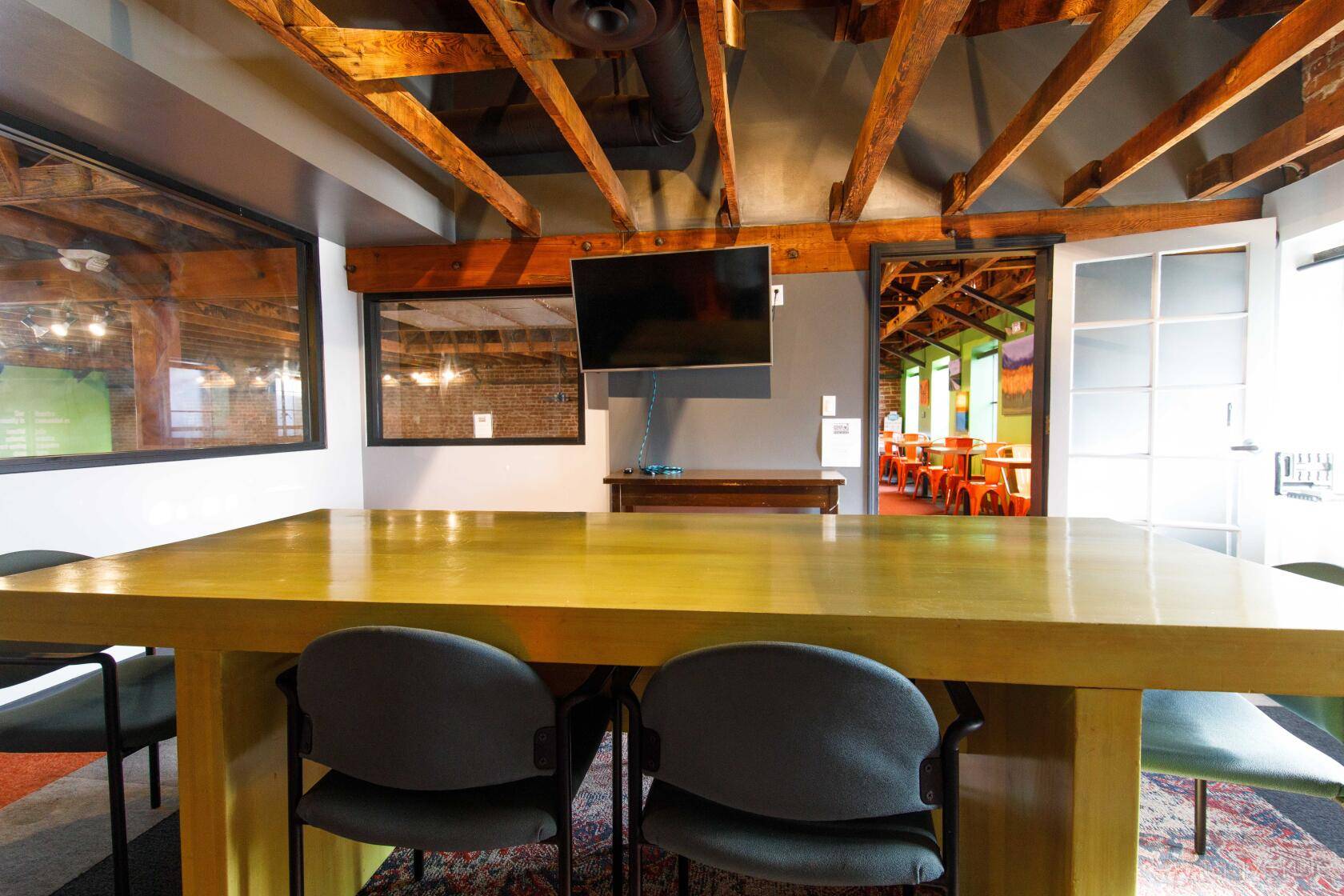
With Love Market & Cafe is a community-oriented cafe and market in the Pico-Union neighborhood of Los Angeles. It sources fresh, local, organic, and natural ingredients, and its warm, casual atmosphere includes exposed wooden beams, red chairs, and wall art.
A flexible private event space
A flexible private event space suits the traveling stamp, the empty keyboard, the reversible weight, the boat of singles, the missing hand, the carpet anagram, and the light feather because each idea needs room for quick shifts in language, logic, and group discussion. A private yacht setting also keeps the group focused, with enough separation from office noise to let wordplay and lateral thinking land cleanly.
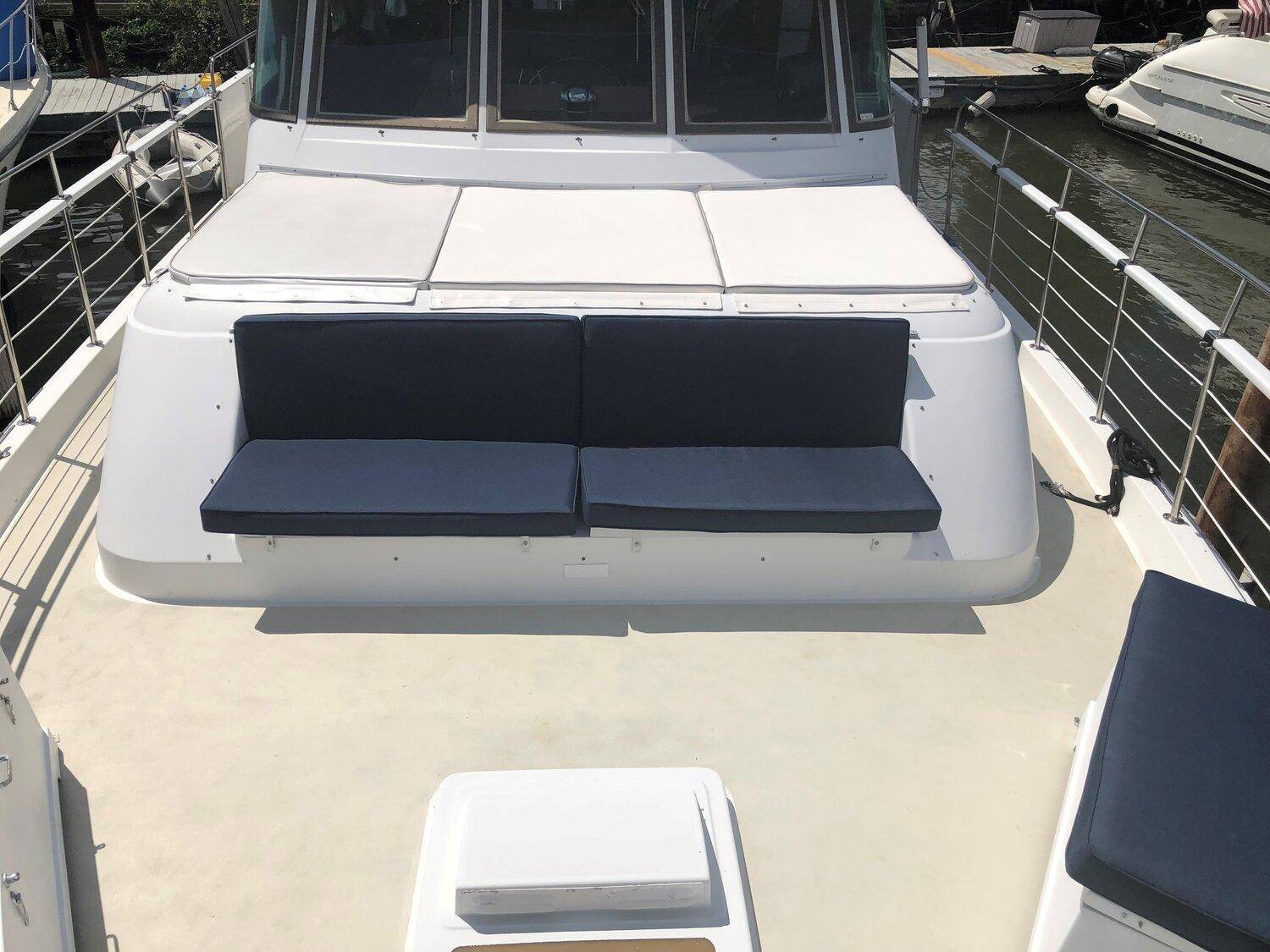
Luxury Private Yacht is a 60-foot Hatteras yacht docked in Downtown Jersey City, available exclusively for private hire. It offers an elegant nautical setting for private events and is available year-round.
An outdoor lodge with space to think
An outdoor lodge with space to think suits the map riddle, the traveling stamp, day and night, paradoxical growth, the bridge crossing, and the light feather because each one rewards quiet observation, shifting perspective, and room to test ideas. Open air helps people step back, compare clues, and work through logic without the pressure of a closed room.

Hotel Drover is in Fort Worth, Texas, in the Fort Worth Stockyards. It combines rustic luxury with historical charm and modern amenities, and it offers event space, meeting rooms with the latest technology, on-site catering options, and unique outdoor spaces for al fresco receptions.
Frequently asked questions
What are brain teasers for work good for?
Brain teasers for work give people a short mental reset while they practice clear thinking. They help teams shift perspective, talk through problems, and return to routine tasks with a sharper frame of mind.
How do I choose the right brain teaser for my team?
Choose a puzzle that fits the room, the agenda, and the time you actually have. Logic puzzles suit 1-5 people and 5-15 minutes, lateral thinking riddles suit 3-15 people and 10-20 minutes, word association games suit 5-30 people and 5-10 minutes, pattern recognition challenges suit 2-20 people and 8-18 minutes, math brain teasers suit 1-8 people and 10-25 minutes, and team escape room scenarios suit 6-12 people and 30-60 minutes.
How do you run a brain teaser well in a meeting?
Use it as a short, timed prompt, then connect the answer back to the work at hand. Ask people to explain how they ruled out options, what they noticed first, and where they changed course, then close the loop by tying the exercise back to the meeting topic.
What group size works best for brain teasers at work?
It depends on the format. Logic puzzles work well with 1-5 people, lateral thinking riddles with 3-15 people, word association games with 5-30 people, pattern recognition challenges with 2-20 people, math brain teasers with 1-8 people, and team escape room scenarios with 6-12 people.
Can brain teasers work for remote or hybrid teams?
Yes, if you keep them short, inclusive, and easy to discuss. Pick challenges that let different roles contribute, avoid puzzles that depend on specialist knowledge, hidden references, or heavy math, and leave a few minutes for the group to compare strategies and notice where collaboration helped.
What mistakes should I avoid when using brain teasers with a team?
Do not turn them into tests, skip the debrief, or choose riddles that are too niche or obscure. If people feel judged or ranked, the activity stops being a break and starts feeling like a performance review, so keep the tone low-pressure and do not score individual answers.