Leadership team building exercises give senior teams a practical way to test judgment, communication, trust, and alignment before those habits are needed in live work.
Use them to choose the right format for the room, then connect the activity to a real decision, a real conflict, or a real leadership standard so the lesson carries back into the business.
Key takeaways
- Martian landing scenario, the six angles model, and the constrained briefing all fit structured decision work, especially when the group needs to handle uncertainty, incomplete data, or a challenge that benefits from multiple thinking modes.
- Blindfolded trust walk and focused feedback circle work well when the goal is trust, clarity, and direct conversation, while role swap immersion day adds cross-functional empathy by putting leaders into very different functions.
- Back-to-back design challenge, the reverse interview, and high-stakes matrix prioritization suit teams that need sharper listening, more strategic questions, or a shared way to sort priorities and trade-offs.
- Defining your leadership charter gives each leader a written anchor with core values, a definition of successful leadership, and three non-negotiable operating principles, then the team shares it to make decision-making more visible.
- For a leadership offsite, the setting should match the exercise: executive conference centers for focused discussion, lakeside lodges for trust work and feedback, mountain lodges for reflection, desert resorts for longer offsites, and city meeting venues for tight working sessions.
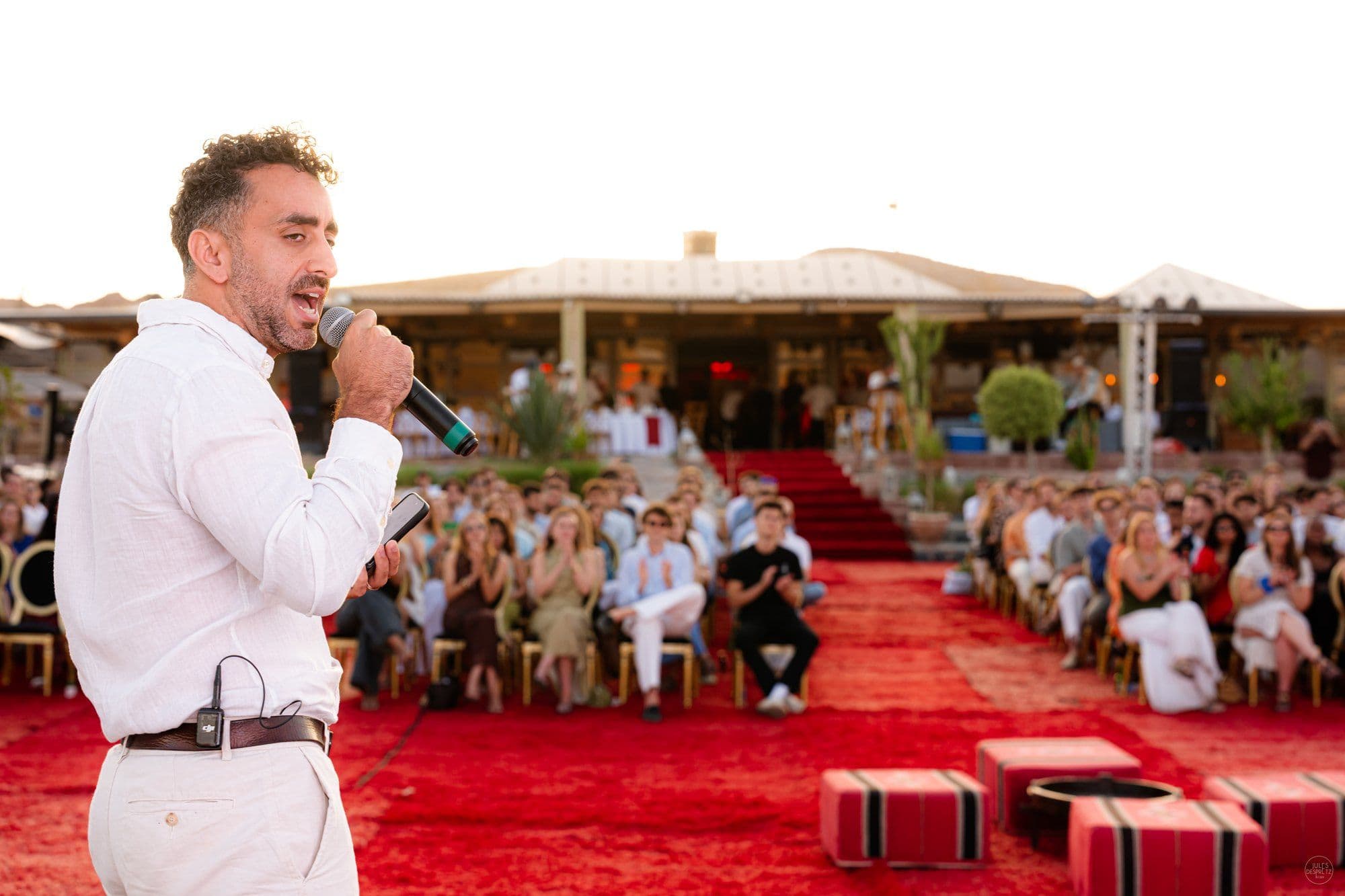
- Naboo's own story in the text is a May 2026 global offsite in the desert near Marrakech, with the founders' keynote held outdoors in front of the whole team.
1. Martian landing scenario
Martian Landing Scenario is a ranked decision exercise that shows how leaders handle uncertainty and disagreement. Teams rank 15 to 20 salvaged items after a crash landing, then compare the group result with an expert ranking to see where judgment diverged and what different perspectives added.
Group setup: Individual first, then group consensus
Best for: Teams practicing decision-making under uncertainty
How to apply: Have each person rank the 15 to 20 salvaged items on their own first. Then have the group reach a single consensus ranking. Compare the final list with the expert ranking and discuss where disagreement, listening, and course correction changed the outcome.
2. The six angles model
The Six Angles Model is a structured way to make a group examine a challenge from six thinking modes before deciding. Each participant takes a hat for Data, Intuition, Optimism, Risk, Creativity, or Process, which keeps one voice or one mindset from taking over.
Group setup: Small group, one thinking mode each
Best for: Leadership groups needing broader discussion
How to apply: Assign each participant a hat representing one thinking mode: Data, Intuition, Optimism, Risk, Creativity, or Process. Work through the challenge from all six angles before deciding. Debrief by naming which angles were easiest to hear and which ones were at risk of being skipped.
3. High-stakes matrix prioritization
High-Stakes Matrix Prioritization helps leaders sort work by Impact and Effort on a 2x2 grid. It makes Quick Wins and Time Sinks visible in the same room, which gives the group a shared language for resource trade-offs.
Group setup: Small group around a 2x2 grid
Best for: Crowded priorities and limited time
How to apply: Place projects on a 2x2 grid using Impact and Effort axes. Identify Quick Wins and avoid Time Sinks. Debrief by naming the trade-offs the group had to make and how the grid translated strategy into tactics.
4. The constrained briefing
The Constrained Briefing asks a team to solve a time-sensitive problem with fragmented, sequentially delivered information. It reveals who can make provisional decisions without pretending certainty and who gets stuck waiting for the full picture.
Group setup: Team receiving information in stages
Best for: Teams that struggle with incomplete data
How to apply: Present the problem in fragments, one piece at a time. Ask the team to make provisional decisions as new information arrives. Debrief by checking where assumptions were validated, where they were wrong, and how the group adapted without slipping into analysis paralysis.
5. Back-to-back design challenge
Back-to-Back Design Challenge is a communication drill built around precise verbal instruction. One partner describes a complex diagram while the other recreates it without seeing the original, so the gap between what was said and what was understood becomes obvious fast.
Group setup: Pairs, back to back
Best for: Teams needing sharper listening
How to apply: Have one partner describe a complex diagram while the other recreates it using only verbal instructions. Switch roles with a new design. Debrief by identifying where confirmation loops were needed and where one-way broadcasts caused errors.
6. Focused feedback circle
Focused Feedback Circle gives the group a structured way to practice giving and receiving criticism. One volunteer sits in the center while others use SBI, or Situation, Behavior, Impact, and the receiver listens and takes notes without defending themselves.
Group setup: Circle with one volunteer in center
Best for: Teams practicing direct feedback
How to apply: Gather the team in a circle and place one volunteer in the center. Have others give feedback using SBI: Situation, Behavior, Impact. The receiver listens and takes notes without defending, then debrief on what made the feedback easier or harder to hear.
7. The reverse interview
The Reverse Interview flips the usual hierarchy by having rising leaders interview a senior executive about strategy, priorities, and current challenges. It surfaces what matters most and shows whether the next layer of leadership can think beyond task management.
Group setup: Rising leaders interview a senior executive
Best for: Developing strategic curiosity across levels
How to apply: Have rising leaders interview a senior executive about strategic priorities, challenges, and vision. Keep the focus on questions that surface high-level strategy. Debrief by noting which questions moved the conversation from tactical management to strategic thinking.
8. Blindfolded trust walk
Blindfolded Trust Walk is a simple but revealing trust exercise. One partner is blindfolded while the other guides them through obstacles using only verbal directions, which shows how clarity, patience, and control affect trust.
Group setup: Pairs, one blindfolded
Best for: Teams building confidence in one another
How to apply: Blindfold one partner and have the other guide them through obstacles using only verbal directions. Let the guide focus on clarity and patience while the follower practices letting go of control. Debrief on the moments where trust broke and what helped repair it.
9. Role swap immersion day
Role Swap Immersion Day asks leaders to shadow or do the work of someone in a very different function. A marketing VP in customer support or an engineering lead in sales sees constraints they usually miss, which builds empathy and breaks down silos.
Group setup: Leaders shadow different functions
Best for: Leadership teams needing cross-functional empathy
How to apply: Have leaders spend a full day shadowing or performing the duties of someone in a vastly different function. Use examples like a marketing VP in customer support or an engineering lead in sales. Debrief on the operational constraints they overlooked before and how decisions land across the business.
10. Defining your leadership charter
Defining Your Leadership Charter gives each leader a written anchor for how they want to lead. The charter includes core values, a definition of successful leadership, and three non-negotiable operating principles, which makes leadership style visible and easier to predict.
Group setup: Individual charter, then shared with team
Best for: Teams clarifying leadership style
How to apply: Have each leader write core values, a definition of successful leadership, and three non-negotiable operating principles. Share the charter with the team. Debrief by discussing how the charter creates transparency and helps people predict how decisions will be made.
How do you make leadership exercises stick?
A single retreat changes little if nothing follows it. Avoiding the One-Off Event Pitfall means connecting the exercise to real work right away. After a prioritization session, use the same matrix on the current backlog. After a trust exercise, revisit how the group handles disagreement in live meetings. The lesson has to move from the room into the workflow, or the energy fades and the behavior stays the same.
Operationalizing Key Metrics for Success means tying leadership work to business outcomes that can actually be tracked. For communication and trust, look at engagement scores, voluntary turnover, and how quickly conflict gets resolved. For decision-making, watch project success rates, on-time delivery, rework, and resource use. The point is to measure behavior in the business, not just opinions about the session. That is what makes the work credible.
Sample leadership offsite agenda
A tech leadership team dealing with cross-functional conflict and slow strategic alignment could run the exercises in this order, so each block builds on the one before:
- Morning, trust: blindfolded trust walk (8) and role swap immersion day (9), to build empathy and break functional barriers.
- Afternoon, decision-making: Martian landing scenario (1) and the six angles model (2), applied to a real, current cross-functional challenge.
- Close, commitment: defining your leadership charter (10), with a shared commitment to how the group will communicate and resolve conflict.
Where to host your leadership offsite
The venue shapes how these exercises land. Decision-making drills need a quiet room and good screens, trust work benefits from space and a change of scene, and reflection needs somewhere people can think without the office pulling them back. Here is how each type of venue works, with a real Naboo venue for each.
An executive conference center
An executive conference center fits the Martian landing scenario, the six angles model, and the constrained briefing because these exercises need a setting built for structured discussion, clear facilitation, and focused decision-making. A location near Boston also helps when leaders are coming in for a short, high-intensity offsite.
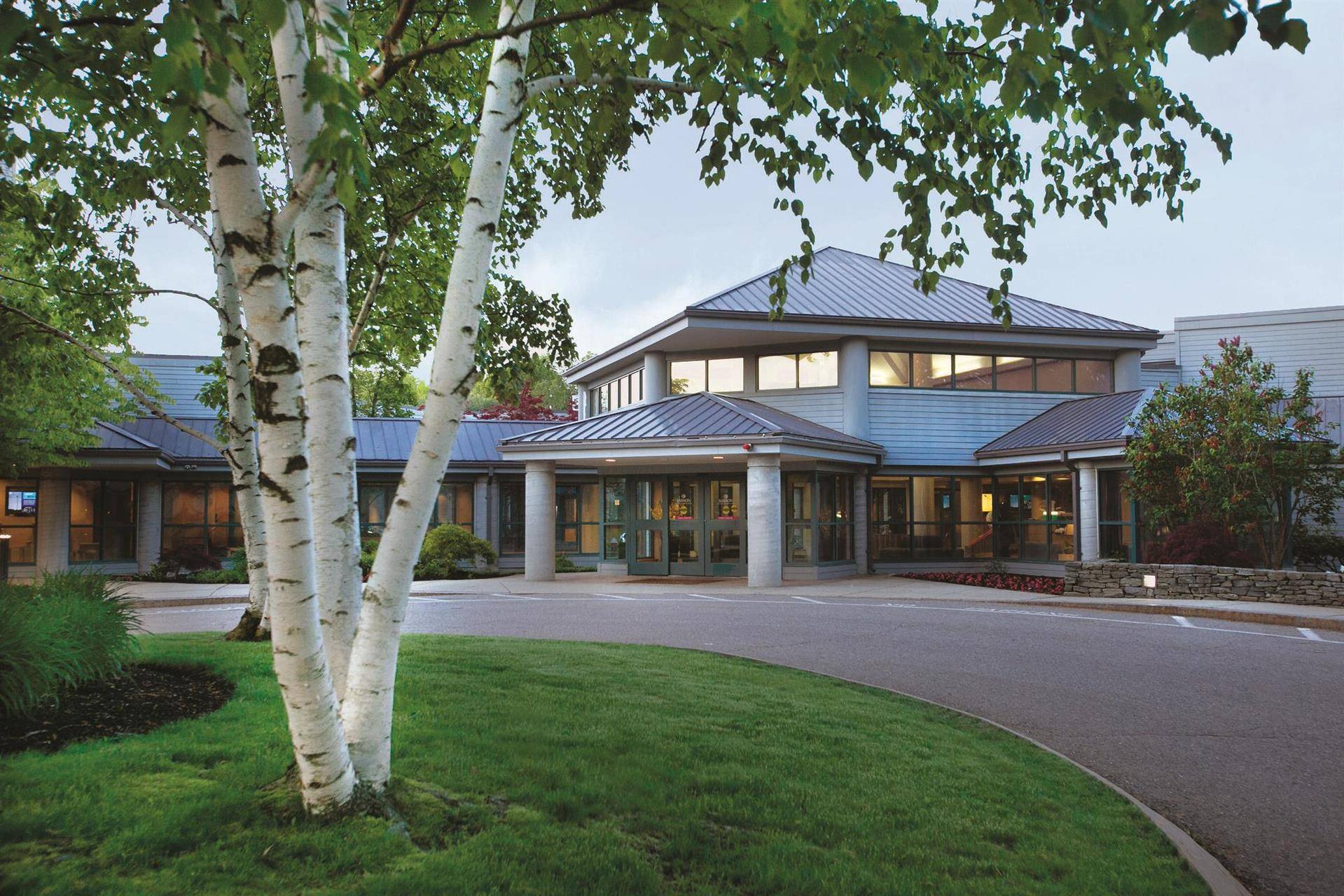
Babson Executive Conference Center is an executive conference center in Wellesley, Massachusetts, on the Babson College campus. It was built in 1988 and renovated in 2020, and it offers 211 guest rooms, including 12 suites, with ample workspace and complimentary Wi-Fi.
A lakeside lodge
A lakeside lodge suits the blindfolded trust walk and the focused feedback circle because the setting gives teams room to move, reset, and talk without the pressure of a city office. Lakeside surroundings also help leaders shift from task mode into a more reflective group dynamic.
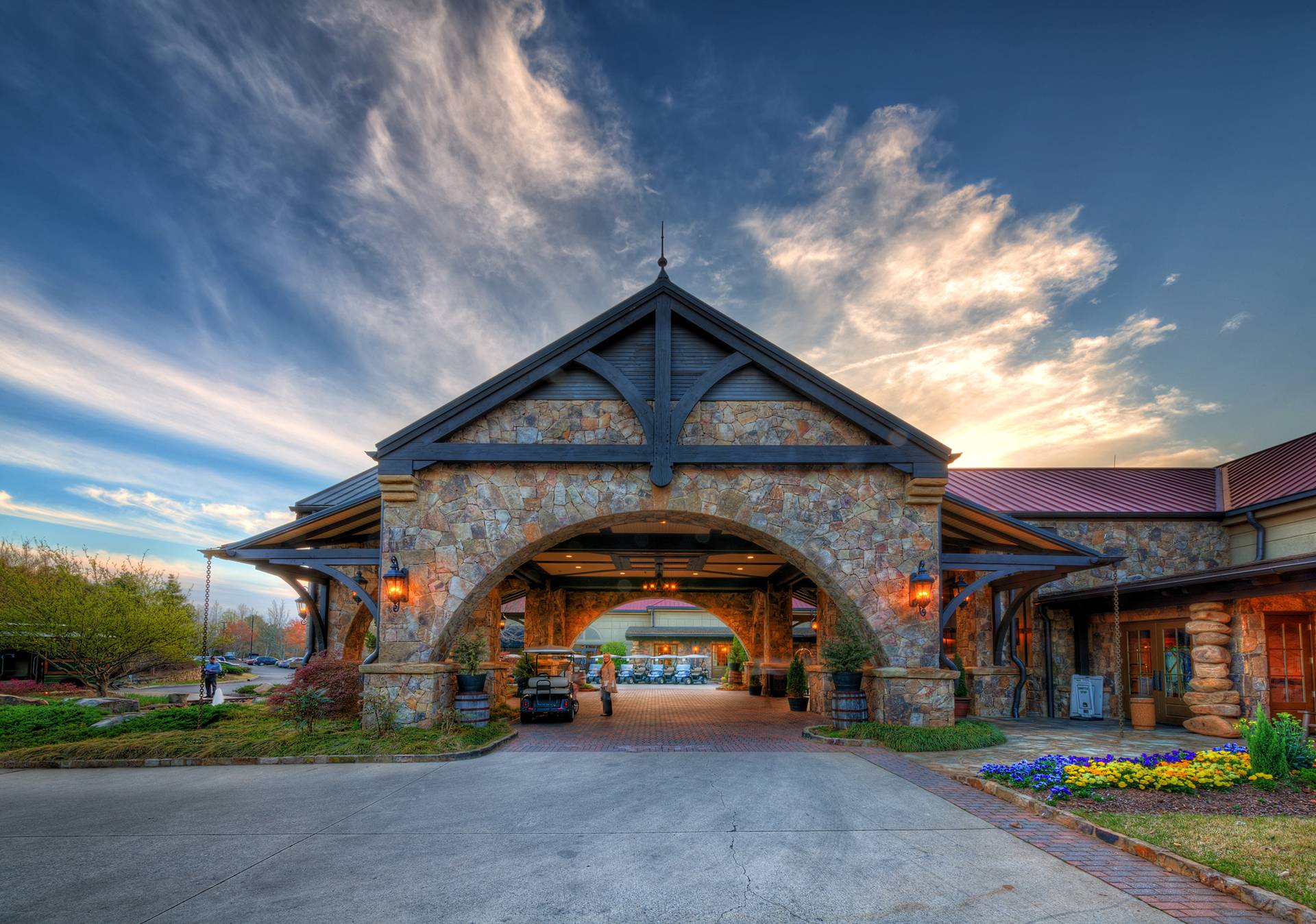
Lanier Islands Legacy Lodge is a lakeside lodge in Buford, Georgia. It has 221 rooms and suites, plus Sidney's Restaurant, Bullfrog's Bar & Grille, a heated saltwater pool, and expansive outdoor spaces with lush pines.
A mountain lodge
A mountain lodge works well for defining your leadership charter and other reflection work because the quieter pace supports careful thinking and honest conversation. The mountain setting also gives teams a clear break from daily routines, which helps when the agenda calls for personal reflection and shared alignment.
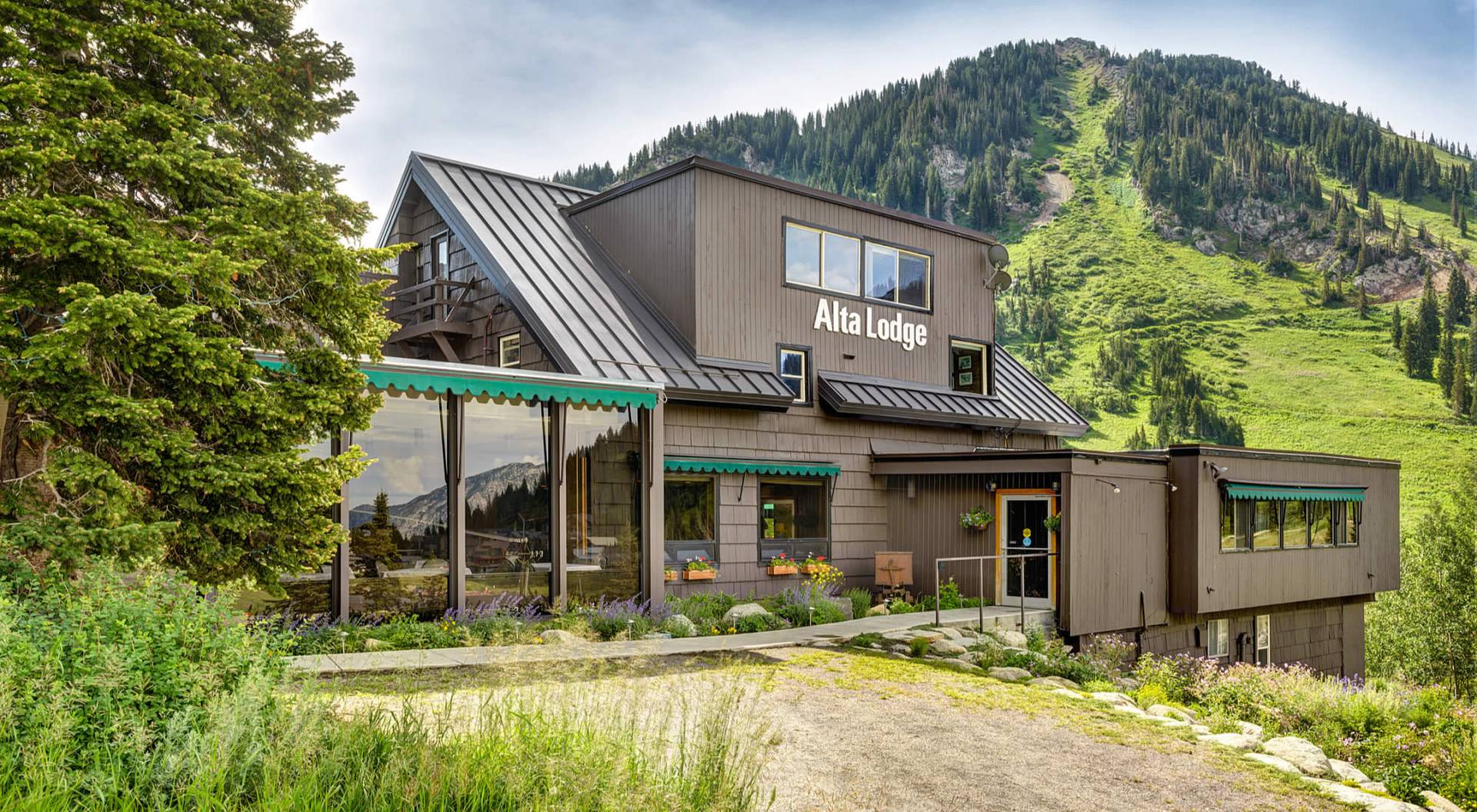
Alta Lodge is a mountain lodge in Alta, Utah. Founded in 1940, it sits in the mountains with direct access to ski slopes, and it offers comfortable rooms, a welcoming setting, and quality catering service.
A desert resort
A desert resort fits a full leadership offsite that runs the sample agenda above because it gives teams enough space for long sessions, breaks, and informal discussion between exercises. The desert location also creates a distinct change of pace, which helps leaders stay present through a full-day program. We ran our own May 2026 global offsite in the desert near Marrakech, with the founders' keynote held outdoors in front of the whole team.
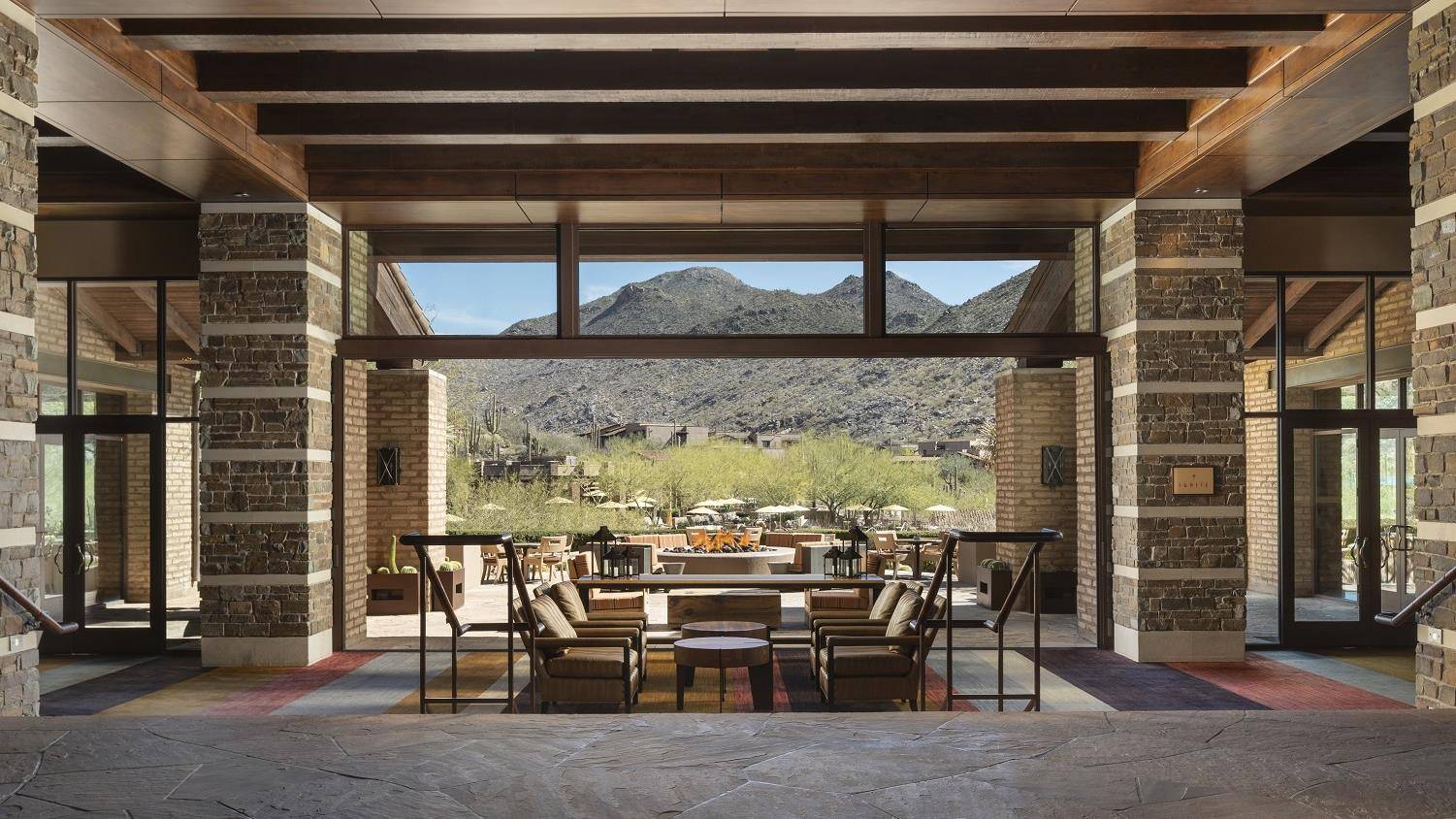
The Ritz-Carlton, Dove Mountain is a desert resort in Marana, Arizona. It sits in the high Sonoran Desert against the Tortolita Mountains and features richly appointed accommodations, adventure programs, hiking trails, and a Jack Nicklaus golf course.
A meeting venue in the city
A meeting venue in the city suits a one-day session with the reverse interview and matrix prioritization because it keeps travel simple and makes it easier to bring people together for a tight agenda. Natural light, whiteboards, and projection support fast-paced working sessions where leaders need to compare ideas and make decisions quickly.
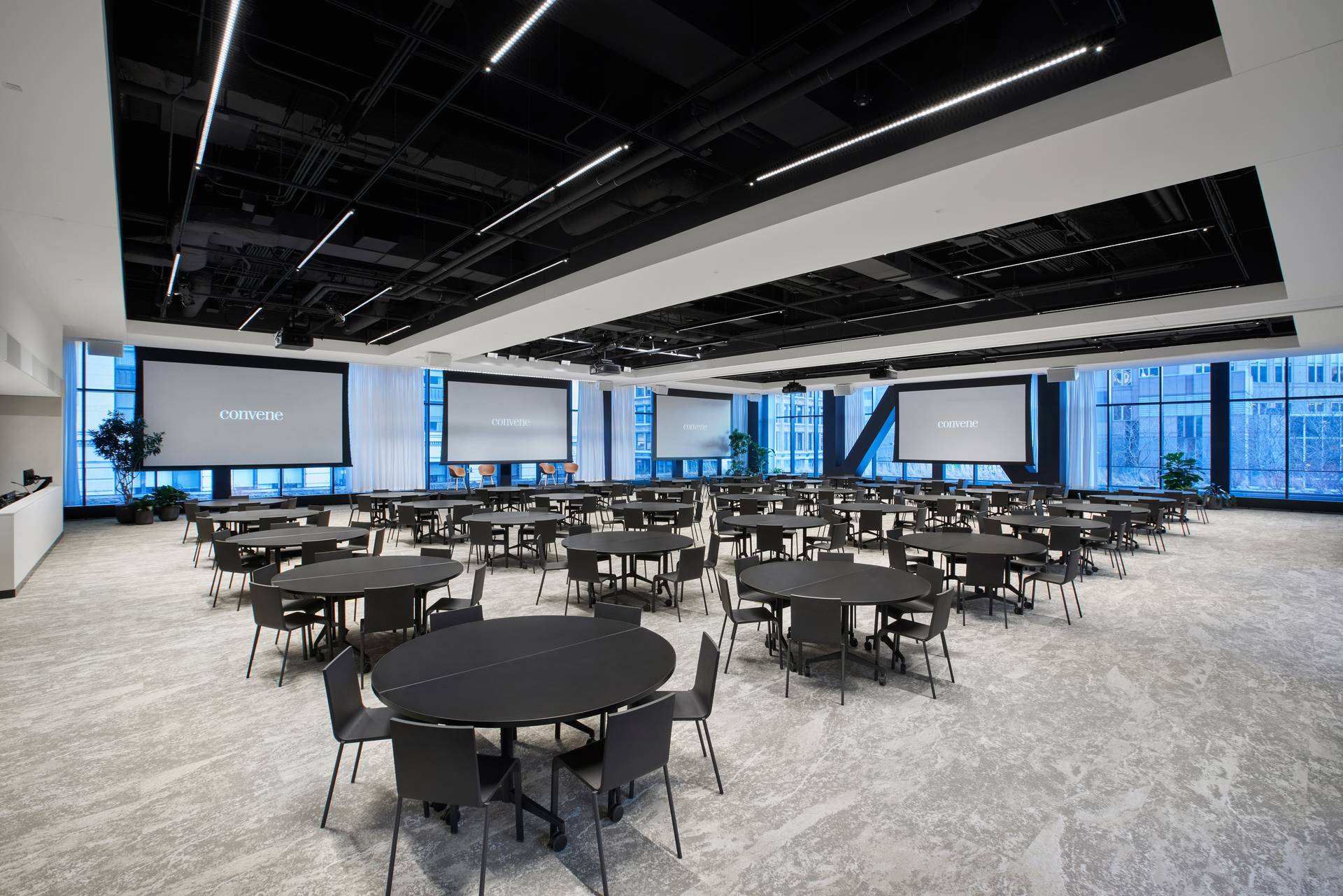
Convene Willis Tower is a meeting venue in Chicago, Illinois, on the third floor of the building. It offers a bright and flexible space with natural lighting, an integrated projection screen, whiteboards, and close access to major public transport lines.
Frequently asked questions
What is the primary goal of leadership team building exercises?
The primary goal is to give senior people a place to practice judgment, communication, and trust before those skills are tested in real work. Used well, these exercises change how leaders decide, speak, and work together.
How do I choose the right leadership exercise?
Choose the exercise that matches the skill gap, not the trend. Mix decision-making, communication, trust, and reflection so the session fits your team's gaps, time, and offsite format.
How do I run a leadership exercise well?
Run it with a clear structure, then debrief every exercise so the lesson carries into daily work. Connect the activity to real work right away, because the lesson has to move from the room into the workflow or the energy fades and the behavior stays the same.
What group size works best for leadership exercises?
The right group size depends on the exercise. Some work best in pairs, like the back-to-back design challenge and the blindfolded trust walk, while others fit a small group or a circle, such as the six angles model, high-stakes matrix prioritization, and the focused feedback circle.
Can leadership exercises work for remote or hybrid teams?
Yes. Decision-making activities like the Six Angles Model and communication exercises like the reverse interview translate directly to virtual environments using collaboration platforms and breakout rooms. The same is true for other exercises when the format fits the team's setup.
How do I know if the exercises made a difference?
Measure change with behavior, not just reaction forms. For communication and trust, look at engagement scores, voluntary turnover, and how quickly conflict gets resolved; for decision-making, watch project success rates, on-time delivery, rework, and resource use.