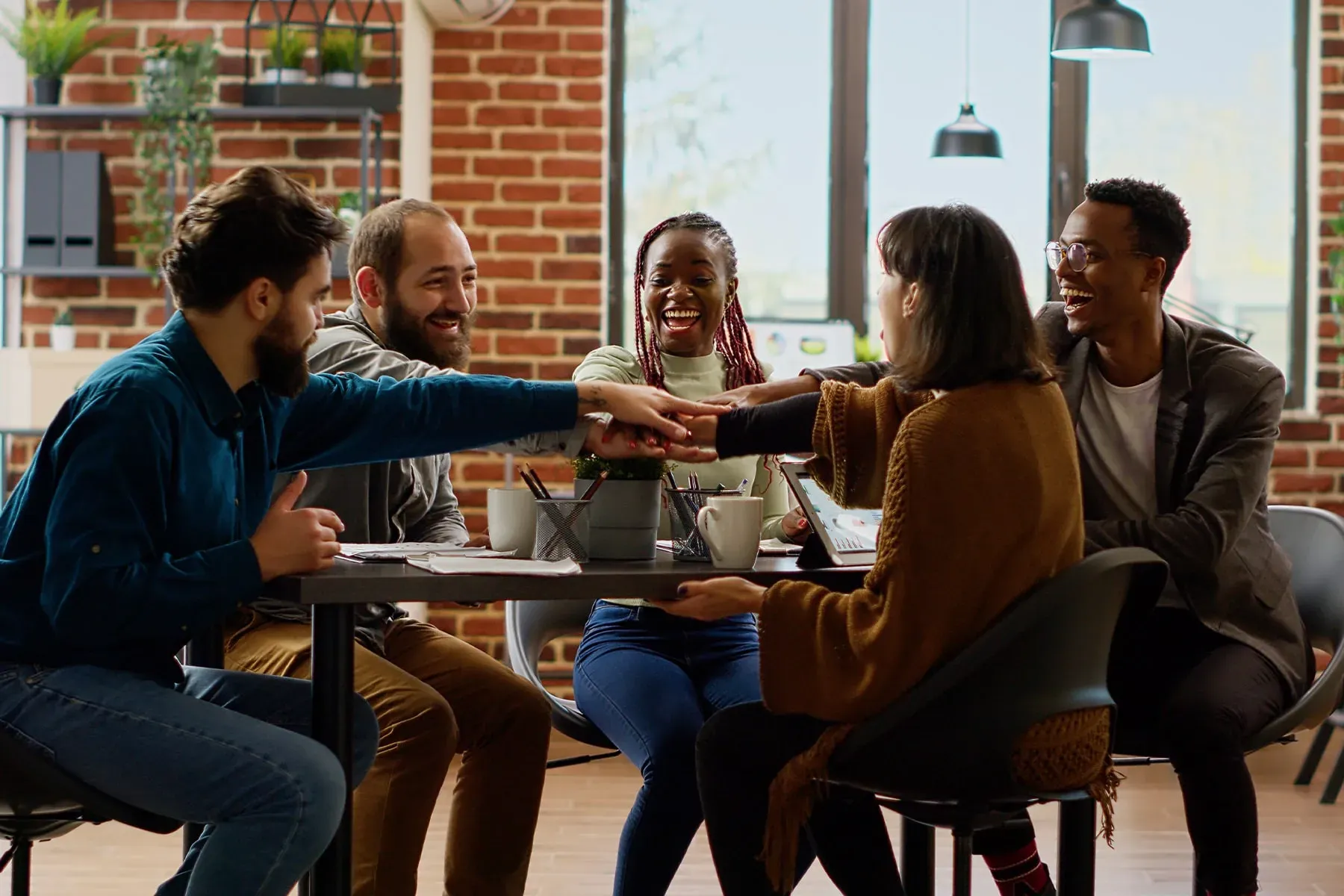
Team building through crafts has become one of the most effective ways to strengthen team building crafts collaboration. Unlike rope courses or forced networking events, hands-on creative activities work because they require shared physical effort, immediate communication, and something tangible to show for it. People naturally drop their professional facades when they're focused on making something together.
Creative activities work differently than typical team exercises. When people engage in team building crafts, they enter a flow state that bypasses hierarchy. The person who runs the department sits next to the junior analyst, and suddenly they're peers working toward a common goal. Real collaboration happens because the stakes feel low.
The Psychology of Creative Team Building
Creative activities engage different parts of the brain than standard meetings do. When employees work on team building crafts, they reduce stress and increase their capacity for divergent thinking. Tasks that require non-verbal communication—collaborative painting, sculpting, building—sharpen listening skills and foster empathy far more quickly than structured conversations.
Three Core Benefits of Art-Based Collaboration
- Mitigating Performance Pressure: Since most employees aren't professional artists, there's no expectation of perfection. This equality removes intimidation and makes vulnerability easier.
- Enhancing Constructive Feedback: Discussing shared art teaches people how to give and receive critique in a low-stakes environment. This translates directly into better feedback during actual work projects.
- Creating Lasting Artifacts: Unlike activities that disappear, finished team building crafts become visible reminders of shared success, strengthening team identity within the office.
The C.R.E.A.T.E. Decision Framework for Selecting Team Building Crafts
The right creative activity depends on your team's actual goals and what you can logistically execute. Use the C.R.E.A.T.E. framework to assess potential activities.
Here's a breakdown of popular team building craft activities matched to your group's specific needs and constraints.
| Craft Activity | Group Size | Materials Cost | Skill Level Required | Duration | Best Outcome |
|---|---|---|---|---|---|
| Collaborative Mural Painting | 8–100+ people | €30–€100 | None | 1.5–2 hours | Creative expression, shared vision |
| Pottery Wheel Workshops | 6–20 people | €15–€40 per person | Beginner-friendly | 2–3 hours | Mindfulness, patience, individual achievement |
| Mosaic Tile Art Projects | 10–60 people | €25–€80 | None | 2–4 hours | Problem-solving, attention to detail |
| Handmade Jewelry Making | 5–30 people | €20–€50 per person | Beginner | 1.5–2.5 hours | Fine motor skills, personal connection |
| Collaborative Collage Building | 8–80 people | €10–€40 | None | 1–2 hours | Rapid ideation, inclusive participation |
| Woodworking Projects | 4–15 people | €40–€120 per person | Intermediate | 3–4 hours | Leadership development, tangible results |
Select activities based on group size, budget constraints, and whether you prioritize creative expression, skill-building, or quick team bonding.
- Context: High-stakes challenges like boat building suit problem-solving; low-stakes activities like painting suit stress relief.
- Resources: Activities like glassblowing require external studios, while digital murals require only software licenses.
- Engagement Style: Does your team respond better to tactile, kinesthetic, or conceptual activities?
- Audience Size: Small group exercises like blind drawing work best with 10 or fewer people. Collaborative murals handle large groups efficiently.
- Timeline: Complex crafts require 2 to 3 hours; simple icebreakers need 45 minutes.
- Execution Model: Consider whether the activity must accommodate remote, hybrid, or only in-person participants. The Naboo blog covers these logistical considerations in more depth.
1. Collaborative Mosaic Project
Teams work on individual tiles that assemble into one large image. Each person owns their piece, but the whole only works if every tile fits. Assign one person as "Curator" responsible for layout and color consistency. This demonstrates why project management matters even in creative work.
2. Improvised Sculpture Challenge
Give teams unconventional materials—pipe cleaners, foil, tape, recycled packaging—and ask them to sculpt something representing an abstract concept like "Innovation." They must rapidly agree on interpretation and execute under tight constraints. This mirrors real business pressure to move fast with limited resources.
3. Community Art Installation
Large groups design and construct a temporary installation using found objects from the environment. This requires high levels of inter-group communication and logistical planning. Breaking down the installation afterward is also valuable experience in collective effort.
4. Group Sketchbook Narrative
One person draws, passes the notebook to the next person who continues the scene, and so on. The goal is a continuous story built without talking. For remote teams, use a shared cloud-based drawing platform and rotate participants at timed intervals.
5. The "Rube Goldberg" Art Machine
Teams design a chain reaction device whose final step produces an artistic output—dropping paint onto canvas or ringing a melodic chime. This requires precision collaboration on physics, timing, and aesthetics. It needs significant space and 2-3 hours, but the payoff in demonstrating reliance and sequential thinking is substantial.
6. Digital Storyboard Creation
Remote teams use design software like Miro or Canva to create a visual storyboard illustrating a success story, product launch, or internal process. Assign roles like "Scriptwriter," "Visual Designer," and "Technical Editor" to leverage different skills.
7. Virtual Reality Design Jam
Using collaborative VR platforms or AR apps, teams work together in a shared virtual space to rapidly design and prototype a digital environment. This requires compatible hardware and high-bandwidth internet for synchronous creation.
8. Remote Zine Creation
A zine is a small self-published book. Divide tasks to create a physical or digital zine centered on a shared interest or company culture. Include layout, illustration, writing, and photo collage. The final assembly—either a digital PDF or mailed physical copies—becomes the collective deliverable.
9. Hybrid Edible Masterpiece Contest
Send standardized kits with edible materials to all participants. Hybrid teams compete to design the most creative structure or scene. In-office teams work physically together while remote participants join the judging via video. Coordinate kit delivery carefully and account for dietary restrictions.
10. Collective Poem & Visual Art Pairing
Split the team into poets and artists. Poets collaboratively write a short poem or mission statement. Artists then interpret that text visually without consulting the poets. Neither group interacts during creation, forcing reliance on shared understanding.
11. Found Object Relief Challenge
Teams venture into a designated area and collect items fitting a specific criterion—five items of varied texture or three items of specific color. They assemble these into a relief sculpture on a flat board that tells a story about their workspace or team goals. This works well as an outdoor team building craft.
12. Blind Contour Portrait Exchange
In pairs, participants draw each other's portraits without looking at their paper or lifting their pen. The often hilarious results provide shared laughter and break down visual communication barriers. Keep the time limit to 2-3 minutes per portrait to maintain energy.
13. Sustainable Materials Design Sprint
Teams use only recycled, sustainable, or reclaimed materials—old newspapers, plastic bottles, natural fibers—to design a functional prototype or architectural model. This ties creativity directly into corporate responsibility.
14. The Abstract Corporate Identity Painting
Teams paint an abstract representation of your company's core values. Focus on translating intangible concepts into color, texture, and form. Discussion afterward reveals how people interpret corporate identity differently.
15. Virtual Interactive Data Visualization
Participants use coding or accessible data visualization software to translate a complex dataset into an aesthetically engaging digital piece. This bridges analytical and creative teams, ensuring data communication is both accurate and visually compelling.
Avoiding Common Missteps in Creative Team Building
Poor execution can create awkwardness or resentment. Manage these three problems upfront.
Mistake 1: Forcing "Creative" Outcomes
The goal is collaboration and communication, not artistic brilliance. When facilitators pressure teams to produce professional-quality art, anxiety rises instead of falling. Focus conversation on the process of collaboration and compromise, not judging the final aesthetic.
Mistake 2: Insufficient or Unorganized Materials
Poorly stocked supplies stall a creative session immediately. Ensure every station has ample materials, backup tools, and clear instructions. Ship standardized, high-quality kits to remote participants well in advance.
Mistake 3: Skipping the Debrief Session
The real value lies in reflection immediately after creation. Allocate 15-20 minutes for guided discussion. Ask: "What was the hardest decision your team made?" or "How did you handle disagreement about creative direction?" This connects the experience back to professional application.
Measuring Success: ROI of Team Building Crafts
Art-based activities deliver returns that are difficult to quantify purely in dollars, but you can track success using both immediate and long-term indicators.
Qualitative Measurement (Immediate Feedback)
Use a brief anonymous survey immediately after the activity.
- Connection Score: "I feel more connected to my teammates after this activity" (1-5 scale).
- Psychological Safety: "I felt safe sharing unconventional ideas during the session" (1-5 scale).
- Recommendation Rate: "I would recommend this specific team building craft to another team."

Quantitative Measurement (Long-Term Impact)
Look at shifts in operational metrics in the weeks following the event.
- Meeting Efficiency: Improved communication often reduces meeting duration.
- Absenteeism/Churn: Engaged teams have lower rates of unplanned absence.
- Idea Submissions: Measure the volume of novel ideas proposed in brainstorming sessions, indicating increased creative confidence.
Effective team building through creative activities requires thoughtful planning. Whether you're aiming for deeper empathy or breaking through workplace inertia, these team building crafts provide structured, enjoyable pathways to improved collaboration.
How to Choose the Right Team Building Craft for Your Group
Start by assessing your team's current collaboration challenges. Are communication gaps your primary concern? Choose crafts like collaborative mural painting or group collage-making that require constant dialogue. If trust-building is the goal, try pottery wheel projects where participants guide each other's hands, or mosaic-making that combines individual contributions into a unified whole. For teams struggling with creative thinking, open-ended crafts encourage innovative problem-solving without predetermined outcomes.
Consider these practical factors:
- Time constraints: Quick 30-minute crafts work for busy teams; 2-3 hour sessions allow deeper engagement
- Physical abilities: Ensure activities are accessible to all participants, including those with mobility or sensory limitations
- Group size: Smaller groups (5-10) excel at detailed crafts; larger teams benefit from modular projects where subgroups create individual components
- Budget: Paper crafting and recycled material projects are budget-friendly; pottery or jewelry-making with professional instructors cost more
Pilot your chosen craft with a small group first if possible. Their feedback reveals whether the activity truly promotes collaboration. The best team building crafts leave participants feeling accomplished, connected, and excited about their shared creation.
Frequently Asked Questions
What is the ideal group size for art team building crafts?
Most large-scale collaborative crafts can handle up to 50 participants when divided into smaller working sub-teams of 4-6 people. Activities focused on close communication work best with 20 or fewer participants.
Do team building crafts require artistic skill?
No. The most successful crafts require minimal prior skill, leveling the playing field and encouraging vulnerability. Focus on collaboration and communication, not technical artistry.
How can I make art activities inclusive for remote and hybrid teams?
Ensure remote participants have equally valuable contributions. Provide identical material kits and use high-quality video conferencing platforms to bridge the physical gap.
Should the final artwork be permanently displayed in the office?
Displaying the final product serves as a tangible reminder of shared success. If the artwork is temporary, document it heavily with photos and video instead.
How often should we schedule creative team building crafts?
Short, focused sessions work quarterly. Larger, multi-hour projects are best reserved for annual retreats or significant project kickoffs to maximize novelty and impact.