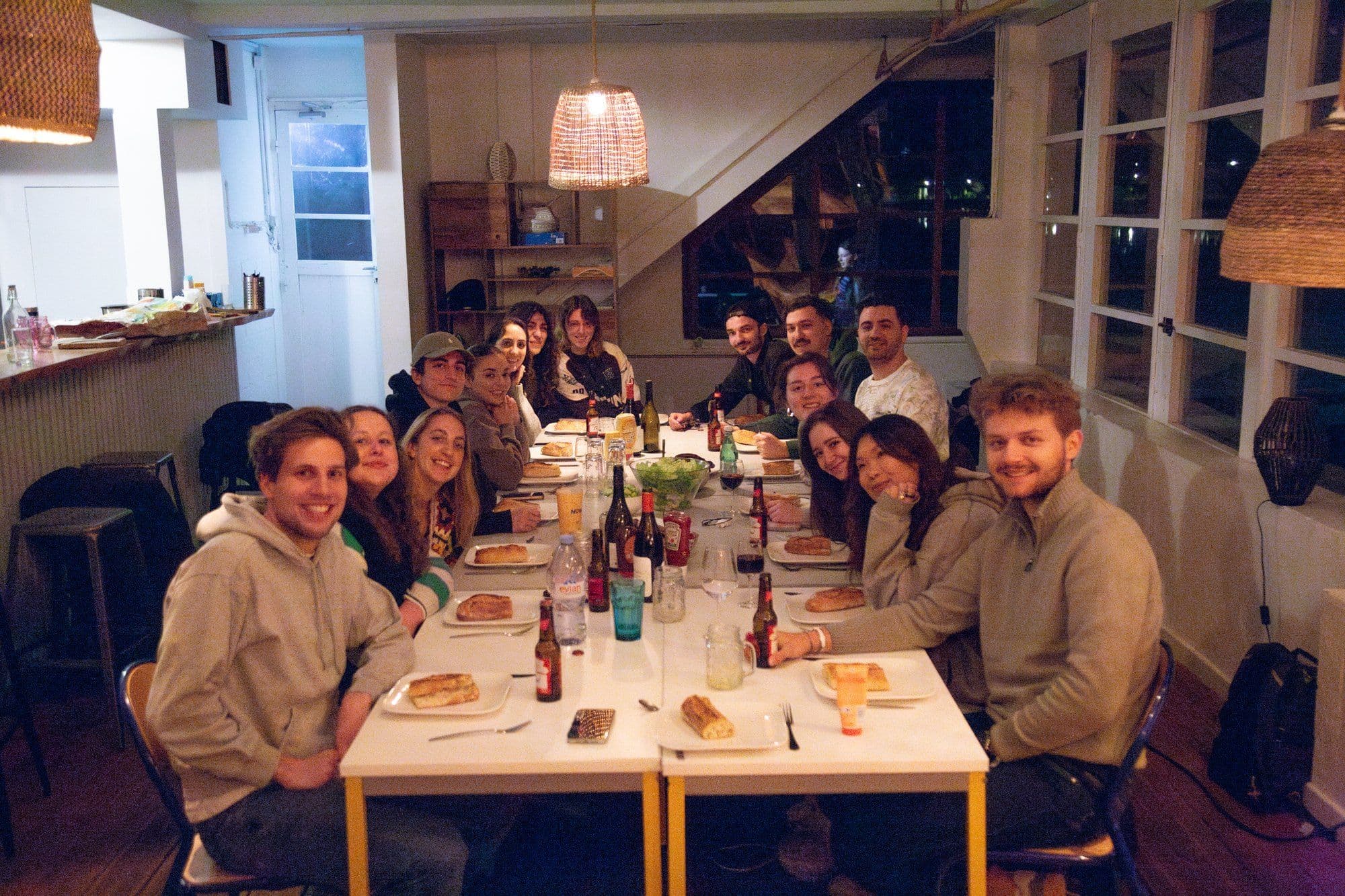
These team building activities for work help you choose the right format for the outcome you want, whether that is honest check-ins, faster problem-solving, or a quick reset in the room.
Use the time, team size, and setup notes to match the activity to your group, then check the how-to steps so the session runs with the right pace and tone.
The list also shows when to use in-person, hybrid, or remote formats, so you can pick something people can actually join.
Key takeaways
- Roses and thorns check-in, office trivia blitz, and group rock, paper, scissors tournament are the quickest options when you need a short opening, a lighter room, or a fast energy reset.
- Marshmallow challenge, the helium stick, and blind drawing cover rapid prototyping, coordination without a clear leader, and clear communication through simple, hands-on formats.
- Virtual coffee roulette and online escape room give remote teams two different ways to connect, from casual 1:1 chats to timed puzzle solving in a small group.
- Heard, seen, respected and WINFY, what I need from you are built for trust, empathy, and clearer expectations across functions, especially when hidden friction needs to surface.
- Before booking, check the team size, time needed, and whether the activity fits an in-room, hybrid, or fully remote setup, then choose the format that matches the team's energy and goal.
Compare these activities at a glance
| Activity | Team size | Time | Best for |
|---|---|---|---|
| 1. Roses and thorns check-in | 3-15 people | 5-8 minutes | Honest opening check-ins |
| 2. Marshmallow challenge | 3-5 people per team | 20-25 minutes | Rapid problem-solving |
| 3. The helium stick | 6-12 people | 10-20 minutes | Team coordination |
| 4. Blind drawing | Pairs, any number of pairs | 15 minutes | Clear communication |
| 5. Office trivia blitz | 5-30 people | 10 minutes | Connection and fun |
| 6. Virtual coffee roulette | Any size, in 1:1 pairs | 15 minutes | Remote bonding |
| 7. Online escape room | 4-8 people per room | 60 minutes | Remote problem-solving |
| 8. Heard, seen, respected | 4-20 people | 30-45 minutes | Trust and empathy |
| 9. WINFY, what I need from you | 8-20 people | 45-60 minutes | Cross-team alignment |
| 10. Group rock, paper, scissors tournament | 5-50 people | 3-5 minutes | A quick energizer |
1. Roses and thorns check-in
Roses and thorns check-in is a short opening round where each person shares one recent success and one recent difficulty.
It works because it gives people a low-pressure way to speak honestly at the start of a meeting, which builds psychological safety and can surface obstacles that might not come up in a normal standup.
Group setup: 3-15 people, 5-8 minutes
Best for: starting a meeting with honest input
How to apply: Start the meeting by asking each person to share one rose and one thorn. Keep each turn to about 30 seconds so everyone gets a chance to speak. Do not interrupt with solutions or follow-up questions while people are sharing. If the group is small and time allows, close by asking whether anyone wants help with a thorn after the check-in ends.
2. Marshmallow challenge
Marshmallow challenge is a team build where each group uses spaghetti, tape, string, and one marshmallow to make the tallest free-standing structure they can.
It works because it pushes teams to prototype quickly instead of planning for too long, and it shows how fast iteration and early testing improve problem-solving at work.
Group setup: 3-5 people per team, 20-25 minutes
Best for: practicing quick prototyping and early testing
How to apply: Give each team 20 sticks of spaghetti, 1 meter of tape, 1 meter of string, and one marshmallow. Set an 18-minute timer and tell teams to build the tallest free-standing structure they can, with the marshmallow on top. When time is up, the structure must still stand on its own. Measure each structure to the bottom of the marshmallow and compare the results.
3. The helium stick
The helium stick is a coordination exercise where the team lowers a light rod, tent pole, or thin dowel to the ground while everyone keeps contact with it.
It works because it shows how a group behaves when there is no clear leader or plan, and it helps teams notice how communication, timing, and shared attention affect group coordination.
Group setup: 6-12 people, 10-20 minutes
Best for: seeing how a group coordinates without a clear leader
How to apply: Have the team form two rows facing each other and hold out their index fingers. Place a light rod, tent pole, or thin dowel across the fingers so everyone is supporting it. Ask the group to lower the stick to the ground without anyone losing contact with it. If the stick rises instead of falling, keep going until the team figures out how to coordinate the movement.
4. Blind drawing
Blind drawing is a paired communication exercise where one person describes a simple image and the other draws it without looking at the original.
It works because it makes it obvious how much meaning gets lost when instructions are vague, and it strengthens clear communication and active listening.
Group setup: pairs, any number of pairs, 15 minutes
Best for: practicing clear instructions and active listening
How to apply: Pair people up and give each pair paper, pens, and a simple reference image such as a house, car, or geometric shapes. One person describes the image using only words while the other draws it without looking at the original. Give the describer 5 minutes to explain the image without gestures. When time is up, compare the drawing to the original, then switch roles with a new image.
5. Office trivia blitz
Office trivia blitz is a quick quiz with questions about company facts, industry topics, and quotes from coworkers.
It works because it creates a shared reference point around the team, the company, and the work itself, while adding lightness to the room and helping people learn details they may not know.
Group setup: 5-30 people, 10 minutes
Best for: building shared knowledge and a lighter room
How to apply: Prepare 5-10 questions in advance, mixing company facts, industry topics, and quotes from coworkers. Run the quiz live or through polls, and have people answer individually or in teams. Show the correct answer right after each question so the pace stays quick. Finish by tallying the score and naming the winner or winning team.
6. Virtual coffee roulette
Virtual coffee roulette is a recurring 1:1 pairing activity where people meet for casual coffee chats.
It works because it recreates the kind of informal conversation people often miss when they work remotely, and it helps people connect across teams and build familiarity outside their usual projects.
Group setup: any size, in 1:1 pairs, 15 minutes
Best for: remote teams that need more informal connection
How to apply: Use a pairing tool such as Donut on Slack, or assign pairs manually if needed. Set up 15-minute coffee chats on a weekly or every-other-week schedule. Tell people the rule is no work talk, so the conversation stays casual. After the chat, rematch people with new partners over time so more teammates meet each other.
7. Online escape room
Online escape room is a timed virtual puzzle game where a small group works through challenges together in one room.
It works because it gives the team a shared problem to solve under time pressure, and it reveals how people communicate, organize, and contribute when the clock is running.
Group setup: 4-8 people per room, 60 minutes
Best for: testing teamwork under time pressure
How to apply: Book a virtual escape room through a provider such as a specialist provider, The Escape Game, or another virtual escape room provider. Test everyone's connection before the session starts and assign a team leader for each room. Once the game begins, the group works through the puzzles together within the time limit. End with a short debrief about who took the lead, who stayed quiet, and how the team worked together.
8. Heard, seen, respected
Heard, seen, respected is a paired listening exercise where one person speaks about a time they did not feel heard, seen, or respected at work while the other listens.
It works because it gives people a structured way to name tension that may otherwise stay hidden, and it can strengthen empathy and psychological safety when it is led carefully.
Group setup: 4-20 people, 30-45 minutes
Best for: surfacing tension and building empathy
How to apply: Put people into pairs and create a quiet space where they can speak without interruption. Person A talks for 4 minutes about a time they did not feel heard, seen, or respected at work while Person B listens. Then Person B speaks for 4 minutes while Person A listens. Bring the group back together for a short discussion of any themes that came up, without naming anyone or retelling personal details.
9. WINFY, what I need from you
WINFY, what I need from you is a simple way to surface what each functional group needs from the others and what it can give back.
It works because it makes hidden dependencies and friction visible before they turn into bigger problems, while helping cross-functional teams get clearer about expectations, handoffs, and responsibility.
Group setup: 8-20 people, 45-60 minutes
Best for: cross-functional teams that need clearer expectations
How to apply: Identify the functional groups in the room, such as Sales, Engineering, and Operations. Ask each group to write down what they need from the other groups and what they can give in return. Read one request pair out loud at a time so everyone can hear it clearly. Have each group publicly agree to or decline each request, then note the outcomes so the team can follow up later.
10. Group rock, paper, scissors tournament
Group rock, paper, scissors tournament is a fast way to raise energy in the room with very little setup.
It works because it adds light competition and gets people moving, which can help reset attention during a long day.
Group setup: 5-50 people, 3-5 minutes
Best for: a quick energy reset during a long day
How to apply: Pair people randomly and have them play a single round of rock, paper, scissors. The person who loses stands behind the winner and cheers them on in the next round. Keep pairing winners until one person has a growing line of supporters behind them. Stop when one person remains and the whole group has joined their side.
How to choose the right activity
Before you pick an activity, decide what your team actually needs. Choosing without a clear goal is the top reason team building falls flat.
Run through this quick checklist first:
- What outcome do you want? Connection, collaboration, creativity, or coordination.
- How much time do you have? Under 15 minutes suits an icebreaker or energizer, 15 to 30 minutes fits a problem-solving or creative activity, and 30 to 60 minutes suits a trust or bonding session.
- What is your team setup? All in-room, hybrid, or fully remote. Pick a format that works for everyone, and offer the remote variant first.
- What is the energy in the room? If energy is low, start with a short physical or movement based activity before anything that needs deep focus.
How to make team building inclusive (especially for hybrid teams)
Inclusivity is the silent failure mode of most team building. Three rules:
- No physical-prowess gatekeeping. Drop activities that require running, lifting or fine motor skill unless your team has explicitly opted into a physical theme. Substitute with cognitive or verbal equivalents.
- Always offer the remote variant first. When a hybrid team has an in-room event with a "Zoom call" tacked on, the remote attendees are spectators. Run the format that forces parity, for example, everyone joins Zoom from their own laptop, even from the office.
- Voluntary participation, named publicly. Make it explicit that opting out is fine. The team members who opt out the first time often opt in by the third, once trust is established.
Avoiding common pitfalls in team building activities for work
Three common mistakes make up about 90% of team building efforts that don't succeed:
Pitfall 1: Overlooking the Purpose. Choosing an activity just because it's popular is worse than skipping it altogether. Be clear about what you want to achieve before you begin. ("This 10 minutes is set aside because we have new team members, and I want them to learn three things about each of us.")
Pitfall 2: Making Participation Mandatory. Forcing people to join in can backfire. Present activities as voluntary, even if most people will choose to take part.
Pitfall 3: Poor Timing or Context. Running a high-energy game right after layoffs, or a trust-building exercise with a brand-new group, often causes resistance. Choose activities that fit the team's current mood, not just the schedule.
Measuring the success of your team building activities
Don't just ask if everyone had fun. Try these instead:
- Monthly psychological safety check: A four-question survey (Edmondson's standard set) before and after a 90-day program. Watch for changes.
- Quarterly engagement survey changes: Use eNPS or a similar measure.
- Post-activity rating (1-5): Three questions: was it useful, would you recommend it, did it change how you view a teammate? Track average scores over time.
- Referrals between teams: Are people recommending each other for different projects? This is a strong early sign of team connection.
- Collaboration patterns: Consider communication tools like Slack DM frequency and cross-team @mentions. These are generally measurable without adding surveillance concerns.
For larger team-building efforts such as full offsites or quarterly gatherings, check out Naboo's corporate retreat budget guide and scavenger hunt ideas for outdoor options.
Where to host team building activities for work
The venue decides which ideas work. Each activity below pairs with a real Naboo venue, so you can match the format to the space instead of forcing the space to fit the plan.
A meeting venue with breakout rooms
A meeting venue with breakout rooms suits roses and thorns check-in, blind drawing, office trivia blitz, heard, seen, respected, and winfy, what i need from you because each activity works best in a space that can shift between small-group discussion and quick whole-room moments. Separate rooms help people speak plainly, while a central meeting area keeps the pace moving.
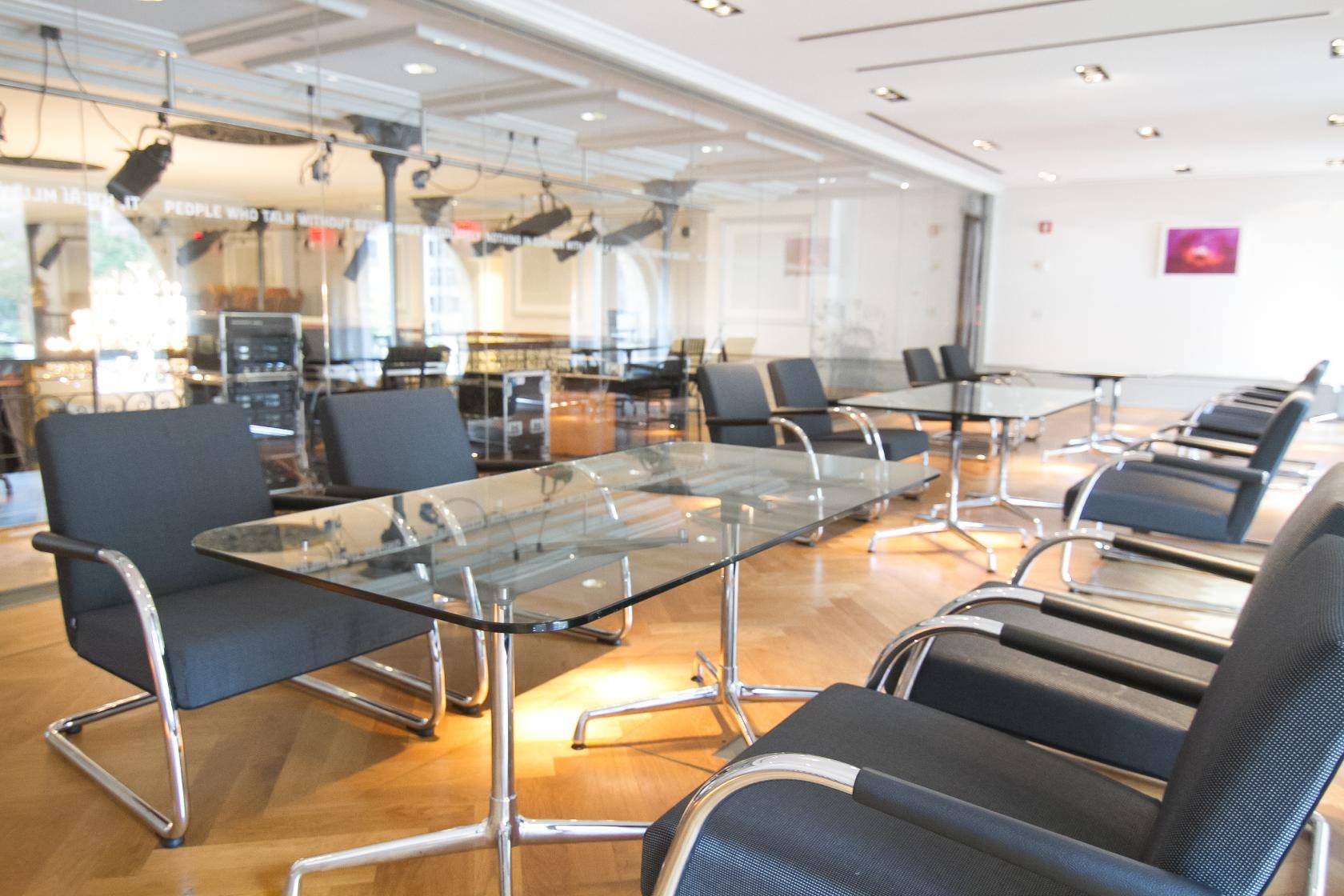
Bohemian National Hall is a theatre venue in the Upper East Side of Manhattan. It offers multiple event spaces for individual hire or a full building buyout, and it suits corporate meetings, film screenings, galas, concerts, and private celebrations.
An activity venue for hands-on team games
An activity venue for hands-on team games suits marshmallow challenge, the helium stick, blind drawing, office trivia blitz, heard, seen, respected, and a group rock, paper, scissors tournament because the format keeps people moving, talking, and solving problems together. The relaxed setting helps colleagues communicate, compare ideas, and build trust without the formality of a meeting room.
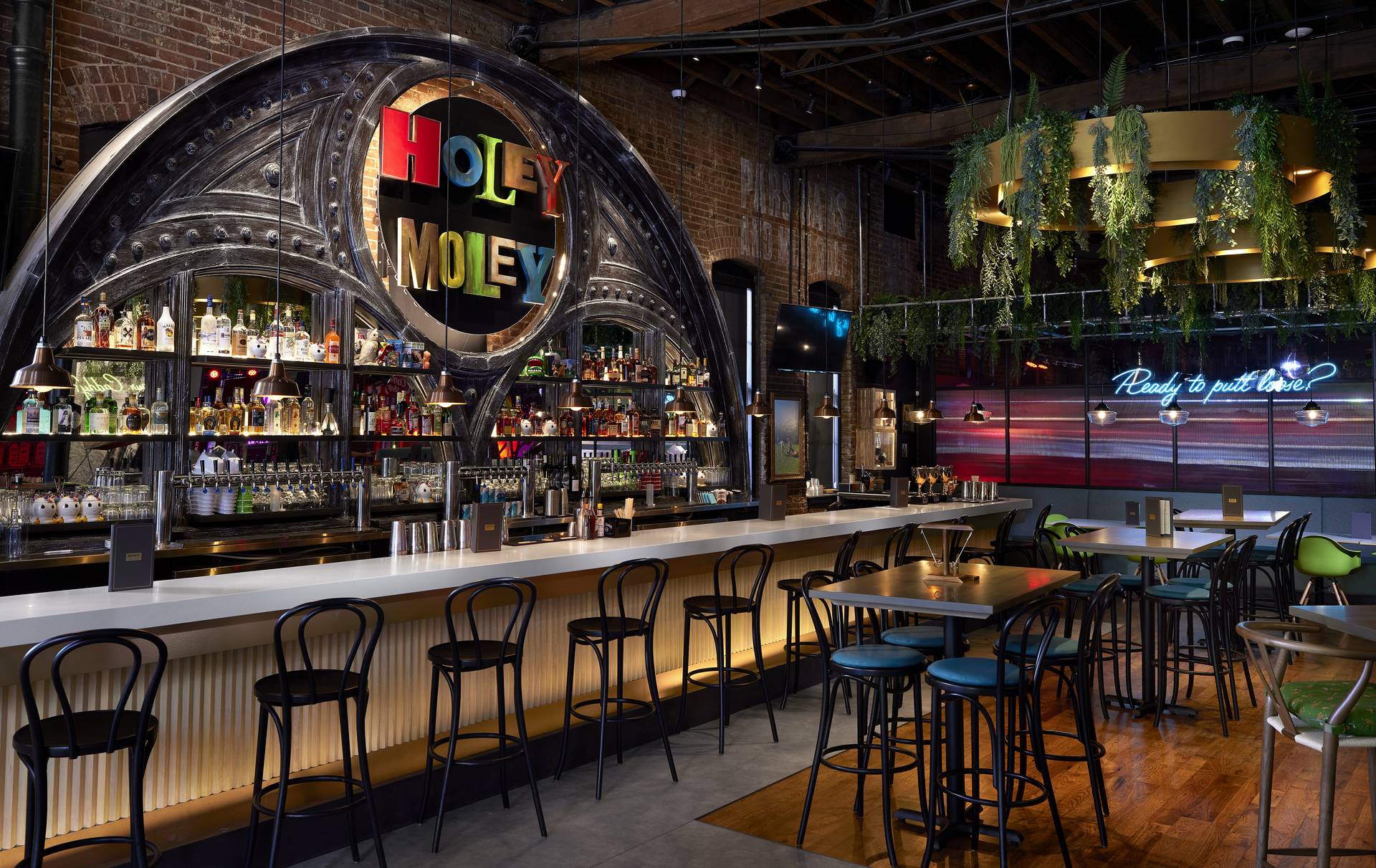
Holey Moley Golf Club is in Denver, Colorado. It is a unique space for corporate events and team building activities, with a friendly, engaging atmosphere and imaginative mini-golf courses that mix competition with teamwork. The setting also encourages informal exchanges and problem-solving.
Frequently asked questions
What are team building activities for work for?
Team building activities for work give teams a simple way to talk, think, and work together with less friction, whether you run them in a meeting room or at an offsite. They can be used for connection, collaboration, creativity, coordination, energy, or trust, depending on the format you choose.
How do I choose the right team building activity?
Choose the activity by starting with the outcome you want, the time you have, the team setup, and the energy in the room. Under 15 minutes suits an icebreaker or energizer, 15 to 30 minutes fits a problem-solving or creative activity, and 30 to 60 minutes suits a trust or bonding session.
How do I run a team building session well?
Run it well by keeping the goal clear so people know whether the focus is connection, energy, or collaboration. For the activity itself, give clear instructions, keep the pace moving, and avoid interrupting with solutions or follow-up questions while people are sharing.
What group size works best for team building activities?
The right group size depends on the format, and the options in this set range from pairs to 5-50 people. Roses and thorns works for 3-15 people, Blind drawing works in pairs, Office trivia blitz fits 5-30 people, and Group rock, paper, scissors tournament can handle 5-50 people.
Do team building activities work for remote or hybrid teams?
Yes, if you choose the format with the setting in mind and offer the remote variant first. Virtual coffee roulette, Online escape room, and Blind drawing adapt well to remote or hybrid teams, while in-person options like the Helium stick or Marshmallow challenge work better when people are together in the same room.
How do I make team building inclusive for hybrid teams?
Make it inclusive by avoiding physical-prowess gatekeeping and dropping activities that require running, lifting, or fine motor skill unless the team has explicitly opted into a physical theme. Always offer the remote variant first, so the hybrid setup does not leave part of the group on the outside.