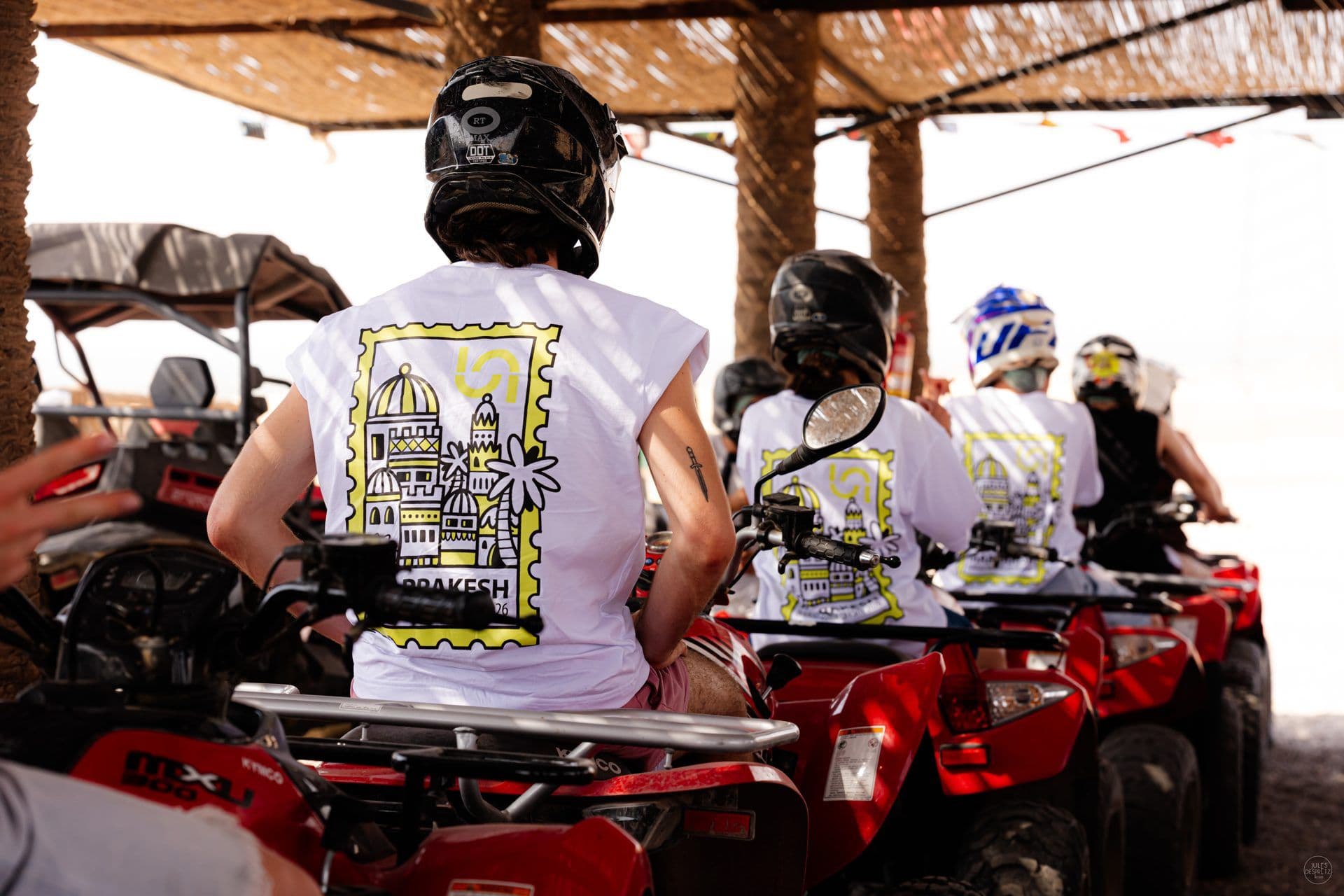
Corporate swag works when people would pick it up without being asked. For Naboo's global offsite in Marrakech in May 2026, our Artistic Director Theo Deschamps designed merch with a clear brief: make it feel closer to a lifestyle brand than event giveaway material.
We made a white T-shirt with an illustrated back print of Marrakech inside a postage-stamp frame, plus woven straw hats embroidered with "naboo" that people wore by the pool and around the riad. After the event, colleagues kept wearing the T-shirts around the office. That was the clearest sign the merch did its job.
As Theo put it:
"My goal as the designer wasn't to create corporate swag, but to build something that felt like a genuine lifestyle brand."
Design for the destination, not the logo
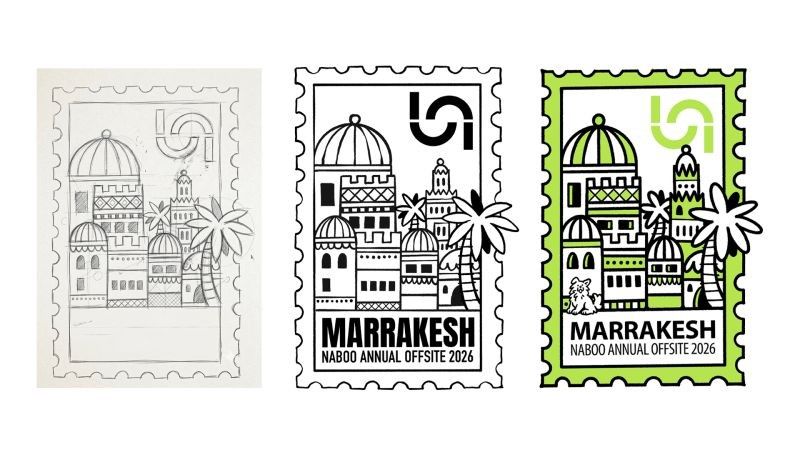
The quickest way to make swag feel forgettable is to lead with the logo and stop there. For a trip like Marrakech, start with the place instead, because people are more likely to wear something that brings back where they were and what they experienced.
For our offsite, the T-shirt centered on an illustrated Marrakech scene framed like a postage stamp. The result felt like a keepsake, not a banner. The place name still mattered, because it gave the design context without turning it into a tourist souvenir.
If you are planning corporate swag ideas for a company trip, ask what visual detail would still make sense six months later. A skyline, a local pattern, a landmark, or even a color palette from the destination will do more for wearability than a large logo ever will.
Put the logo second
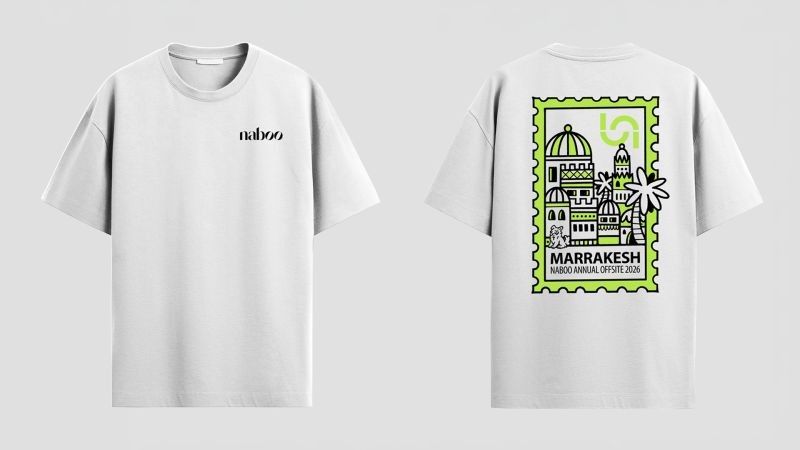
One of the most useful lessons from this project was simple: the logo should support the design, not dominate it. People are more willing to wear merch when it looks intentional and stylish, not like a walking ad.
On our T-shirt, the Naboo mark sits small on the chest and the Marrakesh illustration on the back does the talking. That balance made the pieces feel premium and easy to wear outside the event. The hats followed the same logic. The embroidered "naboo" detail was visible, but subtle enough that people kept them on by the pool, in the sun, and on the way to dinner.
If you are setting up your own merch, think about logo placement as a finishing touch. A small chest mark, a woven label, or a discreet embroidery often works better than a large front print. The goal is recognition, not overexposure.
Choose items people will actually use on the trip
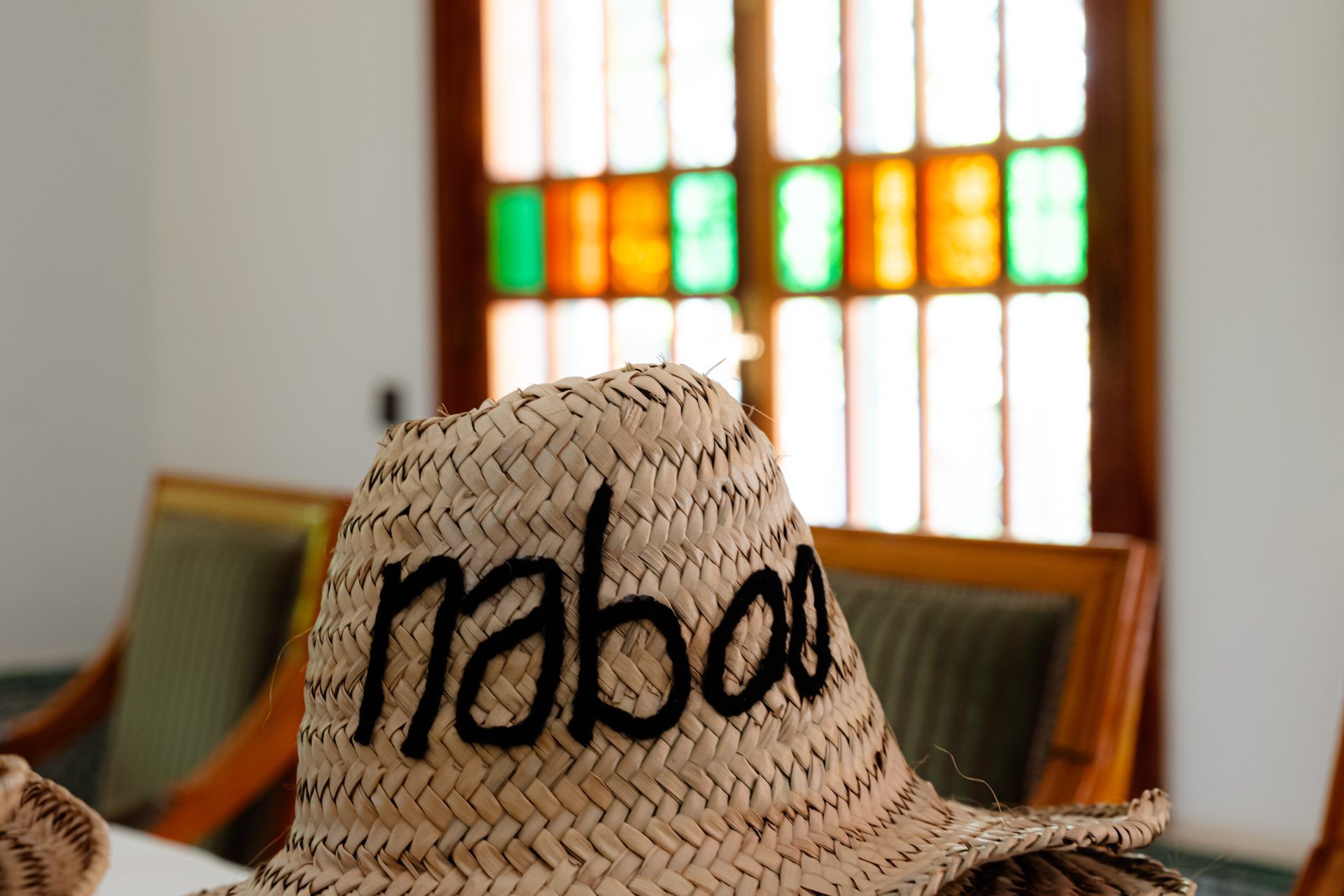
The strongest corporate swag ideas start with utility, not decoration. If people can use the item during the event, it is far more likely to stay in rotation afterward. In Marrakech, sun protection mattered more than novelty.
We chose woven straw hats because they fit the climate and the schedule. People wore them at the pool, while moving around the riad, and during outdoor moments throughout the offsite. That usefulness made the merch feel earned, not forced.
The same logic applies elsewhere. For a colder destination, hoodies are the right call. For a city offsite with lots of walking, caps or tote bags make more sense. The item should match the trip, the daily plan, and the kind of photos you want to capture.
Design a collection, not a single item
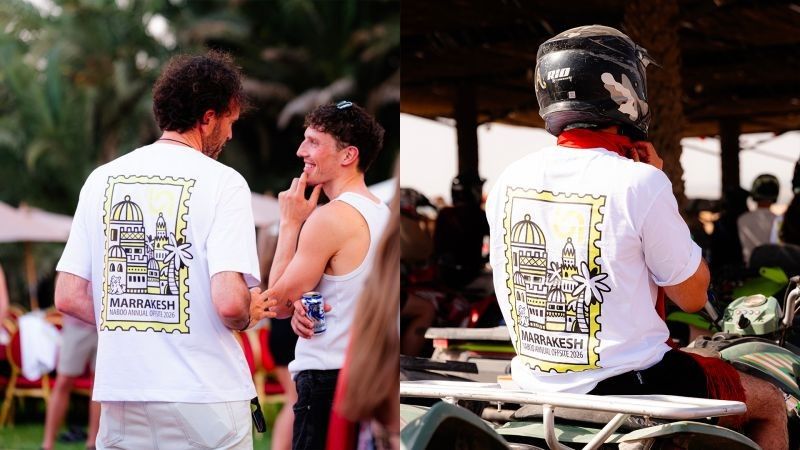
A merch drop feels more considered when everything belongs to one visual world. Instead of treating each item as separate swag, build a small collection with a consistent identity tied to the event theme.
For Marrakech, the T-shirt and the straw hat worked together because they shared the same tone: relaxed, travel-minded, and a little editorial. The illustration style, the color choices, and the placement of the branding all pointed in the same direction. That cohesion made the merch feel like part of the offsite experience rather than a random add-on.
If you are planning your own set, keep the collection tight. Two or three items done well will usually outperform a larger pile of generic pieces. Consistency matters more than quantity. When the visual language is clear, people understand the story immediately and are more likely to keep wearing it.
Get the basics right before you print anything
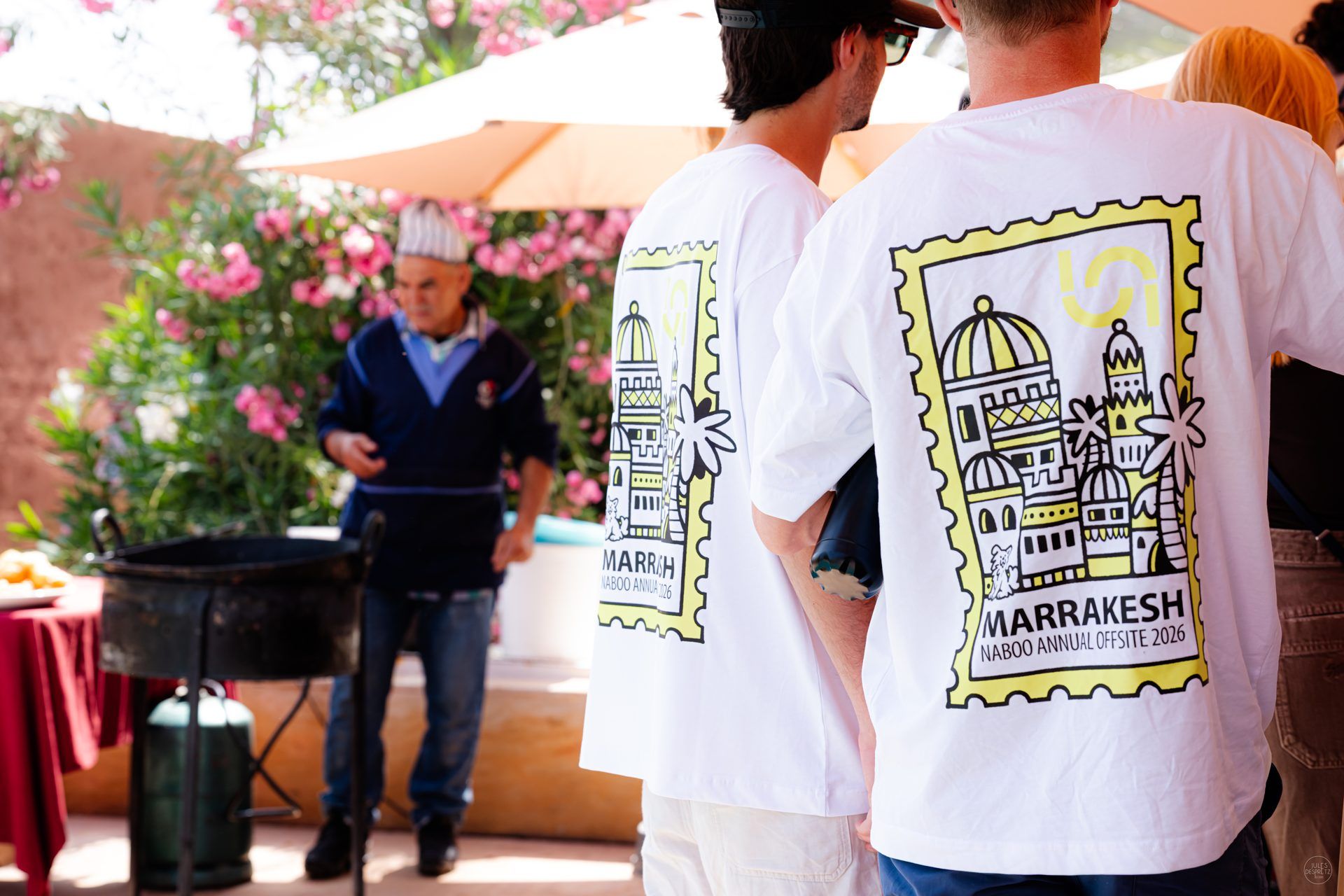
Good design cannot rescue bad logistics. If you want people to wear the merch, the fit and quality have to be right from the start. That begins with collecting sizes from every attendee before the trip, not guessing and hoping for the best.
We gathered sizes in advance so each person could receive a T-shirt that actually fit. That small operational step makes a big difference in whether something gets worn once or repeatedly. Fabric quality matters too. A shirt that survives washing and keeps its shape is far more likely to become part of someone's regular wardrobe.
When you are reviewing samples, pay attention to softness, weight, print durability, and how the piece feels after a wash. If the item is uncomfortable or flimsy, even a strong design will end up in the back of a drawer. The practical details are what turn swag into something people keep.
Hand it out when it matters

Timing shapes how merch is remembered. Hand it out at the right moment, and it becomes part of the event story instead of a separate giveaway. On a trip, arrival is usually that moment: give people the pieces as the trip begins, and they become part of the experience from day one.
That matters because the first wear often ends up in photos. When people put on the shirt or hat soon after arriving, the merch appears naturally in the visual record of the trip. It ties to the setting, the group, and the mood of the offsite.
Plan distribution as carefully as design. Think about when people will be most excited, most present, and most likely to wear the item right away. That is usually when the merch feels most meaningful.
How to measure whether merch worked

The real test of corporate swag ideas is not whether people took the item home. It is whether they kept using it after the event. For us, the clearest signal was seeing colleagues wear the T-shirts around the office after the offsite.
Theo put it plainly after the trip:
"The event is over, but seeing colleagues wear the T-shirts around the office every single day is the ultimate reward."
You can also look at the event itself. Did the merch appear in candid photos, group shots, and social posts without needing to be staged? Did people choose to wear it on their own, not because they were asked to? Those are signs the item felt useful and well made.
After the offsite, watch for repeat appearances. If the piece comes back in everyday work life, it has moved from souvenir to wardrobe staple. That is the standard worth aiming for when you plan merch for a team trip.
If you want a fast starting point, Naboo Studio lets teams upload a logo, preview a merch collection, and request a quote, with a graphic designer adjusting colors, placement, and style.