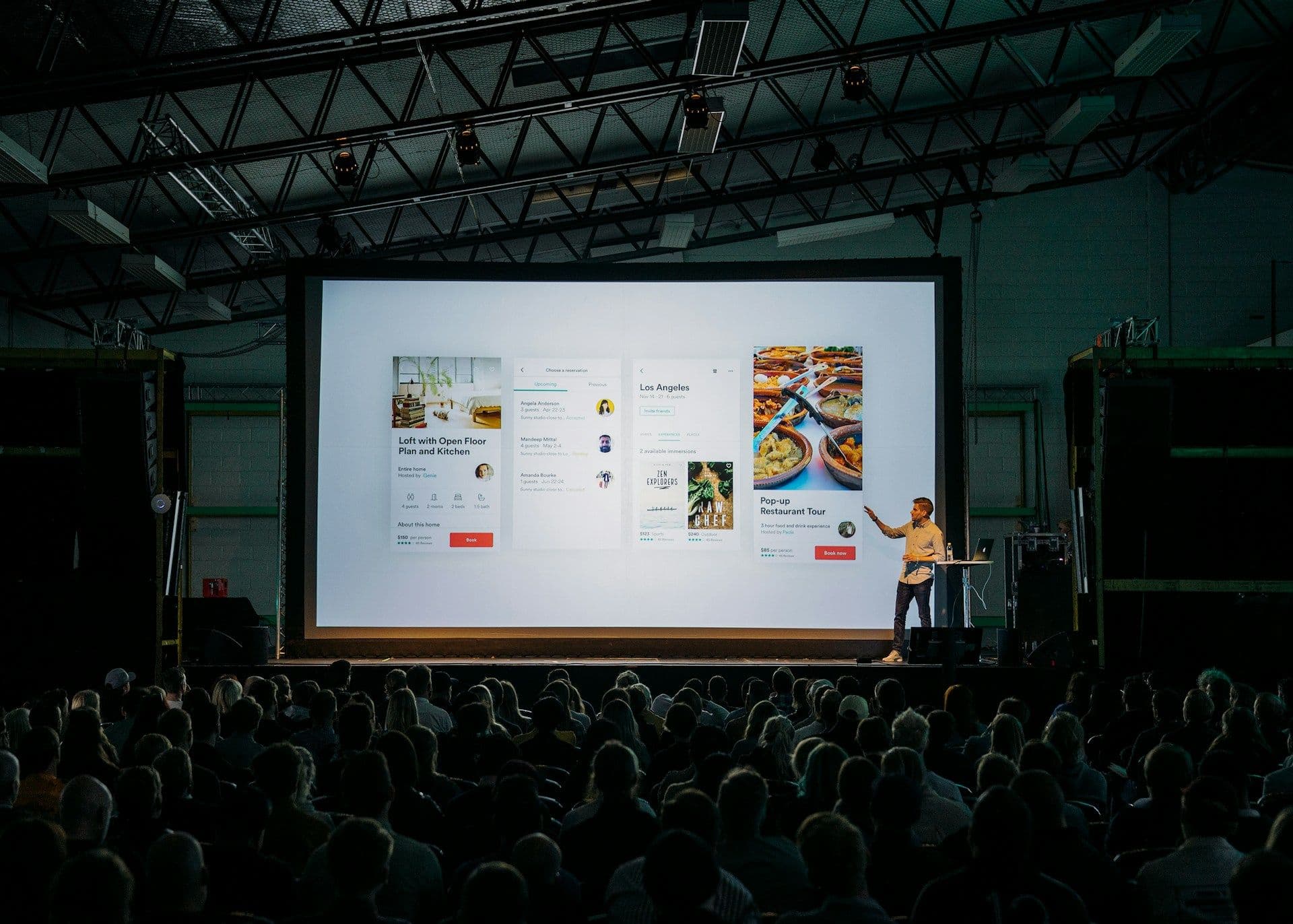
$600+ billion. Why Event Marketing Commands Attention
More than $600 billion is spent globally on business events every year. This number underscores why a strong event marketing strategy has moved from a tactical afterthought to a strategic priority. Events now represent one of the largest line items in most marketing budgets—often 10% to 15% of total spend, and significantly more in B2B organizations.
What makes this spending defensible is that events deliver across multiple dimensions at once: demand generation, brand authority, customer education, partner engagement, and pipeline acceleration. Unlike most channels, experiential marketing consistently drives higher-quality leads and stronger brand recall than digital-only tactics. Events concentrate attention, create real interaction, and generate first-party data in ways few other channels can replicate.
Technology has amplified this. Modern event marketing connects event websites, registration, CRM systems, email automation, mobile apps, analytics, and post-event follow-up into a single ecosystem. Events have transformed from isolated moments into measurable growth initiatives.
Event marketing today is not about filling rooms. It's about orchestrating experiences across the customer journey, measured against tangible business outcomes.
What Event Marketing Really Means Today
Event marketing is a core growth lever for organizations that need to educate markets, shorten sales cycles, and build long-term trust.
Choosing the right event marketing channel depends on your budget, target audience size, and business objectives—here's how the most effective strategies compare.
| Event Marketing Channel | Estimated Cost | Audience Reach | Best Event Type | ROI Timeline |
|---|---|---|---|---|
| Trade Shows & Exhibitions | $5,000–$50,000 | 500–5,000 attendees | B2B lead generation, industry networking | 3–6 months |
| Virtual & Hybrid Events | $2,000–$15,000 | 100–10,000+ attendees | Webinars, product launches, global reach | 1–3 months |
| Sponsored Conferences | $10,000–$100,000 | 1,000–15,000 attendees | Thought leadership, brand authority | 4–9 months |
| In-Person Experiential Events | $15,000–$75,000 | 200–2,000 attendees | Brand activation, customer engagement | 2–6 months |
| Networking Breakfasts & Meetups | $500–$3,000 | 20–100 attendees | Local partnerships, relationship building | Immediate |
| Corporate Incentive Events | $20,000–$150,000 | 50–500 employees | Team building, employee motivation, retention | 6–12 months |
Select your event marketing strategy based on budget capacity and whether your priority is immediate local engagement or long-term brand authority across broader audiences.
According to Cvent's industry benchmarks, 84% of marketers say events help their organization stand out, and 83% report that events are critical to achieving business objectives. These reflect how central events have become to pipeline and revenue strategy.
The global business events industry represents hundreds of billions of dollars in annual economic activity. Even after the disruption of 2020–2021, the market rebounded quickly, with continued growth across in-person, hybrid, and virtual formats.
What makes event marketing unique is its ability to combine reach, depth, and data. Unlike most digital channels, events create extended, high-attention moments. Attendees spend hours or days interacting with content, speakers, peers, and brands—a level of engagement that's difficult to replicate through ads or social media.
Experiential marketing consistently ranks as one of the highest-performing marketing disciplines. A majority of marketers rate live experiences as their most effective channel.
How Companies Use Events as a Marketing Engine
Salesforce Dreamforce functions as a global brand platform, combining keynote broadcasts, product launches, partner marketing, and year-round content distribution. Sessions are streamed, clipped, repurposed, and fed into digital campaigns long after the event ends.
IBM Think uses events to establish narrative authority. Rather than focusing solely on products, IBM positions its events around themes like innovation, ethics, and industry transformation. This engages decision-makers at a strategic level, not just a technical one.
Figma's Config conference blends in-person attendance with a strong virtual layer, allowing the brand to reach a global audience while preserving community intimacy. By treating content as a product, Figma extends the event's impact far beyond the venue.
Brands like IKEA have shown how experiential events generate massive earned media and emotional connection. IKEA's sleepover and lifestyle events invited consumers to experience products in unexpected ways, generating global press coverage and social sharing far beyond the cost of traditional advertising.
In B2B environments, events are tied directly to revenue. Around 70% of marketers measure event ROI based on revenue impact, and more than 60% link events directly to pipeline contribution. This has elevated event marketing from a cost center to a performance channel.
What these examples share is intent. Successful event marketing is about designing moments of concentrated value, then extending those moments across channels, teams, and time.
Types of Event Marketing and When Each One Makes Sense
Event marketing is a portfolio of formats, each designed to achieve different business outcomes. The most effective organizations don't ask "should we do events?" but "which type of event supports this objective right now?"
In-Person Events: High-Trust, High-Impact Experiences
In-person events remain the most powerful format for relationship-driven marketing. Over 75% of marketers say live events deliver the highest-quality leads, particularly in B2B environments where trust and long sales cycles matter.
Large-scale conferences like Salesforce Dreamforce are built on this logic. Dreamforce brings together tens of thousands of attendees, combining keynote storytelling, product launches, ecosystem marketing, and partner visibility. The in-person format creates momentum, credibility, and media coverage that no single digital campaign could replicate.
In-person events work best for enterprise sales, account-based marketing, partner ecosystems, industry authority, and community building.
The tradeoff is cost and scale. In-person events require significant budget and logistics, which is why many organizations combine them with other formats.
Virtual Events: Scale, Accessibility, and Data Density
Virtual events solve a persistent problem: reach. They remove geographic and financial barriers, allowing organizations to engage global audiences at a fraction of the cost of live events.
Virtual platforms capture granular engagement signals, from session attendance to content interaction, chat activity, and poll responses. Virtual events often generate higher registration volumes than in-person equivalents, even if attendance rates are lower.
Companies like HubSpot have built educational virtual events and webinars into their inbound marketing strategy. Virtual events allow them to nurture leads at scale, segment audiences by interest, and feed CRM systems with intent data.
Virtual events work best for education, training, lead generation at scale, product onboarding, and global audiences. Their limitation is emotional depth—virtual events rarely create the same connection as being in the same room.
Hybrid Events: Extending the Life and Reach of Live Experiences
Hybrid events combine the depth of in-person engagement with the reach of virtual distribution. When done well, they extend the lifespan of a live event far beyond its physical dates.
Hybrid strategies allow organizations to offer exclusive in-person experiences while streaming key content, repurpose sessions into on-demand assets, and capture leads from audiences who cannot attend physically.
Successful hybrid events curate distinct experiences for each audience. Streaming everything without differentiation leads to disengagement.
Webinars: Precision Tools for Demand Generation
Webinars remain one of the highest-performing event marketing formats in B2B. They can deliver conversion rates above 50% when aligned with a clear use case and promoted effectively.
Webinars are short, highly targeted, and easy to repeat and optimize. Organizations use them to support product launches, customer education, industry commentary, and lead nurturing. Their strength lies in focus—a well-designed webinar solves one problem for one audience, clearly and efficiently.
Experiential and Brand Activation Events: Attention and Memory
Experiential events focus on emotion and memorability rather than content alone. These formats are common in consumer marketing but increasingly used in B2B as brands look to humanize complex offerings.
Brands like IKEA have demonstrated how immersive experiences generate outsized media impact. IKEA's experiential activations create moments people want to talk about and share, extending reach organically through press and social media.
Experiential events work best when the goal is brand differentiation, the message benefits from physical interaction, and earned media is part of the ROI model.
Internal and Community Events: The Overlooked Multiplier
Internal events, user groups, and community meetups play a critical role in retention, advocacy, and long-term brand equity. Many SaaS companies invest heavily in customer conferences, regional meetups, and executive sessions. These events rarely aim for immediate revenue—instead, they reduce churn, increase product adoption, and turn customers into promoters.
Case Study 1: How Red Bull Stratos Redefined Event Marketing at Scale
When people think of event marketing that truly moved the needle, one campaign rises to the top: the Red Bull Stratos project. What started as an extreme sports sponsorship evolved into one of the most ambitious brand-driven live events of the 21st century—one that captured global attention, rewrote live streaming records, and elevated Red Bull's brand image far beyond energy drinks.
The Mission: Not a Marketing Stunt — a Cultural Event
On October 14, 2012, Austrian skydiver Felix Baumgartner ascended to the edge of space in a pressurized capsule before stepping off and free-falling from approximately 39 kilometers (24 miles) above Earth—breaking the speed of sound without a vehicle and landing safely.
This was not just a stunt. It was a multi-year experiential event built around storytelling, science, and spectacle. Red Bull positioned the campaign as Mission to the Edge of Space, connecting human achievement with their brand message—"Red Bull Gives You Wings." Medium
Integrated, Multi-Platform Execution
Red Bull did not treat this as a one-off broadcast. The campaign was executed across multiple interlocking channels:
Live streaming: The jump was broadcast globally across YouTube and major TV networks, becoming one of the most watched live events in history, with over 8 million concurrent viewers during the live stream.
Global media coverage: More than 40,000 news articles covered the event worldwide, reaching audiences that traditional advertising rarely penetrates.
Social media amplification: The campaign generated over 60 million social impressions across platforms as audiences actively shared, commented, and followed the event's narrative in real time.
Dedicated digital ecosystem: Red Bull built an interactive event website and content hub featuring live data, mission updates, videos, and behind-the-scenes storytelling, transforming the event into a content engine.
Documentary and legacy content: After the jump, Red Bull commissioned documentaries, interviews, and science explainers, repurposing the same investment into enduring branded content.
Impact: Cultural, Commercial, and Strategic
The measurable impact was massive:
Global brand resonance: Millions tuned in live and tens of millions more engaged across digital channels, creating a more intense kind of brand presence than traditional advertising could achieve.
Earned media value: Industry analyses estimate that Red Bull Stratos generated tens of millions of dollars in earned media through news coverage and social engagement—far beyond the usual reach of paid campaigns.
Shift in perception: Red Bull positioned itself as a pioneer in human achievement and immersive storytelling.
Long-term content value: The event continues to drive engagement years later through documentaries and educational clips—an example of how an event can function as evergreen marketing content.
What Red Bull Stratos Teaches Event Marketers
Red Bull Stratos remains one of the most cited examples of ambitious event marketing because it combined:
- Narrative momentum: A compelling story built around human achievement, not just product promotion.
- Cross-platform execution: Simultaneous engagement across broadcast, streaming, social, and owned channels.
- Global scale with tactical precision: A local event with truly global relevance.
- Ongoing content lifecycle: Turning a single live moment into a long tail of shareable assets and narratives.
Brands study Stratos not because it can be replicated directly, but because it shows how to make an event meaningful, memorable, and macro-culturally impactful.
Case Study 2: How Salesforce Turned Dreamforce into a Global Marketing Platform
When Salesforce launched Dreamforce in 2003, it was a modest user conference. Two decades later, Dreamforce has become one of the largest and most influential B2B events in the world.
What distinguishes Dreamforce is not just its size, but the way Salesforce has transformed a single annual event into a multi-layered marketing, sales, media, and ecosystem engine.
From User Conference to Global Brand Moment
Dreamforce's growth mirrors Salesforce's own trajectory. Early editions focused on product education and community building. As Salesforce expanded into a multi-cloud enterprise platform, the event evolved accordingly.
By the late 2010s, Dreamforce regularly attracted 150,000+ registered attendees in San Francisco, with participants from more than 130 countries. At its peak, it generated hundreds of millions of dollars in local economic impact.
Salesforce positioned Dreamforce not as a trade show, but as a destination event—part conference, part cultural festival, part media production.
A Fully Integrated Event Marketing Model
Dreamforce works because it is not treated as a standalone moment. Salesforce designs the event as the centerpiece of a year-round marketing cycle.
In the months leading up, Salesforce uses Dreamforce to anchor product roadmaps, industry narratives around AI and customer experience, partner announcements, and customer success storytelling. Registration campaigns, speaker announcements, and agenda reveals are staged deliberately to sustain momentum. This replaces one-off promotion with progressive narrative buildup.
During the event, Salesforce deploys a multi-audience strategy. While tens of thousands attend in person, Dreamforce is live-streamed globally, with sessions available on demand shortly after. This hybrid distribution extends reach while preserving the exclusivity of the in-person experience.
Content as the Primary Asset
One of Dreamforce's most significant innovations is how Salesforce treats content. Sessions are not ephemeral. Keynotes, panels, and breakout sessions are filmed, edited, segmented, and repurposed across Salesforce's owned channels.
Dreamforce functions as a content production studio: keynotes become global product announcements, breakout sessions turn into sales enablement assets, customer stories feed case studies, and thought leadership sessions shape editorial narratives.
Rather than measuring success solely on attendance, Salesforce evaluates Dreamforce based on pipeline influence, content performance, and long-term engagement.
An Ecosystem, Not Just an Audience
Dreamforce is a case study in ecosystem marketing. Salesforce does not position itself as the sole protagonist. Partners, developers, customers, nonprofits, and industry leaders all have visible roles.
Major technology partners use Dreamforce to launch integrations and announce joint initiatives. Customers present real use cases alongside Salesforce product teams. Nonprofit organizations and sustainability initiatives are woven into the program, reinforcing Salesforce's broader positioning around trust and responsibility.
This ecosystem approach transforms attendees into participants, reducing the risk of appearing overly promotional.
Measurable Business Impact
While Salesforce does not publish full ROI figures, multiple indicators point to commercial impact: major product announcements are timed around Dreamforce, sales teams use the event as a focal point for account engagement and deal acceleration, customer retention and community engagement metrics spike around the event cycle, and Dreamforce content continues to generate engagement long after the event concludes.
Industry analysts cite Dreamforce as a rare example of an event that operates simultaneously as a brand platform, demand engine, and community anchor.
What Dreamforce Teaches Event Marketers
Dreamforce is not replicable in scale for most organizations, but its principles are transferable. It demonstrates that events perform best when treated as media platforms, not logistics projects. Hybrid distribution extends impact without diluting experience. Content planning must begin before the event is designed. Ecosystems outperform monologues. ROI improves when events are integrated into broader marketing and sales systems.
Above all, Dreamforce shows that event marketing succeeds when an event becomes a moment people plan around, not just something they attend.
Failure Case Study: Fyre Festival and the Limits of Hype-Driven Event Marketing
Fyre Festival illustrates what happens when marketing outpaces operational reality.
The Promise: A Perfectly Engineered Illusion
Announced in 2016, Fyre Festival was positioned as an ultra-luxury music festival on a private island in the Bahamas. A single coordinated Instagram campaign featured top influencers posting a mysterious orange tile simultaneously, creating instant viral traction. Models and creators promoted an aspirational lifestyle tied to the event.
Within weeks, tickets priced between $1,200 and more than $100,000 sold rapidly. From a demand-generation perspective, the campaign worked.
The Breakdown: Marketing Without Infrastructure
Behind the scenes, however, the event was never viable. The island lacked basic infrastructure, housing had not been secured, food and sanitation planning was incomplete, vendor contracts were unresolved, and timelines were unrealistic.
Marketing commitments continued after internal teams knew the event could not be delivered as promised. Instead of resetting expectations, the campaign doubled down on hype.
The Moment of Collapse
When attendees arrived in April 2017, they encountered emergency tents instead of luxury villas, minimal food instead of gourmet catering, and no clear communication. Images spread globally within hours, turning what had been one of the most talked-about campaigns into a case study in reputational collapse.
The Aftermath: Legal, Financial, and Reputational Consequences
Lawsuits totaled tens of millions of dollars, the founder faced criminal convictions, and associated brands suffered permanent damage. Long-term skepticism toward influencer-led event marketing followed.
Why This Failure Still Matters
Fyre Festival exposed several systemic risks: treating marketing as a veneer rather than a contract, decoupling promotion from delivery, ignoring early warning signals in favor of momentum.
Credibility compounds slowly and collapses instantly. Once trust is broken, no amount of storytelling can repair it.
The Professional Lesson for Event Marketers
High-performing organizations internalized the lesson quickly: marketing claims must be constrained by operational reality, escalation mechanisms must exist when delivery risks emerge, influencer or hype-driven strategies require stronger controls, and transparency is a defensive asset.
Fyre Festival proved the power of event marketing—just not in the way its creators intended. It demonstrated that trust must be earned and protected. Marketing sets expectations. Events must honor them. When those two drift apart, failure is inevitable.
How Event Marketing Becomes a Strategic Asset (and Not Just a Campaign)
Most companies don't fail at event marketing because they lack ideas. They fail because events are treated as temporary projects rather than long-term instruments.
Early-stage event marketing is often reactive. A conference is organized because competitors have one. A webinar is launched because the pipeline softens. A roadshow appears because sales needs support. These events may perform reasonably well, but they rarely build momentum.
The shift happens when leadership sees events not as isolated executions, but as infrastructure. At that point, events stop being judged solely on attendance or immediate leads and start being evaluated on whether they move durable levers: credibility, category authority, customer intimacy, or ecosystem strength.
You can see this clearly in companies that run flagship events year after year. Over time, the event itself becomes shorthand. People plan around it. Partners align announcements to it. Media anticipates it. That anticipation is earned gradually through consistency, not marketing pressure.
This is also where event marketing starts behaving like owned media. Instead of buying attention repeatedly, the company earns it. Each edition reinforces the previous one. Content themes recur and deepen rather than reset. Audiences return because the event has proven its value before.
Internally, this shift changes behavior. Sales teams engage earlier because they recognize the event as a meaningful moment. Product teams align roadmaps because they know the event will frame the narrative externally. Marketing stops overpromising because credibility becomes an asset worth protecting.
The result is not just better events, but less friction around them. Decisions get easier. Trade-offs become clearer.
Who Owns Event Marketing When It Starts to Matter
Event marketing becomes complicated the moment it starts to work. When events are small or experimental, ownership is rarely questioned. That model breaks down as soon as events begin to influence revenue, reputation, or executive priorities.
The central question becomes who is accountable for its outcomes.
In many organizations, event marketing sits uncomfortably between functions. Marketing owns messaging and demand. Events teams own execution. Sales owns follow-up. Product wants stage time. When these interests are not explicitly aligned, events drift.
High-performing organizations solve this by making ownership explicit early. Someone, usually at the senior marketing or growth level, is responsible for defining what an event is meant to move: pipeline acceleration, category positioning, customer retention, or partner activation. Everything else flows from that clarity.
This does not mean centralizing all control. Mature event programs are often more collaborative. Sales teams are involved upstream in audience definition. Product teams contribute narrative input. Events teams are included in strategic conversations. What changes is decision rights.
Governance also shows up in how trade-offs are handled. Every serious event involves compromise. In weak governance models, these moments trigger reactive decisions. In strong models, trade-offs are evaluated against the event's core purpose. If something does not serve that purpose, it is cut.
The absence of this discipline is one of the most common reasons event marketing underperforms at scale. Teams confuse activity with impact, optimizing for internal satisfaction rather than external value.
Strong ownership prevents that drift. It creates a single source of truth for why the event exists and how success is defined.
Focus, Restraint, and the Discipline of Saying No
As event marketing programs mature, their biggest threat is rarely underinvestment. It is excess. Successful events attract attention internally. Teams want visibility. Leaders want stage time. Partners want presence. Over time, agendas grow longer, formats multiply, and experiences become more complex.
High-performing organizations recognize that focus is a strategic choice, not a limitation. They treat every addition to an event as a trade-off. Adding something always means subtracting attention from something else.
The most effective event programs are built around a small number of non-negotiables. A flagship conference may exist primarily to reinforce category leadership. A customer event may deepen retention and expansion. A roadshow may exist solely to open sales conversations. When that purpose is clear, decisions become easier. Elements that do not serve the primary objective are deferred or removed.
This discipline extends to audience selection. Not every event needs to serve every segment. One of the most common sources of disappointment in event marketing is misaligned expectations: an event promoted as strategic attracts attendees looking for tactical takeaways, or a deeply technical audience finds itself sitting through high-level brand messaging.
Restraint also applies to frequency. There is a temptation to multiply events once infrastructure is in place. In reality, saturation erodes impact. Attendees become selective. Internal teams lose urgency. The strongest programs maintain rhythm rather than volume.
Organizations that avoid this trap treat events less like campaigns to be scaled and more like products to be refined. They iterate carefully. They retire formats that no longer serve. They protect the core experience.
Budget Reality: What Event Marketing Actually Costs, and Where the Money Goes
Across B2B industries, events typically represent 10% to 15% of total marketing budgets. In companies where events play a central role in sales enablement, that share can climb to 20% or more, making events the second-largest marketing investment after paid digital media.
For in-person events, the average cost per attendee usually falls between $400 and $1,200, depending on geography, duration, and production expectations. Large flagship conferences often land between $1,500 and $3,000 per attendee.
Virtual events are far less expensive on a per-attendee basis. Well-produced virtual conferences typically cost $20,000 to $150,000 in total, which translates to $20 to $80 per attendee.
Hybrid events introduce duplication: two experiences must be designed and produced simultaneously. Hybrid events can cost 20% to 40% more than in-person-only formats when executed properly.
Mature event programs typically distribute budgets as follows: logistics and production absorb 35% to 45% of total spend. Promotion and audience acquisition account for 20% to 30%. Content, speakers, and experience design usually represent 15% to 25%. Technology and data, including event platforms and analytics, typically fall between 10% and 15%.
One of the most telling budget indicators is how much is reserved for what comes after. In average programs, less than 5% of the event budget is allocated to post-event activation. High-performing teams push that figure closer to 10% to 15%, recognizing that significant ROI is realized weeks or months later.
In B2B contexts, events often deliver lower cost per sales-qualified lead than paid digital channels, despite higher upfront costs. While a paid campaign may generate leads at $100–$300 each, event-generated leads frequently convert at higher rates and shorter sales cycles.
Strong event budgets are defined by alignment. When spend levels clearly reflect whether an event is meant to build brand authority, generate pipeline, retain customers, or activate partners, budget discussions become far more productive.
Why Event Marketing Still Matters More Than Ever
Event marketing endures because it solves a problem most modern channels cannot. In a landscape defined by fragmented attention, declining trust in advertising, and tightening data regulations, events create something rare: sustained focus in a shared space.
Whether physical or virtual, they compress time, concentrate audiences, and allow brands to demonstrate value rather than simply claim it.
The most effective event programs are not built on spectacle or scale alone. They are built on alignment. Strategy precedes format. Purpose constrains promotion. Budgets follow intent. Measurement reflects reality. When those conditions are met, events stop being risky line items and start behaving like durable assets.
The contrast between success and failure in event marketing is rarely subtle. On one end are programs like Dreamforce, where consistency, governance, and narrative discipline turn a conference into a global platform. On the other are cautionary tales like Fyre Festival, where marketing momentum detached from operational truth led to reputational collapse.
What separates mature event marketing organizations from the rest is clarity. Clarity about why an event exists, who it serves, what it must deliver, and what it is willing to sacrifice to protect credibility. That clarity shows up in ownership structures, in restrained agendas, in realistic promises,
Measuring Event ROI: From Attendance Metrics to Revenue Attribution
The $600+ billion spent on events annually demands rigorous measurement frameworks. Yet many marketers struggle to connect event participation to actual business outcomes. The gap between event attendance and demonstrable ROI remains one of the largest blind spots in marketing accountability—primarily because events touch multiple stages of the buyer journey, making direct attribution challenging.
Start by establishing a tiered measurement system that captures both leading and lagging indicators. Leading indicators include registration conversion rates, attendee engagement scores during the event, and session attendance patterns. These metrics tell you whether your event is resonating in real-time. Lagging indicators—the ones that matter most to revenue teams—include pipeline influence, closed-won deals attributed to event attendees, and customer lifetime value of event-sourced leads. The key is implementing proper tracking infrastructure before the event launches, including unique UTM parameters, custom landing pages, and CRM integration that captures attendee data throughout the customer journey.
Beyond traditional metrics, consider measuring brand lift and competitive positioning shifts. Survey attendees pre- and post-event on awareness, perception, and purchase intent. Track how event participation influences renewal rates among existing customers or speeds up sales cycles for prospects. Some of the highest-ROI events generate value months after the event concludes—through ongoing relationships, partnership development, and thought leadership positioning that compounds over time.
Finally, segment your ROI analysis by attendee type and event role. VIP customer attendees, partner representatives, and prospect leads will each generate different value streams. By understanding which segments drive the highest returns, you can optimize budget allocation and event format for future iterations. This data-driven approach transforms event marketing from a cost center to a measurable revenue driver.
htmlFrequently Asked Questions
What is an event marketing strategy?
An event marketing strategy is a structured plan that outlines how to promote, execute, and measure the success of an event to achieve specific business objectives. It includes defining your target audience, setting clear goals, selecting the right event format, and establishing metrics to track performance and ROI.
How do you measure the success of an event marketing campaign?
Success is measured through key performance indicators such as attendance rates, lead generation, engagement metrics, social media reach, and post-event conversions. You should also track attendee feedback through surveys, brand sentiment, and the cost per acquisition to determine if your event marketing strategy delivered real business impact.
What are the main types of marketing events?
The main types include trade shows, product launches, webinars, conferences, networking events, experiential activations, and sponsorships. Each type serves different purposes in your event marketing strategy, from building brand awareness to generating qualified leads and strengthening customer relationships.
How should I budget for an event marketing strategy?
Start by defining your event goals and expected ROI, then allocate budget across venue, technology, marketing promotion, staffing, and contingencies. A typical breakdown allocates 40-50% to venue and logistics, 30-40% to marketing and promotion, and 10-20% to staffing and contingency—though this varies based on your event type and objectives.
How far in advance should I start planning an event marketing strategy?
For most events, begin planning 6-12 months in advance to secure venue, build awareness, and execute a comprehensive marketing campaign. Smaller events may require 2-3 months of planning, while large conferences or product launches benefit from 12-18 months of strategic preparation to maximize reach and impact.