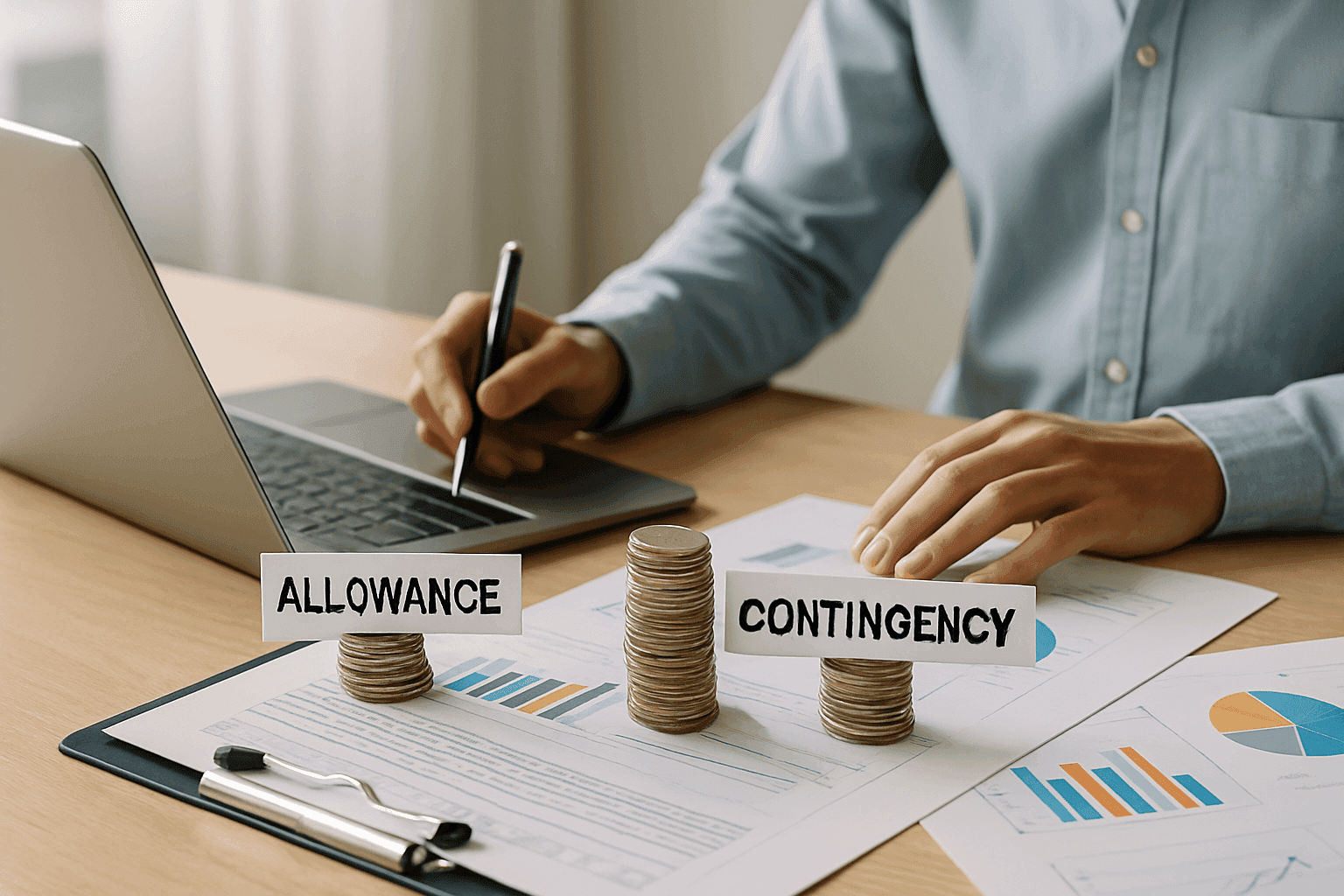
Project managers across the UK — from London offices to developments in Manchester, Birmingham, Leeds and the Scottish Highlands — still face the same budgeting dilemma: how to allow for known but unpriced items and how to provide for genuine unknowns. Two budget items appear in almost every estimate yet are often confused. Knowing the difference between allowance vs contingency changes how teams plan, talk about costs and keep projects on track in 2026.
Mixing the two risks budget headaches, unhappy stakeholders and delays. Treating both as a general cushion leads to poor choices and surprise bills late on. This guide gives practical, down-to-earth steps to tell allowances and contingencies apart, manage both properly and avoid common mistakes seen on UK projects.
what an allowance is
An allowance is money set aside for something you know will be needed but can’t yet price accurately. The need is real and the scope is clear, but details are still to be chosen. That happens a lot during early design stages when finishes or suppliers aren’t finalised.
Think of a local council office refit in Leeds where you know you need new flooring throughout. You don’t yet know whether the client will pick carpet tiles, vinyl or stone. Rather than guess, the estimator adds a flooring allowance based on mid-range prices for similar UK installations.
Allowances act as placeholders. They let planning continue without forcing premature decisions that may cost more later.
typical allowance categories
- material allowances: fixtures, finishes, doors, joinery or branded items for events;
- labour allowances: installation hours that vary with the chosen product;
- design allowances: conceptual items such as a water feature in a campus or park project;
- equipment allowances: specialist systems where supplier choice or specs are pending, common on IT or AV projects in university campuses.
what contingency means
Contingency is different: it funds uncertainty and risk. Contingency covers issues that may or may not happen — surprises on site, weather disruption, or other events that good planning can’t completely remove.
The allowance vs contingency split becomes clear when you think about what each protects. An allowance is for a known item with a variable price. Contingency is for unknowns that might affect any part of the project.
Projects that are complex, long or have many outside dependencies typically need larger contingencies. Early-stage projects in 2026, before designs are locked, should expect to hold more contingency than schemes that already have full specifications.
where contingencies are used
- design contingency: to absorb small changes while drawings are refined;
- construction contingency: for unexpected site conditions, material price swings or trade coordination issues;
- owner contingency: to let the client fund upgrades or changes without disrupting core project funds;
- schedule contingency: to cover costs from delays such as expedited deliveries or overtime.
key differences made simple
Be clear: allowances are named line items and visible in the budget. Everyone can see what the allowance covers and how much is set aside. Contingency is usually a general reserve, often shown as a percentage or a lump sum, kept flexible to deal with whatever arises.
Allowances get replaced with actual costs when selections are made. Contingency is drawn down when risks materialise. Allowances come from incomplete decisions; contingencies come from risk assessment.
common mistakes on UK projects
A frequent error is dipping into contingency to cover an overrun on an allowance after a client in Birmingham or Glasgow picks premium finishes. That eats the risk fund and leaves the project exposed. Underestimating contingency is also common — optimism bias leads teams to assume fewer surprises than reality provides.
Poor communication about allowance limits causes arguments. If a kitchen allowance is set at £30,000, clients may assume any appliance choice is covered. Clear explanations at the start avoid those rows.
Using contingency as discretionary spending is another failure. Contingency should only be used after formal approval and for genuine unforeseen issues, not extras or nicer-to-haves.
the budget clarity framework
Use four simple questions to decide whether an uncertain item is an allowance or contingency:
- Is the requirement certain? If it might not be needed, it’s contingency.
- Can you define the scope? If you can describe what’s needed but not price it, continue.
- Is the uncertainty down to pending decisions? If so, it’s an allowance.
- Will normal project progress resolve the uncertainty? If yes, use an allowance; if only execution can reveal it, use contingency.
This simple approach turns a subjective call into a repeatable decision process suitable for teams working in London, Manchester or elsewhere in the UK. For project managers looking for wider guidance, read more articles on the Naboo blog which cover related budgeting and governance topics.
applied example: a UK workplace refit
A tech firm in Manchester plans a head office refit with open plan desks, a cafe and updated services. Furniture for 200 staff is certain but the system is not yet chosen — this is an allowance. The cafe will need commercial kitchen kit but the operator isn’t picked yet — another allowance. Hidden defects in ageing HVAC found after ceiling strip-out are an unknown condition and need contingency. Weather delays that often affect sites in the Scottish Highlands require schedule contingency.
By applying the framework, allowances are set for furniture and kitchen equipment with clear notes on assumptions. Contingency is reserved for hidden building issues and weather-related delays, keeping the budget honest and useful.
measuring whether your approach works
- allowance accuracy: track how actual costs compare to allowances once selections are made;
- contingency utilisation: record how much contingency is used and why;
- decision velocity: measure how quickly allowances are resolved after being set;
- contingency drawdown rate: watch how fast contingency is consumed versus project progress;
- budget forecast accuracy: compare projected final costs to the current budget over time.
practical tips for allowance management
Document every allowance: what it includes, excludes and the assumptions behind the figure. Base amounts on current UK market data and past local projects — don’t lowball to make a budget look attractive. Make allowance limits explicit to clients and set deadlines for decisions tied to procurement milestones.
practical tips for contingency management
Size contingency from a proper risk assessment considering complexity, duration and external dependencies. Write down what contingency is for and set formal approval steps for releasing funds. Track releases in a log showing the reason and remaining balance. Where relevant, keep owner contingency separate from project contingency so responsibilities are clear.
tools that help
Modern cloud platforms give live budget views so everyone sees when an allowance is updated or contingency is released. Automated alerts warn project teams when allowances near their limits or contingency use exceeds plan. Historical data helps improve future allowances and contingency sizing. Integration between cost and schedule systems highlights when a delayed decision will trigger extra costs.
If you organise team days or stakeholder briefings, consider ideas for planning meaningful events that help speed decision-making and align expectations across project partners.
looking ahead in 2026
New tools, including AI and predictive analytics, are helping make allowance figures and contingency levels more accurate by learning from historic UK projects. Digital models reduce the need for some allowances because more items can be priced early. Still, the basic distinction between allowance for known but unspecified items and contingency for unknown risks remains essential.
putting change in place
Start with training so everyone uses the same language. Create templates that separate allowances and contingencies, keep decision records and set governance for who can approve releases. Review past projects to learn where allowances were missed or contingency ran out. Measure the indicators above and report them regularly — what gets measured gets managed.
frequently asked questions
what is the main difference between an allowance and a contingency?
An allowance covers a definite need that isn’t yet fully specified or priced. A contingency covers unforeseen risks or events that may or may not happen.
how much contingency should a UK project hold?
Size contingency from a risk assessment. Early-stage projects in 2026 might need 10–20% depending on complexity; well-defined projects may need 3–7%. Consider project length, complexity and external risks when deciding.
can unused contingency be returned to the owner?
Yes. Unused contingency is usually returned to the project owner at closeout, unless contract terms say otherwise. Returning it shows good stewardship.
who decides when an allowance is exceeded?
The project manager should flag when an allowance will be exceeded and discuss options with the client or owner. The owner then approves extra spend, chooses a cheaper option or drops the item.
should allowances and contingencies be visible to stakeholders?
Allowances should always be visible. Contingency visibility depends on governance: some teams show it to build trust, others keep it less visible to avoid it being treated as available cash. Either works if rules are clear and applied consistently.