Every project manager in the UK has seen it: two projects with similar budgets and timescales produce very different results. Often the difference isn't tools or methods but the quality of leadership. Leaders shape how teams respond to setbacks, share information across departments, and persist through difficulty.
How leadership shapes project outcomes
Think of leadership as the glue that helps a project hold together. When it works well, teams in London, Manchester or Glasgow adjust quickly and keep momentum. When it fails, small problems become big ones and deadlines slip.
Set a clear vision and direction
Leaders who explain why a project matters make day-to-day choices simpler for everyone. Clear purpose answers basic questions: why are we doing this, what will success look like, and how does this link to wider goals? In a council project in Birmingham or a tech rollout in Leeds, teams with that clarity make better trade-offs and stay focused when plans change.
Decide clearly when it matters
Projects throw up constant choices. Good leaders set out who decides what and when, so decisions aren’t left hanging. In a crisis — whether a supplier issue in Bristol or an outage hitting customers in Edinburgh — decisive but informed choices stop delays stacking up.
Build simple communication paths
Information needs to move smoothly. Effective leaders set the right meetings, channels and update rhythms for the size and complexity of the project. They also model useful habits: asking clear questions, admitting uncertainty and making it safe for others to speak up. That prevents the quiet problems that later derail work.
Keep the team’s energy up
Project work is often frustrating — scope changes, late requests, tight budgets. Leaders who notice effort, celebrate small wins and help people learn keep morale high. Teams with good morale bounce back faster and keep standards even when pressure rises.
The real costs of weak leadership
Poor leadership does more than slow progress: it actively harms projects through confusion, delays and people leaving.
Ambiguity and misaligned efforts
When direction is vague, people make their own calls. That creates duplicate work and gaps where nothing gets done. The result wastes time and frustrates everyone involved.
Decision bottlenecks and flip-flopping
If leaders can’t or won’t decide, work queues up. If they decide too often without clear reasons, teams start and stop work. Both patterns kill momentum and trust.
Silos and conflict
Without clear ways to share information, teams drift apart. Marketing, product and support can end up working to different assumptions, which fuels avoidable disputes.
Low engagement and people leaving
Poor leadership shows up as dwindling input in meetings, minimal extra effort and skilled people moving on. That loss of knowledge makes recovery harder and slower.
Common leadership myths to avoid
Even seasoned leaders fall for simple misconceptions. One is that giving answers shows strength — often it’s better to ask the right questions and help the team think things through. Another is that being constantly available helps; in reality, trying to be everywhere makes you a bottleneck. Avoiding difficult conversations and not celebrating progress are other common traps.
The project leadership effectiveness framework
To make improvement practical, use four leadership areas and three maturity levels for each. Treat this as a checklist to spot where to focus.
Direction setting
Level 1 - Reactive: Leader only reacts to immediate problems. People know tasks but not the bigger picture.
Level 2 - Defined: Objectives are set up front and revisited. Vision is written down and referenced.
Level 3 - Dynamic: Leader links daily tasks to the strategy and updates the story as things change. The team uses the vision to guide choices.
Decision architecture
Level 1 - Centralised: Most decisions go through the leader, causing delays and inconsistent choices.
Level 2 - Structured: Decision rights and processes are clear. People know what they can decide on their own.
Level 3 - Distributed: Decisions sit with the people best placed to make them. The leader handles cross-team or strategic trade-offs.
Communication design
Level 1 - Ad hoc: Information flows only when asked for and visibility is limited.
Level 2 - Systematic: Regular updates and meetings give consistent information for day-to-day work.
Level 3 - Adaptive: Communication changes with project needs and the leader asks for feedback on how well it works.
Team activation
Level 1 - Transactional: Focus is on getting tasks done. Recognition is rare.
Level 2 - Supportive: Leader notices effort and provides what people need to succeed.
Level 3 - Developmental: Leader builds people’s skills with coaching and stretch tasks so the project is also a learning opportunity.
Applying the framework
Use the framework at the start of a project and at intervals. For each area, pick your current level and one simple step to reach the next. This stops you trying to change everything at once. If you want examples and tools for running assessments, read more articles on the Naboo blog to pick up practical templates and prompts.
Real example: a UK software project
Imagine a six-month project to launch a customer portal at a mid-sized firm with teams in Manchester, London and remote workers in the Scottish Highlands. After good initial planning, progress stalls at month three: missed milestones and rising tension.
The project lead uses the framework and finds Direction Setting at Level 1 after scope creep, Decision Architecture at Level 2 but with emerging bottlenecks, Communication Design at Level 2 with rote meetings, and Team Activation at Level 1 where people feel unseen.
Actions taken are straightforward: a half-day reset workshop to refresh the vision and priorities; delegating technical calls to three senior engineers with clearly recorded decision rights; splitting a weekly meeting into tactical and strategic sessions and adding a short daily async update; and spotlighting a team member’s contribution each week while having one-to-ones to discuss development. For team bonding and practical morale boosts, the lead also looked for inspiring event ideas to create moments of shared purpose without heavy cost.
Within weeks, decision delays clear, people handle trade-offs with the refreshed vision in mind and morale improves. The project finishes on time and the stronger cross-team working benefits future work across the business.
Measuring leadership impact
Look at numbers and people signals together. Delivery metrics like meeting deadlines and budgets matter, but so do team health indicators from short pulse surveys asking if people understand goals and can raise concerns. Track decision velocity — how long a decision takes from flagging to resolution — and keep an eye on stakeholder feedback about communication and responsiveness. Post-project reviews should capture lessons and skills gained so knowledge isn’t lost when people move on.
How to build leadership skills in practice
Leadership gets better with steady effort. Try one behaviour a month, practise it and reflect on what changed. Pair up with another project lead for peer feedback, shadow a few meetings and swap notes. Ask specific questions in feedback like "what info are you missing?" rather than "how am I doing?" and set aside weekly time to reflect on what worked and what didn’t.
Invest in targeted training for facilitation, coaching or conflict handling. Small, consistent steps beat hoping people will learn everything by experience alone.
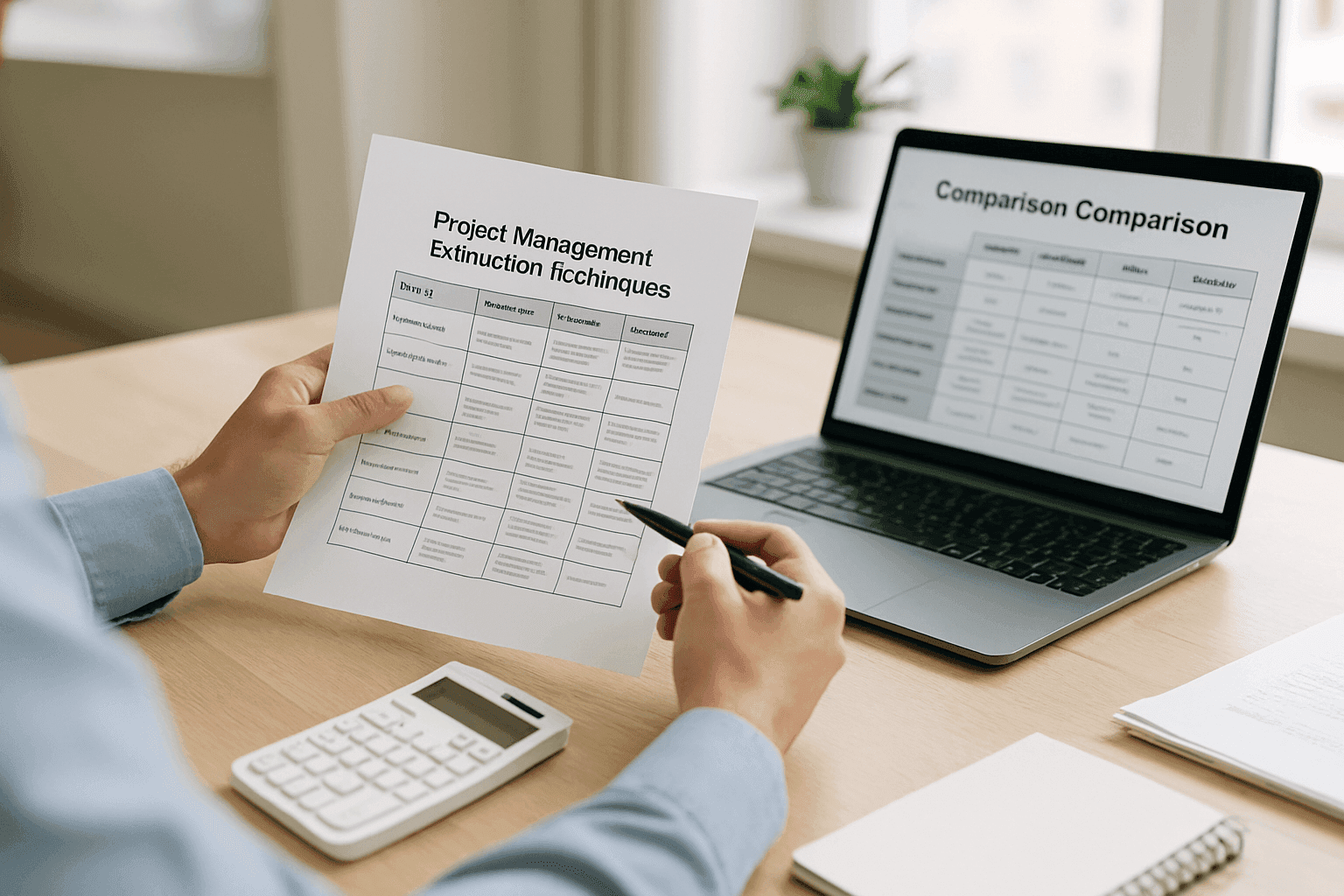
20 Leadership Moves for Project Success: Comparison Framework
| Leadership Move | Implementation Cost | Time to Impact | Difficulty Level | Team Size | Best For |
|---|---|---|---|---|---|
| Clear vision communication | Low | 1-2 weeks | Easy | 5-500+ | All project types |
| Stakeholder alignment meetings | Low-Medium | 2-4 weeks | Medium | 3-50 | Complex projects |
| Delegating decision-making authority | Low | 3-8 weeks | Hard | 8-100 | Large teams |
| Risk management protocols | Medium | 4-6 weeks | Hard | 5-50 | High-stakes projects |
| Regular one-on-one coaching | Medium | 6-12 weeks | Medium | 1-15 per leader | Performance improvement |
| Transparent progress tracking | Medium-High | 2-3 weeks | Medium | 10-200 | Distributed teams |
| Conflict resolution framework | Medium | 8-12 weeks | Hard | 5-100 | Cross-functional teams |
How organisations can help leaders succeed
Individuals don’t operate in a vacuum. Clear role descriptions and decision rights stop confusion. Give project leaders the authority to make routine calls and the resources they need. Run leadership development programmes that combine learning with coaching and peer networks. Reward the behaviours you want to see — good communication and team development — not just final results. Finally, treat post-project reviews as a chance to learn about leadership practices as well as technical delivery.
Frequently asked questions
Which leadership style is best for projects?
There’s no single correct style. Good project leaders adjust their approach depending on the team, the type of project and the organisation. A collaborative style that keeps people involved while holding them accountable usually works well in UK workplaces.
How can new project managers build leadership quickly?
Start with three basics: set clear meeting rhythms, make decisions openly and explain why, and recognise people’s work regularly. Find a mentor and learn from others in your sector—local networks in cities like Leeds or Bristol can be especially helpful.
What if team members resist my leadership?
Talk to them to understand why. They might need clearer goals, disagree with a strategy, or feel overlooked. Take their concerns seriously, act where appropriate and keep firm where needed. If resistance continues despite good-faith efforts, involve senior leadership to resolve it.
How do I balance leadership with technical tasks?
As projects grow, your leadership adds more value than doing technical tasks yourself. Delegate technical work and use those opportunities to develop your team. Step in technically only for critical decisions that need your experience.
Can leadership fix tight budgets or impossible timelines?
Leadership won’t remove real constraints, but it does change how teams cope. Strong leaders surface problems early, negotiate for what’s needed or rework scope sensibly, and keep teams focused on the highest-value work. That usually leads to better, more controlled outcomes than poor leadership would.