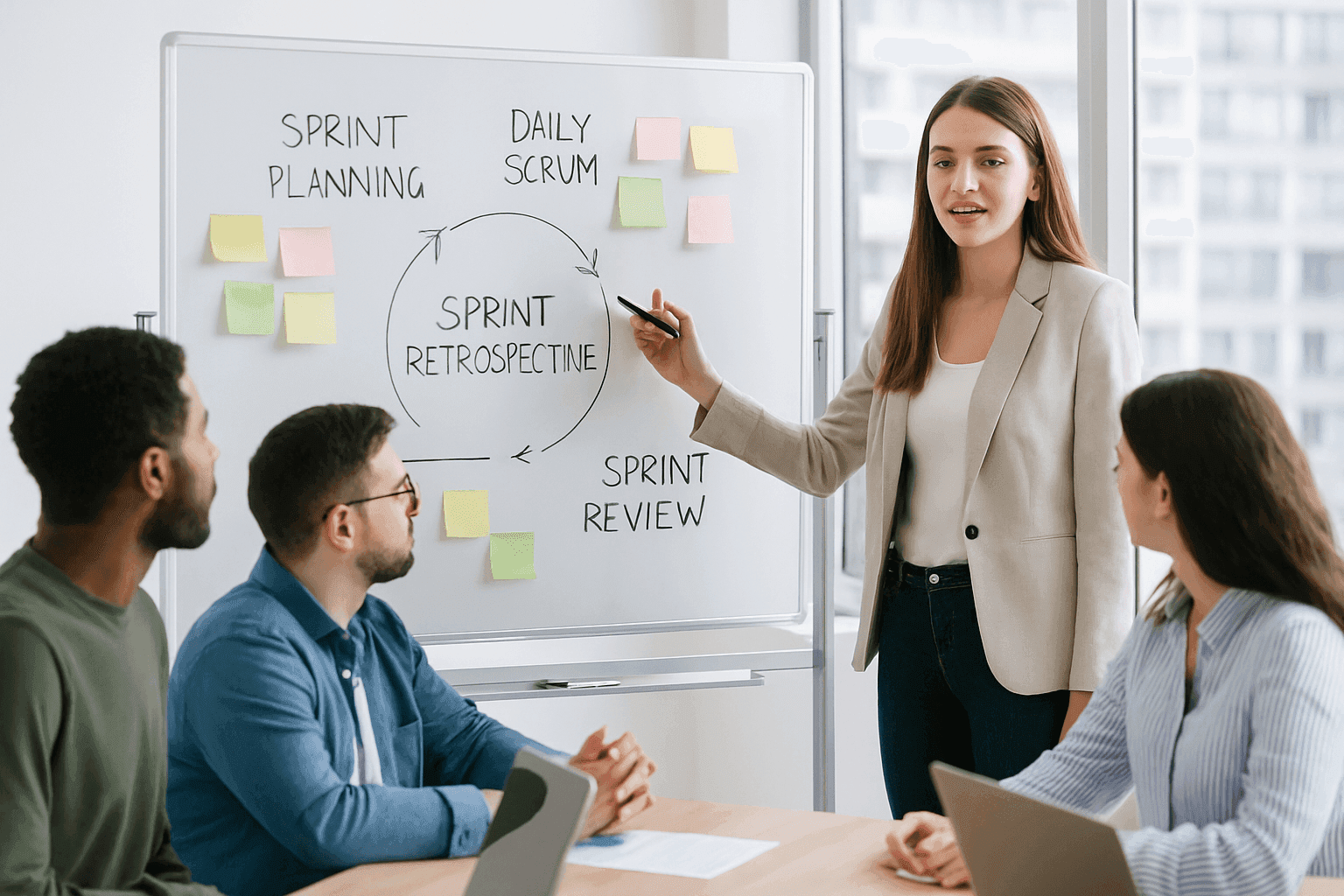
Agile ceremonies structure a team's day-to-day work. In large organizations, these meetings do more than check boxes. When done well, they clarify priorities, surface risks early, and keep delivery predictable without heavy bureaucracy.
Large companies in Washington, Miami, or the Bay Area face challenges small teams rarely see: teams in different time zones, strict compliance rules, many cross-team dependencies, and executives who need visibility without micromanaging. Ceremonies give predictable moments to align work, surface blockers, and adapt plans based on real feedback.
Why structured ceremonies matter at scale
Informal chats work for a co-located team of five, but they do not scale. Without set touchpoints, work gets siloed, priorities change without notice, and dependencies appear too late. Ceremonies create a shared rhythm so a product manager in San Francisco, engineers in Chicago, and stakeholders in Las Vegas can coordinate across time zones and still deliver.
In regulated industries like finance or healthcare, ceremonies also leave an audit trail. Sprint planning documents commitments, stand-ups surface risks early, and retrospectives show continuous improvement. That record helps satisfy governance without reverting to heavy waterfall reviews.
The five core ceremonies every enterprise needs
Across industries and locations, five ceremonies form the backbone of team collaboration: sprint planning, daily stand-ups, sprint review, sprint retrospective, and backlog refinement. Each has a clear purpose and different facilitation needs when you scale.
Sprint planning
Sprint planning turns strategic priorities into agreed work. Product owners bring prioritized backlogs shaped by market needs and compliance. Teams bring capacity, technical constraints, and known dependencies. For large programs, planning must also surface cross-team dependencies and assign owners for them.
Daily stand-up
Fifteen minutes of focused updates keeps momentum and exposes blockers. The stand-up is peer to peer, not a status report to a manager. In enterprises, stand-up output often feeds higher-level coordination forums like a Scrum of Scrums so cross-team issues are handled quickly.
Sprint review
Sprint reviews should show working product, not slides. Demonstrations let stakeholders give concrete feedback and help product owners adjust priorities. When executives visit reviews in New York or offices in Miami, they get real visibility without attending many meetings.
Sprint retrospective
Retrospectives focus on the team process. Ask what went well, what did not, and what actions the team will try next. At scale, aggregate retrospective themes across teams to spot systemic problems that require leadership attention.
Backlog refinement
Refinement keeps the pipeline healthy. Product owners, architects, and compliance specialists should resolve questions early so sprint planning focuses on commitments, not requirement discovery.
Scaling ceremonies across programs
When multiple teams work toward a shared product, add program-level events like PI planning, Scrum of Scrums, and system demos. These create alignment without forcing every team to meet everyone else.
Program increment planning
PI planning is a multi-day event to align teams around shared milestones. Preparation matters: clear vision, capacity checks, and architectural runway make the event effective instead of chaotic.
Scrum of Scrums
Representatives meet briefly to report key dependencies and blockers. Keep these meetings short and focused so they act as an escalation path rather than another status update.
System demo and inspect and adapt workshops
System demos show integrated work across teams and give leaders a single place to see progress. Follow demos with workshops that identify program-level improvements.
Share successful meeting formats and lessons learned across the company so teams in different offices reuse what works. If you want to read more articles on the Naboo blog about ceremony formats and facilitation techniques, you will find practical examples and templates to adapt locally.
How to keep ceremonies useful
Use a simple assessment: is the meeting clear in purpose, are participants engaged, does the meeting produce actionable outcomes, and does it connect to strategy? Score each ceremony and improve the lowest ones first.
Common failures to avoid: turning ceremonies into one way status reports, ignoring timeboxes, not tracking outputs into action, and using the same format even when the team needs something different. Facilitation matters. Train Scrum Masters and rotate facilitators so meetings do not depend on a single person.
Local team culture matters. When executives join a sprint review, they should listen and give context, not dictate designs. That balance preserves team autonomy while keeping leadership informed.
For team-building and morale, plan intentional events rather than ad hoc gatherings. If you need help with offsite planning or remote-friendly activities, check these ideas for planning meaningful events that work for distributed US teams from Seattle to Miami.
Measure what matters
Track a few practical indicators: how often teams meet sprint commitments, time to resolve impediments, percent of stakeholder feedback integrated, completion rate for retrospective actions, and ceremony duration trends. These metrics show whether ceremonies help delivery or just consume time.
Agile Ceremonies Comparison Guide
| Ceremony | Duration | Frequency | Group Size | Difficulty Level | Best For |
|---|---|---|---|---|---|
| Daily Standup | 15 minutes | Daily | 5-12 people | Easy | Team alignment and blocking issues |
| Sprint Planning | 2-4 hours | Weekly/Bi-weekly | 6-15 people | Medium | Setting sprint goals and planning capacity |
| Sprint Review | 1-2 hours | Weekly/Bi-weekly | 8-20 people | Medium | Gathering stakeholder feedback and showing product work |
| Sprint Retrospective | 1-1.5 hours | Weekly/Bi-weekly | 5-12 people | Medium | Improving team processes |
| Backlog Refinement | 1-2 hours | Bi-weekly | 6-10 people | Medium | Preparing stories and estimating effort |
| Release Planning | 4-8 hours | Monthly/Quarterly | 10-30 people | Hard | Coordinating multiple teams and aligning roadmap |
| Scaled Standup | 30-45 minutes | Daily | 20-50 people | Hard | Managing cross-team dependencies in larger organizations |
Remote and hybrid adjustments
For dispersed teams, use async stand-ups when time zones make daily syncs impractical. Use virtual whiteboards for planning and retrospectives. If some people gather in a room and others join remotely, have everyone join by their own device so remote members are not sidelined.
Conclusion
Ceremonies are practical tools, not ritual. When teams in Chicago, Washington, or small hubs near the Rocky Mountains get the basics right in 2026, ceremonies reduce surprises, speed decision making, and make big programs manageable. Start with clear purpose, strict timeboxes, better facilitation, and metrics that matter. Improve one ceremony at a time and share wins across the company.
Frequently Asked Questions
What is the main purpose of Agile ceremonies?
The main purpose is to create predictable moments for planning, coordinating, showing progress, and improving how teams work. In larger organizations, ceremonies also provide governance evidence without heavy reporting.
How do you stop ceremonies from becoming wasteful?
Define clear purpose, stick to timeboxes, ensure active facilitation, and connect meeting outputs to real decisions. If actions from meetings do not lead to change, change the meeting.
How do team ceremonies differ from program ceremonies?
Team ceremonies coordinate work inside a single team. Program ceremonies align multiple teams, manage dependencies, and create shared milestones.
How should leaders participate without taking over?
Leaders should attend to listen, give context, and remove barriers. They should avoid dictating solutions and trust teams to decide how to deliver.
How can we tell if ceremonies add business value?
Look for better delivery predictability, faster resolution of blockers, higher integration of stakeholder feedback, and completion of retrospective actions. These outcomes show meetings are improving how work gets done.