Project communication is the job
Project managers in Seattle, New York, Miami, and Denver spend most of their day writing. Emails to vendors in Las Vegas, status notes for a board in Washington, DC, and updates for teams across the Rocky Mountains all shape how work gets done. In 2026, clear writing often makes the difference between hitting milestones and missing deadlines.
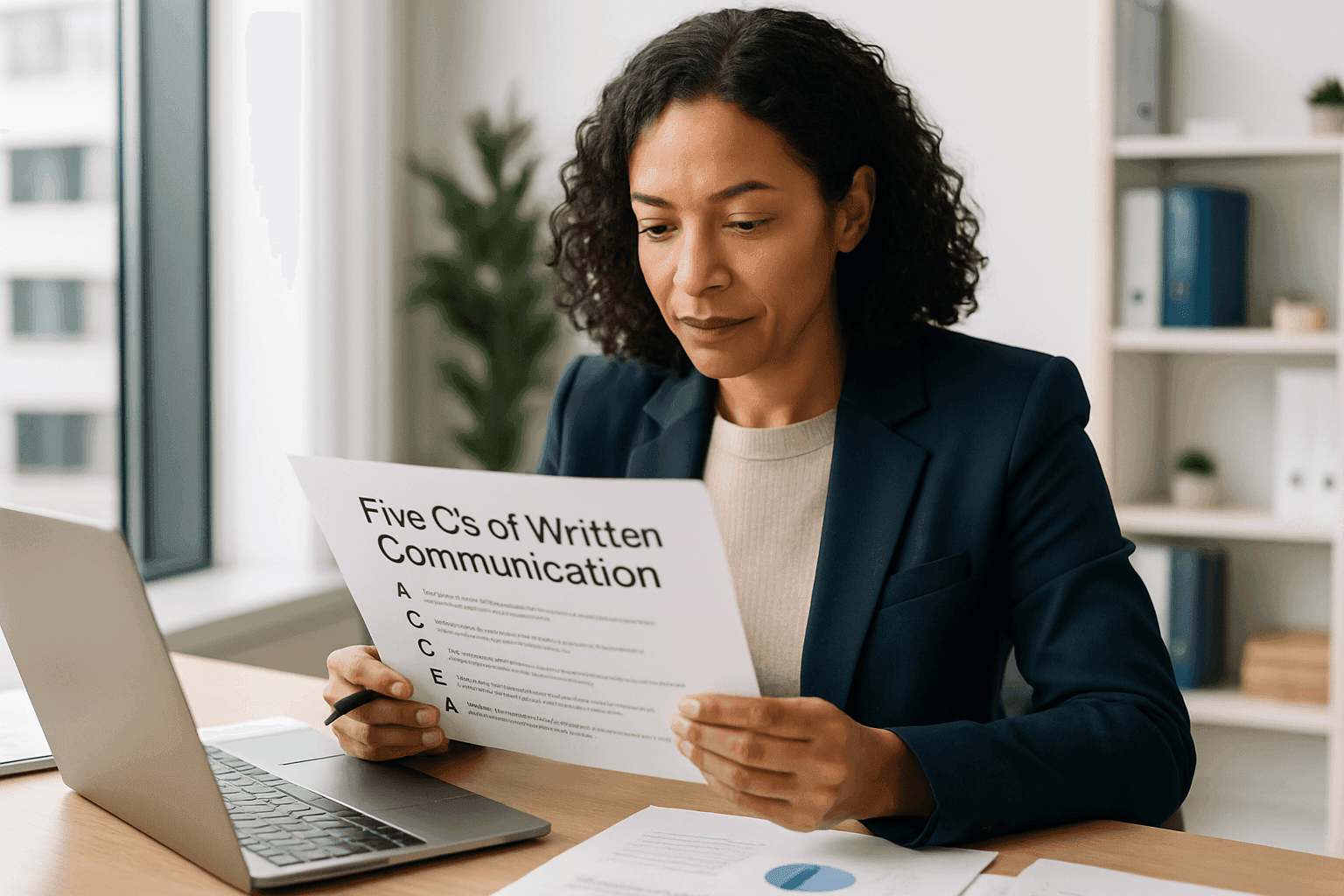
The five C's of written communication for project management—clarity, conciseness, correctness, completeness, and courtesy—give practical guardrails for every note you send. They help teams move faster, reduce rework, and keep stakeholders confident that the project is under control.
Why the five C's matter in US workplaces
Written messages are the project record. Unlike a verbal chat at a standup in San Francisco, your emails and docs live on and guide future decisions. A clear charter prevents feature rework; a correct budget table avoids surprise funding calls in Austin; a courteous vendor email keeps supply chains steady. Practicing the five C's stops small mistakes from turning into dropped deadlines and unhappy clients.
The first C: clarity
Clarity means the reader gets your point on the first read. Say the outcome first, then give the details. Instead of "we should start soon," write "QA on release 2.1 begins July 12; QA lead: Maria Soto." Use plain English so nontechnical stakeholders at a city office or remote teams understand without decoding jargon.
The second C: conciseness
People in busy offices and distributed teams skim. Keep updates short and focused. Replace long paragraphs with one-sentence summaries and a short bulleted follow up when needed. A compact status email to an executive in Chicago should list milestone progress, one current risk, and the decision needed now.
The third C: correctness
Verify dates, budget numbers, and names before you hit send. A wrong milestone date in a CFO update in Boston can derail approvals. Double-check against the official schedule and source systems so stakeholders trust your reports.
The fourth C: completeness
Answer the reader's follow-up questions before they ask them. If you need a sign-off from a partner in Atlanta, include which document to review, where it is stored, which sections need attention, and the deadline. That saves back-and-forth and keeps momentum moving.
The fifth C: courtesy
Tone matters, especially under pressure. Be direct but respectful when delivering bad news about a Jacksonville rollout or a Denver reschedule. Acknowledge effort, offer next steps, and avoid assigning blame in public threads. Courtesy preserves working relationships and makes future conversations easier.
Common mistakes to avoid
Project teams often bury the key point deep in a long message, assume shared context, or cram too many unrelated topics into one email. Avoid writing while angry; take a pause before sending sensitive messages. These simple habits prevent the typical communication traps that cause delays across regional offices from Los Angeles to Minneapolis.
For templates and examples that help you apply these principles daily, read more articles on the Naboo blog that show practical formats for status reports and stakeholder notes.
Use the Message Quality Matrix
Before sending any important message, run a quick self-check: can someone unfamiliar with the project grasp this in one read, can any sentence be removed, are all facts verified, can the recipient act on this, and does the tone help the relationship? Rate each item and revise anything below full score. This two-minute habit prevents many common problems.
Measure and improve
Track how often recipients ask for clarification, how long approvals take after you send information, and how much rework comes from miscommunication. These metrics show whether your written communication is helping projects in Houston, Portland, and beyond. For team-building ideas that reinforce communication skills, check out ideas for planning meaningful events that work for remote and in-person teams.
Apply this in a real scenario
If testing slips two weeks because requirements were incomplete, write a short, factual note: new dates, cause, verified schedule, next steps, and how this affects delivery. Say what you will do to prevent the issue again and thank the stakeholders for their time. That kind of message keeps trust intact across stakeholders from Dallas to Washington, DC.
Comparison of the 5 C's in Written Communication for Project Management
| The 5 C's | Definition | Best For | Difficulty Level | Impact on Projects | Implementation Time |
|---|---|---|---|---|---|
| Clarity | Expressing ideas in an understandable way | Complex technical documentation | Medium | Reduces misunderstandings by 60% | 2-3 weeks |
| Conciseness | Conveying information in fewer words | Email updates and status reports | Medium | Saves 15+ hours per project | 1-2 weeks |
| Correctness | Using accurate grammar, spelling, and facts | Client-facing communications | Low | Builds professional credibility | Ongoing |
| Completeness | Including all necessary information and details | Project briefs and requirements documents | High | Prevents scope creep and delays | 3-4 weeks |
| Courtesy | Using respectful and professional tone | Stakeholder and team communications | Low | Improves team collaboration by 40% | Immediate |
| Combined Approach | Applying all 5 C's together | Large cross-functional teams (8+ members) | High | Increases project success rate by 75% | 4-6 weeks |
Build the habit into routines
Use templates for status reports and action requests, add peer review for executive updates, and include communication effectiveness in your sprint retrospectives. Small processes like these spread good habits across teams in different US regions and make consistent communication the norm.
Frequently asked questions
What are the 5 C's of written communication project management?
The five C's are clarity, conciseness, correctness, completeness, and courtesy. Together they make messages actionable and trustworthy and reduce the back-and-forth that slows projects.
How can I improve clarity in project status reports?
Lead with the main point, list who is responsible, and include exact dates. Keep jargon out when reporting to mixed audiences, and use short headings so someone scanning in an office in San Diego or on a train in Boston gets the point quickly.
Why is conciseness important when stakeholders are busy?
Busy stakeholders skim updates. Concise messages respect their time and make it easier to spot risks and decisions. Focus on the essentials and put extra detail in an attachment or link.
How do I keep courtesy when delivering bad news?
Stick to facts, explain the impact, offer solutions, and acknowledge the effort people put in. That tone keeps relationships intact and shows leadership under pressure.
What tools help ensure completeness?
Use checklists and templates that prompt for who, what, when, where, and next steps. Review messages from the recipient's point of view to answer likely follow-up questions before you send them.