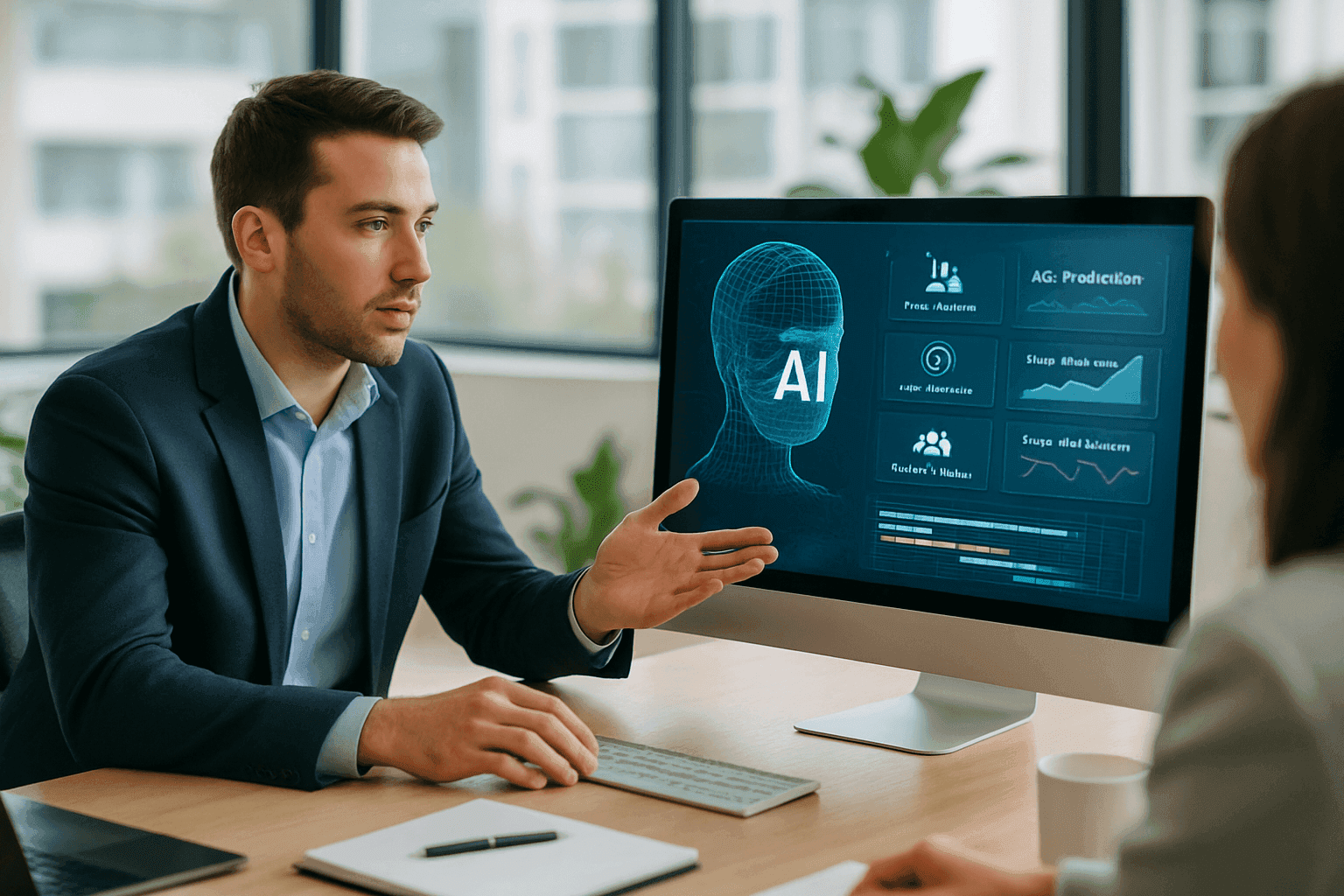
Project managers in New York, Seattle, Austin, and across the Rocky Mountains face growing complexity in 2026. Teams span time zones from Miami to San Francisco, stakeholder priorities shift fast, and the amount of project data keeps rising. Traditional approaches still matter, but they often cannot keep up. AI won't replace human judgment. It amplifies what project managers do each day.
The basics of AI in project work
In practical terms, AI in project management means systems that spot patterns in data, make predictions from past projects, automate routine choices, and learn over time. A PM in Chicago might review a handful of past projects to plan a schedule. An AI system can analyze thousands of projects in seconds and surface patterns about team mix, seasonal demand, and resource limits.
When these tools plug into daily workflows, AI takes on the heavy data work and leaves people free to build relationships, make judgment calls, and handle politics inside organizations like those in Washington DC or Los Angeles.
Smarter planning and resource matching
AI makes planning more accurate. Instead of guessing task durations, systems examine historical data to produce realistic estimates. They factor in individual productivity, similar past tasks, dependencies, and external effects such as holiday seasons in Miami or fiscal cycles in public agencies.
Resource allocation improves too. AI predicts which team members will perform best on specific work by looking at skills, past results, current workload, and working style fit. This goes beyond simple skill lists to the factors that affect real outcomes in offices from Denver to Boston.
Teams that adopt AI planning report less time spent rewriting schedules and fewer last minute changes. For examples and practical tips, read more articles on the Naboo blog.
Dynamic schedule updates
Project plans stop being static once work starts. AI watches progress and suggests schedule tweaks when things change. If a key developer in Austin is unavailable, the system recalculates priorities to limit delay. That means PMs spend less time updating timelines and more time coaching teams and managing stakeholders.
Predictive risk spotting
Risk management moves from reactive to proactive with AI. Machine learning pulls signals from thousands of projects and flags risky patterns early. For example, projects that begin in certain months with specific team sizes may show repeated scope creep. AI alerts PMs before problems grow costly.
Real-time monitoring adds another layer. AI scans chat threads, task rates, and budget burn to catch issues early. That early warning saves teams in places like Las Vegas offices and remote hubs from costly rework.
Common misconceptions
One major myth is that AI will replace project managers. It will not. AI handles analysis and routine work. Humans still build trust with clients, settle trade offs, and motivate teams. A better view is AI-augmented project managers.
Another misunderstanding is that AI works well with bad data. It does not. Poor records and inconsistent entry will produce poor outcomes. Teams must clean and standardize data first. Also, AI adoption does not require ripping out everything and starting over. Most organizations get the best results by starting small and expanding.
AI-PM readiness checklist
Use this short checklist to assess where your organization stands.
- Data 1 Ad Hoc to 4 Intelligent
- Processes 1 Variable to 4 Optimized
- Analytics 1 Reactive to 4 Predictive
- Technology 1 Fragmented to 4 Intelligent
- Team skills 1 Unaware to 4 Strategic
Be honest about each area. A mid sized professional services firm in Denver with 200 people might have a central PM tool but inconsistent data entry. Their best move is to fix data practices and train teams before adding advanced AI features.
Local scenario: a Denver firm adopting AI
A mid sized firm based near the Rocky Mountains assessed its readiness and found data at Level 2 and team skills at Level 1. They spent three months cleaning historical data and ran an internal training program. After six months, data moved to Level 3 and the team to Level 2. They piloted predictive risk tools and saw alerts that proved accurate, which built trust. Once the pilot worked, they expanded into automated reporting and resource optimization.
Small, steady steps like these work better than big bang rollouts in offices from Austin to Seattle.
Better communication and team flow
AI helps communication in practical ways. Virtual assistants answer routine status questions so team members do not wait for the PM. Natural language processing tools flag messages that show confusion or tension so managers can step in early. Teams using these tools report fewer misunderstandings and less firefighting.
To build morale, many teams pair AI tooling with simple in person or virtual team activities. If you need ideas for planning meaningful events for hybrid teams, check the events page for low effort formats that work in cities like Miami and Las Vegas.
Data driven decision support
AI runs scenario models that help with trade off decisions. For example, a system might show that adding two engineers in Austin would shorten a timeline by three weeks but raise costs by 15 percent and add integration risk. That gives PMs clear comparisons so they can make better calls under pressure.
Automating routine work
AI automates status reports, tracking, meeting scheduling, and documentation. What took two hours a week becomes instant. Progress tracking moves from weekly snapshots to continuous updates, so PMs always see the current state.
Measuring results
Track these practical metrics after you launch AI:
- Schedule accuracy percentage within 10 percent of estimates
- Budget variance between projected and actual costs
- Resource utilization on billable work
- Project manager time split between strategic and admin work
- Days of early risk detection versus old methods
- Stakeholder satisfaction and team sentiment
Capture baselines before you start and review quarterly. That tells you what to scale and what to change.
20 AI Solutions for Project Management in 2026: Quick Comparison
| AI Solution | Implementation Cost | Setup Duration | Difficulty Level | Team Size | Best For |
|---|---|---|---|---|---|
| Automated Planning Tools | $5,000–$15,000 | 2–4 weeks | Low | 5–50 people | Project scheduling and timeline optimization |
| Resource Matching Engine | $8,000–$20,000 | 3–6 weeks | Medium | 20–100 people | Assigning the right skills to the right tasks |
| Predictive Risk Analytics | $10,000–$25,000 | 4–8 weeks | Medium-High | 15–75 people | Identifying project risks early |
| AI Communication Hub | $3,000–$10,000 | 1–2 weeks | Low | 10–150 people | Team collaboration and reducing information silos |
| Data-Driven Decision Support | $12,000–$30,000 | 6–10 weeks | High | 25–200 people | Real-time insights for strategic decisions |
| Smart Budget Forecasting | $6,000–$18,000 | 2–5 weeks | Medium | 10–60 people | Cost predictions and budget management |
| Team Productivity Monitor | $4,000–$12,000 | 1–3 weeks | Low-Medium | 5–100 people | Tracking capacity and finding bottlenecks |
Practical rollout tips
Start with a clear problem such as schedule slips or resource bottlenecks. Clean your data first. Pilot on a small set of projects. Train people on what AI does and when to question it. Keep humans accountable for final decisions and plan for continuous tuning of the system.
The next steps
AI will keep improving in 2026. Natural language interfaces will let PMs ask questions in plain English and get fast answers. AI will also help leaders balance a portfolio of projects and match investments to strategy. The organizations that win will combine smart AI use with strong people skills.
Frequently asked questions
What is the most important factor for successful AI implementation in project management?
Data quality. Clean, consistent data is the base. Without it, AI predictions are unreliable and adoption stalls.
How much does it cost to implement AI in project management?
Costs vary. Small teams can get started with built in AI features on subscription platforms for a few hundred dollars per month. Enterprise efforts with custom models and integrations can reach six figures. Start with focused, low cost pilots to prove value.
Will AI replace project managers?
No. AI changes the role but does not replace the human skills of stakeholder management, negotiation, and judgment. Expect AI augmented project managers doing higher value work.
How long before I see results?
Focused applications like automated reporting or basic risk alerts often show value in three to six months if the data is in good shape. Full scale adoption across functions typically takes 12 to 18 months.
What skills do project managers need to work effectively with AI?
PMs need basic data literacy, critical thinking, and change management skills. They do not need deep technical AI expertise but should understand model limits and bias.
If you want practical examples and playbooks for rolling out these changes in US teams, discover more content on the Naboo blog.